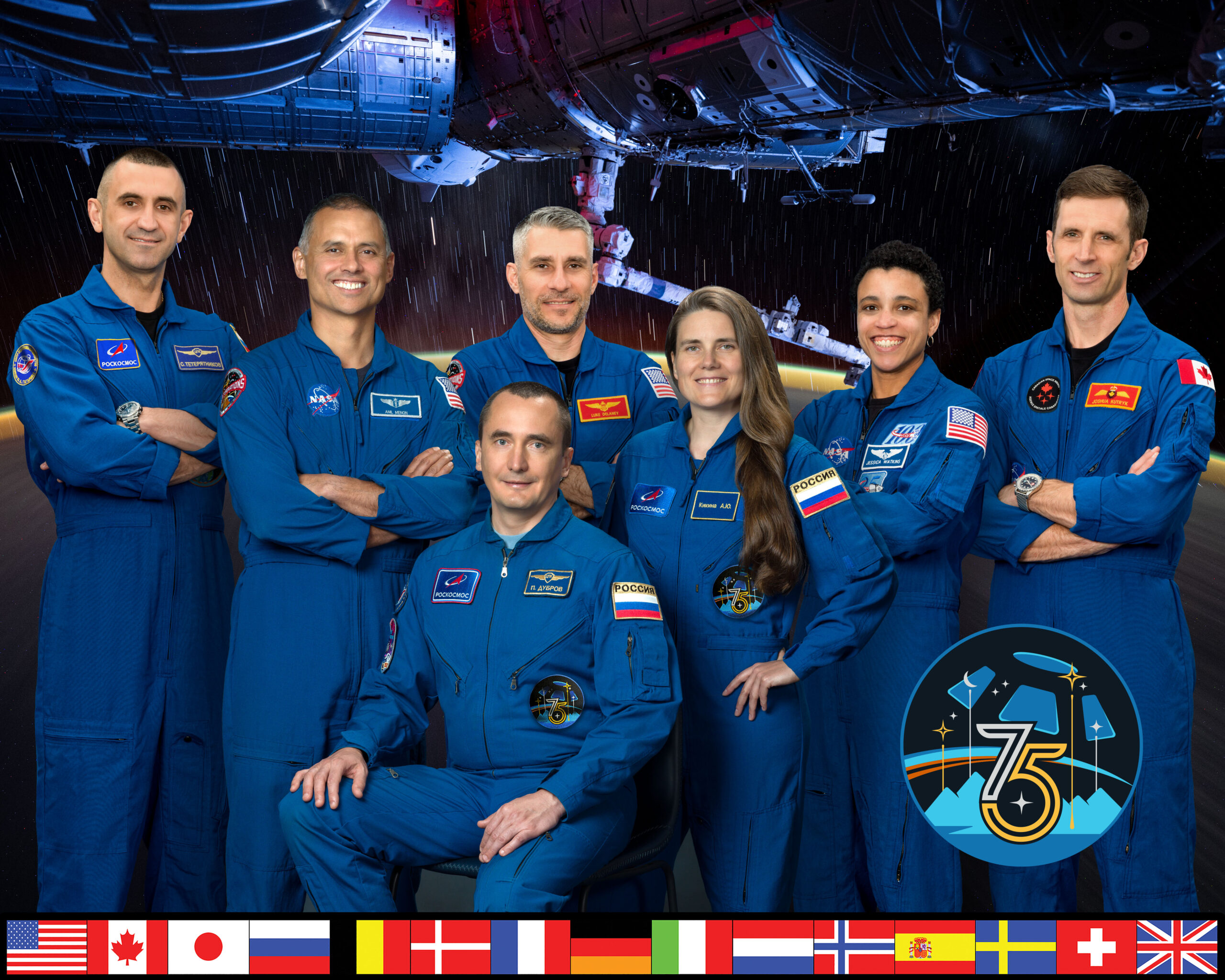
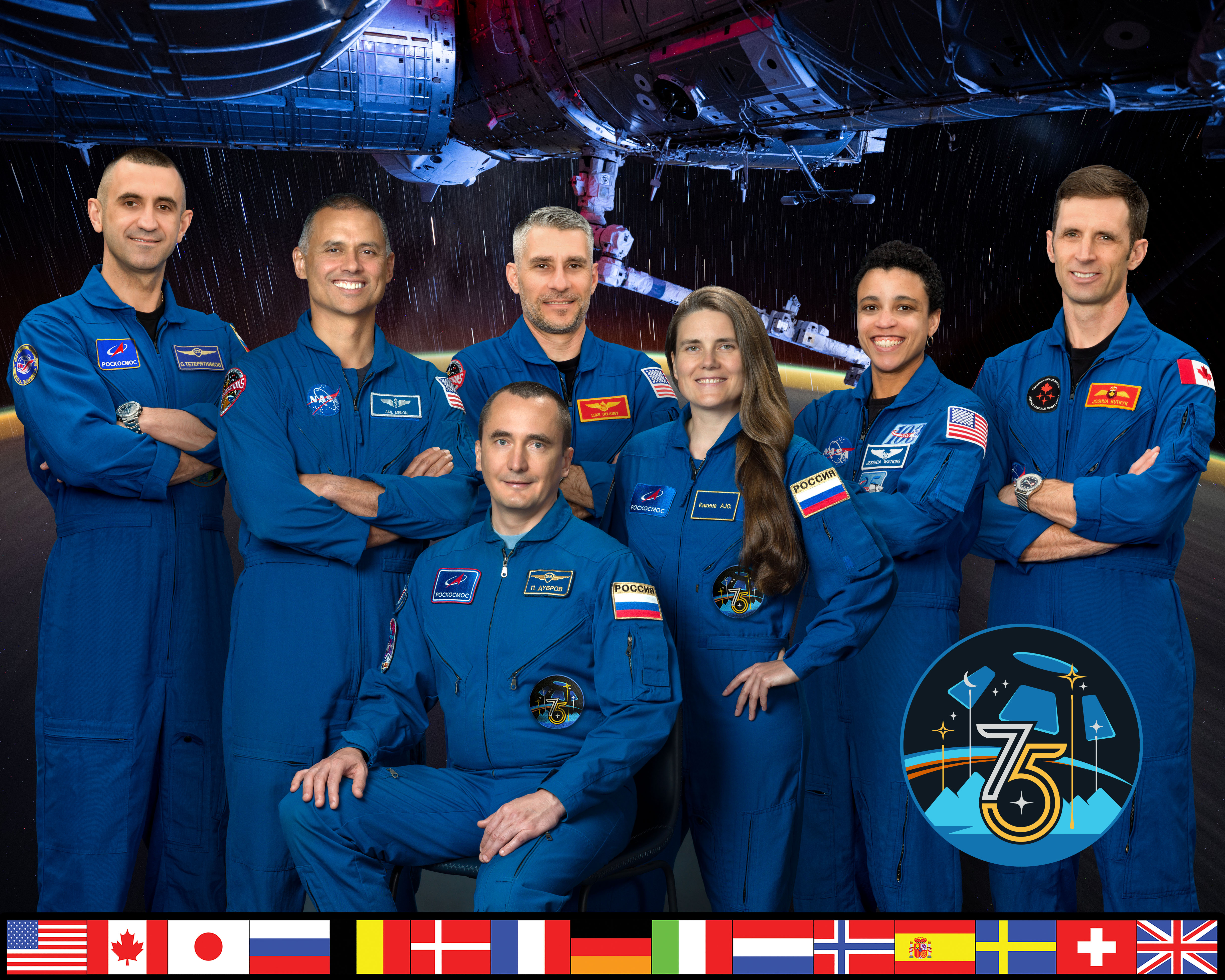
The seven-member Expedition 75 crew awaits the arrival of an uncrewed SpaceX Dragon that launched on Tuesday carrying new cargo for delivery on Thursday. When Dragon reached orbit the lab residents were midway through their day filled with biomedical research and advanced space innovations.
A cargo-packed Dragon spacecraft lifted off atop a Falcon 9 rocket from Florida’s Cape Canaveral Space Force Station at 6:33 a.m. EDT on Tuesday. Loaded inside Dragon are over 6,300 pounds of science, supplies and roll-out solar arrays due to arrive at 11 a.m. on Thursday. Some of the new science will explore creating artificial retinas and growing heart tissues in weightlessness. Dragon is also carrying the final pair of roll-out solar arrays that will be installed on upcoming spacewalks to augment the orbital outpost’s power generation system.
While they wait for Dragon’s arrival, flight engineers Anil Menon of NASA and Joshu Kutryk of CSA (Canadian Space Agency) inspected and cleaned a science freezer in the Kibo laboratory module during the first half of their shift on Tuesday. Menon later joined fellow NASA astronauts Jessica Watkins and Luke Delaney and used a medical imaging device for eye checks to help doctors understand how microgravity affects the retina, cornea, and lens. Kutryk wore the Bio-Monitor vest and headband that comfortably tracks a crew member’s health data while living and working in space.
Watkins began her shift servicing 3D cell printing hardware in the Destiny laboratory module then swapped batteries on an Astrobee free-flying robotic assistant. Delaney set up the Echo tele-operated ultrasound scanner system for remote maintenance by ground engineers then removed a battery adapter from inside a spacesuit emergency jetpack.
Station commander Pyotr Dubrov and flight engineer Anna Kikina of Roscosmos tested an exoskeleton suit for its ability to remotely control robots. One cosmonaut wore the suit while wearing virtual reality goggles, simulating picking up and using tools, and plugging and unplugging connectors. The other cosmonaut monitored the activities on a computer while providing verbal guidance. The next-generation Teledroid experiment may help crew members prepare for future long-term space exploration missions.
Cosmonaut and flight engineer Sergey Teteryatnikov, on his first spaceflight, spent most of his shift in the Nauka science module cleaning smoke detectors. He spent the last portion of his shift on Tuesday continuing to familiarize himself with space station systems and procedures.
Learn more about station activities by following the space station blog, @space_station on X, as well as the ISS Facebook and ISS Instagram accounts.
Get the latest from NASA delivered every week. Subscribe here.