
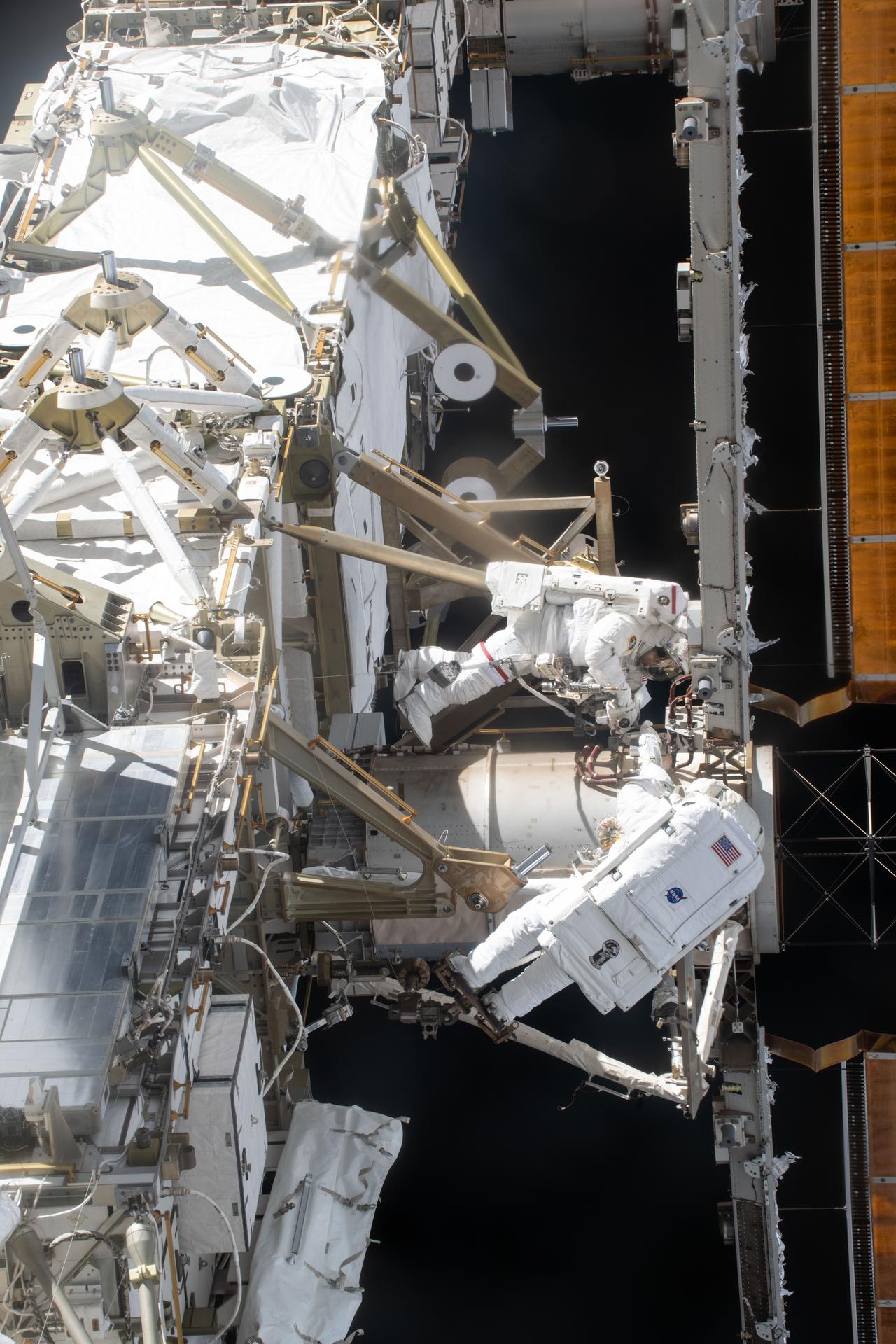
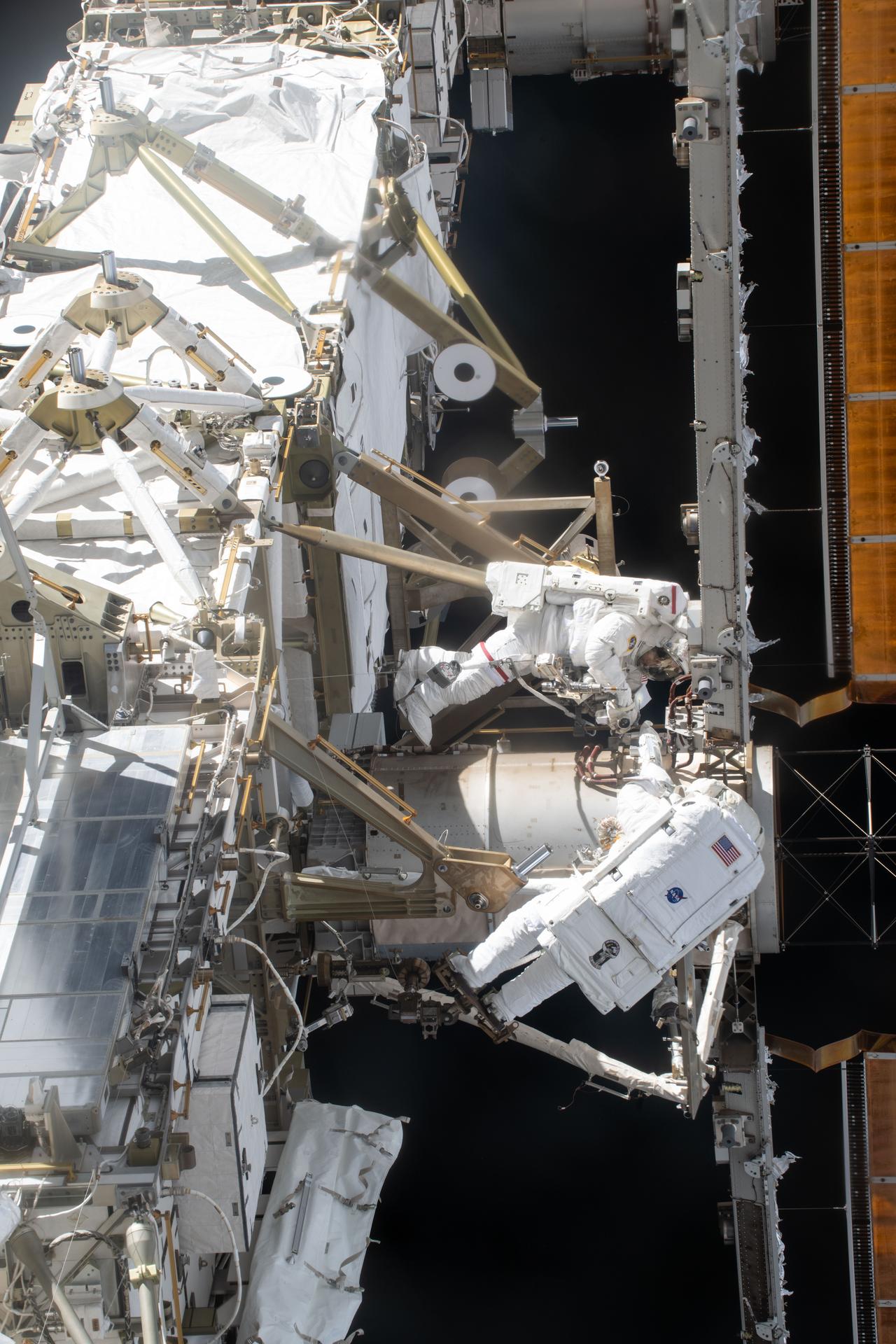
Spacewalk preparations filled the schedule aboard the International Space Station on Tuesday as a pair of astronauts gear up for next week’s external robotics repair job. CubeSat maintenance and eye checks rounded out the day for the Expedition 74 crew.
NASA flight engineers Chris Williams and Jessica Meir will once again wear their spacesuits and work together in the vacuum of space to repair a wrist joint on the Canadarm2 robotic arm starting at 7:35 a.m. EDT on Tuesday, June 30. The duo will spend about six hours and 40 minutes on the outside of the orbital lab replacing the malfunctioned wrist joint on Canadarm2 that has been in operation for over 25 years. NASA and the Canadian Space Agency (CSA) analyzed the issue and determined a spacewalk was necessary to replace the wrist joint with a spare already on the station. NASA and CSA officials will preview the upcoming spacewalk tasks during a news conference on NASA’s YouTube channel at 2 p.m. on Thursday, June 25.
Williams tried on his spacesuit Tuesday and tested the suit in its powered configuration with assistance from flight engineer Sophie Adenot from ESA (European Space Agency). The duo worked inside the Quest airlock checking the pressurized suit’s comfort and mobility and its communications and life support systems while engineers on the ground monitored.
Williams then joined Meir and reviewed on a computer a 3D interactive animation of the procedures and maneuvers they will use to return the Canadarm2 to full motion. Afterward, the pair took turns servicing emergency jet packs that will be installed on the spacesuits the day the spacewalk begins. Meir also installed batteries inside the pistol grip tools — designed especially for microgravity — they will use to work on the robotic arm.
Adenot and NASA flight engineer Jack Hathaway, who will monitor the spacewalkers from inside the orbital outpost, studied their spacewalk support roles including carefully adjusting the Canadarm2 into position during the repair work. Hathaway also had time for CubeSat work first removing a small satellite orbital deployer that was stowed inside the Kibo laboratory module’s airlock. Next, he installed a set of CubeSats inside the NanoRacks CubeSat deployer that will soon be placed outside Kibo’s airlock for deployment into Earth orbit. The tiny satellites were designed by university students for a variety of communications and technology investigations.
Station commander Sergey Kud-Sverchkov joined flight engineer Sergei Mikaev in the Harmony module for eye checks using standard medical imaging hardware. Doctors on the ground were examining how living in space affects the retina, lens, and cornea. Roscosmos flight engineer Andrey Fedyaev continued testing artificial intelligence tools to boost crew efficiency and communications in space.
Learn more about station activities by following the space station blog, @space_stationon X, as well as the ISS Facebook and ISS Instagram accounts.
Get the latest from NASA delivered every week. Subscribe here.