Explore Hubble Hubble Home Overview About Hubble The History of Hubble Hubble Timeline Why Have a Telescope in Space? Hubble by the Numbers At the Museum FAQs Impact & Benefits Hubble’s Impact & Benefits Science Impacts Cultural Impact Technology Benefits Impact on Human Spaceflight Astro Community Impacts Science Hubble Science Science Themes Science Highlights Science Behind Discoveries Universe Uncovered Hubble’s Partners in Science Hubble & Citizen Science AI & Hubble Science Explore the Night Sky Observatory Hubble Observatory Hubble Design Mission Operations Science Operations Astronaut Missions to Hubble Hubble vs Webb Team Hubble Team Career Aspirations Hubble Astronauts Multimedia Images Videos Online Activities e-Books Sonifications Podcasts 3D Hubble Models Lithographs Fact Sheets Posters Hubble on the NASA App Glossary News Hubble News Social Media Media Resources 35th Anniversary More Online Activities 1 min read
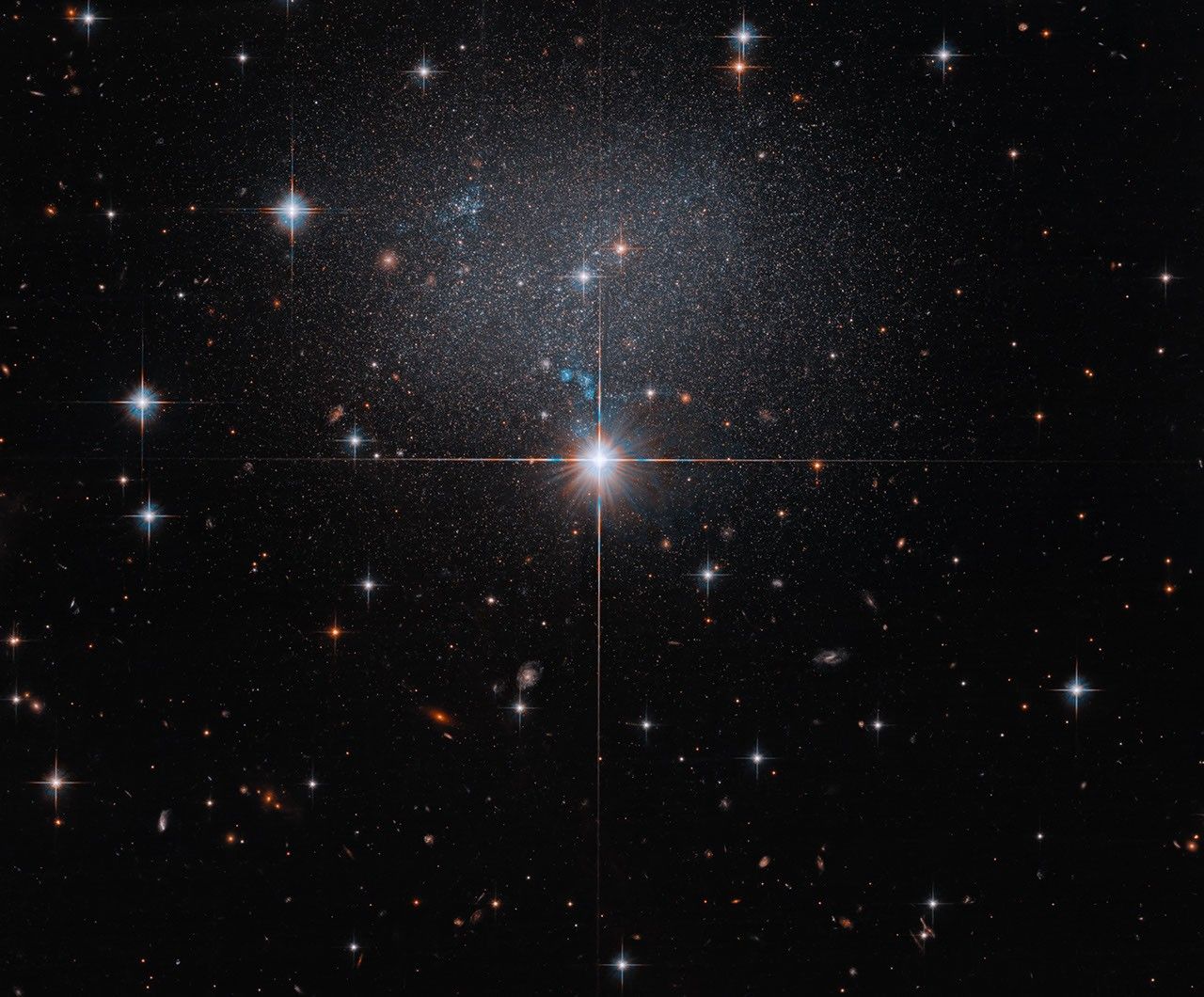
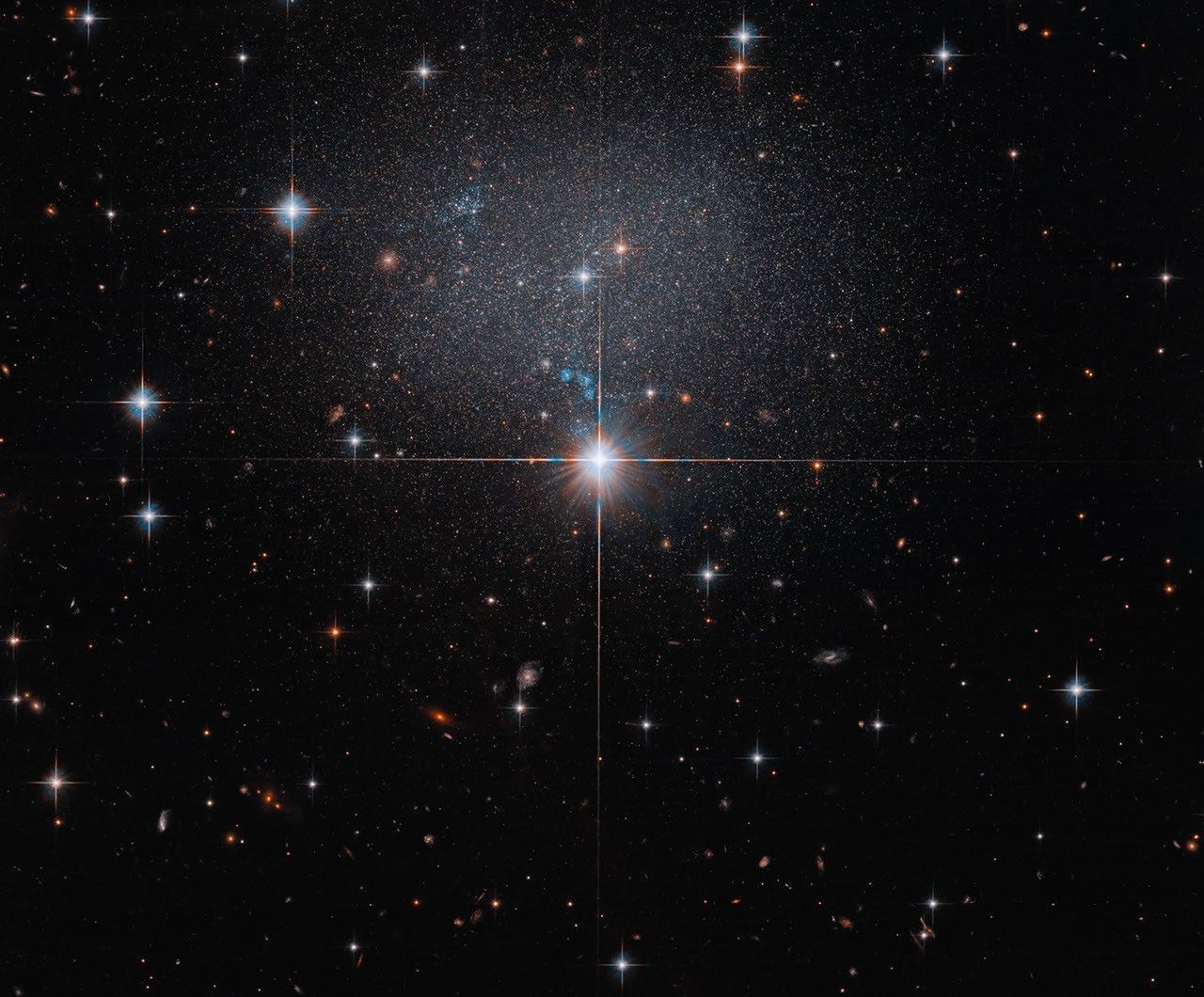
Hubble Spies Faint Irregular Galaxy 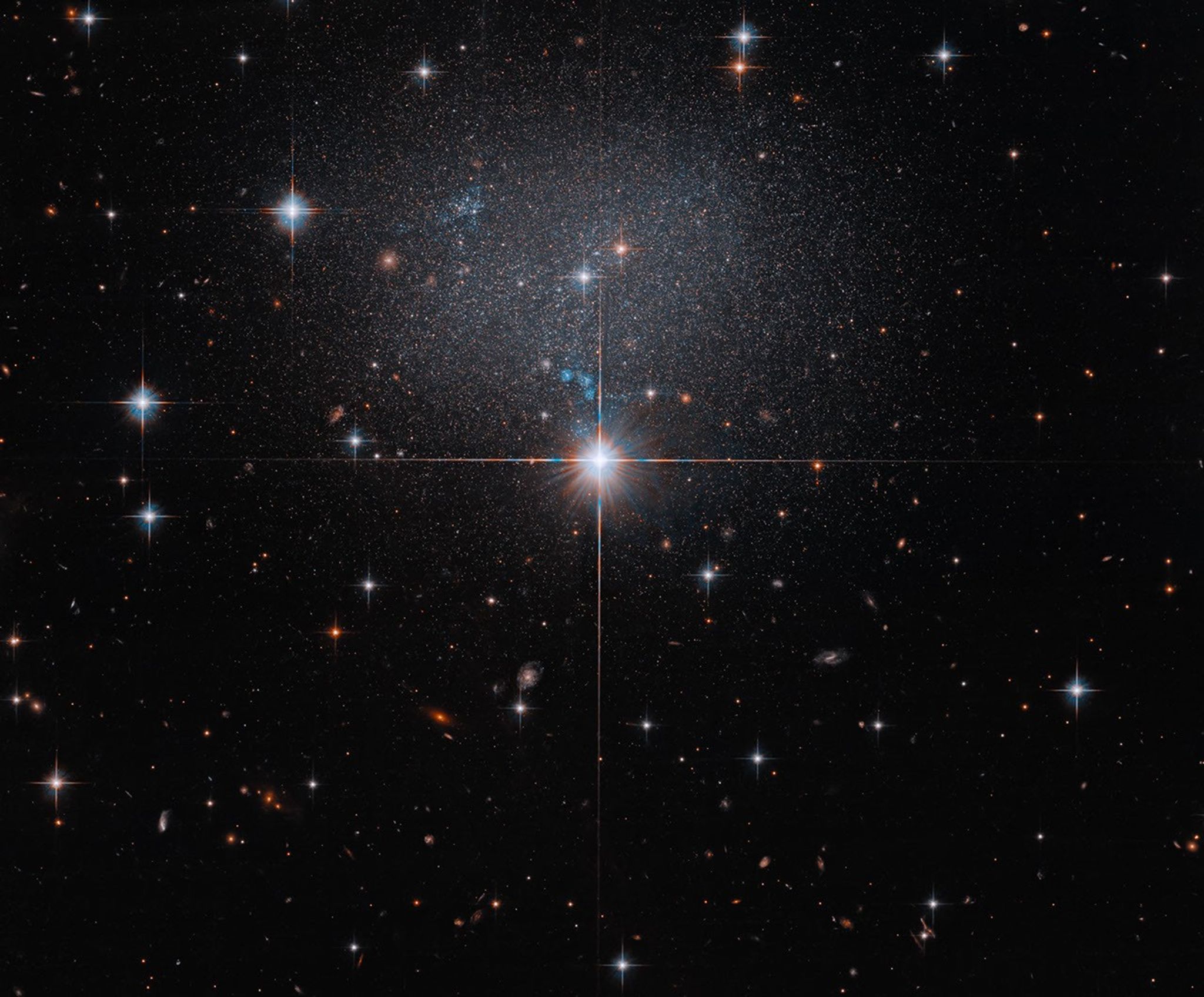
The data in this image of ESO 490-017 was part of a Hubble observing program that looked at the movement of galaxies and galaxy clusters through space. Matter in the universe is distributed unevenly, and the gravitational influence of that matter drives the “cosmic flow” or movement of large-scale structures in the universe.
Hubble is uniquely capable of providing distances to nearby galaxies like ESO 490-017 by measuring the luminosities of low-mass red giant stars as “standard candles”. The observing program also provided a legacy archive of the types of stars in local galaxies.
Facebook logo @NASAHubble @NASAHubble Instagram logo @NASAHubble Media Contact:
Claire Andreoli
NASA’s Goddard Space Flight Center, Greenbelt, MD
claire.andreoli@nasa.gov
Details Last Updated May 27, 2026 Editor Andrea Gianopoulos Location NASA Goddard Space Flight Center Related Terms Hubble Space Telescope Goddard Space Flight Center Irregular Galaxies The Universe
Keep Exploring Discover More Topics From Hubble Hubble Space Telescope
Since its 1990 launch, the Hubble Space Telescope has changed our fundamental understanding of the universe.