
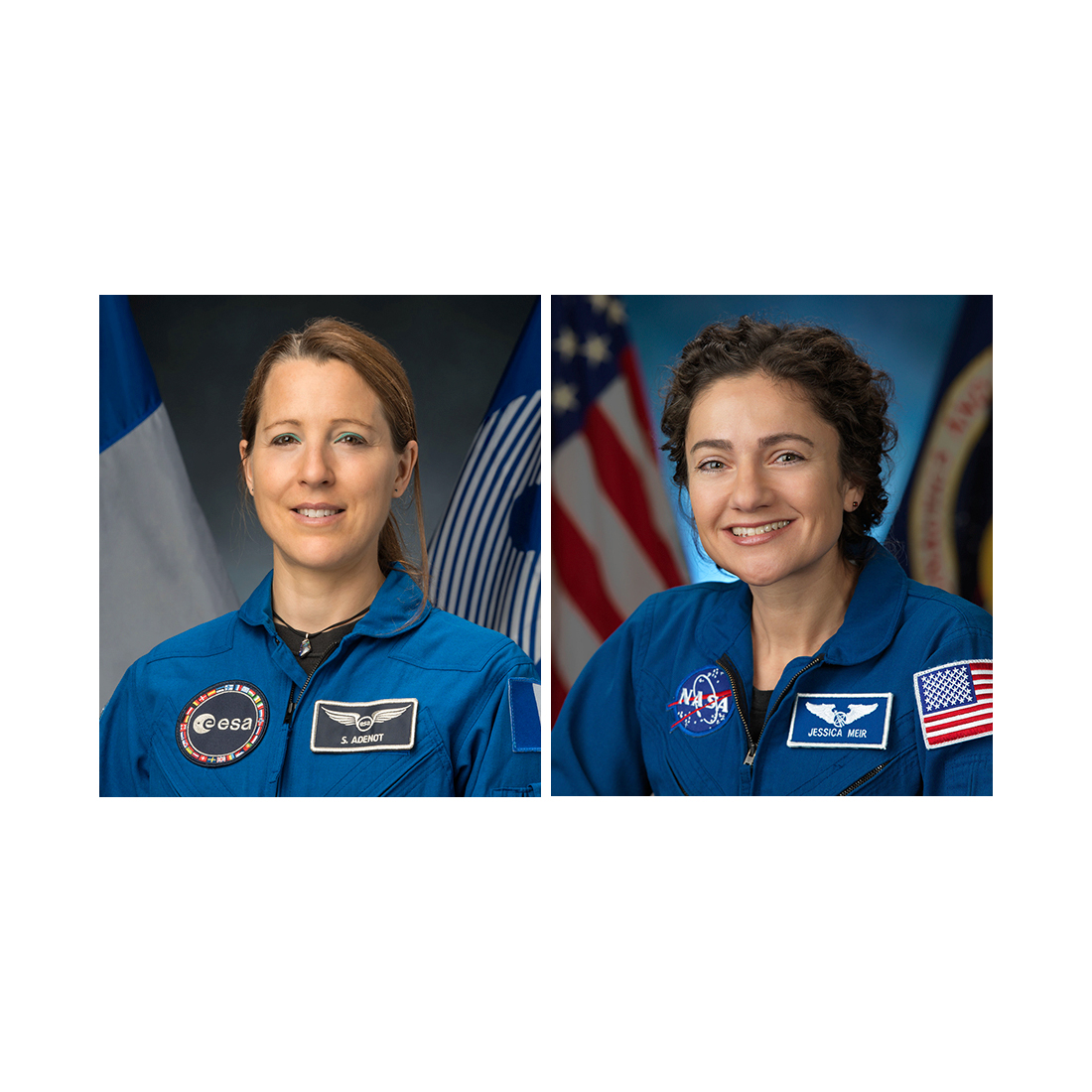
Astronauts Sophie Adenot of ESA (European Space Agency) and Jessica Meir of NASA will exit the International Space Station after setting their spacesuits to battery power at 8:30 a.m. EDT on Tuesday, Sept. 1, signifying the beginning of their spacewalk. NASA+ and a variety of other platforms will stream live spacewalk coverage beginning at 7 a.m.
The spacewalkers will spend about six-and-a-half hours in the vacuum of space replacing a spacecraft navigational aid, preparing a cosmic particle detector for future upgrades, installing jumper cables to boost data-relay systems, and other tasks. This will be Meir’s seventh spacewalk, Adenot’s third, and the 284th at the orbital outpost since 1998.
The Expedition 75 crew finalized preparations on Monday for the fourth spacewalk in a month outside the orbital outpost. Adenot and Meir reviewed their spacewalk procedures, prepared their spacesuits, and organized their tools inside the Quest airlock throughout Monday. The duo also joined NASA flight engineers Anil Menon and Jack Hathaway and studied the Canadarm2 robotic arm procedures necessary to support Tuesday’s spacewalk.
Menon will operate the Canadarm2 and guide Meir, attached to its latching end effector by an articulating portable foot restraint, to the worksites along the orbital outpost’s starboard truss structure. Adenot will remain tethered to the station translating on her own to the worksites. Hathaway will monitor the external activities ensuring both spacewalkers stay safe and accomplish their tasks. Menon and Hathaway also will assist the spacewalkers in and out of their spacesuits inside Quest.
The station’s three cosmonauts focused on their contingent of Roscosmos science and maintenance duties on Monday. Flight engineers Pyotr Dubrov and Anna Kikina worked together inside the Zvezda service module and tested communications between the docked Progress 94 cargo craft and the tele-operated robotic unit, or TORU. The TORU would be used to remotely control a Roscosmos spacecraft in the unlikely event its automated rendezvous and docking system failed.
Dubrov also repaired and tested ethernet cables while Kikina worked on electronics and ventilation maintenance. Flight engineer Andrey Fedyaev transferred water from the Progress 94 into station water tanks then jogged on Zvezda’s treadmill while attached to electrodes for a physical fitness test.
Learn more about station activities by following the space station blog, @space_station on X, as well as the ISS Facebook and ISS Instagram accounts.
Get the latest from NASA delivered every week. Subscribe here.