
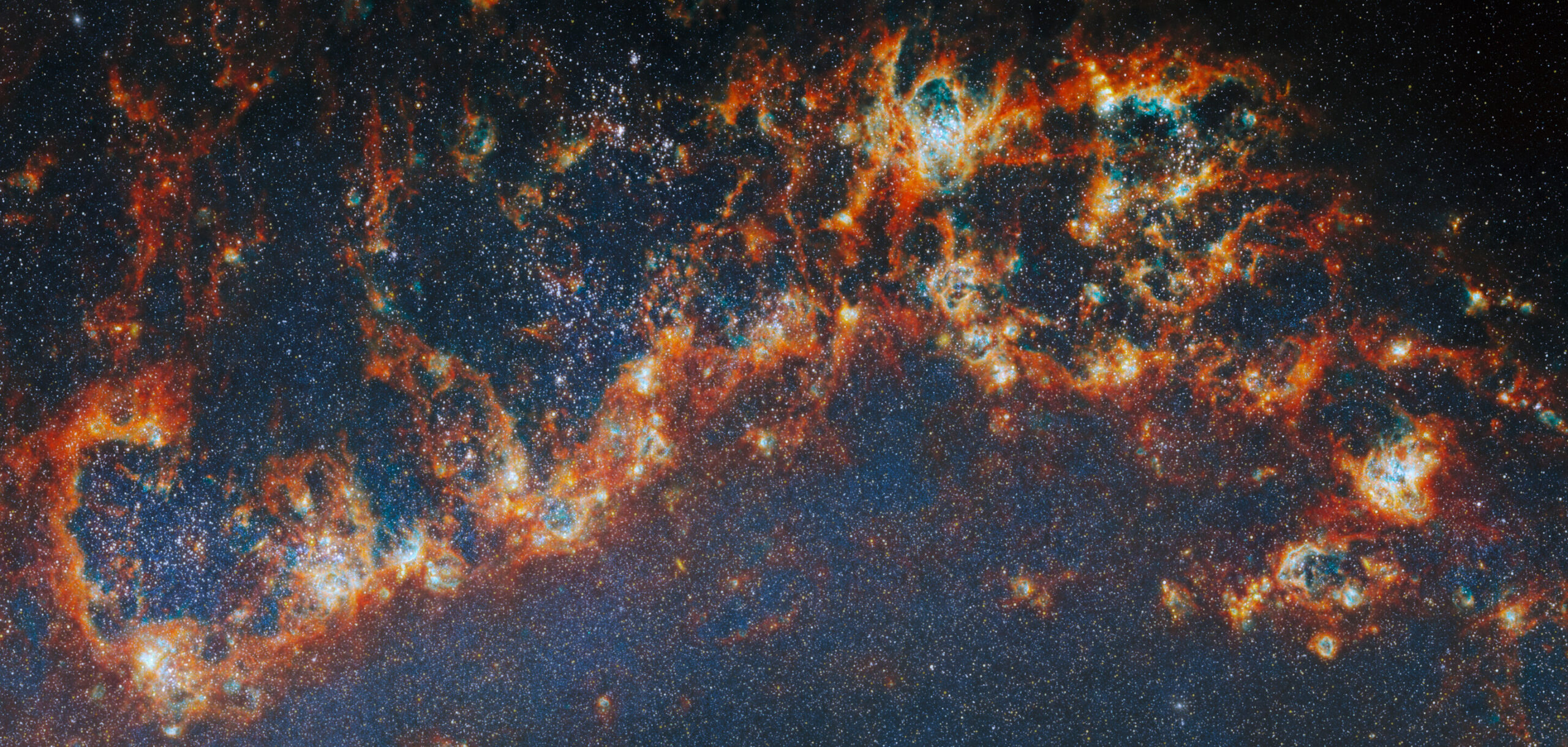
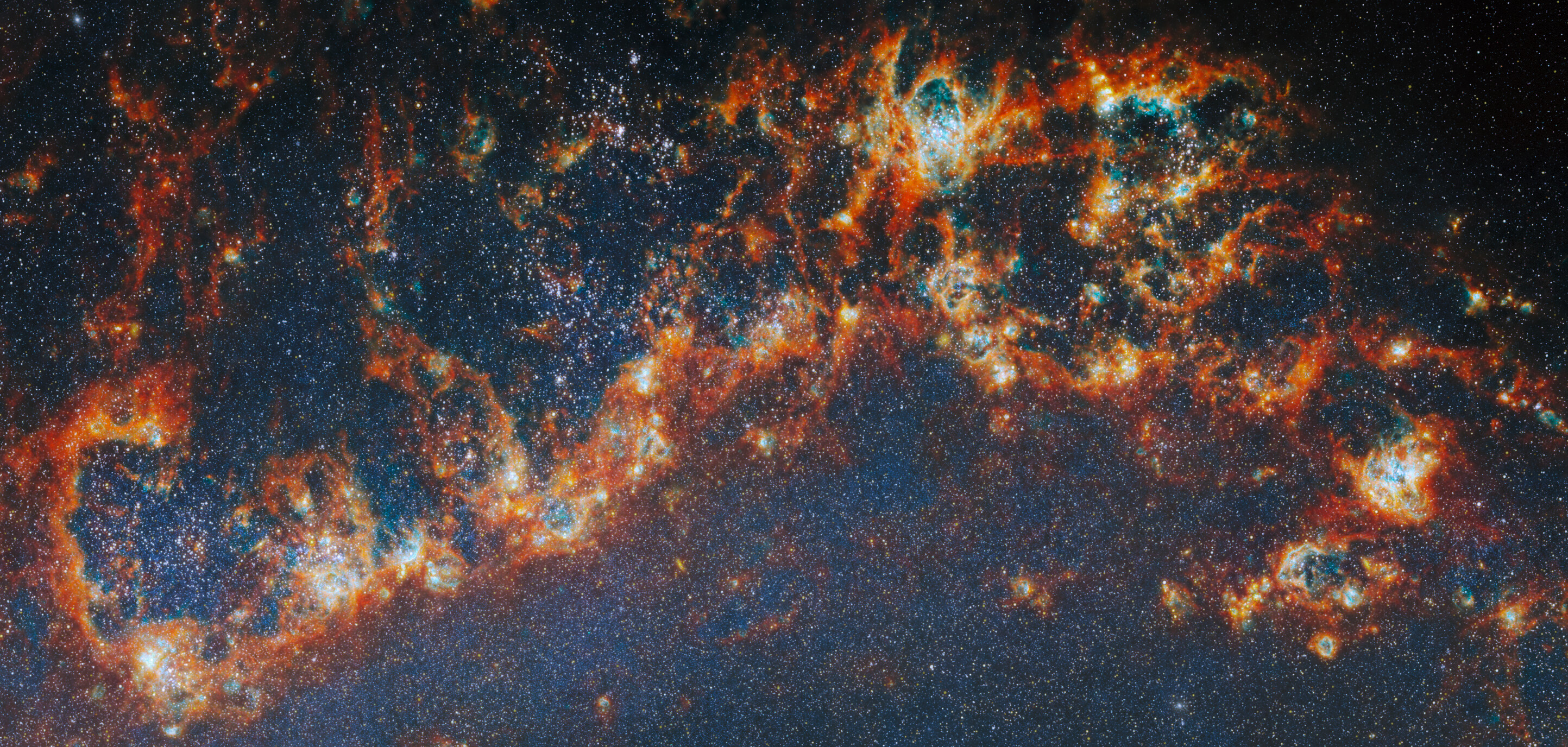
 ESA/Webb, NASA & CSA, A. Pedrini, A. Adamo (Stockholm University) and the FEAST JWST team This near-infrared image released on May 6, 2026, shows a section of one of the spiral arms of Messier 51 (M51). M51 is one of four nearby galaxies observed by NASA’s James Webb Space Telescope in a study of nearly 9,000 star clusters.
Data from the study shows that more massive star clusters emerge more quickly from the clouds they are born in. Learning about star formation helps us understand galactic evolution, the dynamics within a galaxy, as well as how and where planets form.
Image credit: ESA/Webb, NASA & CSA, A. Pedrini, A. Adamo (Stockholm University) and the FEAST JWST team