
4 min read
Preparations for Next Moonwalk Simulations Underway (and Underwater) 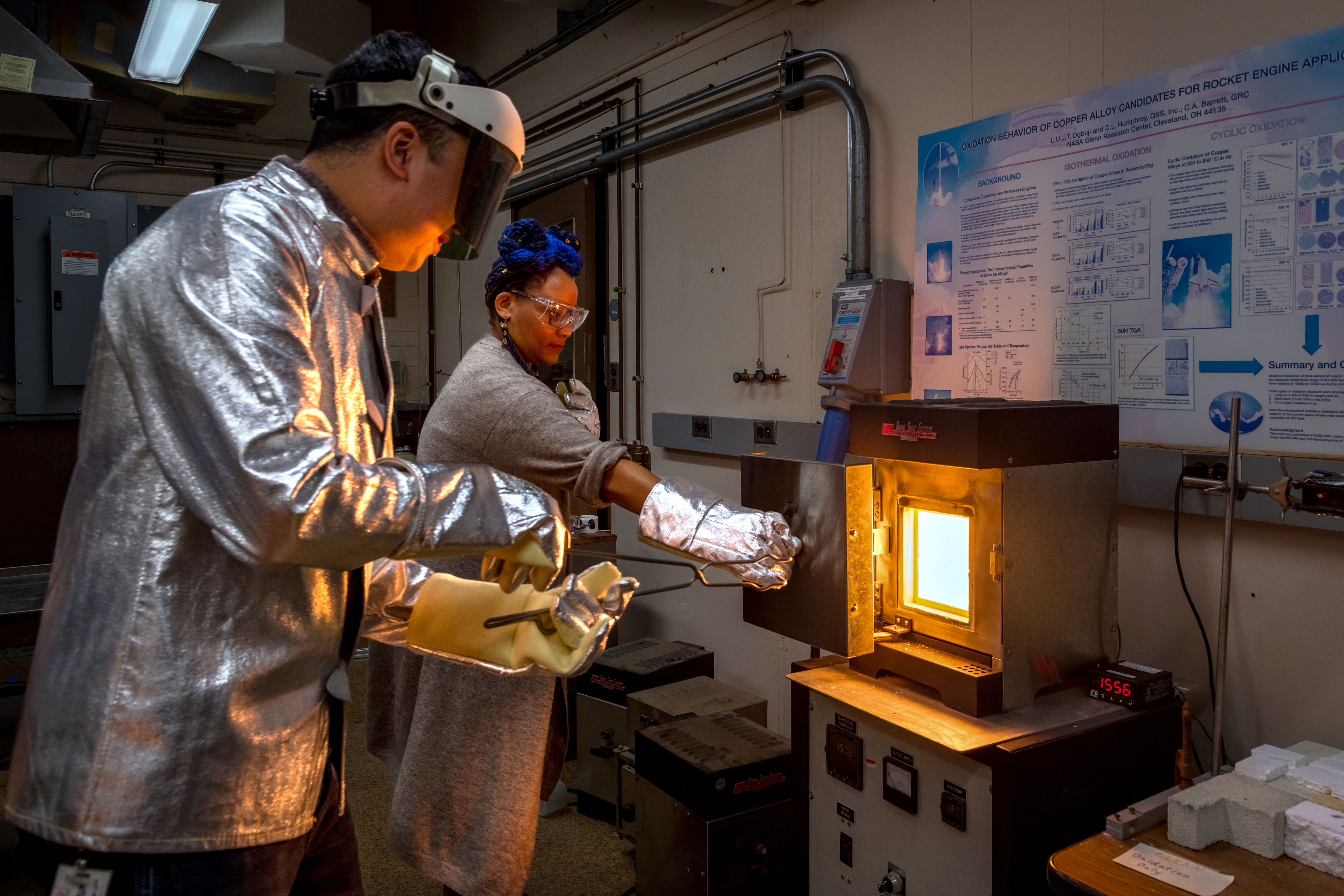 Researchers Dr. Kevin Yu, left, and Dr. Jamesa Stokes prepare to remove a sample of a new material they discovered from a furnace inside a laboratory at NASA’s Glenn Research Center in Cleveland in October 2024. Quenching, or bringing the temperature of the sample down as quickly as possible, helps to ensure no more reactions occur as the sample cools so scientists can focus on studying how it behaves at high temperatures.NASA/Jef Janis A material recently discovered and tested at NASA’s Glenn Research Center in Cleveland could help astronauts pack lighter for future missions to the Moon. NASA is researching ways explorers could “live off the land” by harnessing lunar resources, including melting Moon rocks to extract metals for building infrastructure and oxygen for fuel and life support.
As part of a graduate fellowship through the agency’s Space Technology Graduate Research Opportunities, Dr. Kevin Yu, who now works as a technologist at NASA’s Jet Propulsion Laboratory in Southern California, teamed up with Dr. Jamesa Stokes, a materials research engineer at NASA Glenn, to study how a variety of substances interacted with liquefied Moon dust.
You could call it lava, because it’s basically rocks that are crushed up and then melted. It’s very corrosive, and it will very quickly eat through a lot of commonly used refractory, or heat-resistant, materials.  Dr. kevin yu
Technologist at NASA’s Jet Propulsion Laboratory
About six months into their research, Stokes and Yu realized they’d stumbled across something promising and entirely new. After combining simulated lunar dust with a compound called scandium oxide and heat treating the mixture using a red-hot furnace, they discovered that an unknown material had formed. The researchers checked and double-checked their work, but the material didn’t match any of the more than 1 million substances in their X-ray analysis database.
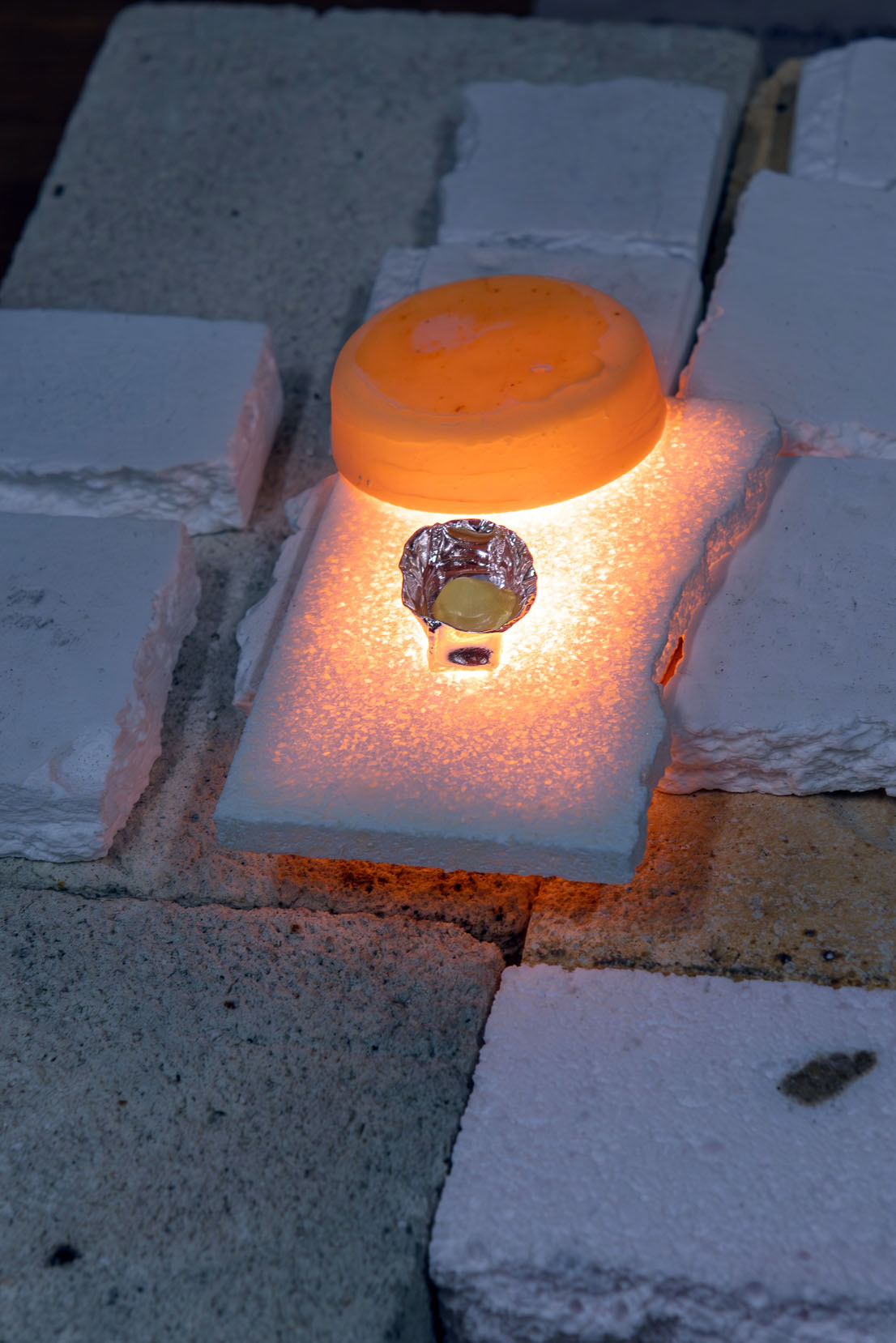 A sample of the new material researchers discovered at NASA’s Glenn Research Center in Cleveland sits inside a platinum crucible, or heat-resistant container, after being removed from a high-temperature furnace. Behind the silver-colored container is a dome that protects the sample during handling.NASA/Jef Janis Nothing about the material had ever been studied before, so the team started from scratch, measuring the substance’s chemical composition. To make small, isolated samples and continue testing how it reacted with molten Moon dust, they used special grinding and mixing equipment in their laboratory to crush up around eight basic oxide components in ethyl alcohol before baking the mixture at more than 2,900 degrees Fahrenheit inside the furnace.
“It’s actually a very cool-looking powder; it goes in pink, almost like strawberry milk,” Yu said. “It has a built-in color indicator, so by the time you’re done with it, it turns to a light beige or tan color, and that’s how you know the reaction has proceeded the way you wanted it to.”
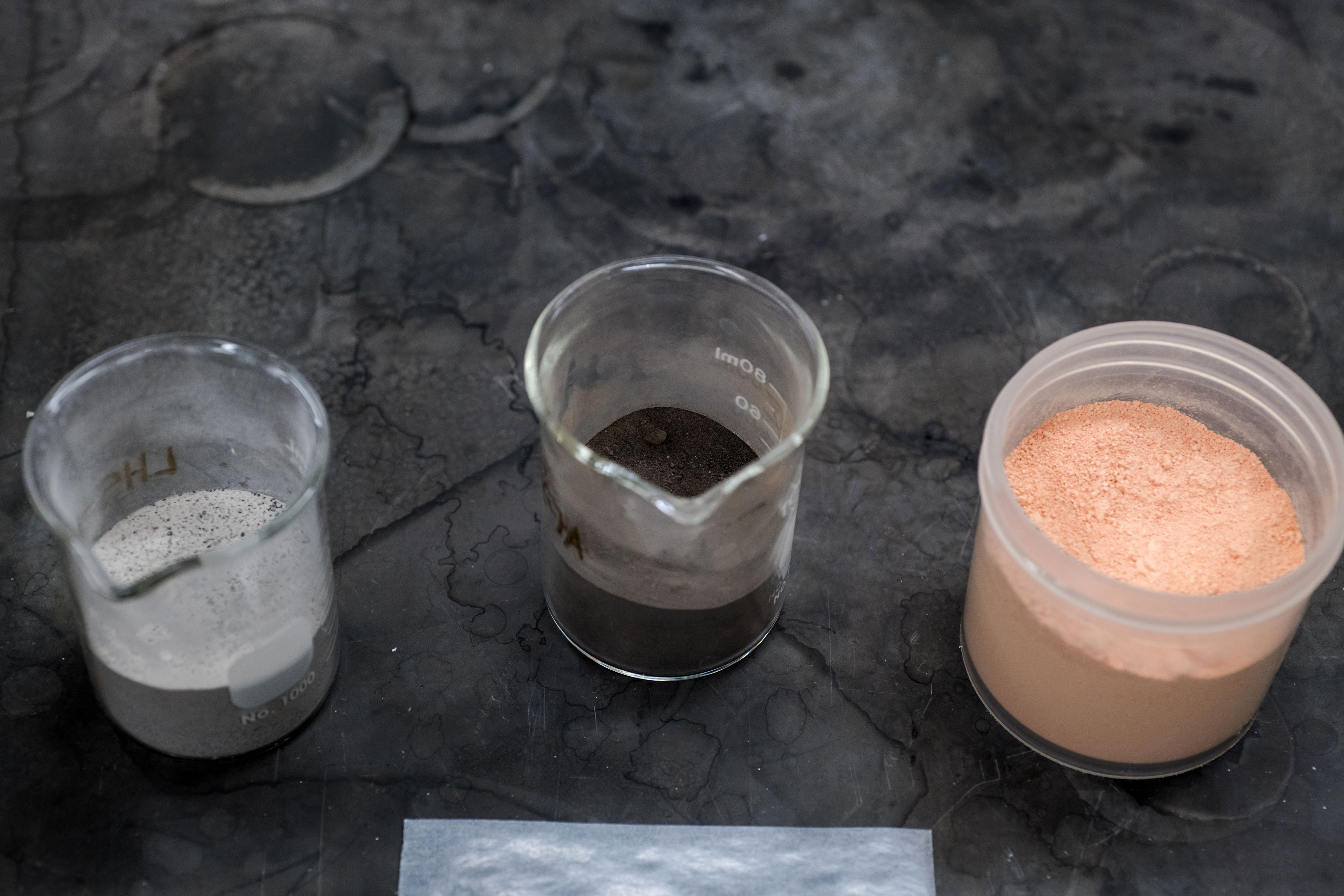 The pink powder shown at the far right is used to make the new material researchers discovered at NASA’s Glenn Research Center in Cleveland. The other powders to the left are two types of simulated Moon dirt used to represent dust from both the brighter regions of its surface (referred to as lunar highlands) and the darker regions (referred to as lunar maria).NASA/Jef Janis After analyzing their results, the team found that the new substance isn’t corroded too quickly by the molten Moon dirt and can withstand the high temperatures needed to melt it — up to six times hotter than the oven in your kitchen. While it’s made with scandium oxide, which can be expensive, it costs much less than precious metals like platinum that would normally be used in these types of high-temperature processes.
The researchers’ insights could help influence NASA’s designs for a future technology that would extract resources from Moon rocks, and the new material could be used to make the pipes or basins holding molten dust inside this potential technology.
The new material’s characteristics also could prove ideal for making coatings that protect parts inside of jet engines, which can reach similarly scorching temperatures. The researchers found it is lighter, less dense, and better at insulating heat than current state-of-the-art coating materials.
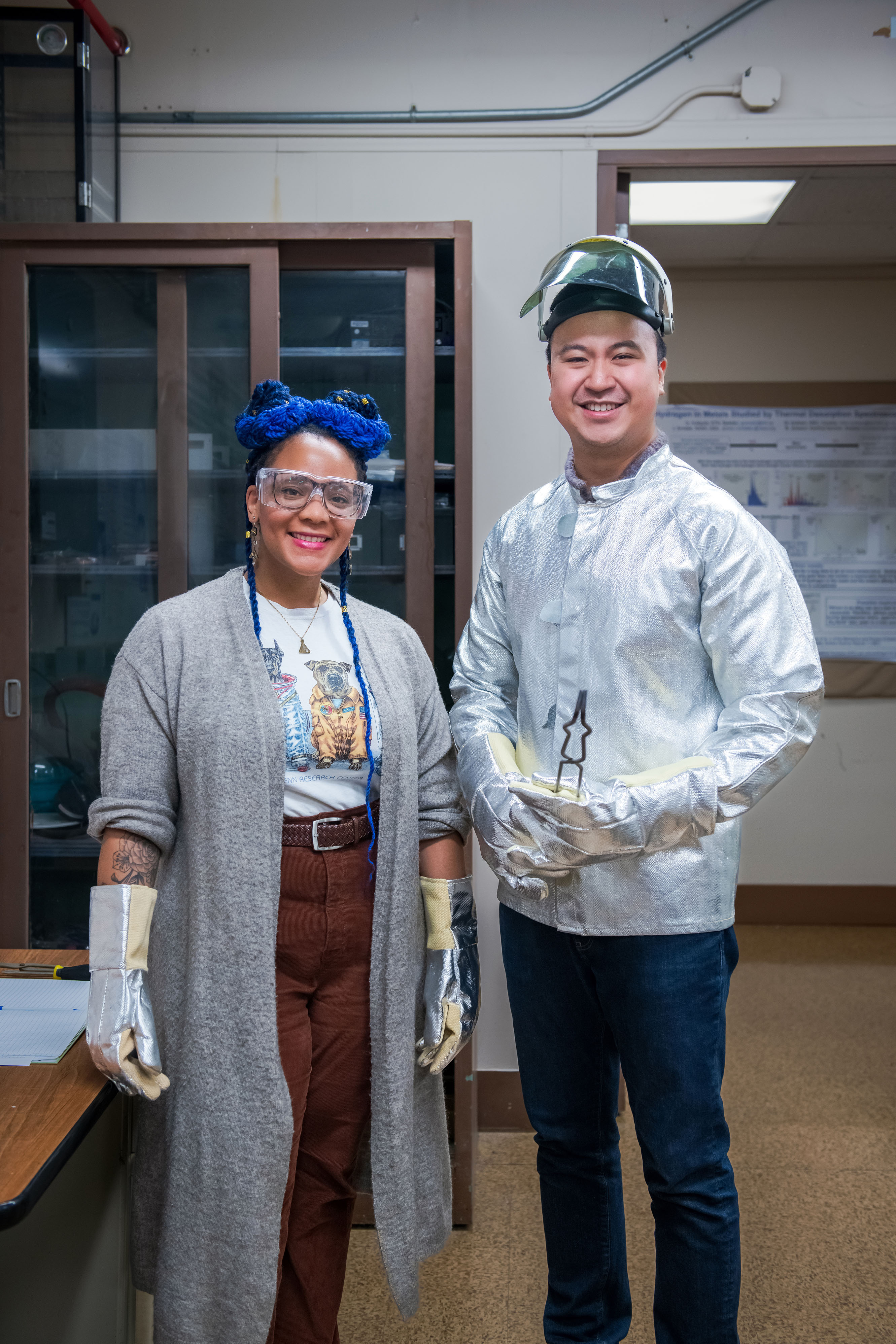 Researchers Dr. Jamesa Stokes, left, and Dr. Kevin Yu pose for a portrait inside of a laboratory at NASA’s Glenn Research Center in Cleveland in October 2024.NASA/Jef Janis While Yu and Stokes have now completed their initial tests, they hope to fine-tune the material in the future to purify it and make it even more affordable to produce. Materials research will be integral to exploring the harsh environments of the Moon and beyond.
You can have the best idea in the world for a structure or a vehicle, but if you don’t have the materials that have the right properties to make your vision come true, it’s not going to succeed no matter how well you design it.  Dr. Jamesa stokes
Materials Research Engineer at NASA Glenn
Studying new materials also advances NASA’s work on Earth.
“I think trying to push what’s possible with materials also allows for a lot of breakthroughs on the terrestrial side. Having a better understanding of materials for all sorts of applications is what gets me excited to go to work in the morning,” Yu said. “That’s why I love NASA’s mission; it’s for the benefit of all.”
This materials research is supported by NASA’s Space Technology Mission Directorate and NASA’s Aeronautics Research Mission Directorate.
For more information, visit:
 4 min read Keeping NASA Flying: Ground Crews Ensure Aircraft Readiness Article 2 hours ago
  2 min read Hubble Captures Galaxy Cluster Look closely at this image from NASA’s Hubble Space Telescope and you’ll see galaxies of…
Article 6 hours ago
 2 min read NASA Seeks Interest for Artemis Mission CubeSats Article 21 hours ago
 Keep Exploring Discover Related Topics Missions



