4 min read
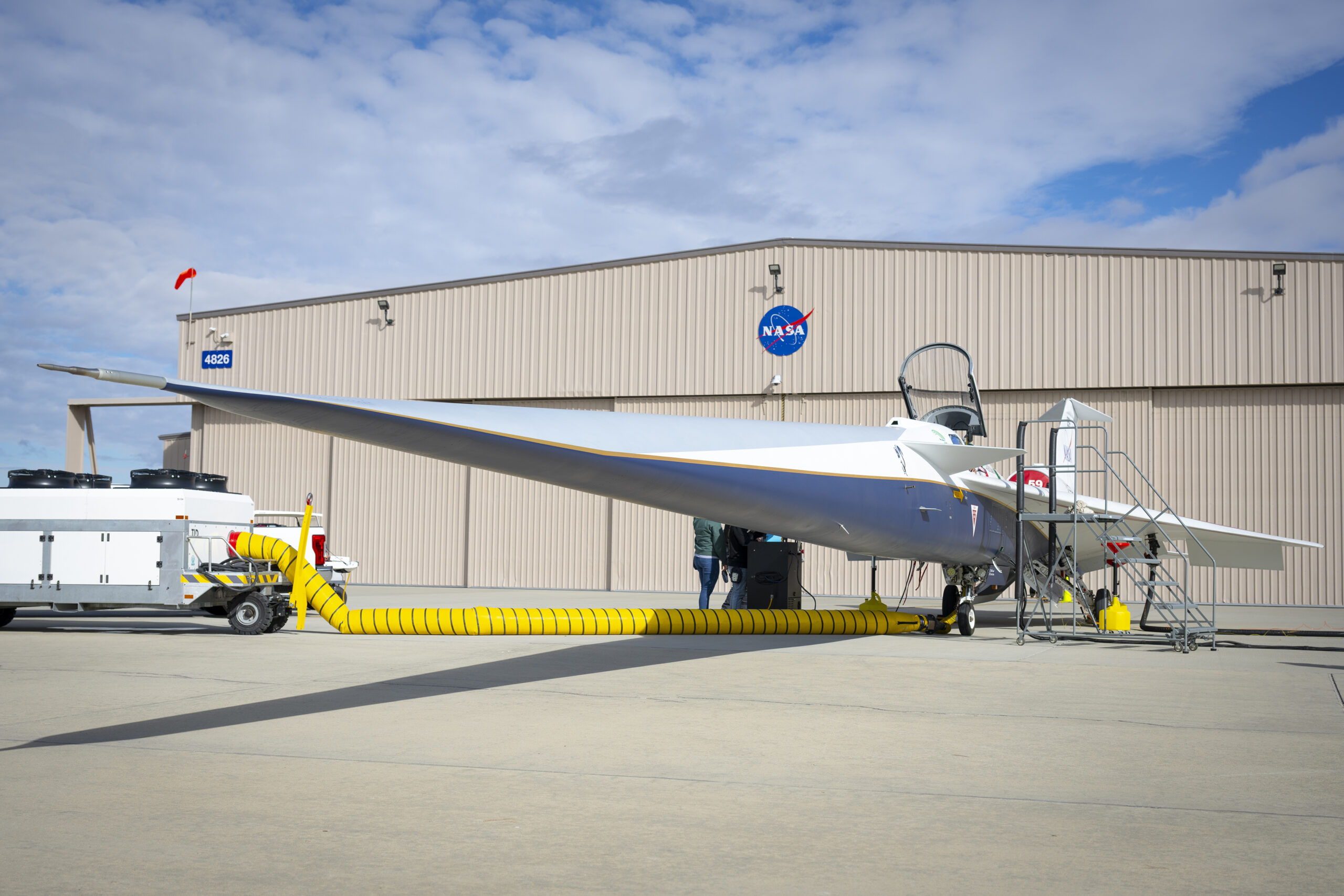
Preparations for Next Moonwalk Simulations Underway (and Underwater) 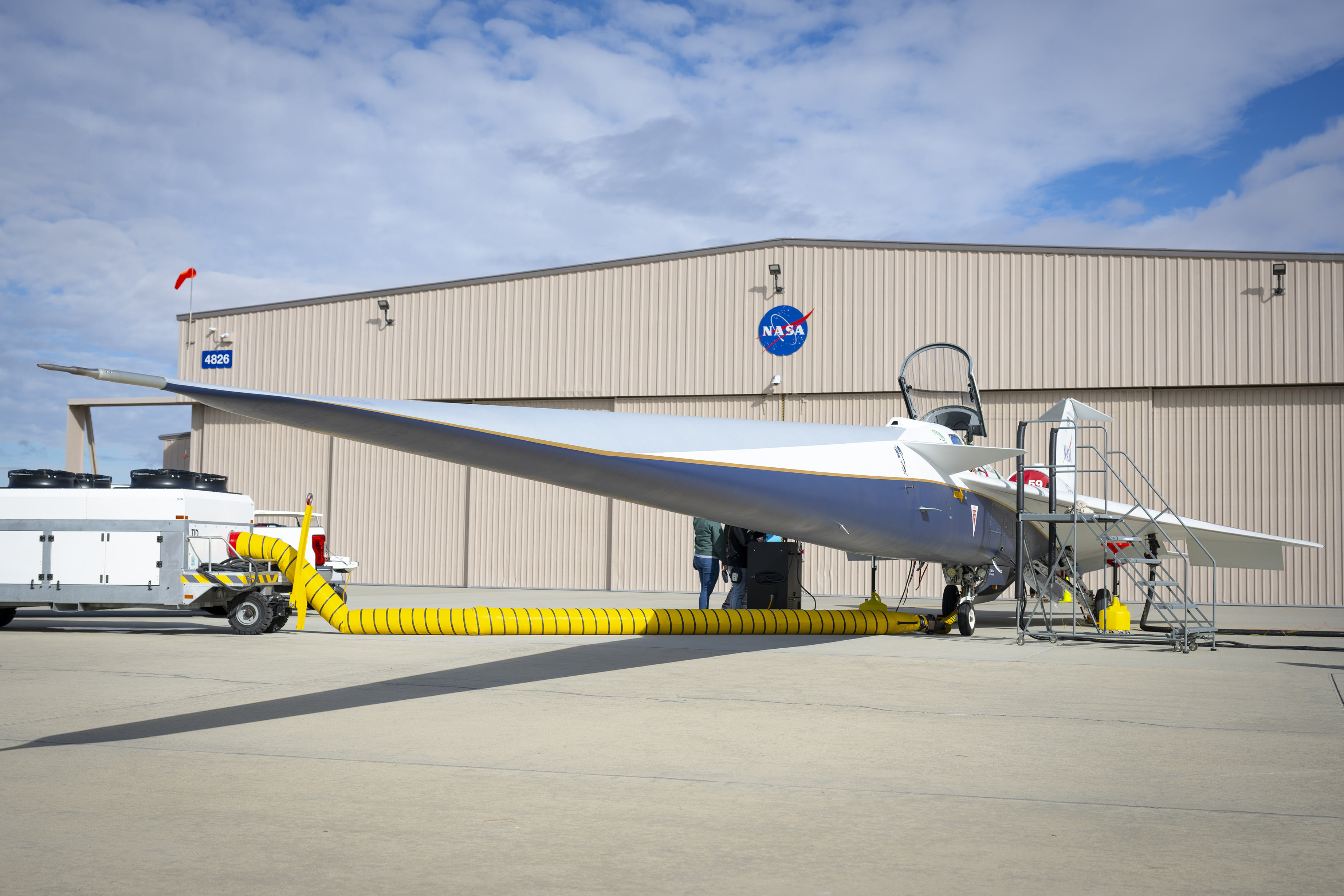 NASA’s X-59 quiet supersonic airplane sits parked in front of its new hangar home at the agency’s Armstrong Flight Research Center in California. The facility originally was constructed in 1968 and for nearly 60 years has hosted a number of research aircraft and programs.NASA/Christopher LC Clark There’s no sign reading “home sweet home” in the hangar where the X‑59 now sits, but the sentiment is unmistakable among those tending to the quiet supersonic aircraft.
Located at NASA’s Armstrong Flight Research Center in Edwards, California, the X-59 hangar was built in 1968 but looks like new thanks to a full renovation and modernization. While the X-59 was being assembled in Palmdale, California, workers at NASA Armstrong gutted the hangar, adding new electrical wiring, a fire suppression system, office space, air conditioning, and other safety features.
“The whole team is incredibly proud of what we’ve accomplished in preparing this new home for the X-59,” said Bryan Watters, the NASA project manager at Armstrong who led the renovation effort. “The fact we could take a 1960s hangar and modernize it for use by a 2020’s X-plane is very special.”
The X-59 is the centerpiece of NASA’s Quesst mission to enable a new era of commercial supersonic air travel over land by reducing the sound of typically loud sonic booms to a much quieter sonic thump.
Home hunting When NASA test pilot Nils Larson successfully took the X-59 into the air for the first time on Oct. 28, 2025, he flew from the Lockheed Martin Skunk Works assembly site in Palmdale to nearby NASA Armstrong, from where test flights have continued to make progress.
From the beginning of the program, knowing the X-59 would eventually need a new residence at NASA Armstrong, Quesst managers were on the hunt for somewhere to house the quiet supersonic demonstrator.
Like anyone looking for the ideal place to call home, the team made sure there would be enough space for the airplane and all its support equipment. But with the experimental jet measuring at just under 100 feet long and 30 feet wide, there were few options.
“We had to find a hangar that was long enough so that part of the X-59 wouldn’t hang outside, exposed to the elements,” Watters said.
Building 4826, as the hangar is officially designated, turned out to be the choice spot. “It was basically stripped down and gutted so that essentially it was just structural steel with siding. From that state it was rebuilt,” Watters said.
The feature they are perhaps most proud of is the hangar’s new floor. Covering more than 32,000 square feet, it is coated with epoxy that prevents any spills from seeping into the concrete.
From the hangar’s office windows, the view of the hangar floor can include the F-15 research jets that will be used as chase planes to support X-59 flights in the coming months. The renovation faced challenges along the way, chief among them being supply chain issues stemming from the COVID-19 pandemic. But there were some incredible, unforgettable moments too.
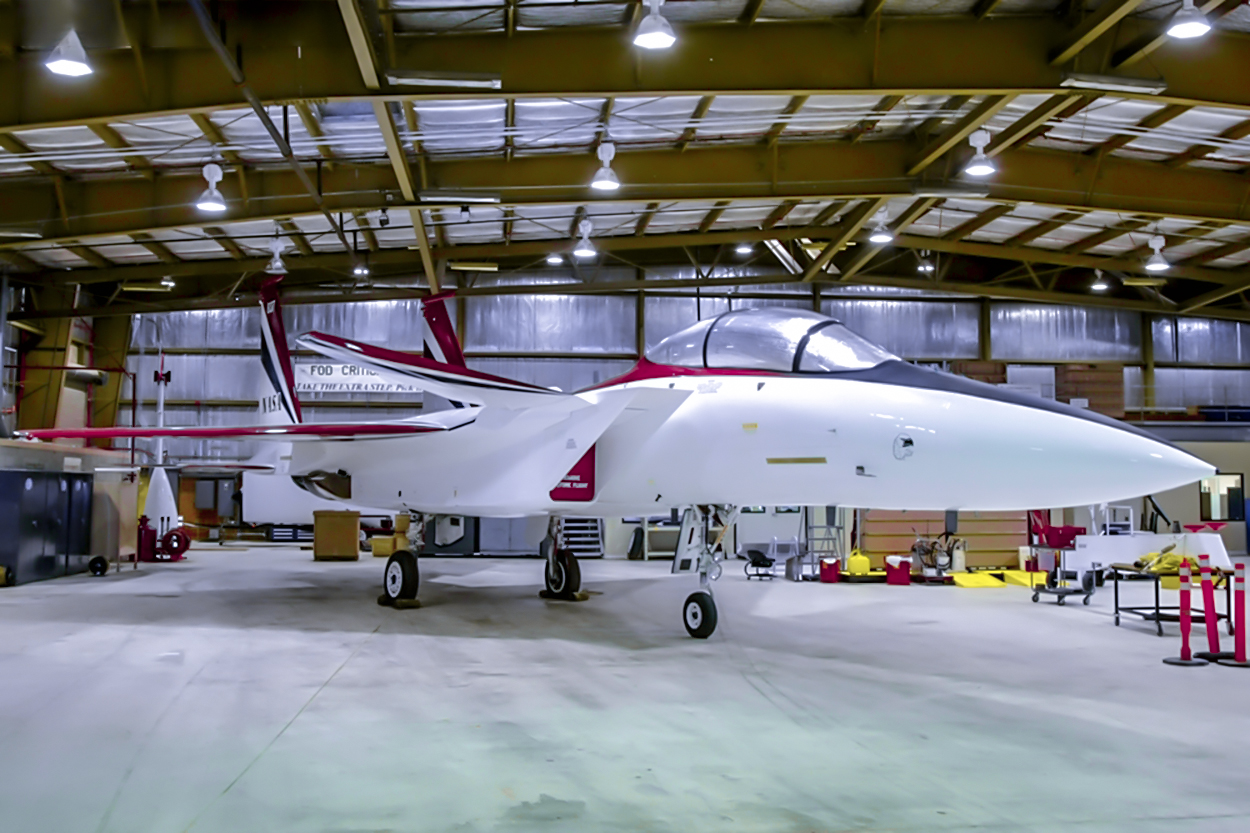
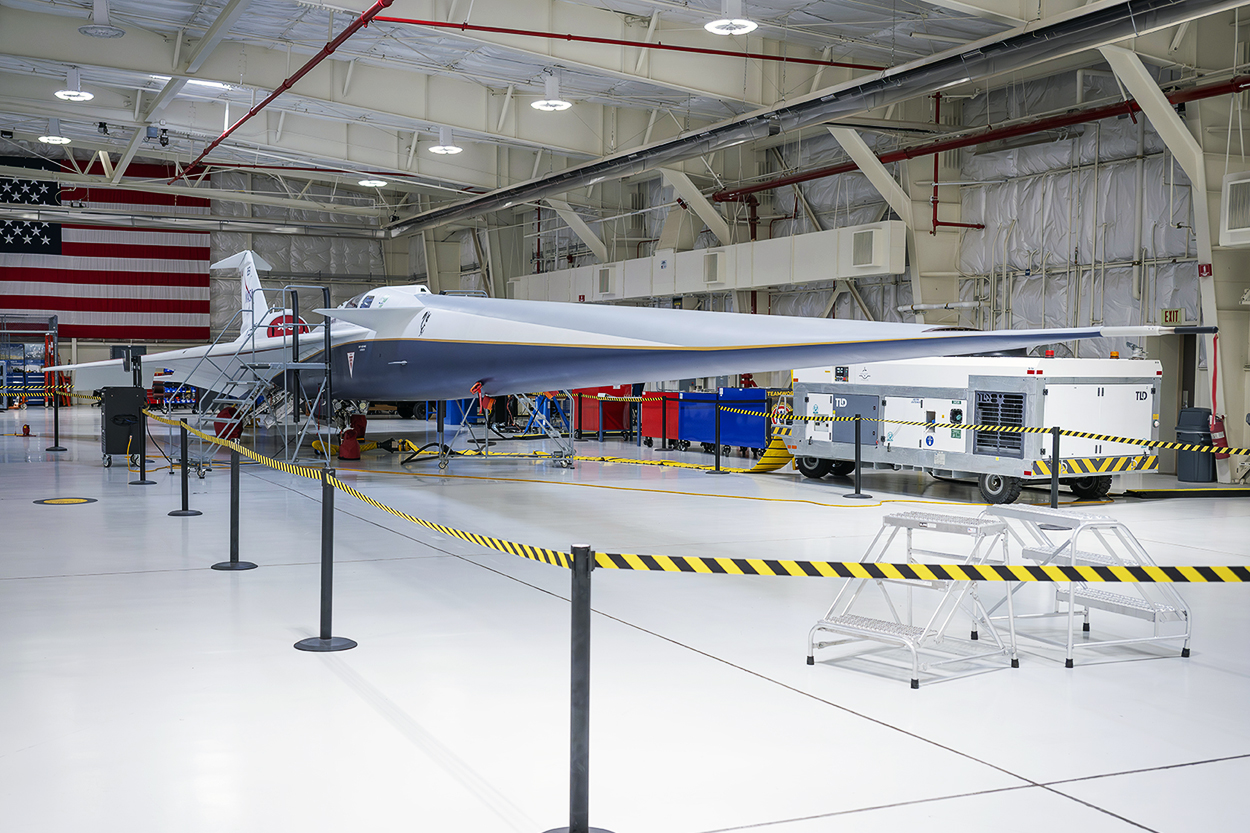 Circa 1990 Nov. 2025
  On loan to NASA from the Air Force, an F-15 Eagle fighter jet was the focus of the Short Takeoff and Landing/Maneuver Technology Demonstrator research program, which concluded in 1991. The aircraft is seen here inside Building 4826, a hangar at NASA’s Armstrong Flight Research Center that was renovated and began use in 2025 as home for the X-59 quiet supersonic technology demonstrator.NASA
 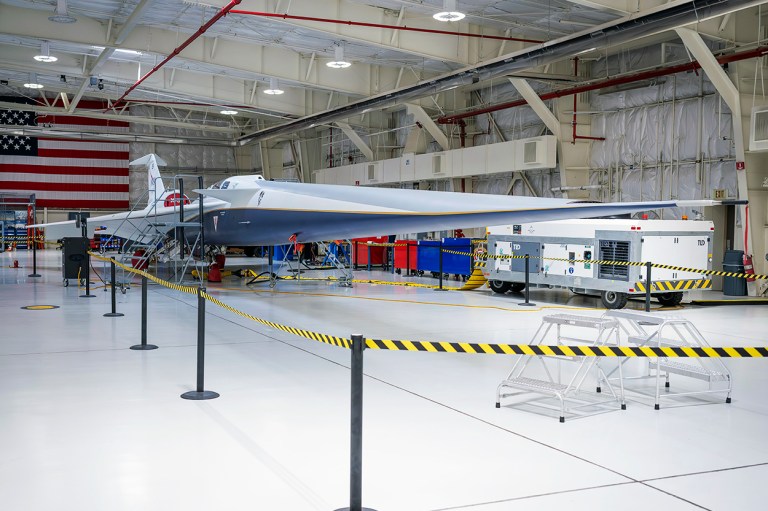 NASA’s X-59 quiet supersonic technology demonstrator aircraft is seen parked inside its new hangar home at the agency’s Armstrong Flight Research Center in California.NASA/Christopher LC Clark Circa 1990Nov. 2025 On loan to NASA from the Air Force, an F-15 Eagle fighter jet was the focus of the Short Takeoff and Landing/Maneuver Technology Demonstrator research program, which concluded in 1991. The aircraft is seen here inside Building 4826, a hangar at NASA’s Armstrong Flight Research Center that was renovated and began use in 2025 as home for the X-59 quiet supersonic technology demonstrator.NASA NASA’s X-59 quiet supersonic technology demonstrator aircraft is seen parked inside its new hangar home at the agency’s Armstrong Flight Research Center in California.NASA/Christopher LC Clark Circa 1990 Nov. 2025 past and present
Hangar Updated to Continue Hosting Historic Research CurtainToggle2-Up Image Details This NASA hangar at Armstrong Flight Research Center originally was constructed in 1968 and since then has hosted a number of history-making programs. Compare the two images above to see how the hangar looked during the late 1980s when it hosted an F-15 research aircraft (left), and beginning in 2025 after it had been renovated and modernized to host the X-59 quite supersonic technology demonstrator aircraft. Moved in With X-59 now flying regularly and comfortably settled into its new digs, the Quesst team is gauging its performance on the way to quiet supersonic flight.
“This is truly a great time for Quesst and the X-59,” said Cathy Bahm, NASA’s project manager for the Low Boom Flight Demonstrator. “It’s also still a little surreal to be able to just walk down from your office and see the airplane in our hangar.”
For more than a year, the hangar refurbishment team worked through every detail of the X-59’s new home to make sure it would be safe and sound. But actually seeing the aircraft occupy that space is an adjustment for them, too.
“We’ve looked at X-59 models on our desk for years and then, you know, there’s the real thing right in front of us, in a hangar that we renovated,” Watters said.
A real thing in the hangar – and streaking across the California desert sky. The X-59’s transition from an idea into a working aircraft is a testament to the teams that help build out every aspect of its infrastructure.
NASA’s X-59 is supported under the agency’s Aeronautics Research Mission Directorate.
About the Author Jim BankeManaging Editor/Senior WriterJim Banke is a veteran aviation and aerospace communicator with more than 40 years of experience as a writer, producer, consultant, and project manager based at Cape Canaveral, Florida. He is part of NASA Aeronautics’ Strategic Communications Team and is Managing Editor for the Aeronautics topic on nasa.gov. In 2007 he was recognized with a Distinguished Public Service Medal, NASA’s highest honor for a non-government employee.
Facebook logo @NASA@NASAArmstrong@NASAaero@NASA_es @NASA@NASAArmstrong@NASAaero@NASA_es Instagram logo @NASA@NASAArmstrong@NASAaero@NASA_es Linkedin logo @NASA
 8 min read NASA Celebrates Decade of University Innovation in Aeronautics Article 4 days ago
  4 min read NASA Releases Powerful LAVA Software to US Aerospace Industry Article 5 days ago
  4 min read NASA, Organ Sharing Network UNOS to Study Faster Organ Transport Article 1 week ago
 Keep Exploring Discover More Topics From NASA Missions