Promoting science and technology education through spaceflight and weather balloons.

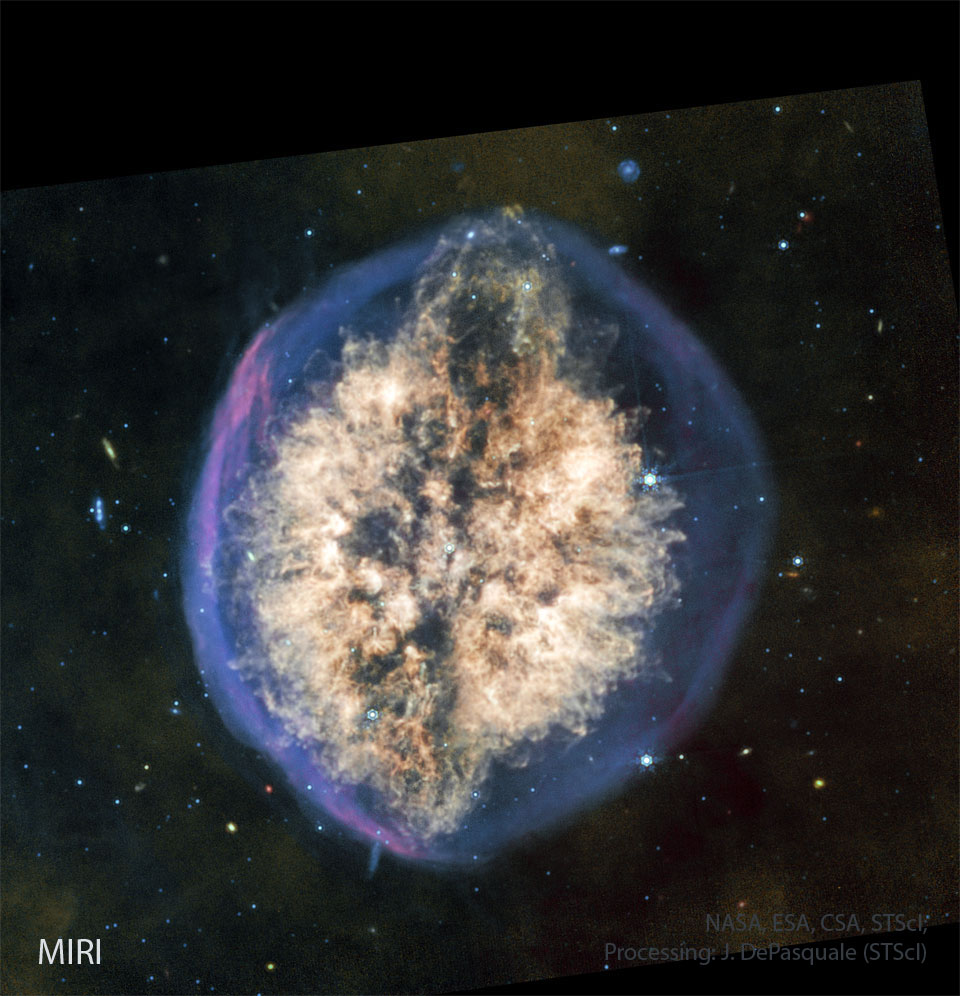
Apep: Unusual Dust Shells from Webb

By |2025-11-24T15:44:25-05:00November 24th, 2025|Categories: NASA News, Uncategorized|Tags: , , , , , |

Photo of the Day What created this unusual space sculpture? Stars. This unusual system of swirls and shells, known as Apep, was observed in unprecedented detail by NASA’s James Webb Space Telescope in infrared light in 2024. Observations indicate that the unusual shape originates from two massive Wolf-Rayet stars orbiting each other every 190 years [...]

Dione and Rhea Ring Transit

By |2025-11-22T15:44:29-05:00November 22nd, 2025|Categories: NASA News, Uncategorized|Tags: , , , , , |

Photo of the Day Seen to the left of Saturn's banded planetary disk, small icy moons Dione and Rhea are caught passing in front of the gas giant's extensive ring system in this sharp telescopic snapshot. The remarkable image was recorded on November 20, when Saturn's rings were nearly edge-on when viewed from planet [...]

3I/ATLAS: A View from Planet Earth

By |2025-11-21T15:44:25-05:00November 21st, 2025|Categories: NASA News, Uncategorized|Tags: , , , , , |

Photo of the Day Now outbound after its perihelion or closest approach to the Sun on October 29, Comet 3I/ATLAS is only the third known interstellar object to pass through our fair Solar System. Its greenish coma and faint tails are seen against a background of stars in the constellation Virgo in this view [...]

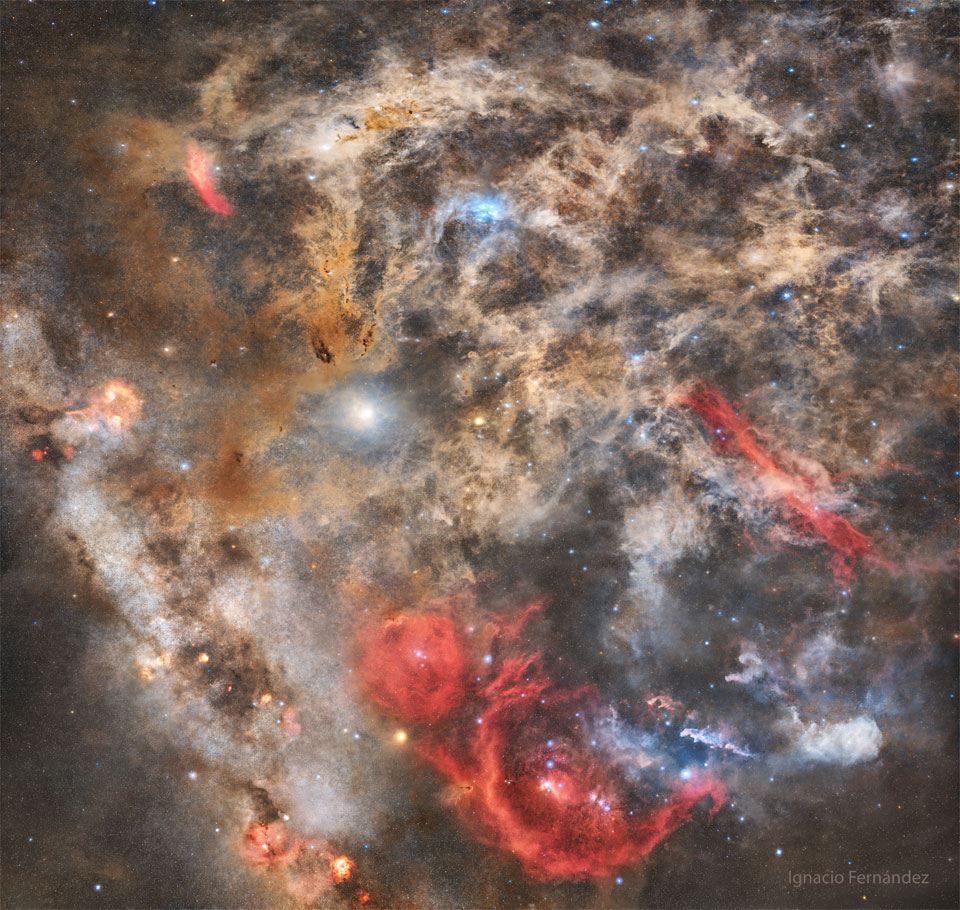
Orion and the Running Man

By |2025-11-13T15:44:24-05:00November 13th, 2025|Categories: NASA News, Uncategorized|Tags: , , , , , |

Photo of the Day Few cosmic vistas can excite the imagination like The Great Nebula in Orion. Visible as a faint, bland celestial smudge to the naked-eye, the nearest large star-forming region sprawls across this sharp colorful telescopic image. Designated M42 in the Messier Catalog, the Orion Nebula's glowing gas and dust surrounds hot, [...]

Astronomy Picture of the Day

By |2025-10-01T13:44:24-04:00October 1st, 2025|Categories: NASA News, Uncategorized|Tags: , , , , |

Photo of the Day Ten thousand years ago, before the dawn of recorded human history, a new light would suddenly have appeared in the night sky and faded after a few weeks. Today we know this light was from a supernova, or exploding star, and record the expanding debris cloud as the Veil Nebula, [...]

Two Camera Comets in One Sky

By |2025-09-29T13:44:24-04:00September 29th, 2025|Categories: NASA News, Uncategorized|Tags: , , , , , |

Photo of the Day It may look like these comets are racing, but they are not. Comets C/2025 K1 ATLAS (left) and C/2025 R2 SWAN (right) appeared near each other by chance last week in the featured image taken from France's Reunion Island in the southern Indian Ocean. Fainter Comet ATLAS is approaching our [...]

A Rocket in the Sun

By |2025-09-27T13:44:28-04:00September 27th, 2025|Categories: NASA News, Uncategorized|Tags: , , , , |

Photo of the Day On the morning of September 24 a rocket crosses the bright solar disk in this long range telescopic snapshot captured from Orlando, Florida. That's about 50 miles north of its Kennedy Space Center launch site. This rocket carried three new space weather missions to space. Signals have now been successfully [...]

A SWAN, an ATLAS, and Mars

By |2025-09-26T13:44:29-04:00September 26th, 2025|Categories: NASA News, Uncategorized|Tags: , , , , |

Photo of the Day A new visitor to the inner Solar System, comet C/2025 R2 (SWAN) sports a long ion tail extending diagonally across this almost 7 degree wide telescopic field of view recorded on September 21. A fainter fellow comet also making its inner Solar System debut, C/2025 K1 (ATLAS), can be spotted [...]

GW250114: Rotating Black Holes Collide

By |2025-09-24T13:44:25-04:00September 24th, 2025|Categories: NASA News, Uncategorized|Tags: , , , , , |

Photo of the Day It was the strongest gravitational wave signal yet measured -- what did it show? GW250114 was detected by both arms of the Laser Interferometer Gravitational-wave Observatory (LIGO) in Washington and Louisiana USA earlier this year. Analysis showed that the event was created when two black holes, each of mass around [...]

NGC 6357: Cathedral to Massive Stars

By |2025-09-23T13:44:26-04:00September 23rd, 2025|Categories: NASA News, Uncategorized|Tags: , , , , , |

Photo of the Day How massive can a normal star be? Estimates made from distance, brightness and standard solar models had given one star in the open cluster Pismis 24 over 200 times the mass of our Sun, making it one of the most massive stars known. This star is the brightest object located [...]

Go to Top