Promoting science and technology education through spaceflight and weather balloons.

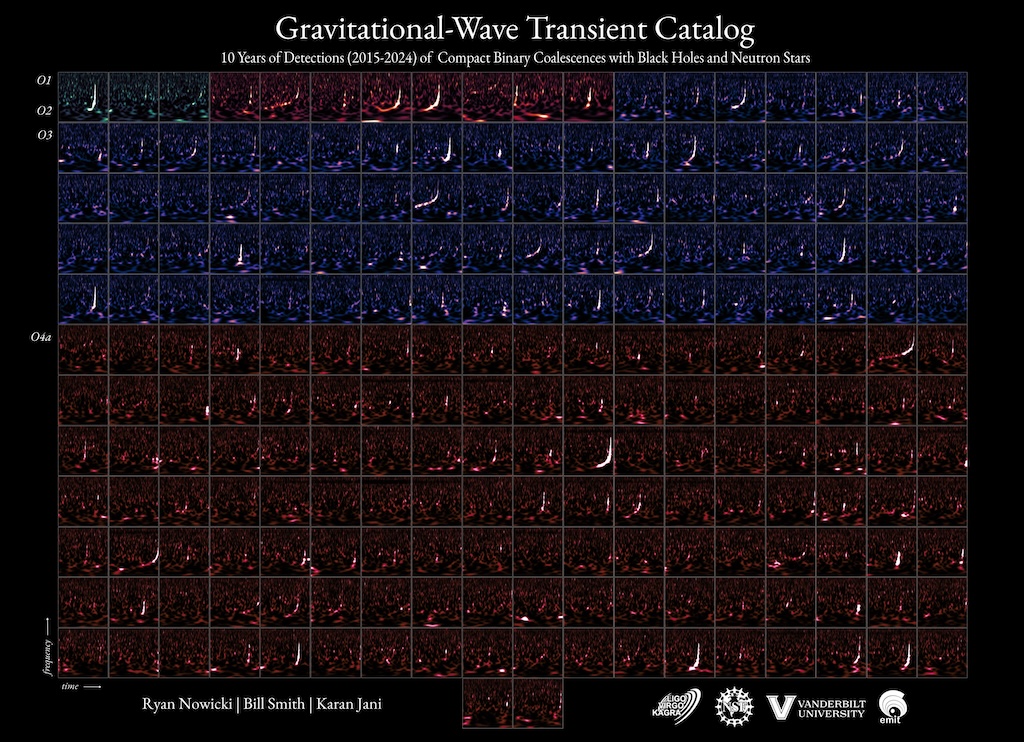
Black Holes and Neutron Stars: 218 Mergers and Counting

By |2026-03-26T16:44:27-04:00March 26th, 2026|Categories: NASA News, Uncategorized|Tags: , , , , , |

Photo of the Day What is the sound of two black holes merging in deep space? Sound waves don't propagate in vacuum, but gravitational waves do. In 2015 we were able to "hear" them for the first time and confirm one of Albert Einstein's theoretical predictions. Each square on the grid of the featured [...]

The Guardians of Rapa Nui beneath the Milky Way

By |2026-03-25T16:44:27-04:00March 25th, 2026|Categories: NASA News, Uncategorized|Tags: , , , , , |

Photo of the Day In the words of today's astrophotographer, Rositsa Dimitrova, "What have these silent sentinels watched pass across the sky?" The volcanic mo'ai (meaning statue) of Ahu Tongariki stand guard over Rapa Nui (Isla de Pascua, Easter Island), a Polynesian island (annexed by Chile in 1888) located thousands of kilometers off the [...]

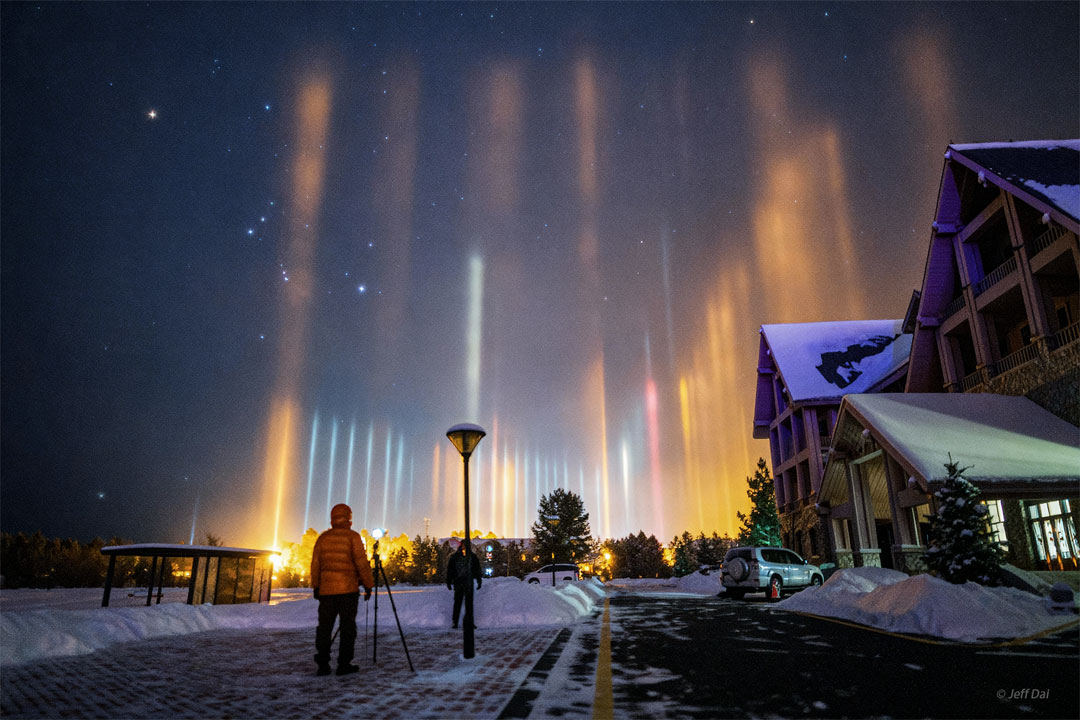
Light Pillars and Orion over Mohe

By |2026-03-23T16:44:24-04:00March 23rd, 2026|Categories: NASA News, Uncategorized|Tags: , , , , , |

Photo of the Day What's happening at the end of that street? Pictured here are not auroras but light pillars, a phenomenon typically much closer. In most places on Earth, a lucky viewer can see a Sun pillar, a column of light appearing to extend up from the Sun caused by flat fluttering ice-crystals [...]

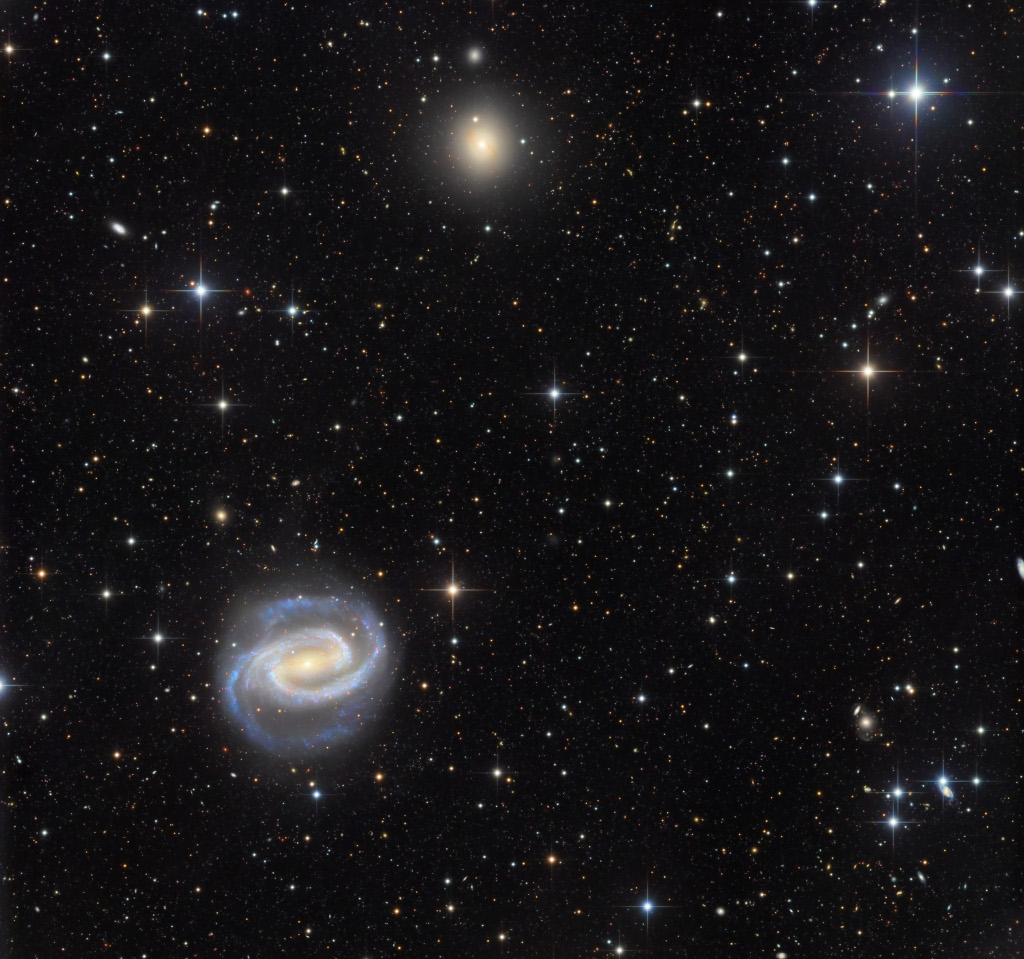
Galaxies in the River: NGC 1300 and NGC 1297

By |2026-03-21T16:44:27-04:00March 21st, 2026|Categories: NASA News, Uncategorized|Tags: , , , , , |

Photo of the Day Spiral NGC 1300 and elliptical NGC 1297 are galaxies that lie on the banks of the southern constellation Eridanus (The River). At 70 million light-years distant or more, both are members of the Eridanus Galaxy Cluster. About 100,000 light-years across, at lower left in this sharp, galaxy group photo NGC [...]

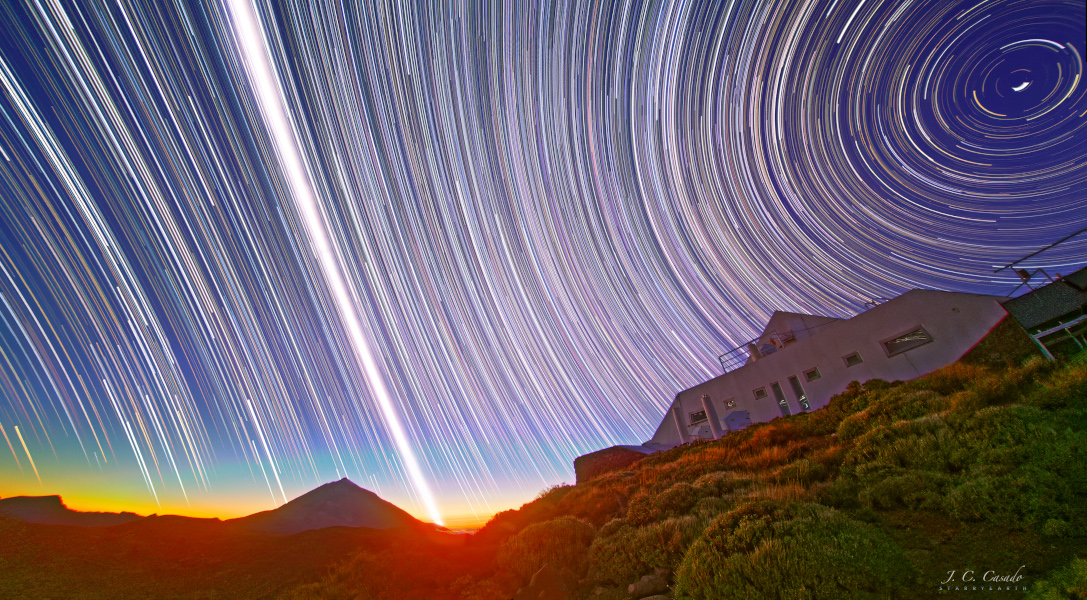
Spring Equinox at Teide Observatory

By |2026-03-20T16:44:24-04:00March 20th, 2026|Categories: NASA News, Uncategorized|Tags: , , , , , |

Photo of the Day The defining astronomical moment of the equinox today is at 14:46 UTC (March 20). That's when the Sun crosses the celestial equator moving north in its yearly journey through planet Earth's sky, marking the beginning of spring for our fair planet in the northern hemisphere and fall in the southern [...]

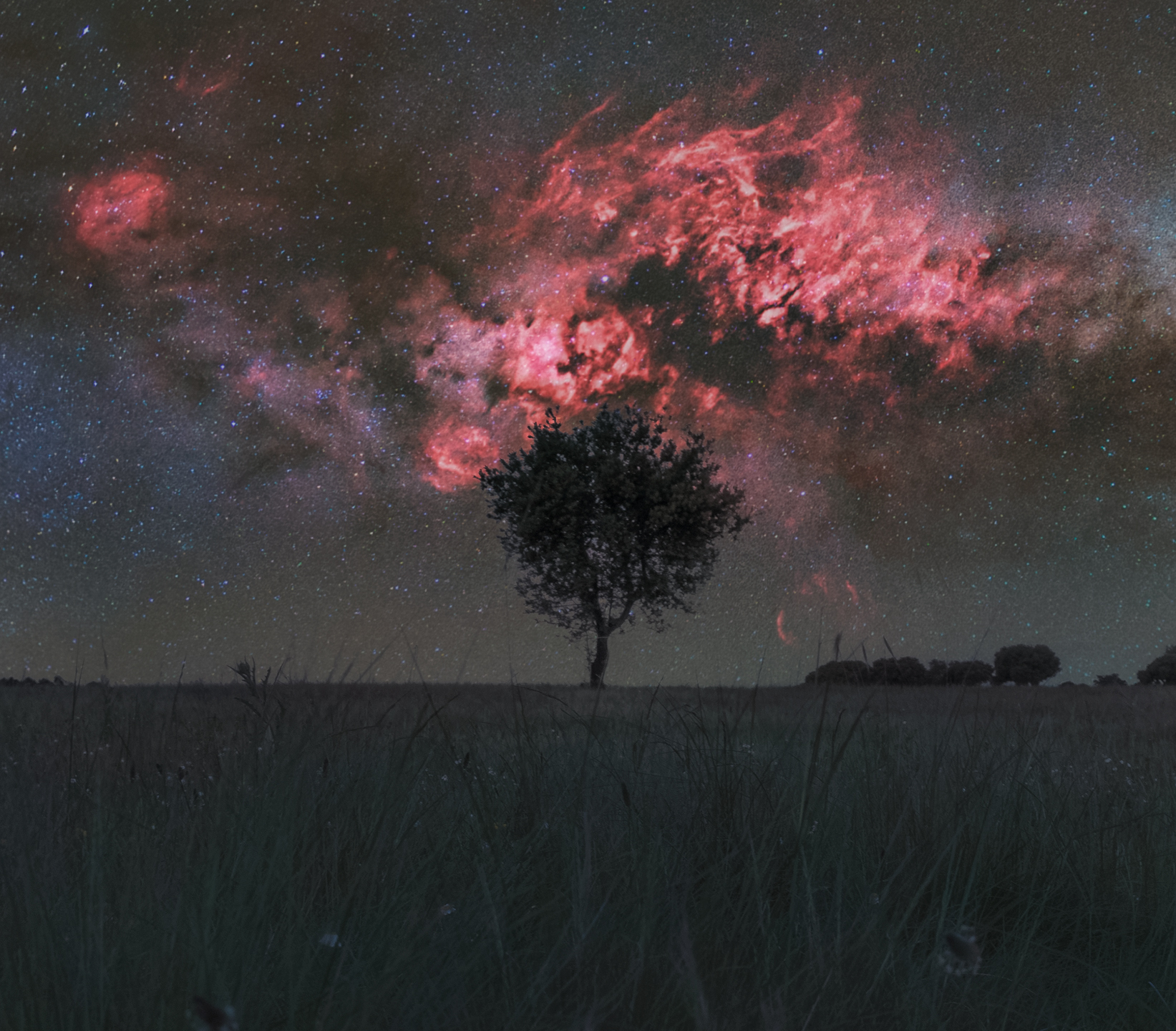
Cygnus and the Solitary Tree

By |2026-03-18T16:44:29-04:00March 18th, 2026|Categories: NASA News, Uncategorized|Tags: , , , , , |

Photo of the Day A lone tree stands in a quiet meadow in Guadalajara, Spain, silhouetted against the Cygnus region rising above like flames in the night sky. This deep night skyscape is a composite of exposures that reveals a range of brightness and color human eyes can't quite see on their own. Spanning [...]

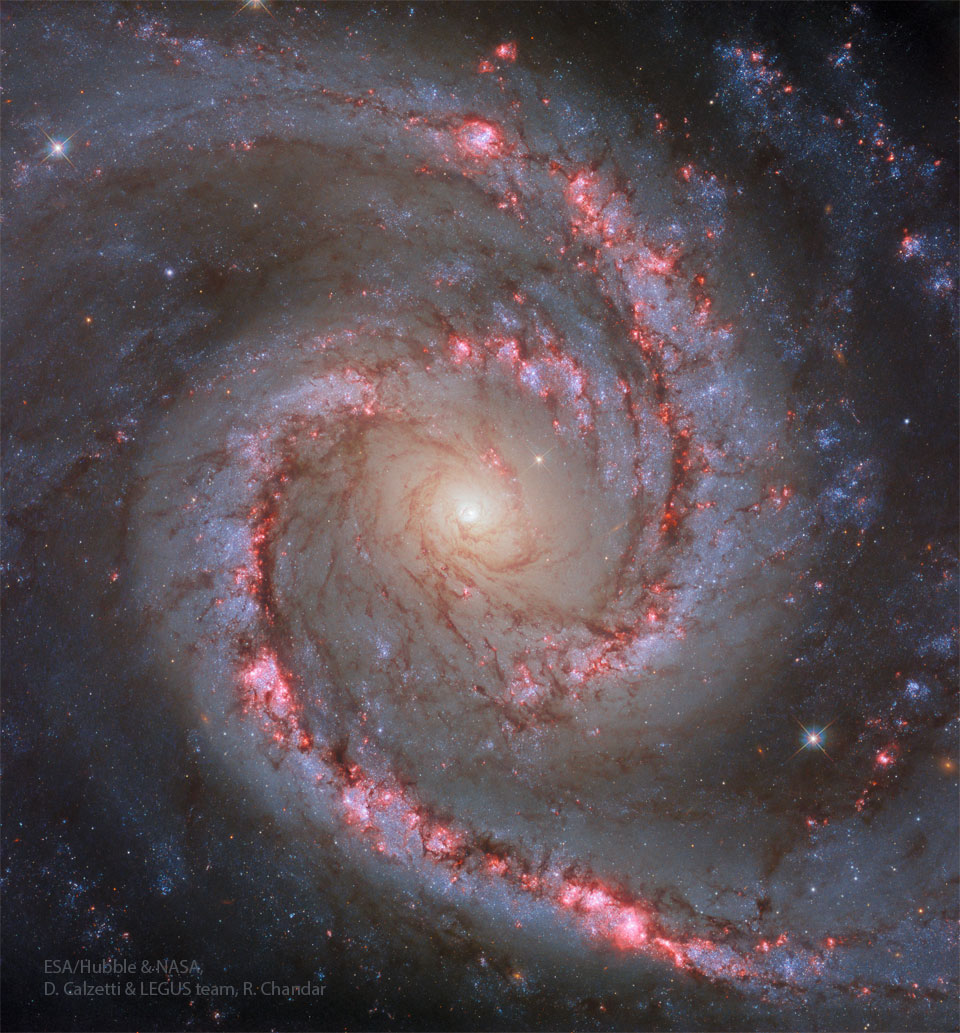
NGC 1566: The Spanish Dancer Galaxy

By |2026-03-16T16:44:24-04:00March 16th, 2026|Categories: NASA News, Uncategorized|Tags: , , , , , |

Photo of the Day If not perfect, then this spiral galaxy is at least one of the most photogenic. An island universe containing billions of stars and situated about 40 million light-years away toward the constellation of the Dolphinfish (Dorado), NGC 1566 presents a gorgeous face-on view. Classified as a grand design spiral, NGC [...]

Equinox at the Pyramid of the Feathered Serpent

By |2026-03-15T16:44:24-04:00March 15th, 2026|Categories: NASA News, Uncategorized|Tags: , , , , , |

Photo of the Day To see the feathered serpent descend the Mayan pyramid requires exquisite timing. You must visit El Castillo -- in Mexico's Yucatán Peninsula -- near an equinox. Then, during the late afternoon if the sky is clear, the pyramid's own shadows create triangles that merge into the famous illusion of a [...]

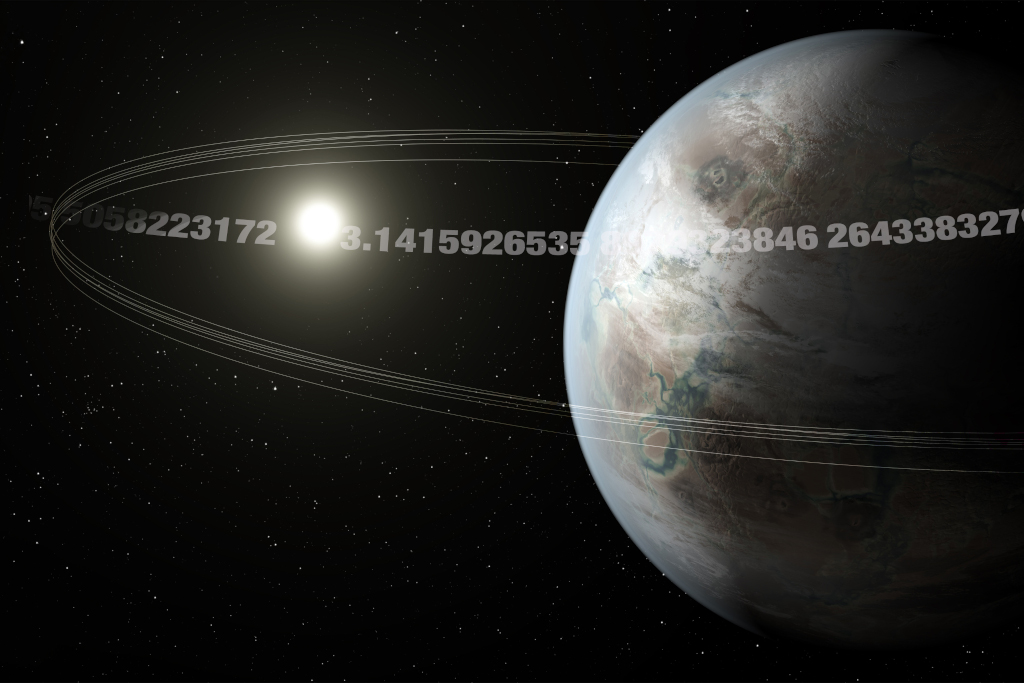
A Year for K2-315b

By |2026-03-14T16:44:25-04:00March 14th, 2026|Categories: NASA News, Uncategorized|Tags: , , , |

Photo of the Day Want to visit a planet that has 3.14 days in a year? Then plan a trip to K2-315b, an earth-sized planet orbiting around a cool, red, M dwarf star about once every 3.14 days. The exoplanet's discovery, based on publicly available data from the planet-hunting Kepler Space Telescope's extended K2 [...]

CG 4: The Globule and the Galaxy

By |2026-03-11T16:44:26-04:00March 11th, 2026|Categories: NASA News, Uncategorized|Tags: , , , , , |

Photo of the Day Is this a cosmic monster ready to devour an unsuspecting galaxy? Thankfully, that is not the case. The red “monster” shown in the featured image is Cometary Globule CG 4, 1,300 light-years away in the Constellation Puppis. CG 4 is a molecular cloud, where hydrogen becomes cold enough to form [...]

Go to Top