
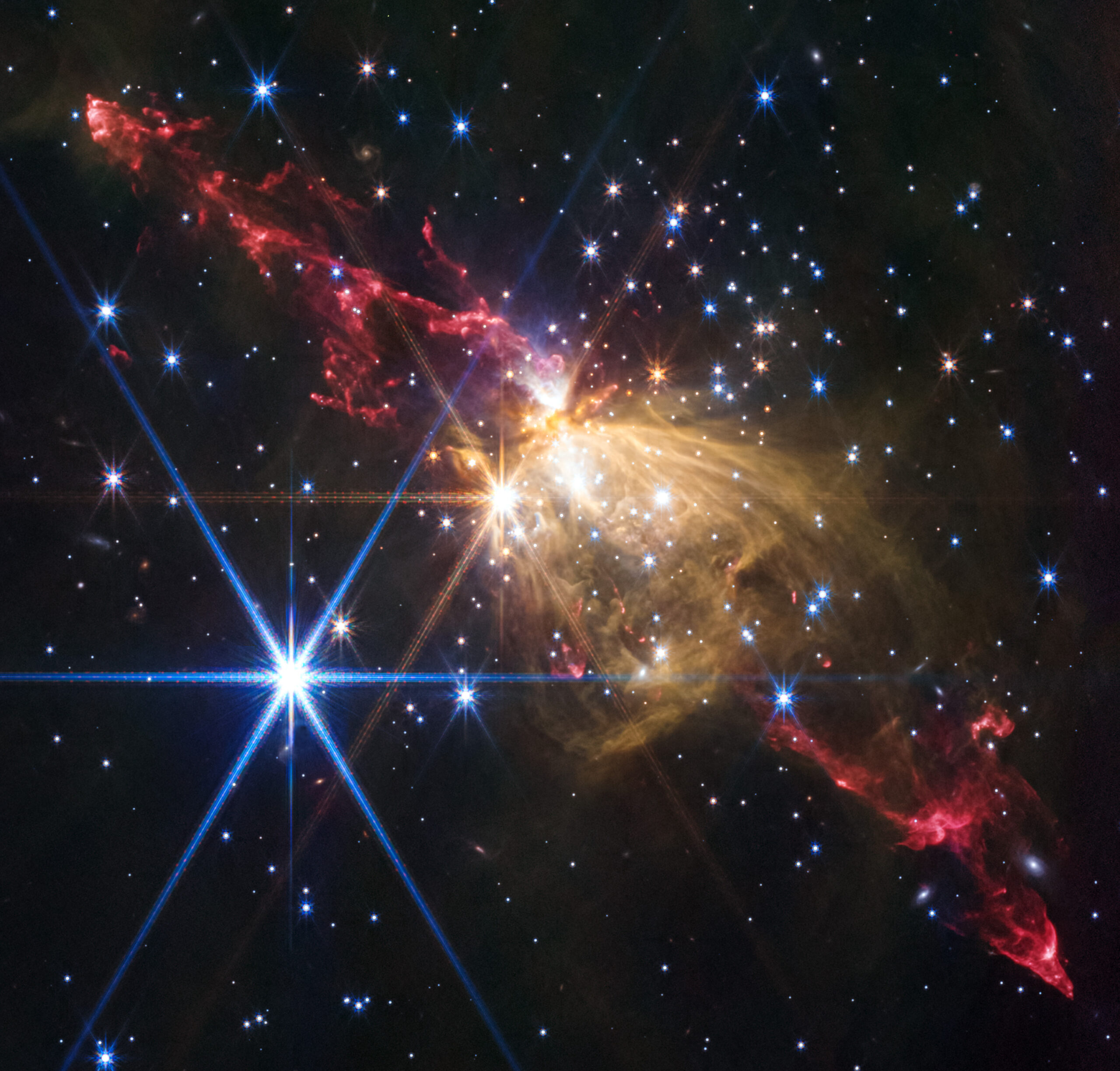
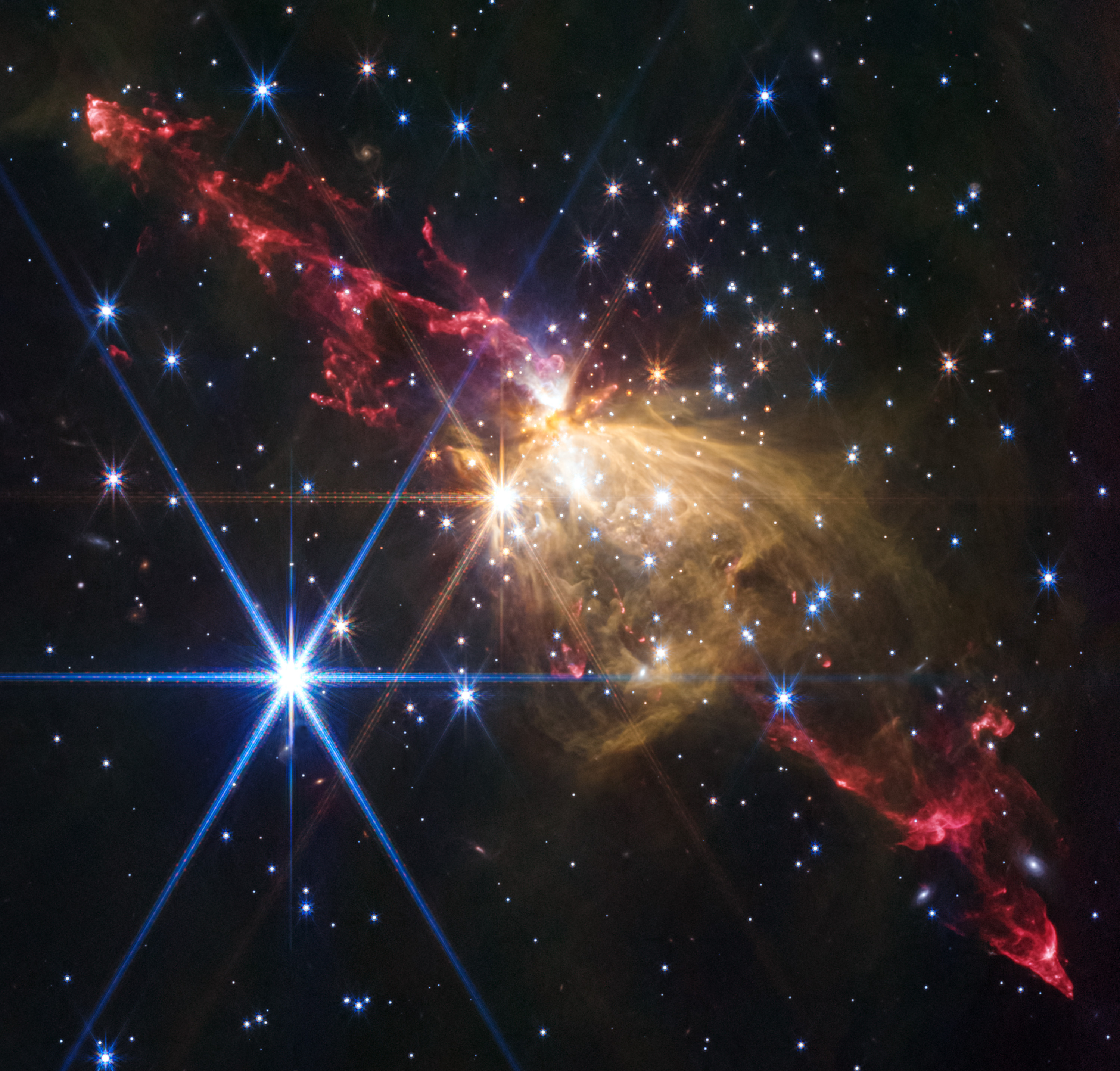
 NASA, ESA, CSA, STScI, Yu Cheng (NAOJ); Image Processing: Joseph DePasquale (STScI) NASA’s James Webb Space Telescope captured a blowtorch of seething gasses erupting from a volcanically growing monster star in this image released on Sept. 10, 2025. Stellar jets, which are powered by the gravitational energy released as a star grows in mass, encode the formation history of the protostar. This image provides evidence that protostellar jets scale with the mass of their parent stars—the more massive the stellar engine driving the plasma, the larger the resulting jet.
Image credit: NASA, ESA, CSA, STScI, Yu Cheng (NAOJ); Image Processing: Joseph DePasquale (STScI)