4 min read
Preparations for Next Moonwalk Simulations Underway (and Underwater) NASA’s Nancy Grace Roman Space Telescope team recently blasted the observatory with extreme sound, shook it, and listened to its electronic hum. Roman passed all three assessments, which aimed to confirm that the observatory will withstand launch conditions and function as expected in space. The achievement keeps the mission on track for launch as early as this fall.
“All of the testing went smoothly and progress is well ahead of schedule,” said Jack Marshall, the Roman observatory integration and testing lead at NASA’s Goddard Space Flight Center in Greenbelt, Maryland. “The team has done a great job putting the observatory together, and the tests show that everything is lining up with expectations.”
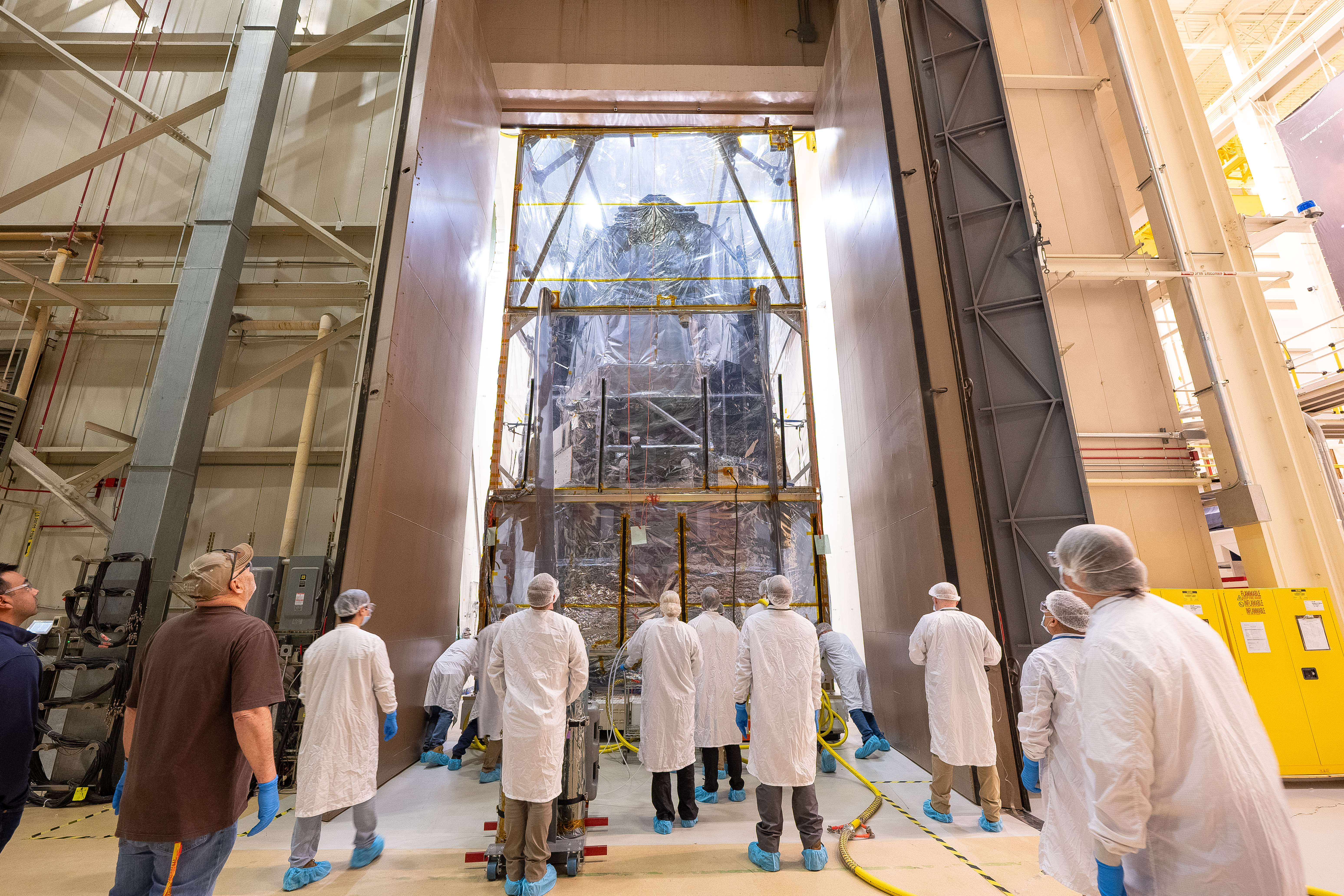
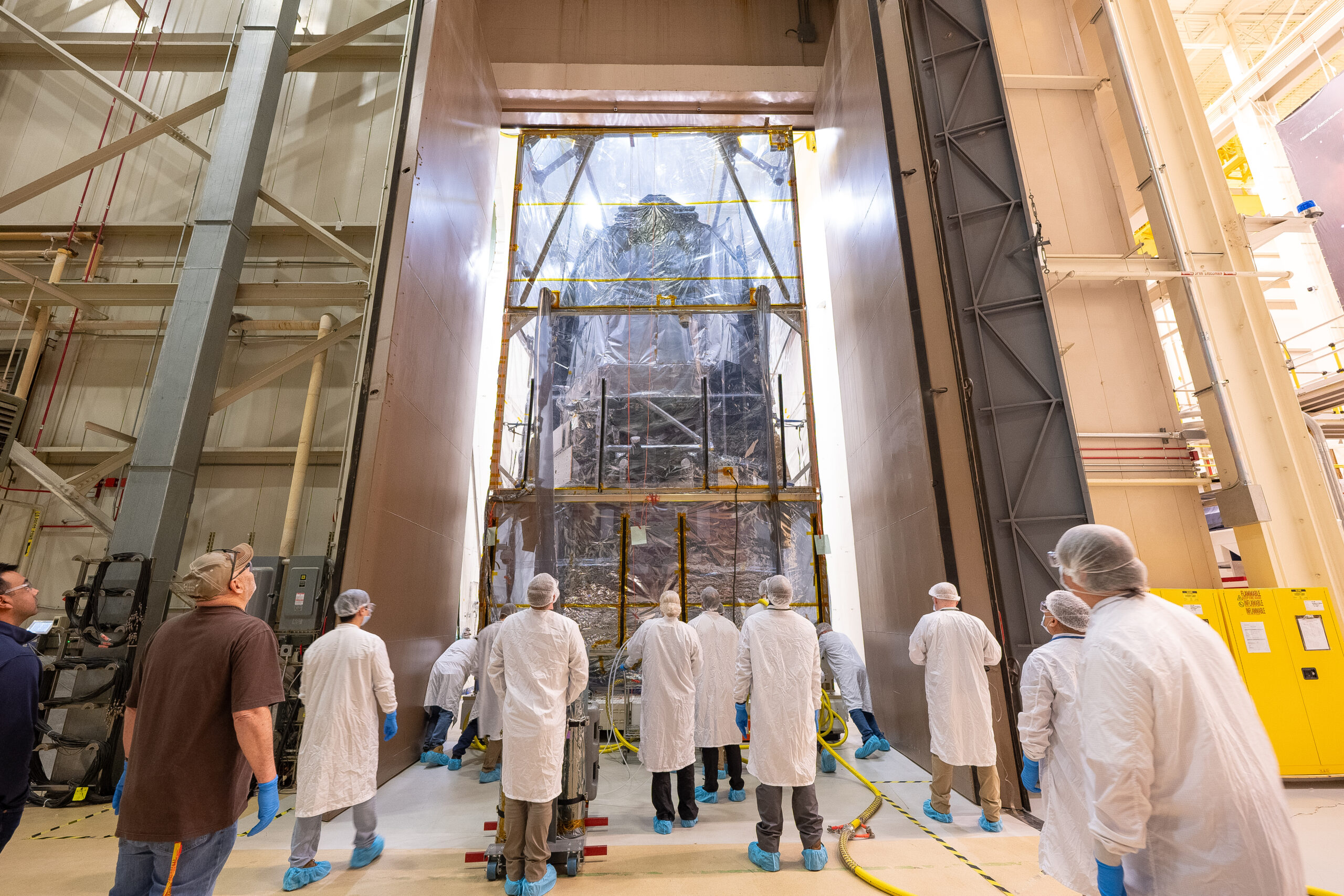
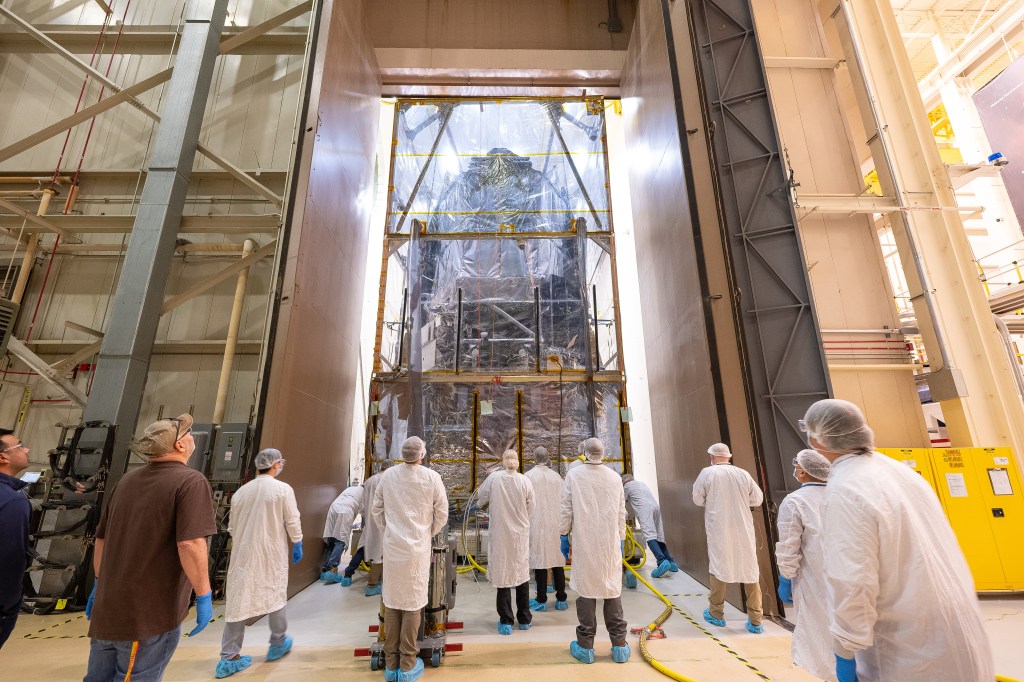 Technicians move NASA’s Nancy Grace Roman Space Telescope into an acoustics chamber for environmental testing at the agency’s Goddard Space Flight Center.NASA/Jolearra Tshiteya
 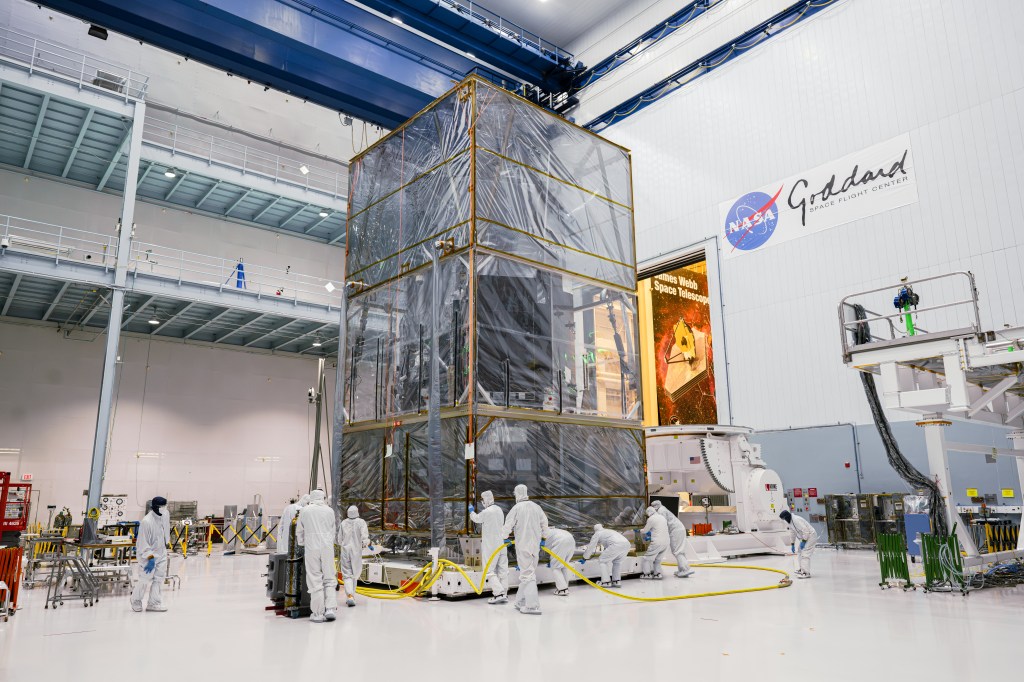 Technicians place the Roman observatory on an air barge to safely move it between testing facilities.NASA/Sydney Rohde (Rocz)
 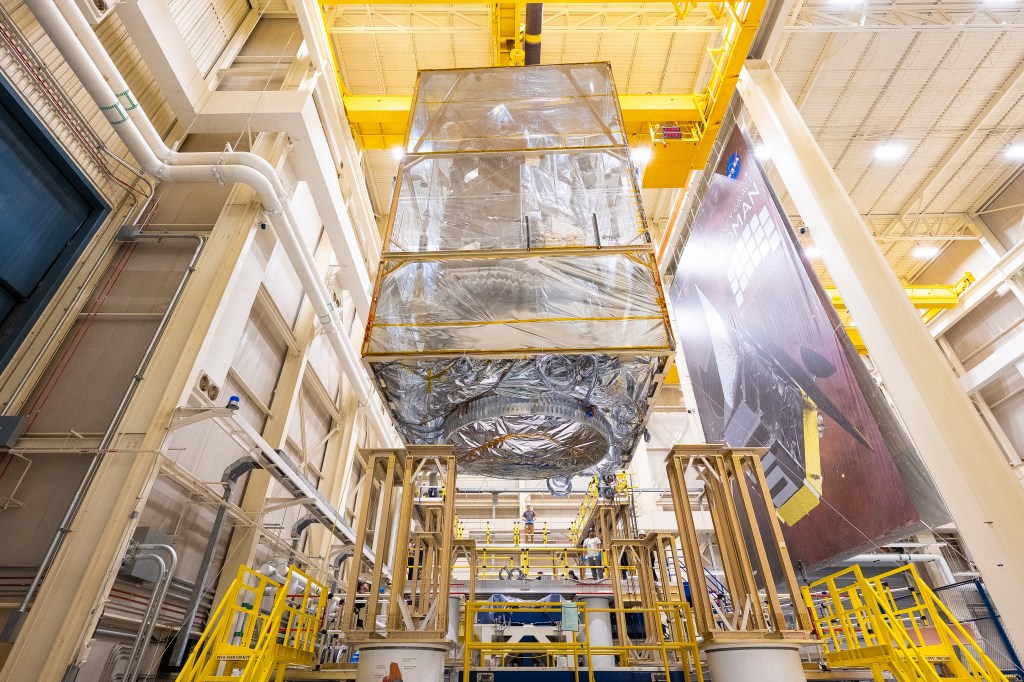 The Roman observatory moves onto a shaker table for vibration testing.NASA/Jolearra Tshiteya
 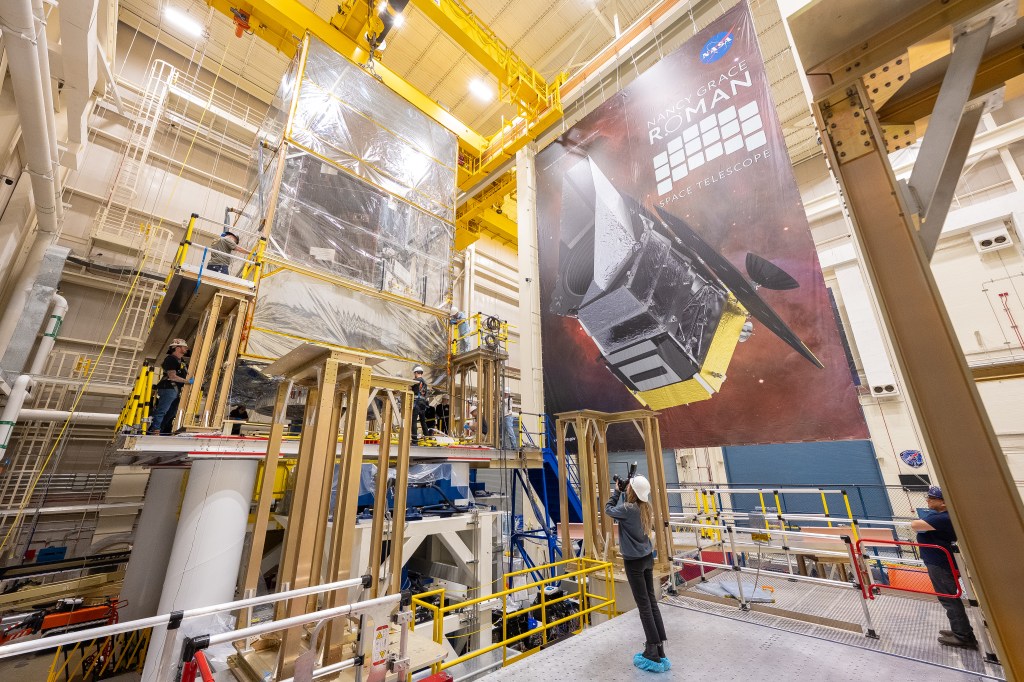 Technicians prepare for Roman’s vibration test to begin.NASA/Jolearra Tshiteya
 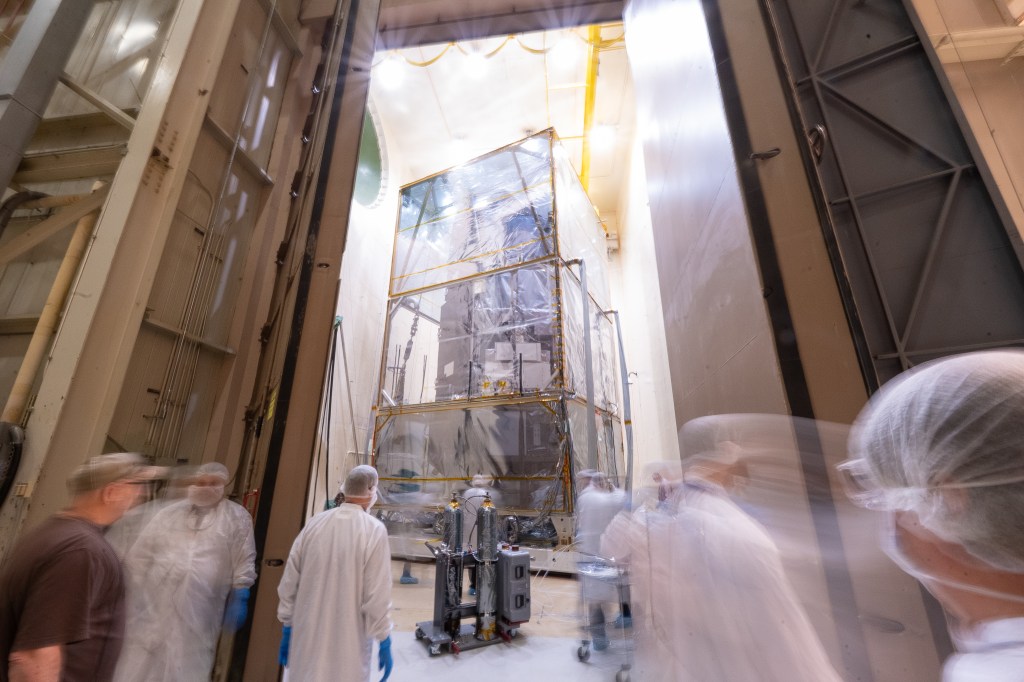 Technicians move the Roman observatory into the acoustics chamber.NASA/Jolearra Tshiteya In January, the team set up an absorbent panel around the observatory for an electromagnetic interference test. This special configuration is designed to block external radio signals and absorb reflections inside the test facility.
Engineers powered on all of Roman’s electronics and measured the signals they generated, closely monitoring for any errors. Too much electrical noise could interfere with the observatory’s ability to detect faint infrared signals, but Roman passed with flying colors.
The team moved on to vibration testing in February. “Each time the observatory traveled between test facilities, it was placed in a custom-made portable clean room to protect it from contamination that could otherwise compromise scientific performance once in space,” said Joel Proebstle, a mechanical systems engineer who led the vibration and acoustic tests at NASA Goddard.
Engineers tested the observatory on a large shaker table to simulate the vibrations it will experience during launch, gradually building to higher frequencies. “Try to imagine sitting on that rocket and feeling all those vibrations,” said Cory Powell, the Roman structural analyst lead at NASA Goddard. “We simulated the shaking that the launch vehicle will produce to ensure the components and connections will all remain intact.”
In early March, the team conducted an acoustic test. The test took place in a state-of-the-art sound booth, where engineers ramped up the volume to 138 decibels — about as loud as a jet engine from 100 feet away.
“If you’ve ever been at a concert with an extremely loud bass, that load you felt was acoustic energy,” Powell said. “Now think about how loud a launch is. The acoustics can produce very high loads on a large structure like Roman.”
This video showcases some of NASA’s Nancy Grace Roman Space Telescope team’s major accomplishments during the second half of 2025, culminating in the completion of the observatory.
NASA’s Goddard Space Flight Center Roman has now returned to the large clean room at Goddard where it will undergo a final series of smaller tests. The next one aims to replicate the shock Roman will experience shortly after launch when the observatory separates from the rocket. Then the team will deploy all of the elements that will initially be stowed (including the solar panels, “visor,” antenna, and “sunblock” shield), to verify that they’ll still work correctly even after launch and rocket separation.
Early this summer, the observatory will be transported to NASA’s Kennedy Space Center in Florida for launch preparations. There, engineers will verify that the observatory arrived fully intact and begin prepping the rocket — a SpaceX Falcon Heavy. The team expects Roman to be ready for launch within a few months after the observatory’s arrival at NASA Kennedy.
“We have a great team, great leadership, and with our successful testing we continue to set the standard for staying within budget and schedule while balancing difficult challenges,” Powell said. “Meeting cost and schedule commitments without compromise to technical standards is a major point of pride for the Roman team.”
Explore a 3D model of the Roman observatory Click and drag to rotate Downloadsgltf-binary File (3D Model) 28.28 MB
To learn more about the Roman mission, visit:
By Ashley Balzer
NASA’s Goddard Space Flight Center, Greenbelt, Md.
Media contact:
Claire Andreoli
NASA’s Goddard Space Flight Center, Greenbelt, Md.
301-286-1940
 6 min read NASA’s Roman Mission Shares Detailed Plans to Scour Skies Article 11 months ago
  7 min read NASA Announces Plan to Map Milky Way With Roman Space Telescope Article 3 months ago
  8 min read NASA Completes Nancy Grace Roman Space Telescope Construction Article 4 months ago