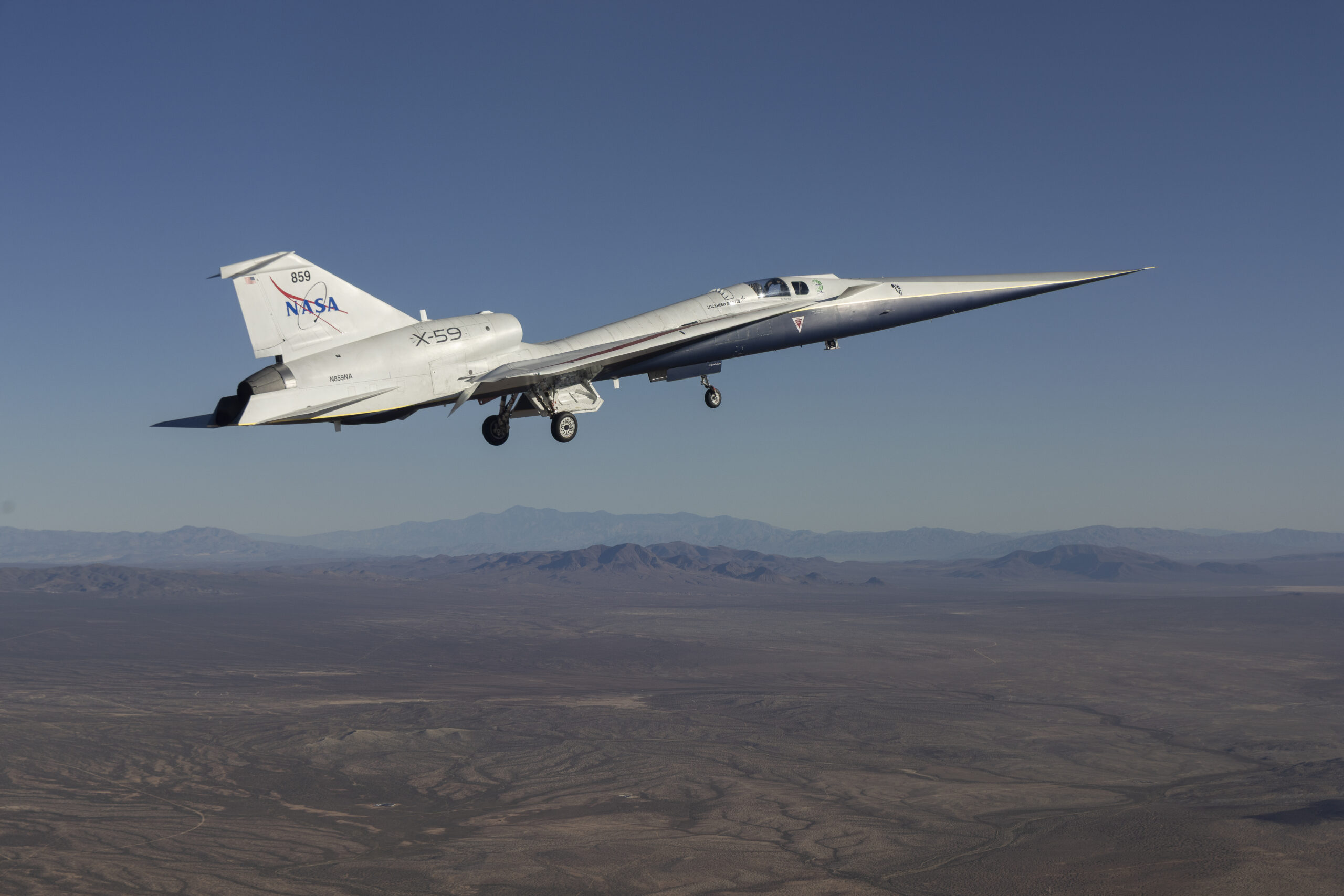
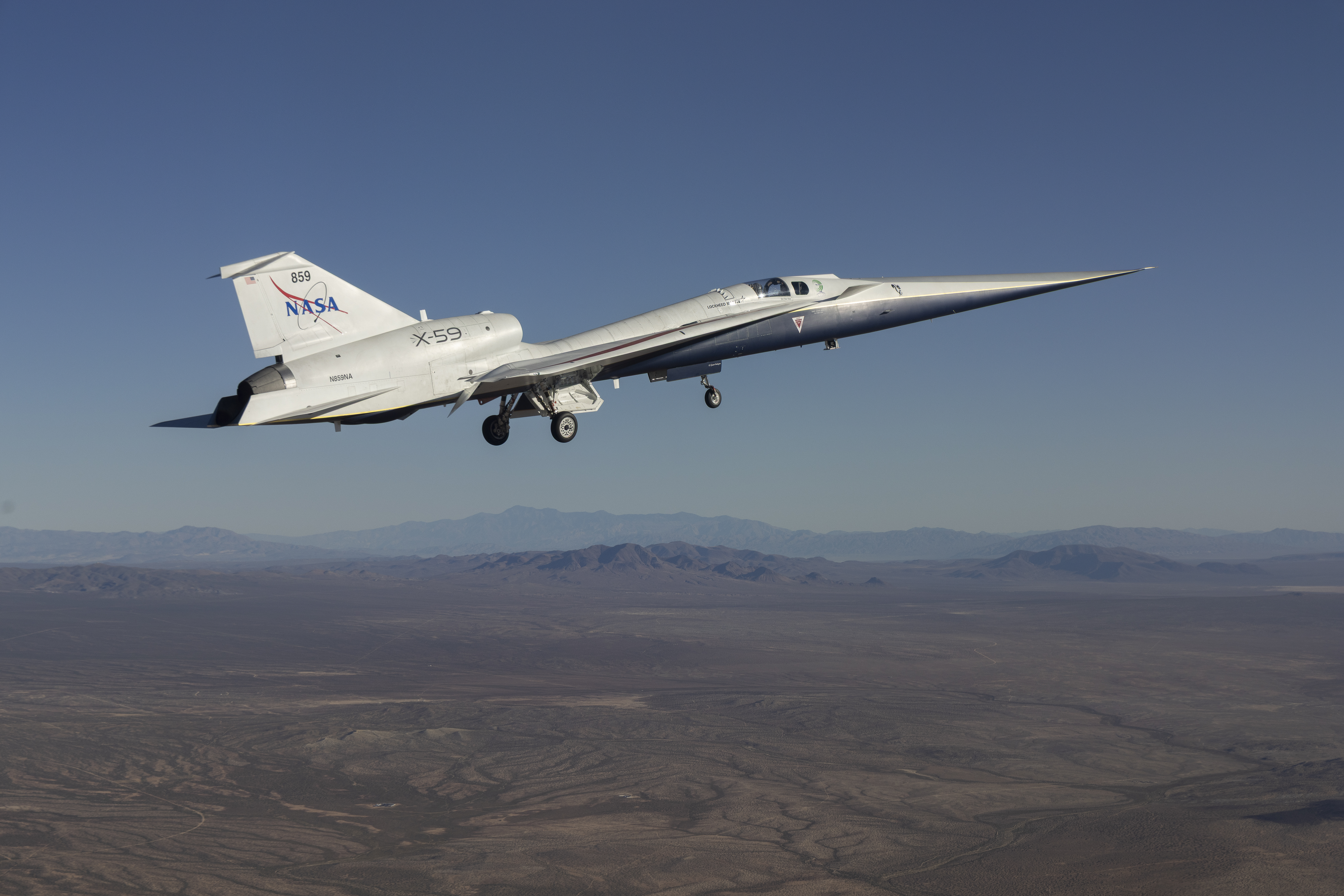
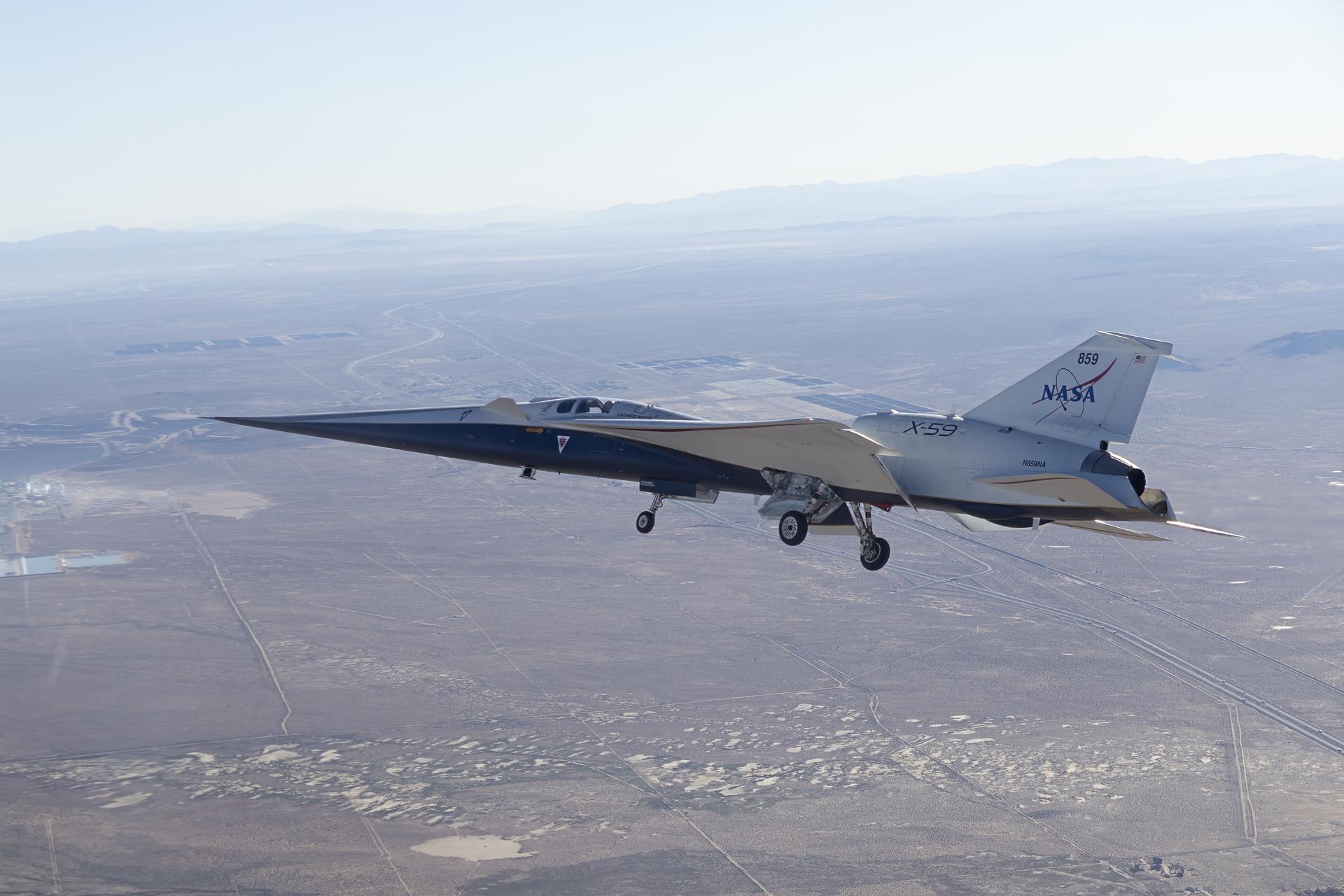
 The X-59 is shown during its historic first flight flown by NASA test pilot Nils Larson.NASA/Lori Losey NASA’s X-59 quiet supersonic research aircraft took off for its historic first flight on Oct. 28 at 11:14 a.m. EDT from Lockheed Martin Skunk Works in Palmdale, California. The one-of-a-kind aircraft flew for 67 minutes before landing and taxiing to NASA’s Armstrong Flight Research Center in Edwards, California.
NASA test pilot Nils Larson flew the X-59 up to an altitude of about 12,000 feet and an approximate top speed of 230 mph, precisely as planned. The plane’s landing gear remained down during the entire flight, a common practice for experimental aircraft flying for the first time.
Now that the X-59’s first flight is in the books, the team is focused on preparing for a series of test flights where the aircraft will operate at higher altitudes and supersonic speeds. This test flight phase of NASA’s Quesst mission will ensure the X-59 meets performance and safety expectations.
Through the Quesst mission, NASA aims to usher in a new age of quiet supersonic flight, achieved through the unique design and technology of the X-59 in future supersonic transport aircraft.
 1 min read X-59 First Flight Media Resources Article 5 hours ago
  5 min read NASA’s X-59 Completes First Flight, Prepares for More Flight Testing Article 23 hours ago
  3 min read NASA, Industry Weave Data Fabric with Artificial Intelligence Air taxis and drones navigate different flight zones with NASA-inspired system
Article 3 days ago
Keep Exploring Discover More Topics From NASA Armstrong Flight Research Center
 Integrated Aviation Systems Program