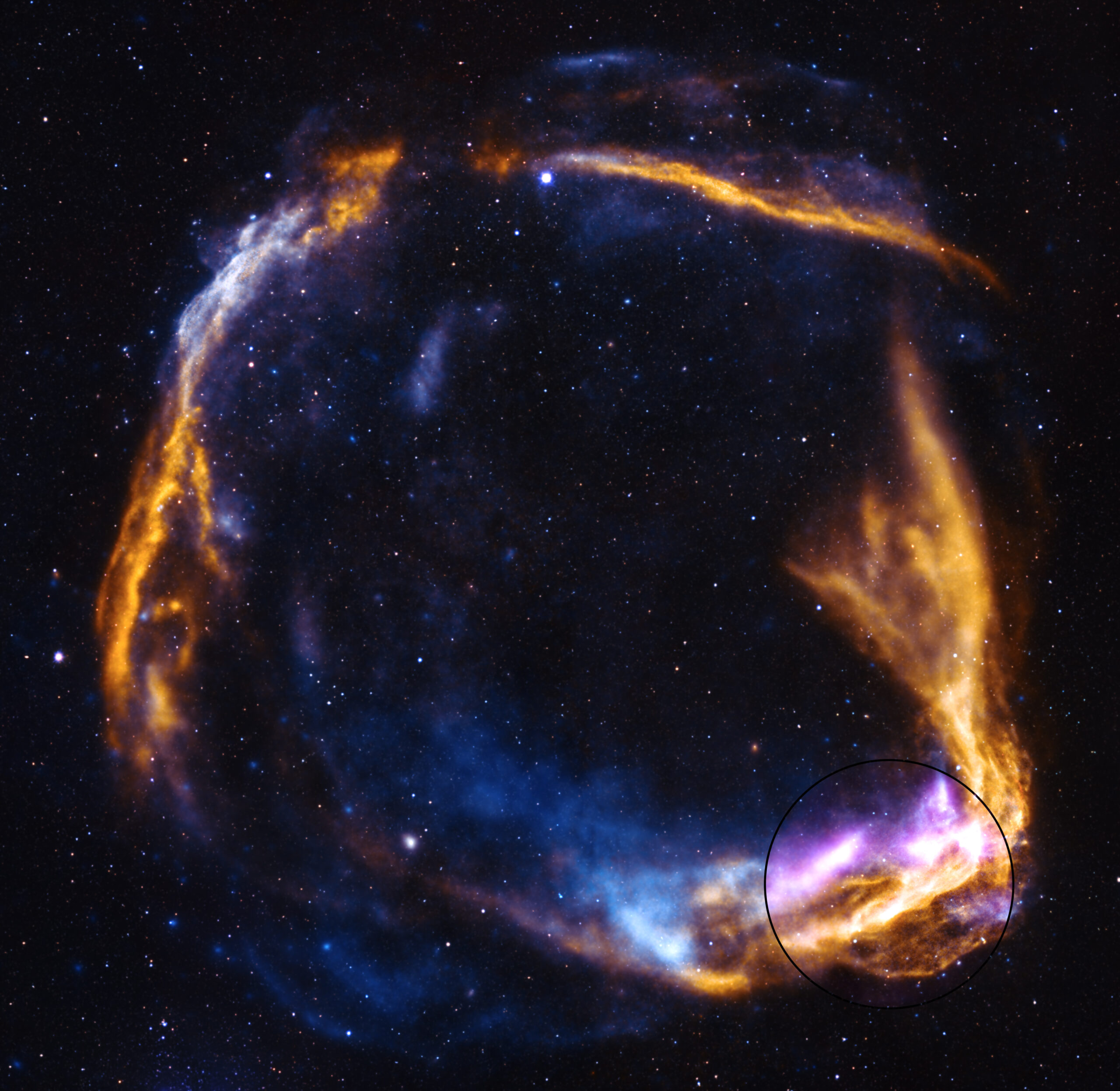
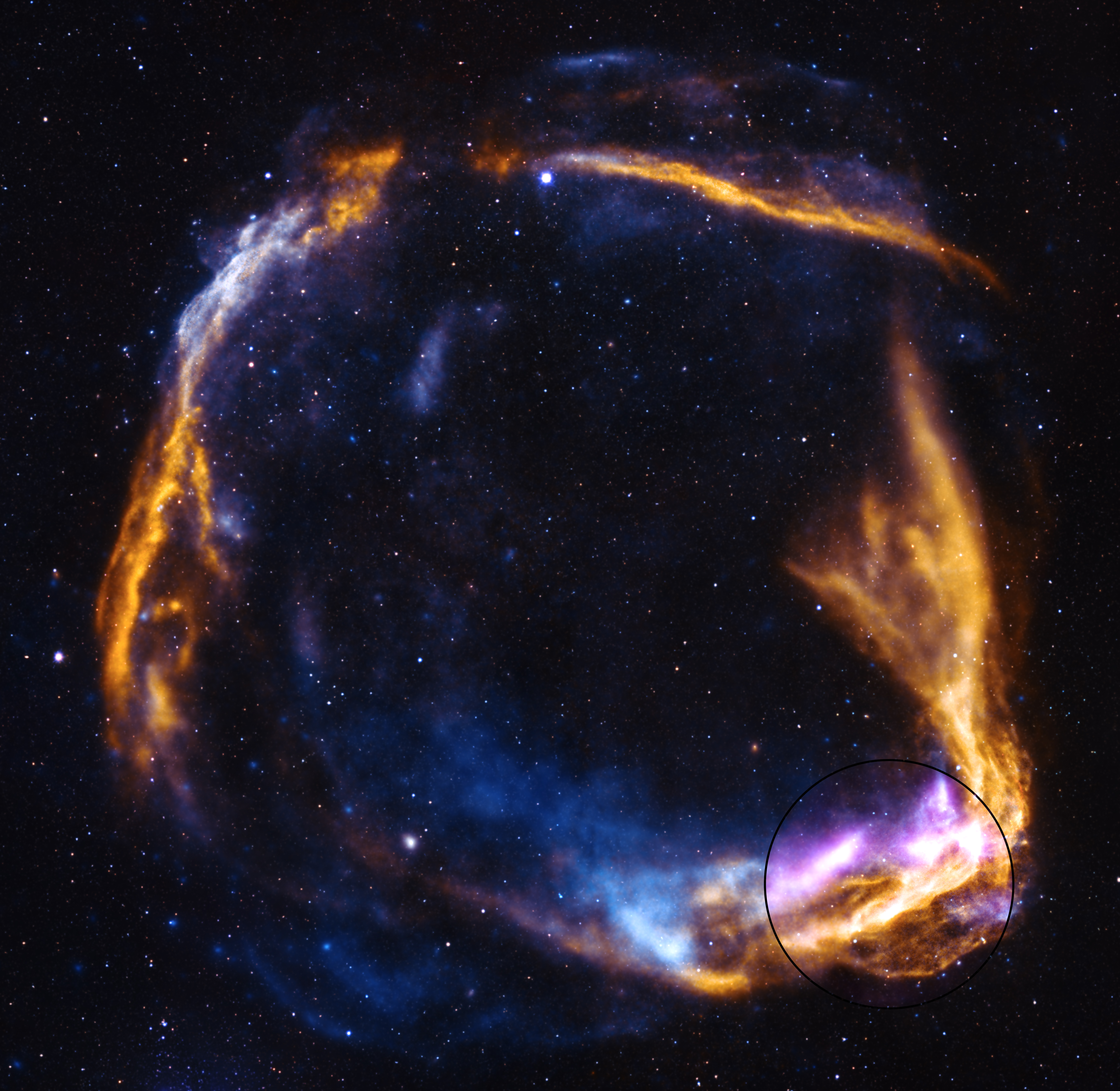
 NASA’s IXPE observed the outer rim of the supernova remnant highlighted in purple in the inset. Data from IXPE is combined with data from NASA’s Chandra X-ray Observatory and ESA’s XMM-Newton. The yellow represents low-energy X-rays, while blue shows high-energy X-rays detected by Chandra and XMM-Newton. The starfield in the image comes from the National Science Foundation’s National Optical-Infrared Astronomy Research Laboratory (NOILab).NASA/ X-ray: Chandra: NASA/CXC/SAO, XMM: ESA/XMM-NEWTON, IXPE: NASA/MSFC; Optical: NSF/NOIRLab; Image Processing: NASA/CXC/SAO/J. NASA’s IXPE (Imaging X-ray Polarimetry Explorer) mission has taken a new observation of a supernova, RCW 86, helping fill in a fuller picture of what other telescopes have observed.
When astronomers using NASA’s Chandra X-ray Observatory previously targeted RCW 86, they discovered that a large “cavity” region around the system led the supernova to expand more rapidly than expected. The low-density cavity region could have led to RCW 86’s unique shape as well. Now, IXPE has observed the outer rim of this supernova, where its expansion is suspected to have halted at the edge of the “cavity,” creating the reflected shock effect highlighted in purple.
The full image combines IXPE’s data with legacy observations from two other X-ray telescopes: NASA’s Chandra and the ESA (European Space Agency) XMM-Newton telescope. The yellow represents low-energy X-rays, while blue shows high-energy X-rays detected by Chandra and XMM-Newton. The starfield in the image comes from the National Science Foundation’s National Optical-Infrared Astronomy Research Laboratory (NOIRLab).
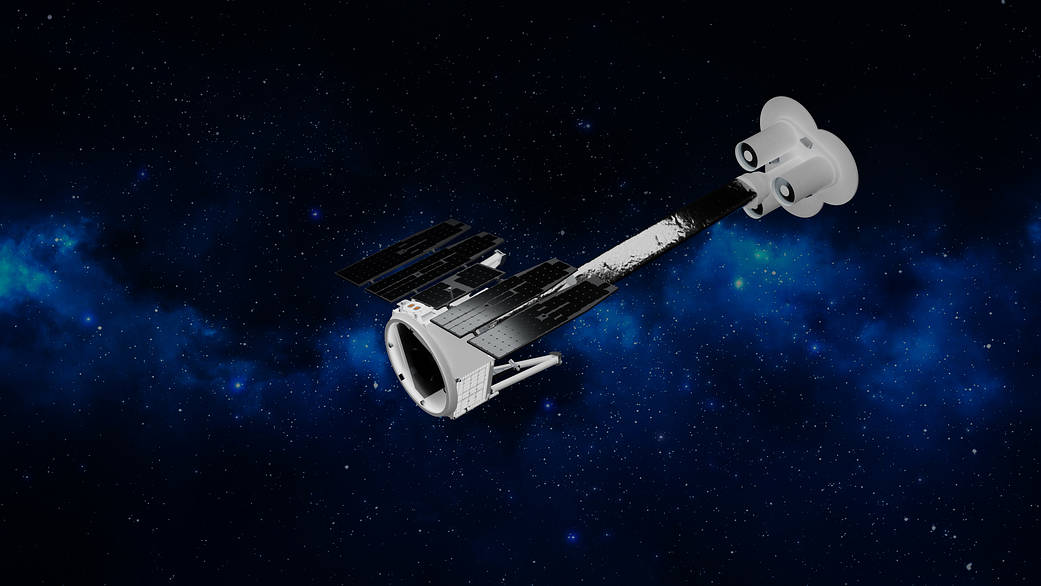
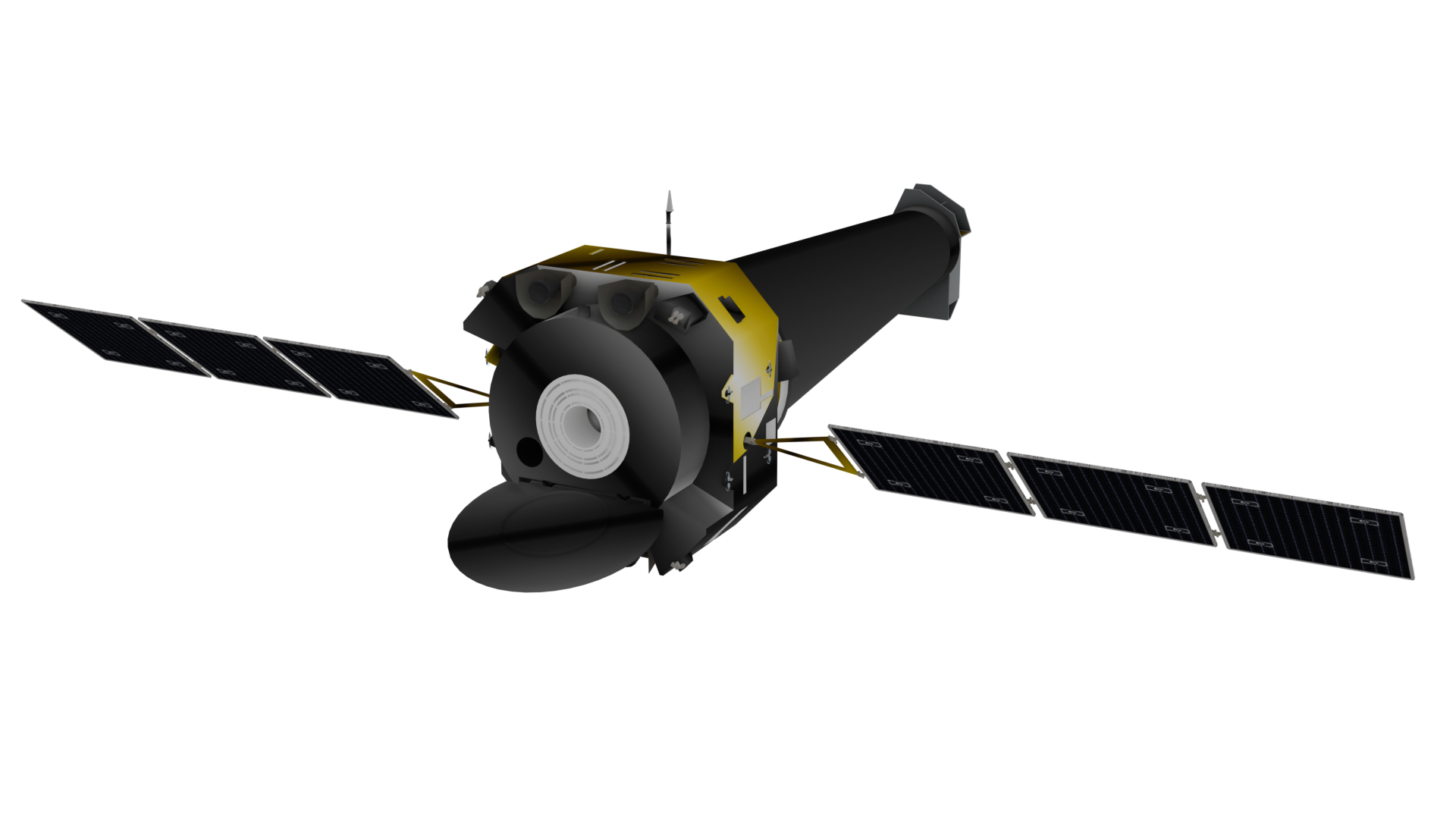
More about IXPE The IXPE mission, which continues to provide unprecedented data enabling groundbreaking discoveries about celestial objects across the universe, is a joint NASA and Italian Space Agency mission with partners and science collaborators in 12 countries. It is led by NASA’s Marshall Space Flight Center in Huntsville, Alabama. BAE Systems, Inc., headquartered in Falls Church, Virginia, manages spacecraft operations together with the University of Colorado’s Laboratory for Atmospheric and Space Physics in Boulder. Learn more about IXPE’s ongoing mission here:
Keep Exploring Discover More Topics From NASA Imaging X-ray Polarimetry Explorer (IXPE) The Imaging X-ray Polarimetry Explorer (IXPE) is a space observatory built to discover the secrets of some of the most…