
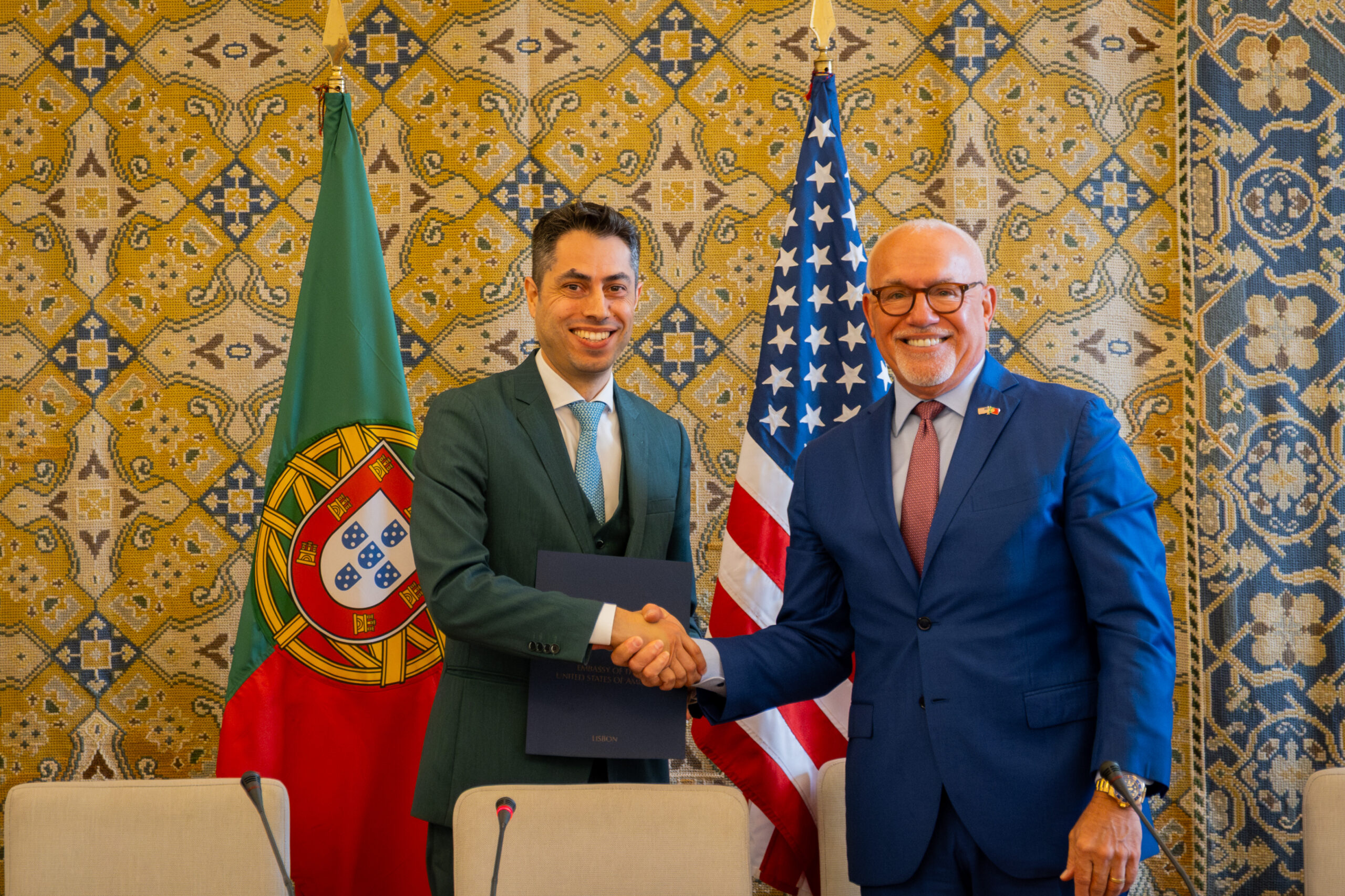
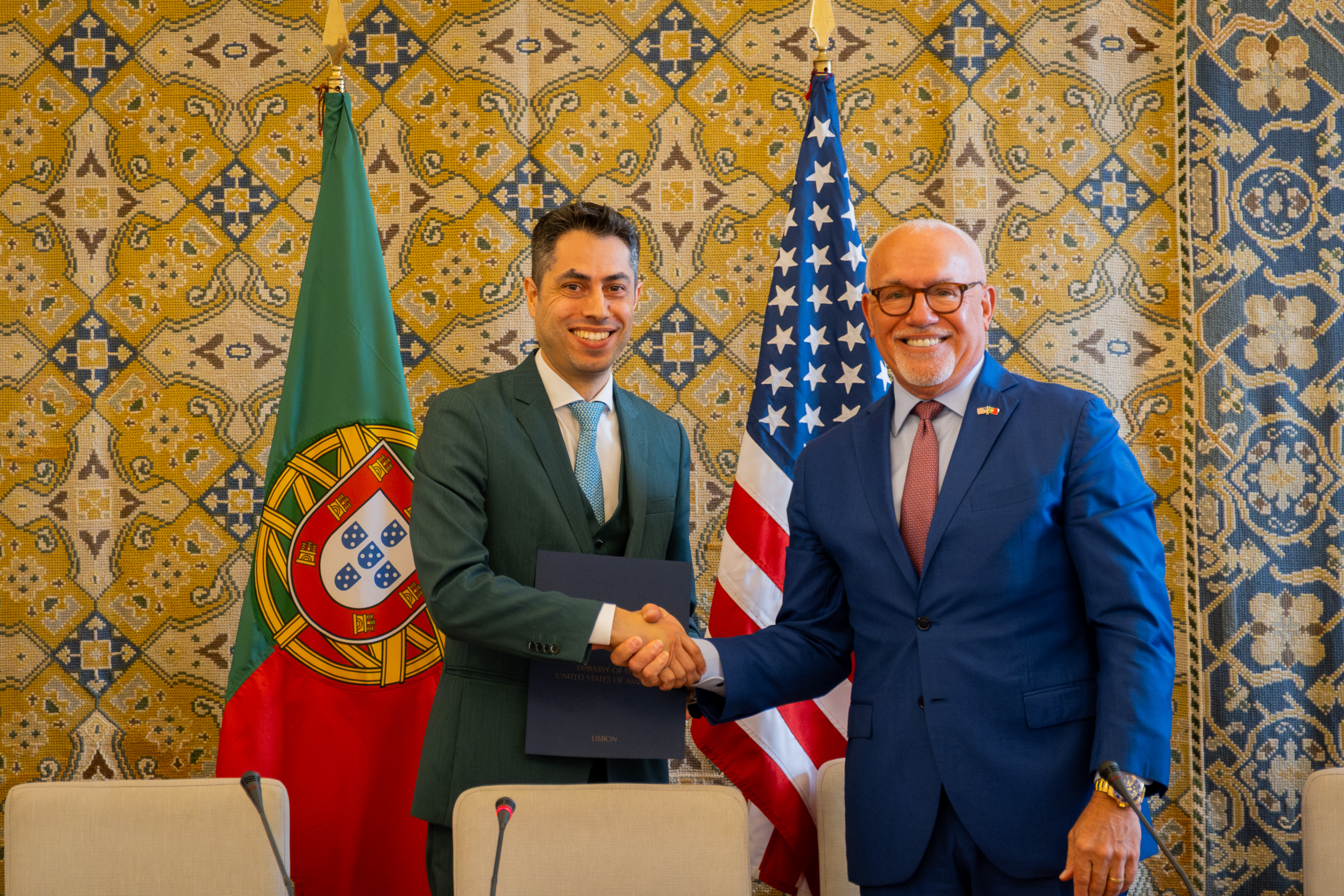
 Hugo Costa, executive director for the Portuguese Space Agency, and U.S. Ambassador to Portugal John J. Arrigo pose for a photo on Jan. 12 during a ceremony in Lisbon, Portugal, to mark the country’s signing of the Artemis Accords.Credit: U.S. State Department Portugal is the latest nation to sign the Artemis Accords alongside 59 other countries in a commitment to advancing principles for the responsible exploration of the Moon, Mars, and beyond with NASA.
“Portugal joins a cadre of nations building the framework for safe, transparent, and prosperous activity in space,” said NASA Administrator Jared Isaacman in recorded remarks. “This is our generation’s Golden Age of Exploration. Together, we are advancing innovation, driving international collaboration, and discovering the secrets of the universe.”
Portugal’s Secretary of State for Science and Innovation Helena Canhão signed the Artemis Accords on behalf of the country on Jan. 11.
“2026 is the year in which humans will return to the Moon. It will mark the beginning of a new era of space exploration, reminiscent of the Portuguese explorers of the past, such as Magellan and his circumnavigation of our planet,” said Hugo Costa, executive director of the recently established Portuguese Space Agency, about the signing. “As a nation that approaches space sustainability with great care and responsibility, Portugal and the Portuguese Space Agency are proud to join the Artemis Accords and contribute to the sustainable, beneficial, and peaceful use of space for all humankind.”
A ceremony to recognize the signing was held on Monday in the capital city Lisbon, during a semi-annual meeting between the United States and Portugal to discuss cooperation between the two governments.
“This is a meaningful step forward for responsible space exploration,” said U.S. Ambassador to Portugal John J. Arrigo, who participated in the event. “Shared principles like those in the Artemis Accords are essential to ensuring that space remains a domain of stability, safety, and opportunity for all nations.”
In 2020, during the first Trump Administration, the United States, led by NASA and the U.S. Department of State, joined with seven other founding nations to establish the Artemis Accords, responding to the growing interest in lunar activities by both governments and private companies.
The accords introduced the first set of practical principles aimed at enhancing the safety, transparency, and coordination of civil space exploration on the Moon, Mars, and beyond.
Signing the Artemis Accords means to explore peaceably and transparently, to render aid to those in need, to ensure unrestricted access to scientific data that all of humanity can learn from, to ensure activities do not interfere with those of others, to preserve historically significant sites and artifacts, and to develop best practices for how to conduct space exploration activities for the benefit of all.
More countries are expected to sign the Artemis Accords in the months and years ahead.
Learn more about the Artemis Accords at:
https://www.nasa.gov/artemis-accords
-end-
Bethany Stevens / Elizabeth Shaw
Headquarters, Washington
202-358-1600
bethany.c.stevens@nasa.gov / elizabeth.a.shaw@nasa.gov