3 Min Read NASA Testing Advances Space Nuclear Propulsion Capabilities 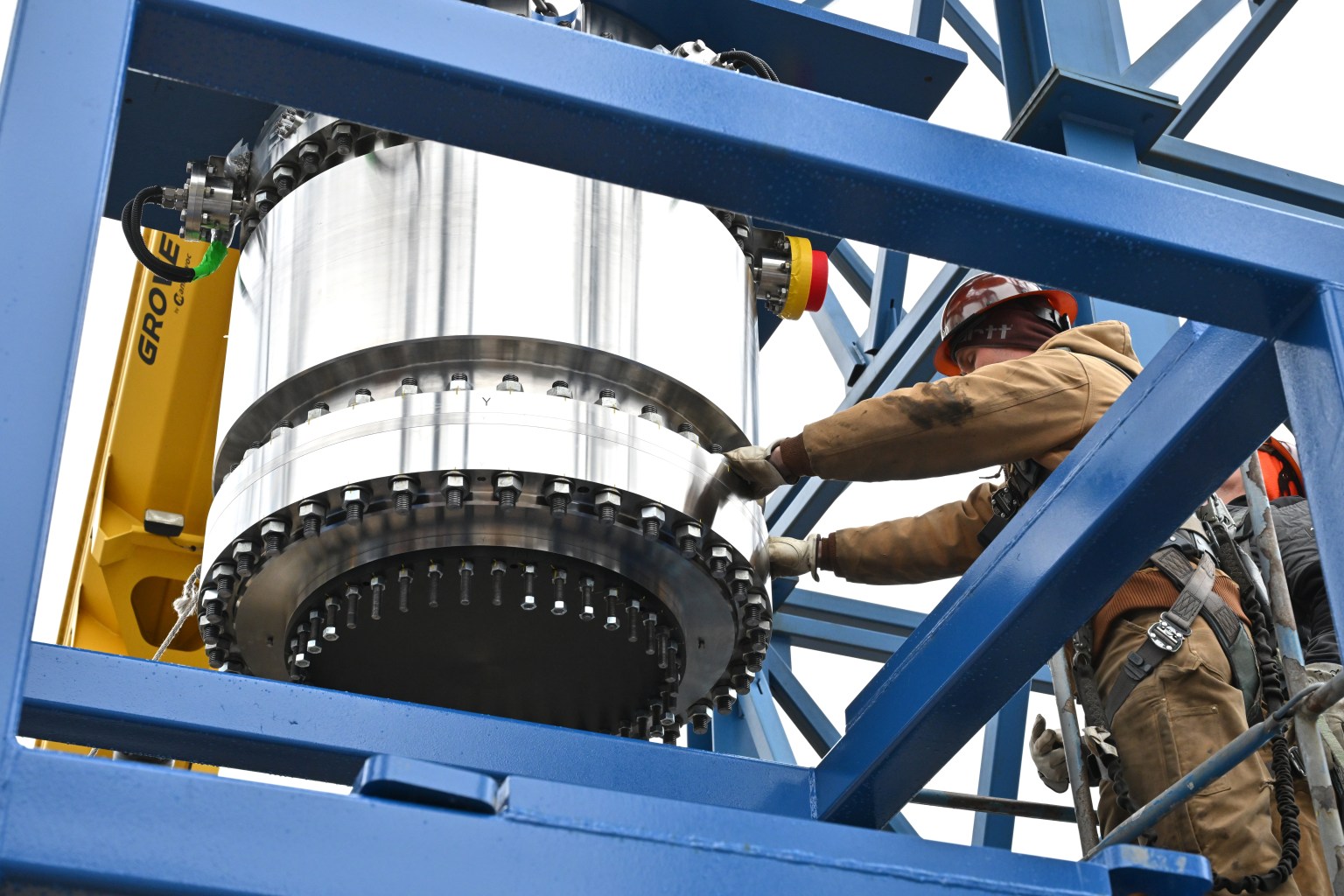 Written by Daniel Boyette
Nuclear propulsion and power technologies could unlock new frontiers in missions to the Moon, Mars, and beyond. NASA has reached an important milestone advancing nuclear propulsion that could benefit future deep space missions by completing a cold-flow test campaign of the first flight reactor engineering development unit since the 1960s.
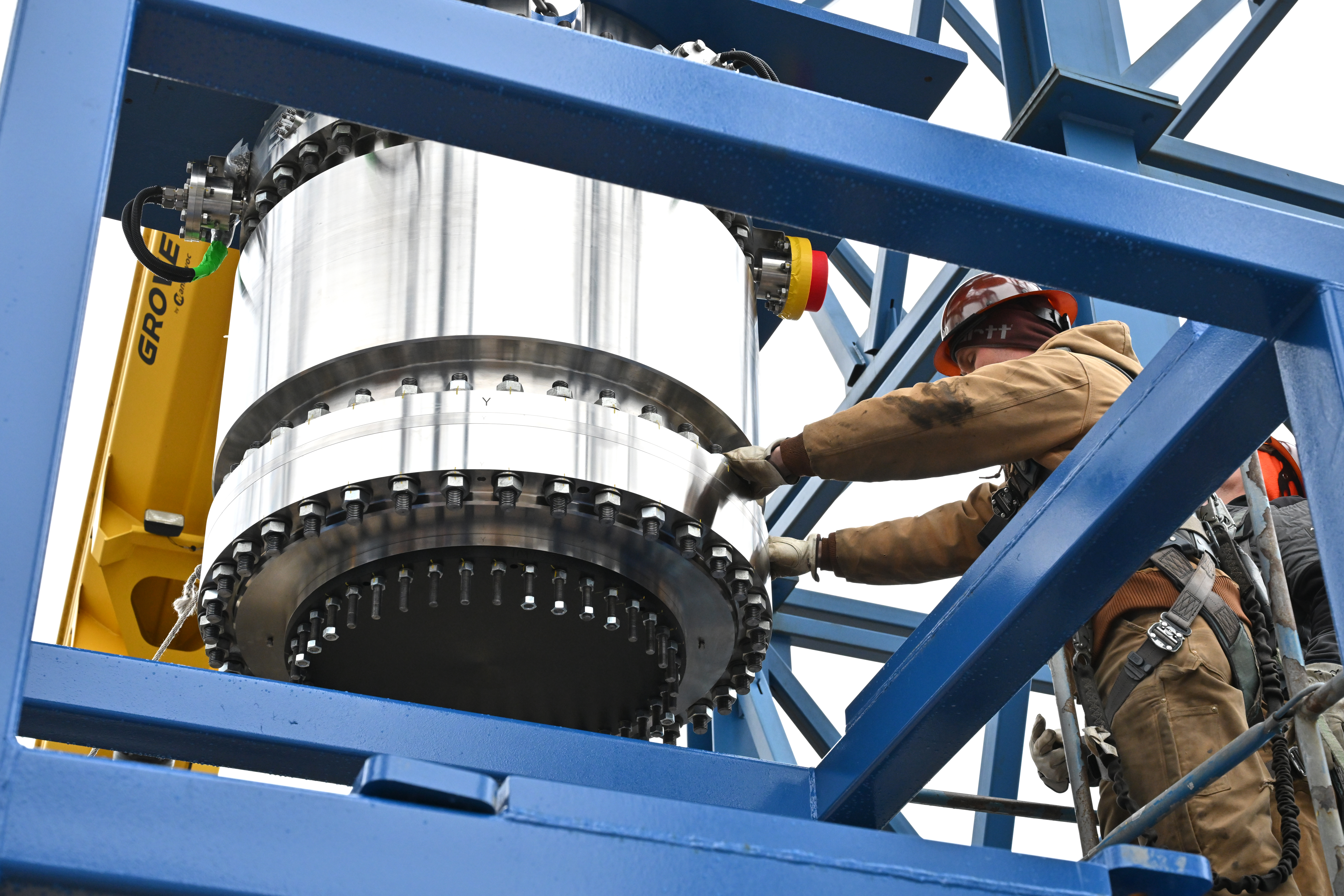
 April 8, 2025Crews at NASA’s Marshall Space Flight Center in Huntsville, Alabama, install a flight reactor engineering development unit into Test Stand 400 in preparation for cold-flow testing. The test campaign began in July and ran through September and marked the first testing on a light reactor engineering development unit since the 1960s.NASA/Adam Butt
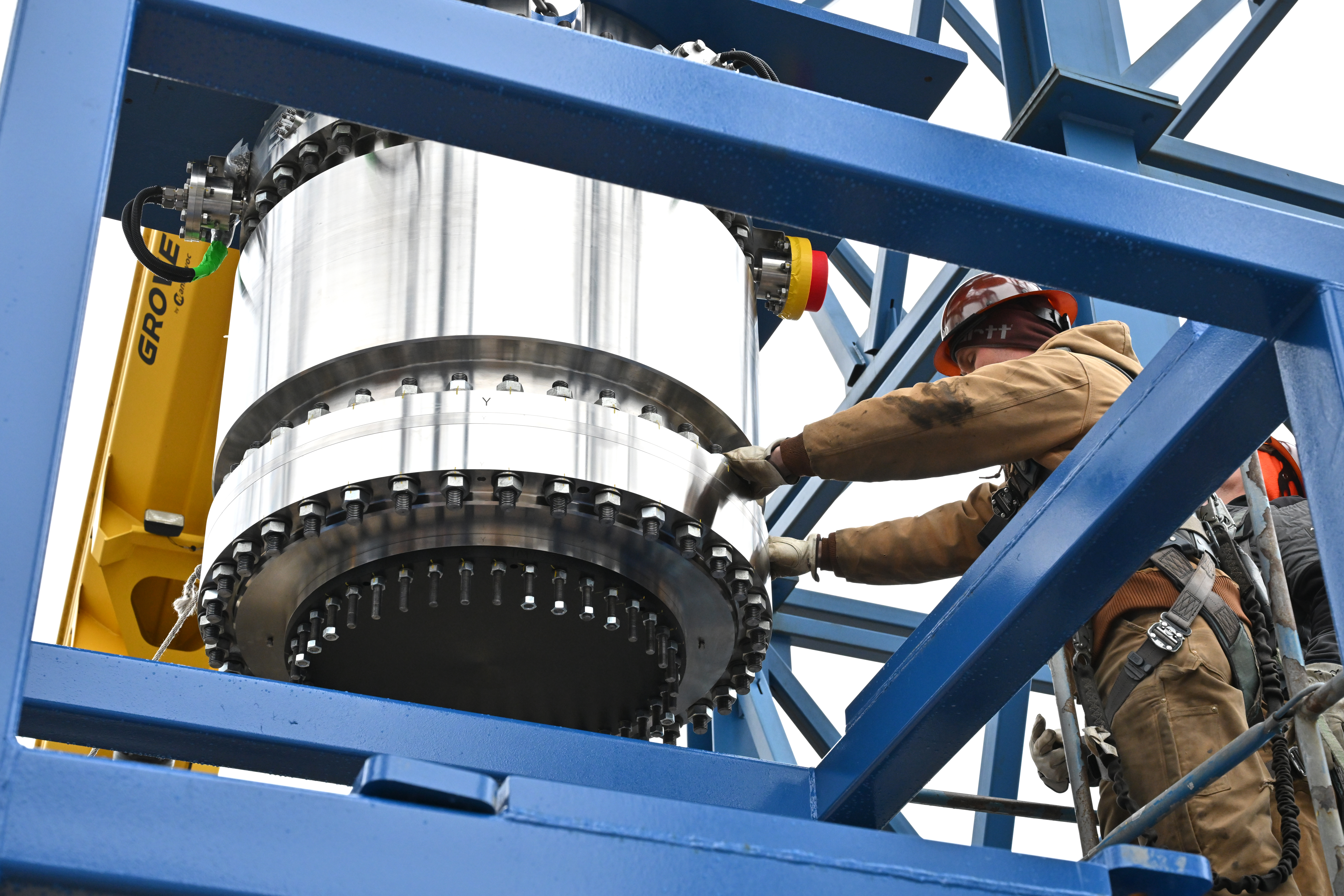
 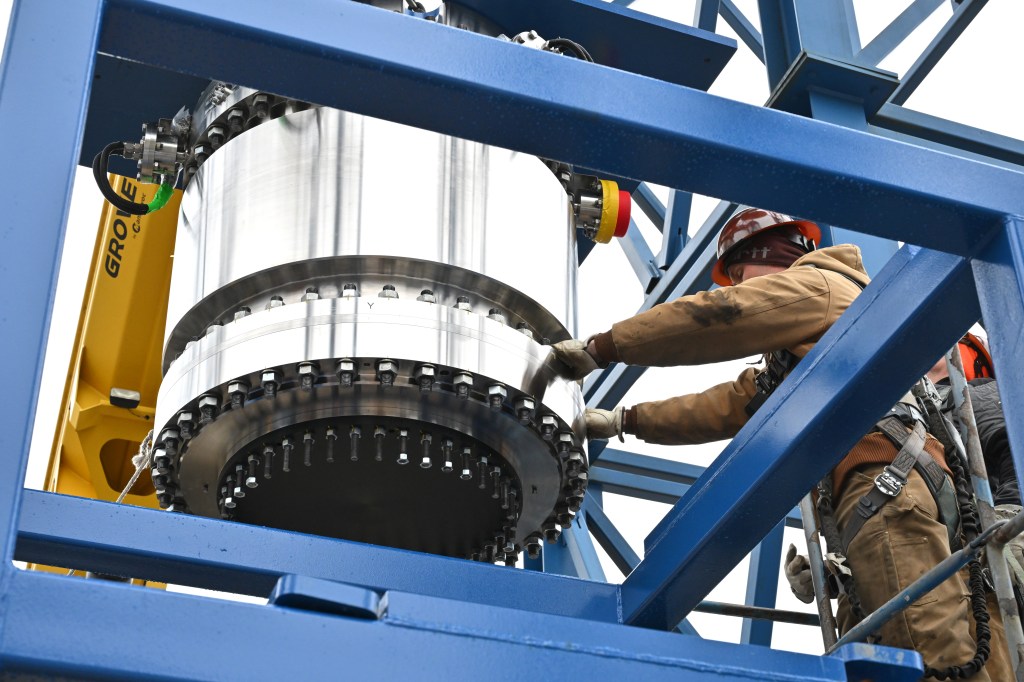 April 9, 2025Crews at NASA’s Marshall Space Flight Center in Huntsville, Alabama, install a flight reactor engineering development unit into Test Stand 400 in preparation for cold-flow testing. The test campaign began in July and ran through September and marked the first testing on a flight reactor engineering development unit since the 1960s. NASA/Adam Butt
 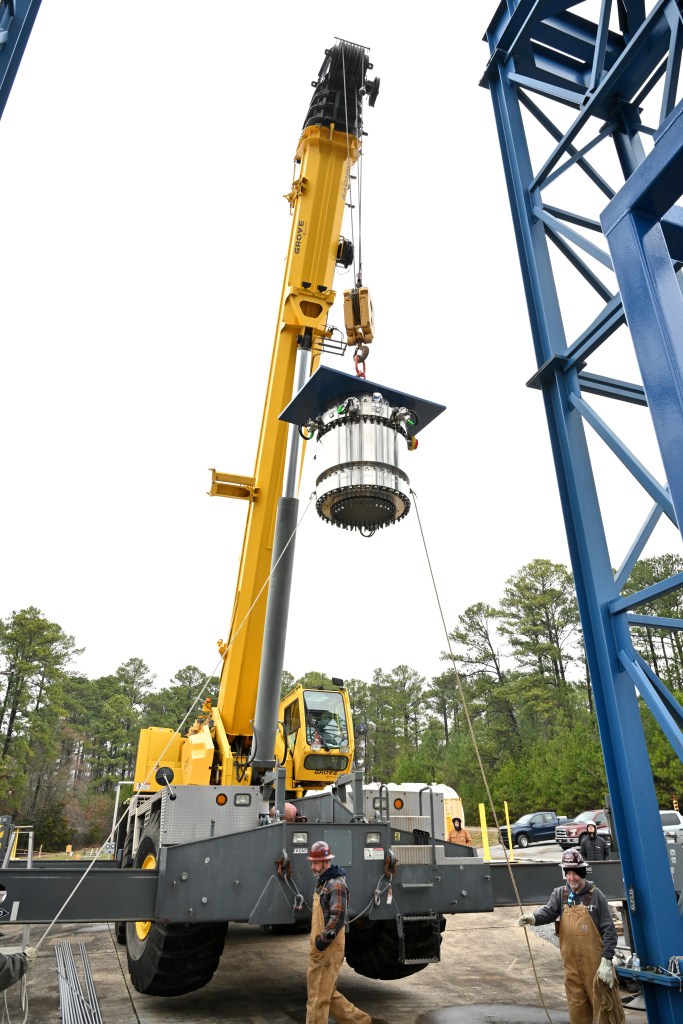 April 10, 2025Crews at NASA’s Marshall Space Flight Center in Huntsville, Alabama, install a flight reactor engineering development unit into Test Stand 400 in preparation for cold-flow testing. The test campaign began in July and ran through September and marked the first testing on a flight reactor engineering development unit since the 1960s. NASA/Adam Butt
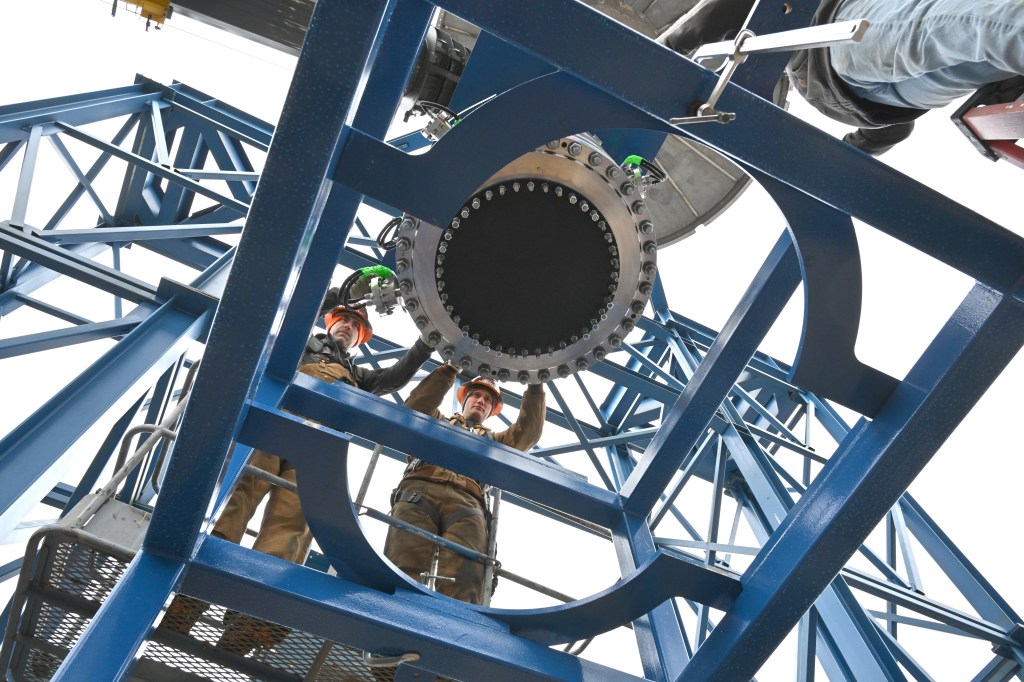
 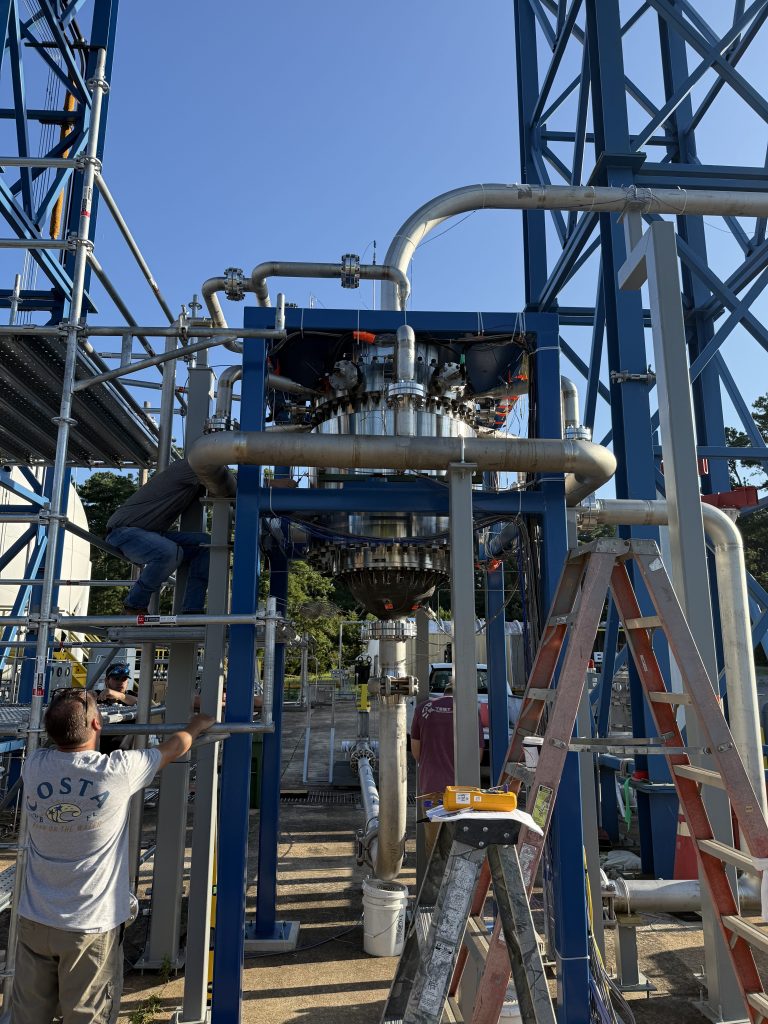 April 10, 2025A flight reactor engineering development unit is fully installed at Test Stand 400 in preparation for cold-flow testing. The test campaign began in July and ran through September, marking the first testing on a flight reactor engineering development unit since the 1960s. NASA/Adam Butt “Nuclear propulsion has multiple benefits including speed and endurance that could enable complex deep space missions,” said Greg Stover acting associate administrator of NASA’s Space Technology Mission Directorate at NASA Headquarters in Washington. “By shortening travel times and expanding mission capabilities, this technology will lay the foundation to explore farther into our solar system than ever before. Information from the cold-flow test series is instrumental in understanding the operational characteristics and fluid flow performance of nuclear reactors.”
Teams at the agency’s Marshall Space Flight Center in Huntsville, Alabama, conducted more than 100 tests on the engineering development unit over several months in 2025. The 44-inch by 72-inch unit, built by BWX Technologies of Richmond, Virginia, is a full-scale, non-nuclear, flight-like development test article the size of a 100-gallon drum that simulates propellant flow throughout the reactor across a range of operational conditions.
The cold-flow tests at NASA Marshall are the culmination of a multi-year activity for the agency and its industry partners. Key test objectives included simulating operational fluid-dynamic responses, gathering critical information for design of the flight instrumentation and control system, providing crucial validation of analytical tools, and serving as a pathfinder for manufacturing, assembly, and integration of near-term flight-capable nuclear propulsion systems.
Other benefits to space travel include increasing the science payload capacity and higher power for instrumentation and communication.
Test engineers were able to demonstrate that the reactor design is not susceptible to destructive flow-induced oscillations, vibrations or pressure waves that occur when a moving fluid interacts with a structure in a way that makes the system shake.
“We’re doing more than proving a new technology,” said Jason Turpin, manager of the Space Nuclear Propulsion Office at NASA Marshall. “This test series generated some of the most detailed flow responses for a flight-like space reactor design in more than 50 years and is a key steppingstone toward developing a flight-capable system. Each milestone brings us closer to expanding what’s possible for the future of human spaceflight, exploration, and science.”
The Space Nuclear Propulsion Office is part of NASA’s Technology Demonstration Missions Program within the agency’s Space Technology Mission Directorate.
Learn more about NASA’s technology advancements:
https://www.nasa.gov/space-technology-mission-directorate/
News Media Contact Joel Wallace
Marshall Space Flight Center, Huntsville, Alabama
256-544-0034
joel.w.wallace@nasa.gov