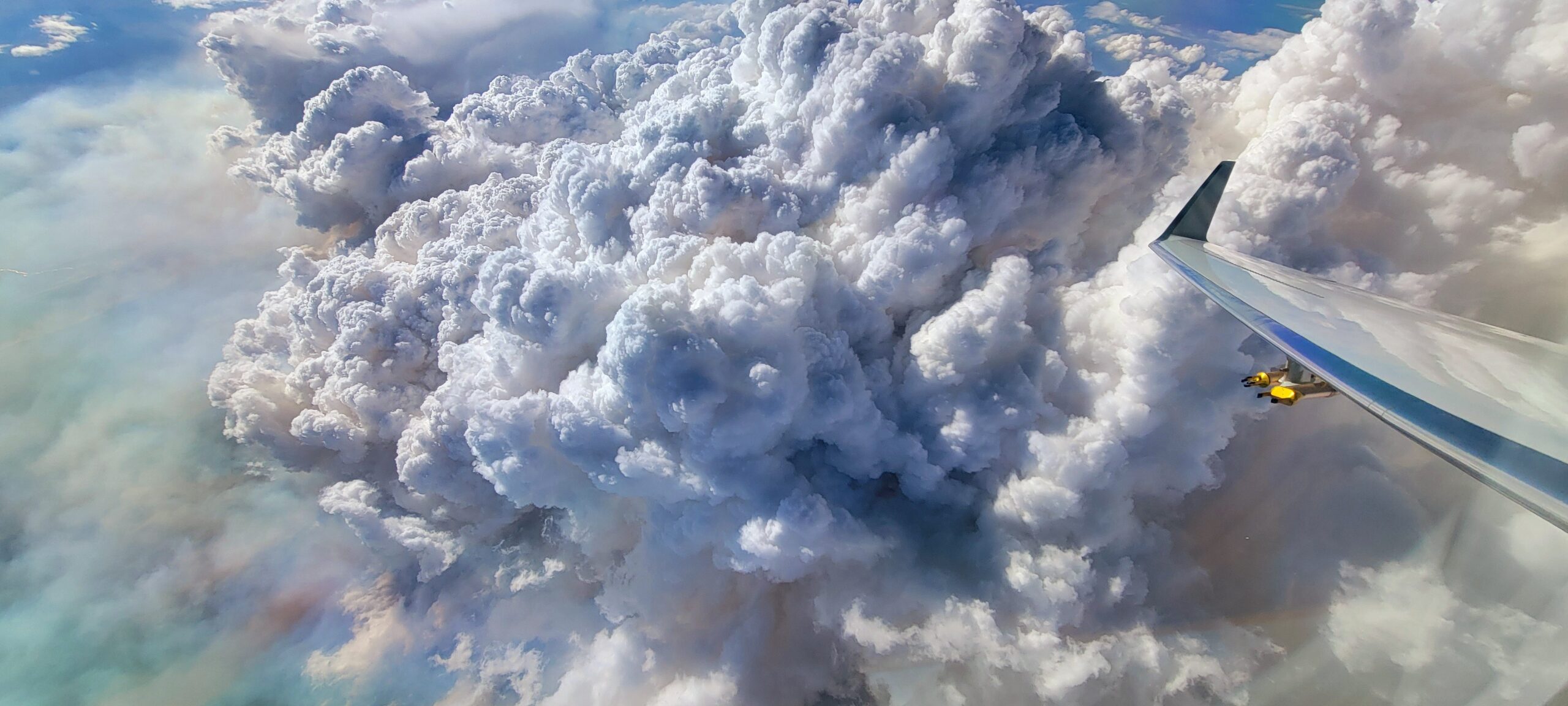
6 Min Read NASA Campaign Explores Clouds Spawned by Wildfires 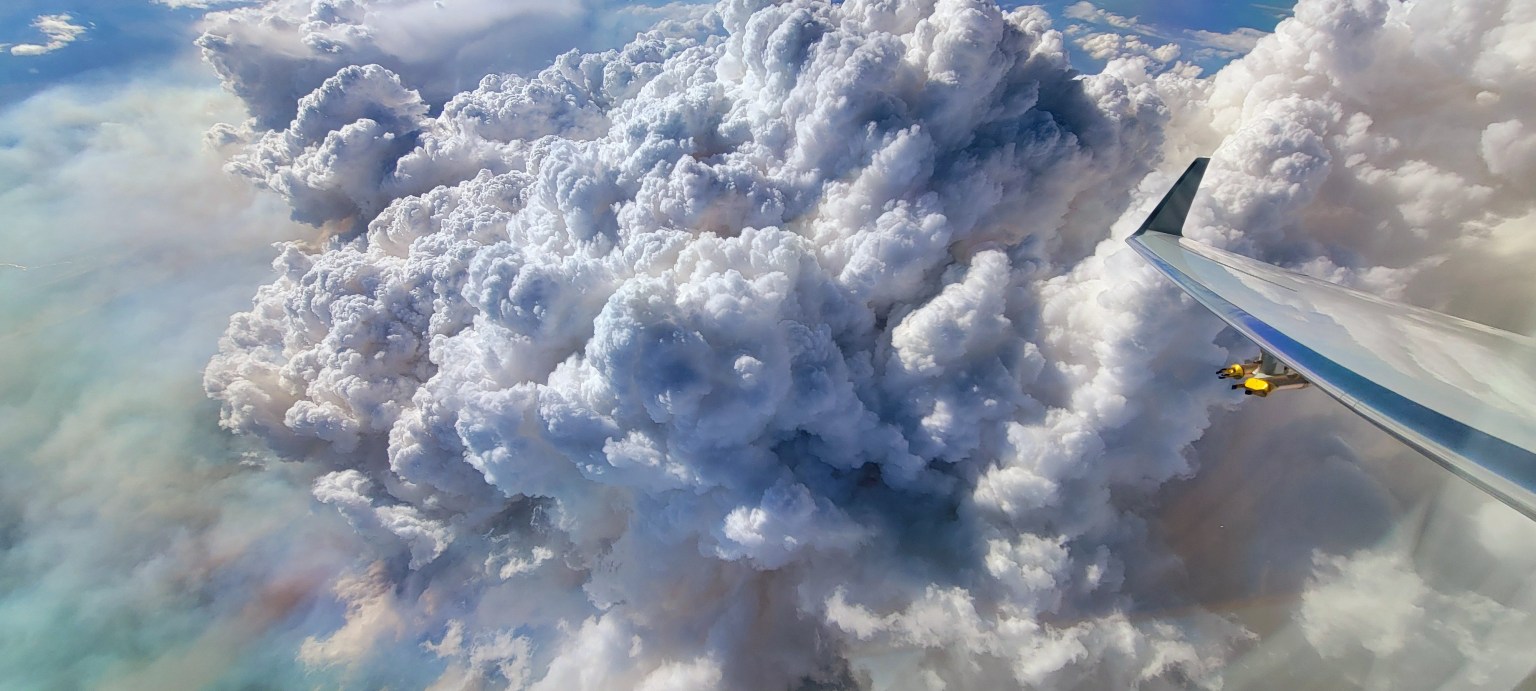 The Wildhorse grass fire in eastern Idaho erupted with a massive pulse of smoke. No one had expected it, but the wildfire had launched what’s known as a pyrocumulonimbus cloud, or pyroCb. It was an elusive weather phenomenon that scientists on NASA’s INSPYRE (INjected Smoke and PYRocumulonimbus Experiment) campaign spent weeks this summer hunting across western North America.
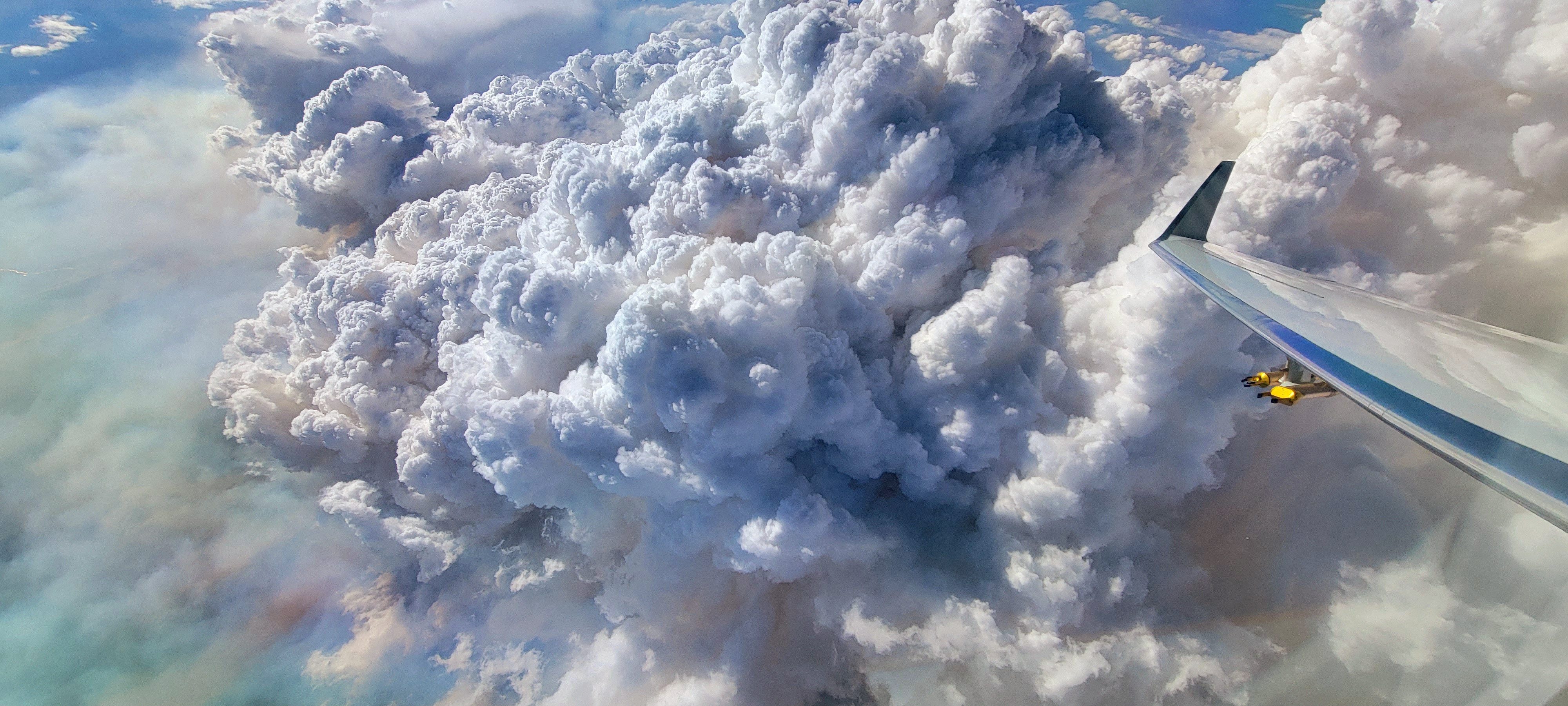
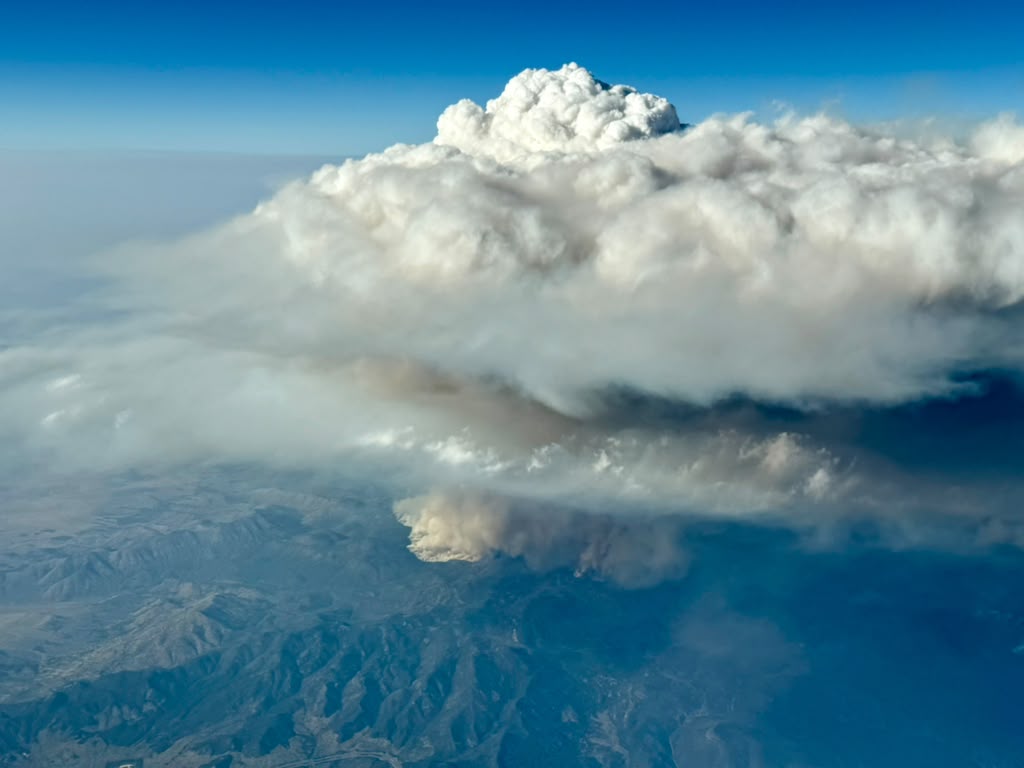 Fire-driven weather about the Widemouth 2 fire in Utah, as seen from the NCAR Gulfstream jet during the fourth INSPYRE campaign research flight on Aug. 3. INSPYRE/Bernadett Weinzierl Pyrocumulonimbus clouds rise above intense fires, producing lightning and rain along with powerful winds that can whip the flames below into a fury. The largest pyroCbs funnel smoke 30,000 to 50,000 feet (10 to 15 kilometers) above Earth’s surface, as high as the cruising altitudes of commercial jets and even into the stratosphere.
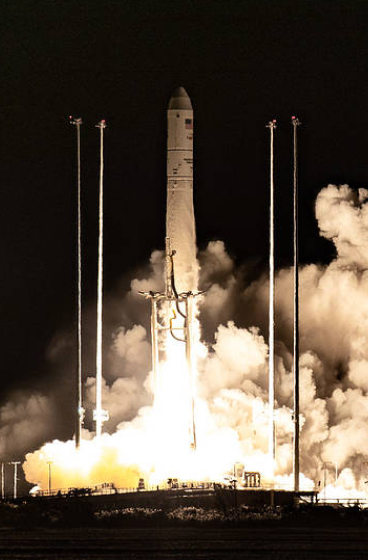
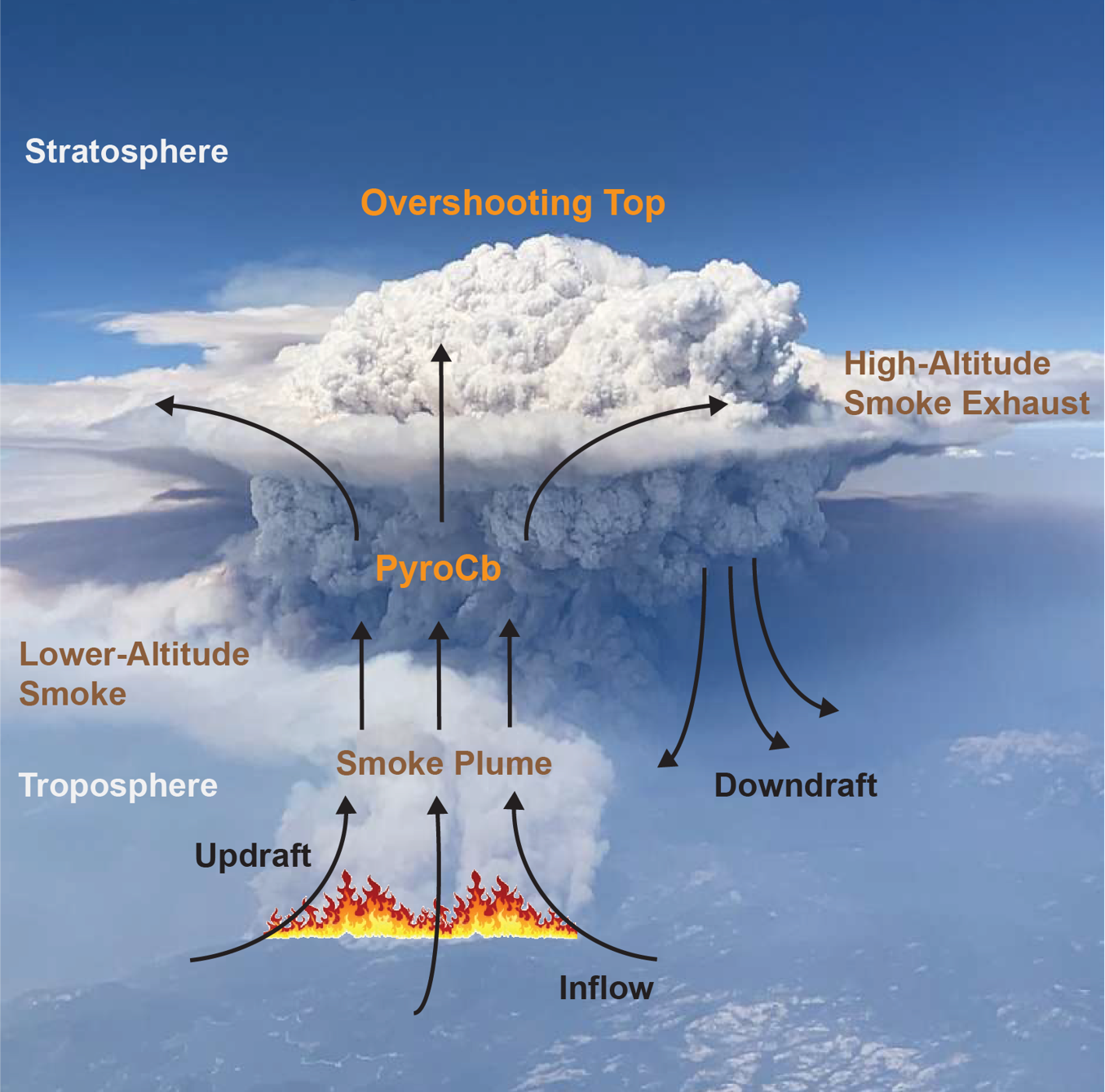 A pyroCb cloud forms when an intense fire funnels a chimney of smoke into the stratosphere above the height of most clouds formed by normal weather patterns. NASA/Bill Ingalls, NASA/JSC/Mark Sowa The significance of pyroCbs emerged around the turn of the 21st century, when satellite observations revealed smoke reaching altitudes previously associated with major volcanic eruptions. Once in the stratosphere, pyroCb smoke can spread across continents, circle the globe, and persist far longer than it would in the lower atmosphere.
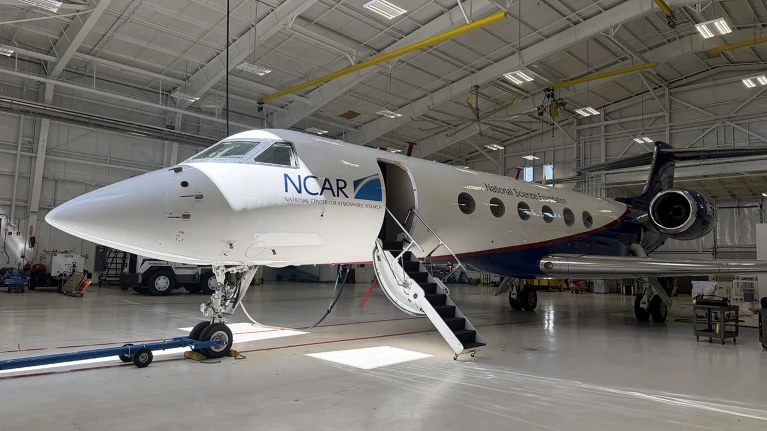 The NCAR Gulfstream jet, outfitted with instrumentation for studying clouds and smoke over wildfires, sits in its hangar at the National Science Foundation’s NCAR Research Aviation Facility in Broomfield, Colorado. NASA/Bill Ingalls, NASA/JSC/Mark Sowa Despite their massive size, pyroCb clouds remain mysterious. But it’s important to understand how they form and connect with the atmosphere, because their smoke can affect climate and weather far from the fires that produced them and long after they’ve extinguished. They also can produce dangerous fire-generated winds.
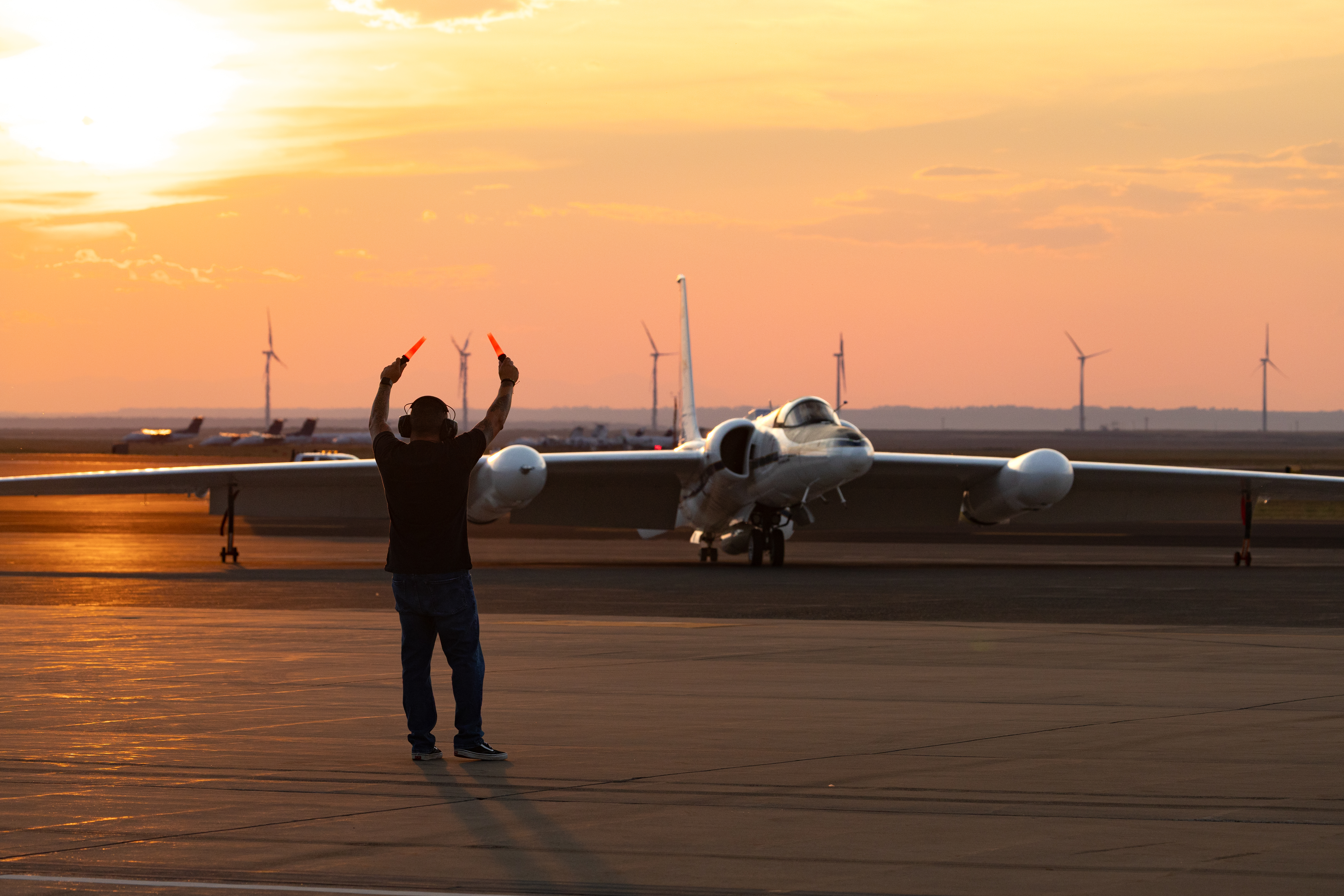 NASA’s ER-2 taxis on the runway during its deployment at the Great Falls International Airport. The high-flying jet launched from Great Falls, Montana, on flights across western North America and as far north as Alaska during the INSPYRE campaign. NASA/Milan Loiacono “We still do not understand if they’re driven by fire energetics, or fire intensity, or by atmospheric conditions above,” said Olga Kalashnikova, a researcher with NASA’s Jet Propulsion Laboratory in Southern California, who is one of the principal investigators leading INSPYRE, the first aircraft campaign designed specifically around studying pyroCbs.
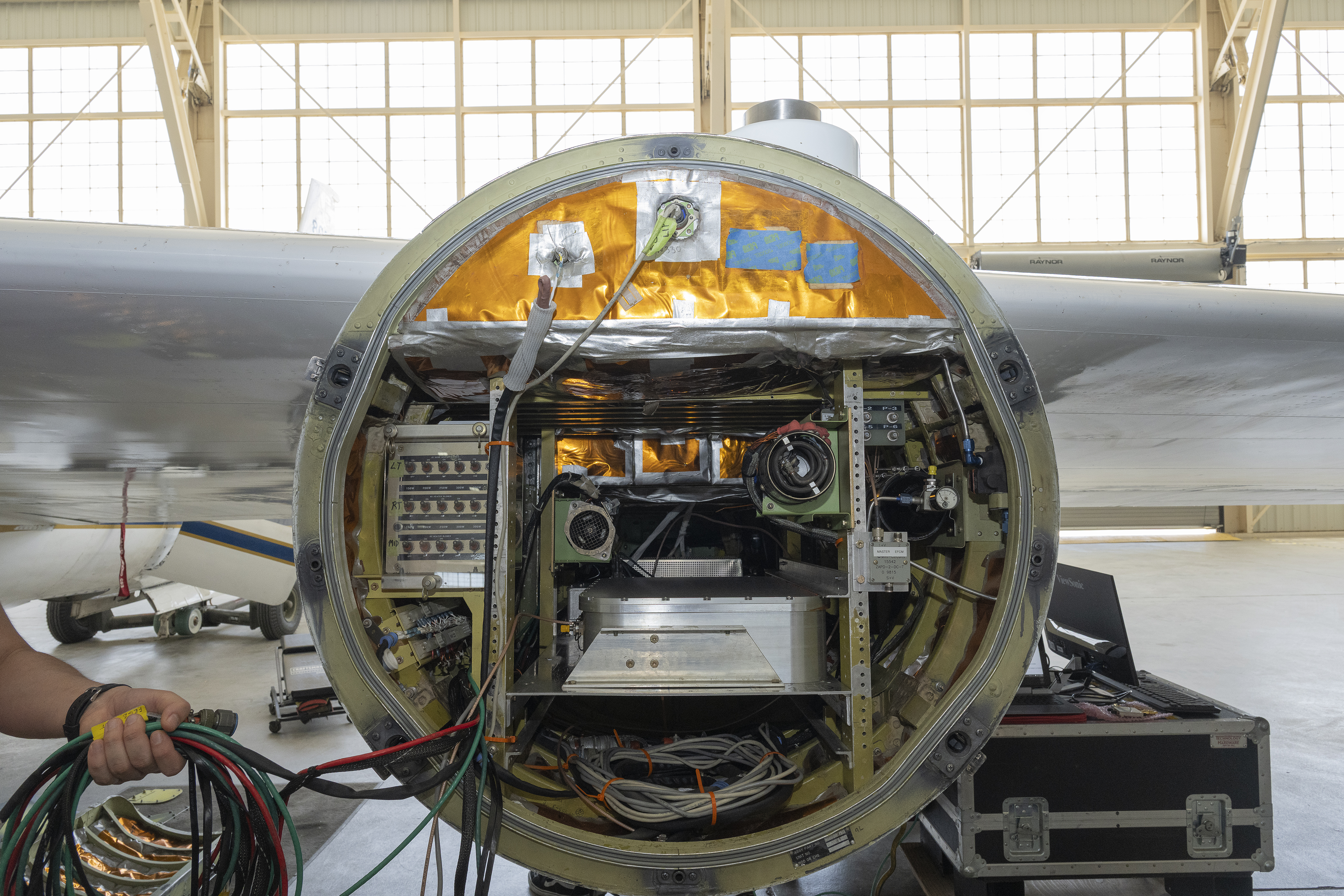 An ER‑2 aircraft based at NASA’s Armstrong Flight Research Center in Edwards, California, carries a pod full of instruments for the INSPYRE campaign. NASA/Carla Escamilla For six weeks this summer, INSPYRE researchers climbed aboard a Gulfstream jet for a series of flights from the plane’s home base at the National Center for Atmospheric Research (NCAR) near Boulder, Colorado. Scientists collected smoke particles, sampled gases, photographed ice crystals, and monitored radiation passing through clouds and reflected back into space. The aircraft crisscrossed above, below, and through clouds to get a close-up view of fire-induced weather and smoke.
Meanwhile, NASA’s high-flying ER-2 aircraft, loaded with 14 instruments, tracked fire intensity, updraft speeds, smoke, and cloud properties from above, while crews drove trucks equipped with sensors to view the same events from the ground. Ultimately, the team will investigate how wildfire-generated clouds transport smoke upward, how clouds transform particles and gases in smoke, how much reaches the stratosphere, and what happens once it gets there.
From fire forecasts to climate models Firefighters will benefit from a better understanding of when pyroCbs are likely to develop and how they affect fire conditions on the ground. “A unique thing about pyrocumulonimbus is they are fire-generated weather, meaning the fire makes its own weather,” said Neil Lareau, an atmospheric scientist at the University of Nevada, Reno, who led INSPYRE’s ground observations. “The fire is making its own thunderstorm, and in the process of doing that, it’s also making its own wind.”
A unique thing about pyrocumulonimbus is they are fire-generated weather . . . the fire makes its own weather. Neil Lareau
University of Nevada
Lareau hopes the research will lead to warnings comparable to the alerts meteorologists issue for severe thunderstorms. For example, he said, a forecast would warn firefighters that a developing cloud could soon produce a dangerous downdraft and wind shift, giving fire managers time to pull personnel off the line.
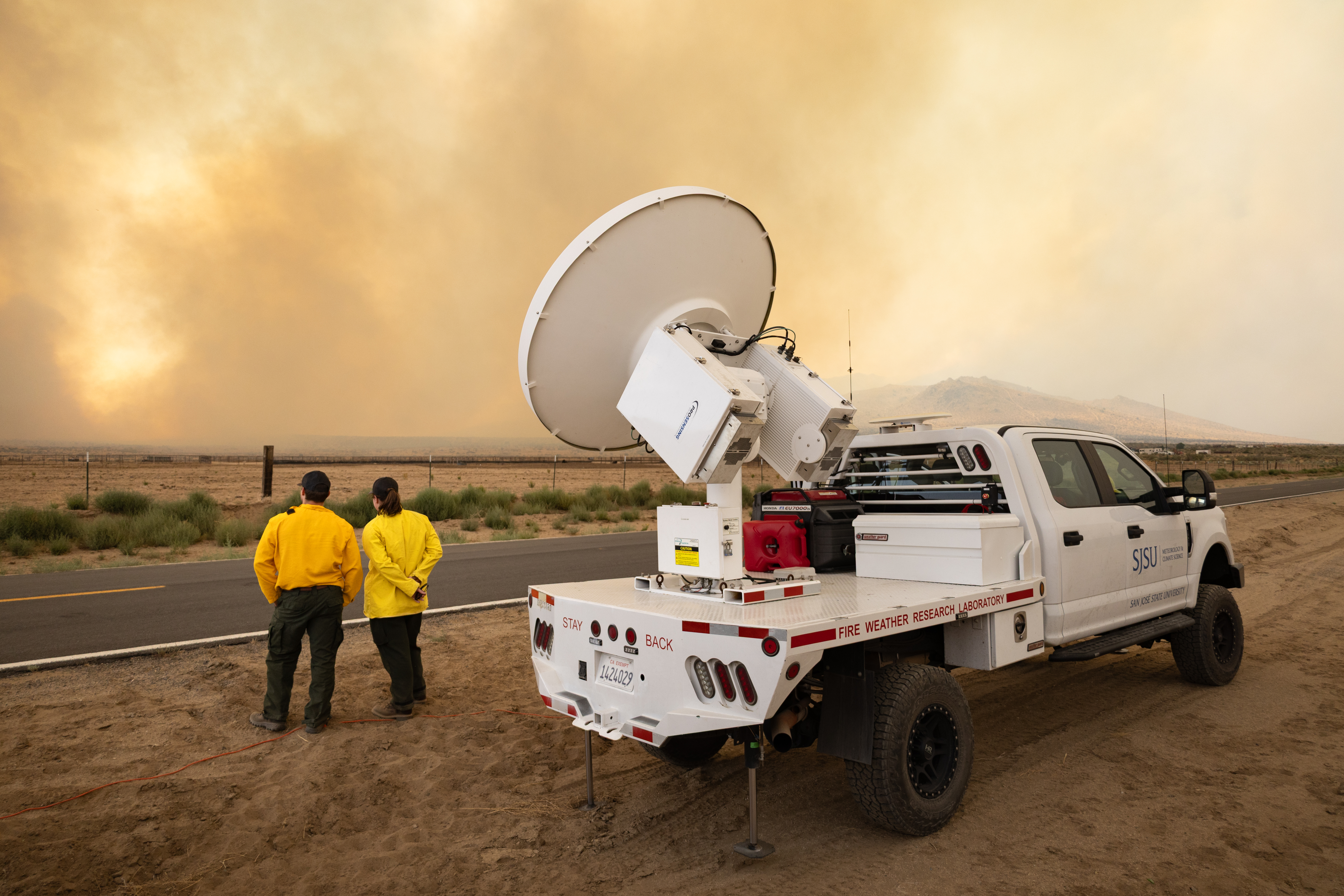 Ground crews traveled across the western U.S. to monitor wildfires up close during the INSPYRE campaign. NASA/Milan Loiacono Additionally, INSPYRE could also improve Earth system models. PyroCbs can carry enormous quantities of smoke into the stratosphere, where particles can persist for months or longer and affect how much solar energy the atmosphere absorbs and how much reaches Earth’s surface. Most numerical prediction models don’t explicitly include the effects of pyroCbs and their smoke injections, said Dave Peterson, a Naval Research Laboratory meteorologist and INSPYRE’s co-principal investigator. Measurements of the particles, gases, and radiation associated with these events will give scientists data to test and improve simulations of their effects on Earth’s weather and climate.
Hunting storms To study wildfire smoke and clouds, and perhaps catch a pyroCb in action, the INSPYRE team first had to find one. The challenge was getting an aircraft to the right place at the right time. Pyrocumulonimbus clouds can develop in minutes and subside just as quickly, while reaching fires hundreds of miles away takes hours of preparation, flight time, and coordination with air traffic controllers.
Instrumentation racks take the place of passenger seats on the NCAR Gulfstream plane that has been converted from an executive jet to a flying laboratory. NASA/Katie Jepson But on Aug. 26, the team got lucky. The Gulfstream was returning from a fire farther west when Sarah Woods, a National Center for Atmospheric Research scientist serving as spotter, got word that the Wildhorse fire was unexpectedly intense.
The fire hadn’t initially attracted much attention. “We knew there was a grass fire there, and everyone’s like, it’s just a grass fire; we’re not going to worry about it,” Peterson said. “And it ended up being the main event.”
We knew there was a grass fire there, and everyone’s like, it’s just a grass fire; we’re not going to worry about it . . . And it ended up being the main event.” DAVE PETERSON
Naval Research Laboratory
When the flight path neared the Wildhorse fire, Woods spotted the fresh remains of a pyroCb from her cramped jump seat behind the pilots. “It looks just like a big thunderstorm, and so as you approach it, you look for a visual indication of the fire on the ground,” said Woods.
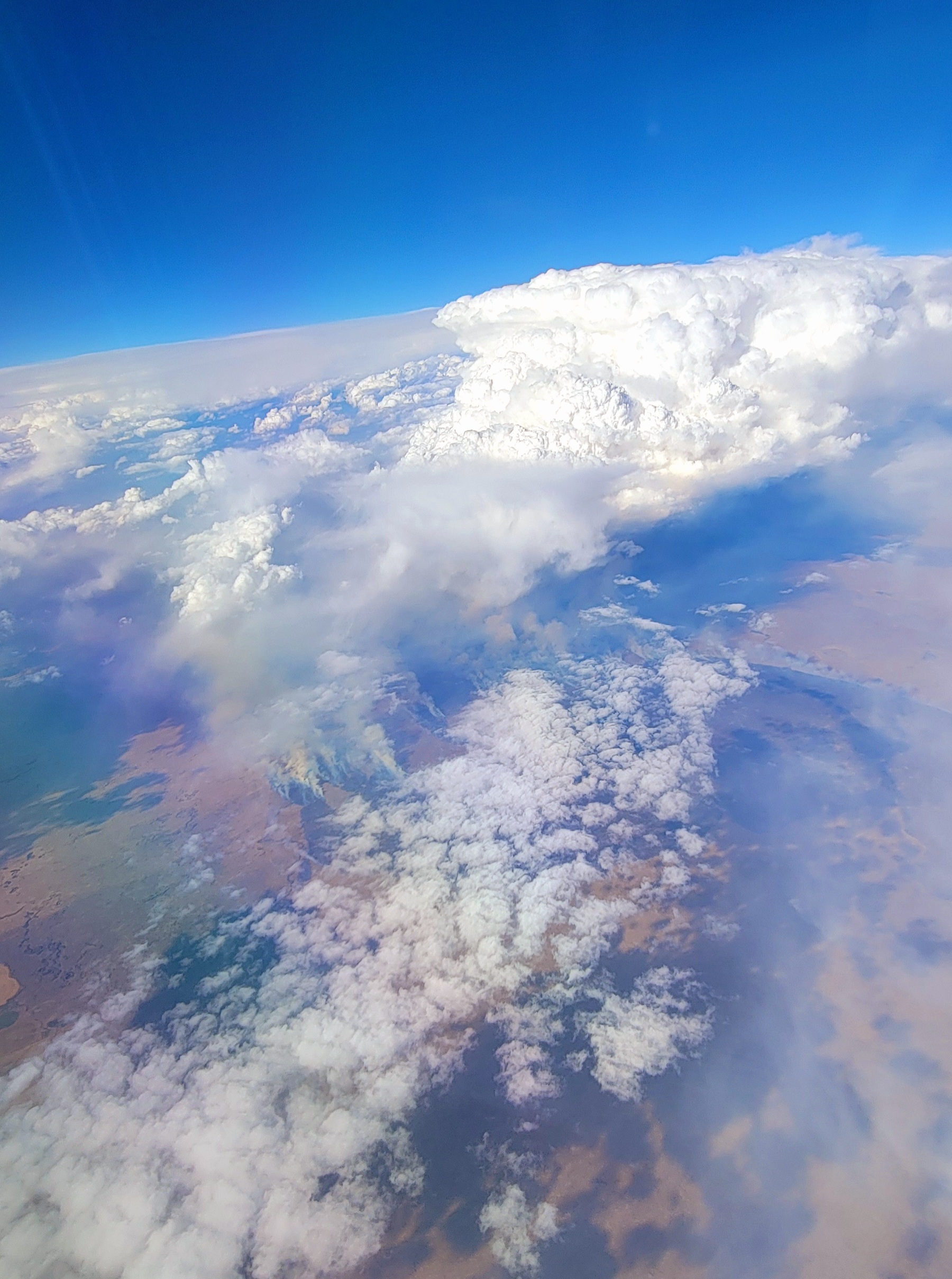 Researchers on an Aug. 26 INSPYRE research flight encountered a pyrocumulonimbus (pyroCb) cloud that unexpectedly formed over the Wildhorse grass fire in eastern Idaho. INSPYRE/Chris Kruse Seeing the fire on the ground far below confirmed that the cloud was fire-generated. At Woods’ request, the pilots swung the plane around and spent the next three hours flying back and forth through the cloud plume and the trail of smoke drifting northwest toward Wyoming.
The chance encounter gave the INSPYRE team measurements of a pyroCb plume roughly an hour after the cloud first erupted. Other flights coordinated between the Gulfstream jet and ER-2 added crucial observations of active fire-driven atmospheric airflow that will help document how the resulting smoke plumes evolve over the days and weeks that follow.
Putting pieces together
Measurements from the Gulfstream and ER-2 will now be combined with satellite and ground observations and compared with models.
“When clouds form, they modify chemistry,” said Kalashnikova, the JPL-based principal investigator. That altered smoke can have different effects on radiation, she said, making it important to understand both how pyroCbs form and the smoke that emerges from them.
In the summer of 2026, the challenge was finding the clouds and collecting the measurements. Now comes the work of understanding what they found.
 3 min read Rains Swamp the Gandak River After days of torrential rain, the river rose to record-breaking levels in parts of Nepal…
Article
16 hours ago
 3 min read An Agricultural “Island” in the Saskatchewan River Delta Surrounded by wetlands, Manitoba’s northernmost farmland near The Pas turns from green to brown over…
Article
2 days ago
 4 min read Powerful Storms Continue to Prowl the Pacific Hurricanes Polo and Nolo sent destructive effects ashore amid an active season in the northeastern…
Article
3 days ago
About the Author  James Riordon Senior Science Writer
Details Last Updated Oct 02, 2026 Related Terms Wildfires Armstrong Flight Research Center Earth Langley Research Center NASA Aircraft Science in the Air
3 min read Rains Swamp the Gandak River After days of torrential rain, the river rose to record-breaking levels in parts of Nepal…
Article
16 hours ago
3 min read An Agricultural “Island” in the Saskatchewan River Delta Surrounded by wetlands, Manitoba’s northernmost farmland near The Pas turns from green to brown over…
Article
2 days ago
4 min read Powerful Storms Continue to Prowl the Pacific Hurricanes Polo and Nolo sent destructive effects ashore amid an active season in the northeastern…
Article
3 days ago
Keep Exploring Discover More Topics From NASA Missions