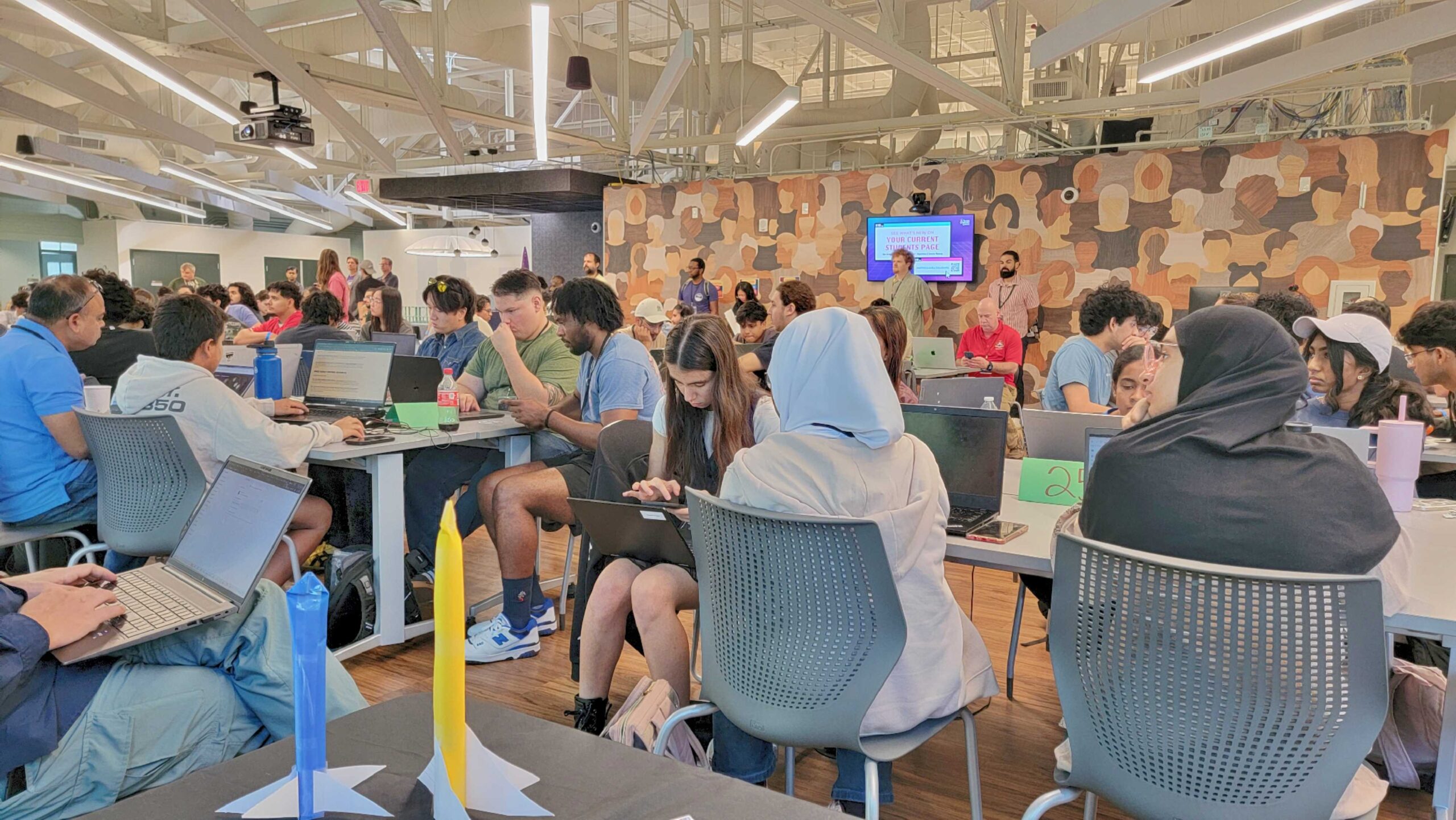
NASA Space Apps announced Thursday 10 winners of the 2025 NASA Space Apps Challenge. During this two-day hackathon, participants gathered at 551 local events across 167 countries and territories to showcase their STEM skills and proposed ways to transform NASA’s open data into actionable tools.
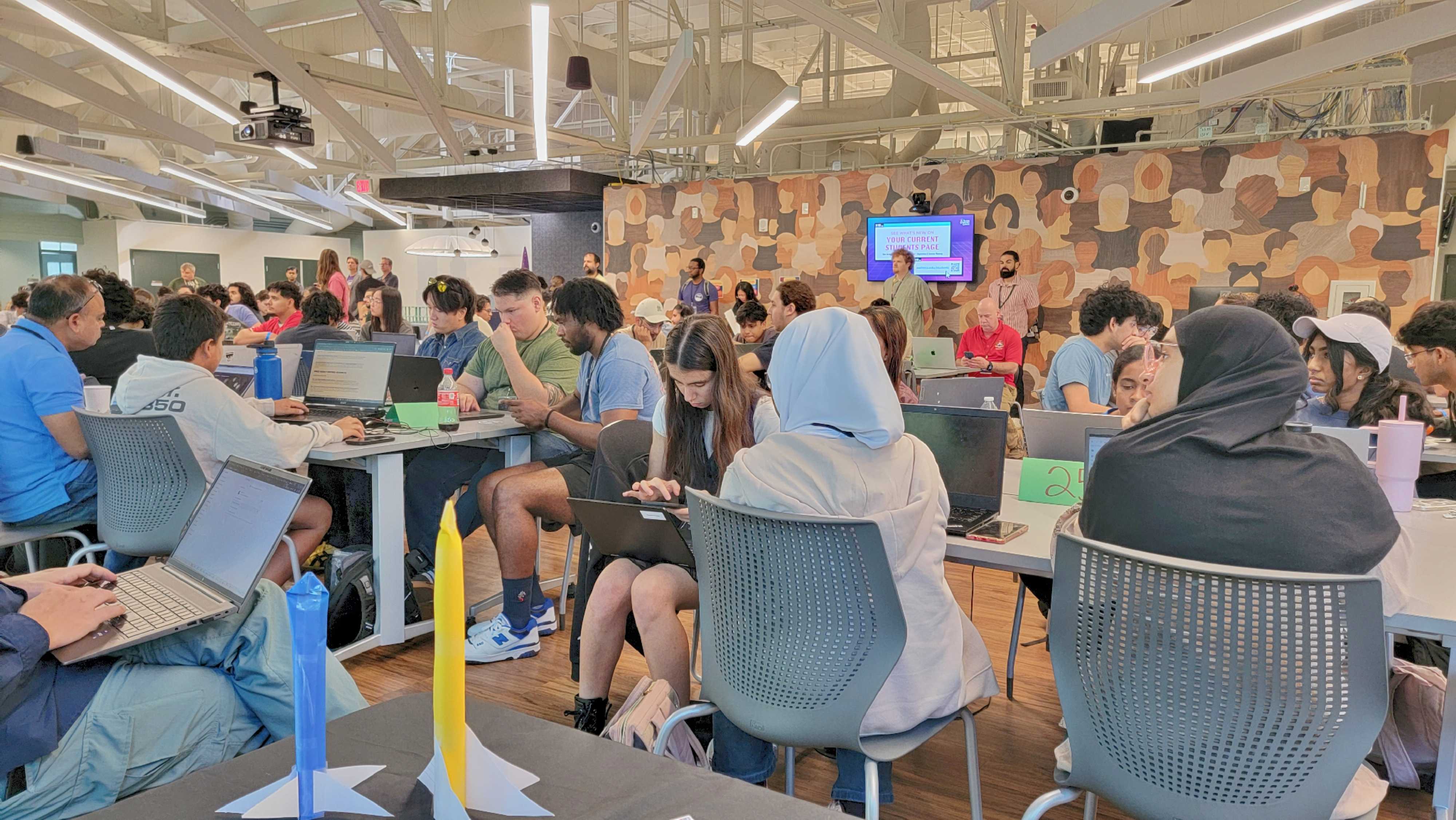 Participants work on their projects at the NASA Space Apps Challenge in Austin, Texas, at one of more than 50 local events held in the United States.NASA Space Apps More than 114,000 participants came together to address challenges created by NASA subject matter experts. These challenges ranged in complexity and topic, tasking participants with everything from leveraging artificial intelligence, to improving access to NASA research, and developing tools to evaluate air quality.
“The Space Apps Challenge puts NASA’s free and open data into the hands of explorers around the world,” said Karen St. Germain, director, NASA Earth Science Division at NASA Headquarters in Washington. “With participants as varied as NASA enthusiasts, future scientists, regional decision-makers and members of the public, this challenge demonstrates the excitement of discovery and the real-world applications of agency data. Space apps also fosters a global community of creative and innovative ideas.”
The winners were determined from more than 11,500 project submissions and judged by subject matter experts from NASA and agency partners:
Best Use of Science Award: SpaceGenes+
Team Members: Saloni T.
Challenge: Build a Space Biology Knowledge Engine
Country/Territory: Germany
Team SpaceGenes+ created an interactive dashboard designed to help researchers uncover how radiation and microgravity together impact astronaut health at the molecular level. It gives researchers and mission planners an easy way to identify important molecular changes, supporting more effective protection strategies for long-duration spaceflight.
Learn more about SpaceGenes+’ project
Best Use of Data Award: Resonant Exoplanets
Team Members: Adhvaidh S., Gabriel S., Jack A., Sahil S.
Challenge: A World Away: Hunting for Exoplanets with AI
Country/Territory: United States
Team Resonant Exoplanets developed an AI-powered system that ingests large sets of telescope and satellite data, including spectra from missions like the James Webb Space Telescope. This tool automatically analyzes data for exoplanets and detects possible biosignatures, rather than identifying them manually.
Learn more about Resonant Exoplanets’ project
Best Use of Technology Award: Twisters
Team Members: Fernando A., Marcelo T., Mariana D., Regina R., Regina F.
Challenge: Will It Rain on My Parade?
Country/Territory: Mexico
Team Twisters developed SkySense, a web-app platform that uses NASA Earth observation data and AI analysis to provide ultra-local, personalized weather predictions and to analyze weather variables such as rain, wind, temperature, humidity, and visibility, generating real-time risk assessments and suggesting the safest time windows for activities.
Learn more about Twisters’ project
Galactic Impact Award: Astro Sweepers: We Catch What Space Leaves Behind
Team Members: Harshiv T., Pragathy S., Pratik J., Sherlin D., Yousra H., Zienab E.
Challenge: Commercializing Low Earth Orbit (LEO)
Country/Territory: Universal Event
Team Astro Sweepers developed an end-to-end orbital debris compliance and risk intelligence platform that automatically ingests public orbital data to generate Debris Assessment Software reports and compute the Astro Sweepers Risk Index for every resident space object. This project considers the operational, regulatory, and environmental challenges of commercialized space travel.
Learn more about Astro Sweepers’ project
Best Mission Concept Award: PureFlow
Team Members: Esthefany M., João F., Laiza L., Lara D., Pedro H., Thayane D.
Challenge: Your Home in Space: The Habitat Layout Creator
Country/Territory: Brazil
PureFlow developed an interactive systems engineering platform that allows users to design, model in 3D, and validate space habitats, and then test the design against real space-weather threats, such as solar storms. This system considers the critical functions required for living in space, including waste management, power, life support, communications, and more.
Learn more about PureFlows’ project
Most Inspirational Award: Photonics Odyssey
Team Members: Manish D., M. K., Prasanth G., Rajalingam N., Rashi M., Sakthi R.
Challenge: Commercializing Low Earth Orbit (LEO)
Country/Territory: India
Photonics Odyssey reimagined satellite internet as a sovereign national infrastructure rather than a private service, proposing a phased-array antenna approach that reduces ground dependency and expands broadband access to remote regions of India. The concept aims to help connect more than 700 million people who lack access to broadband internet.
Learn more about Photonics Odysseys’ project
Best Use of Storytelling Award: HerCode Space
Team Members: Alice R., Joselyn R., Paula C., Pierina J.
Challenge: Stellar Stories: Space Weather Through the Eyes of Earthlings
Country/Territory: Universal Event
HerCode Space combined NASA data and heliophysics concepts with powerful storytelling and vibrant illustrations to teach kids how space weather affects daily life and why it matters. HerCode Science hopes their story, “A Solar Tale,” can bridge science and imagination, and bring heliophysics to life in classrooms, libraries, and outreach programs.
Learn more about HerCode Spaces’ project
Global Connection Award: Gaia+LEO
Team Members: Adam H., Katia L., Prajwal S., Upendra K.
Challenge: Commercializing Low Earth Orbit (LEO)
Country/Territory: United States
Team Gaia+LEO developed a mixed-integer optimization framework that co-designs orbital and terrestrial data-center networks to support large-scale AI training and climate modeling in orbit. Their goal is to reduce the power, and water demands of Earth-based systems and help accelerate the shift toward space-based, green computing within the emerging orbital economy.
Learn more about Gaia+LEOs’ project
Art & Technology Award: Zumorroda-X
Team Members: Alaa A., Esraa A., Malak S., Mennatulla E.
Challenge: NASA Farm Navigators: Using NASA Data Exploration in Agriculture
Country/Territory: Egypt
Team Zumorroda-X created mini games that allow players to step into the shoes of a farmer who sets off on an epic journey around the world. Through this game, players can learn how farmers globally adapt to heat waves, flooding, and other environmental challenges.
Learn more about Zumorroda-Xs’ project
Local Impact Award: QUEÑARIS
Team Members: Borax Q., Carlos Y., Marcelo S., Máximo S., Oscar M., Pamela P.
Challenge: BloomWatch: An Earth Observation Application for Global Flowering Phenology
Country/Territory: Peru
Team QUEÑARIS’ project addresses critical water scarcity in Peru’s second-largest city, Arequipa, caused by the degradation of queñua forests, which are vital for water retention. Their platform combines native microorganisms, NASA satellite data, drones, and artificial intelligence to accelerate tree growth, identify the best areas for reforestation, and monitor ecosystem health.
Learn more about QUEÑARIS’ project
Stay up to date with #SpaceApps by following these accounts:
X: @SpaceApps
Instagram: @nasa_spaceapps
Facebook: @spaceappschallenge
YouTube: @NASASpaceAppsChallenge
NASA Space Apps is funded by NASA’s Earth Science Division through a contract with Booz Allen Hamilton, Mindgrub, and SecondMuse.
To learn more about what inspired these winning projects, visit:
https://www.spaceappschallenge.org
 6 min read NASA International Space Apps Challenge Announces 2024 Global Winners Article 11 months ago
  5 min read 2023 NASA International Space Apps Challenge Announces 10 Global Winners Ten teams from around the world have been named the Global Winners of the 2023…
Article 2 years ago