1 min read
Preparations for Next Moonwalk Simulations Underway (and Underwater) 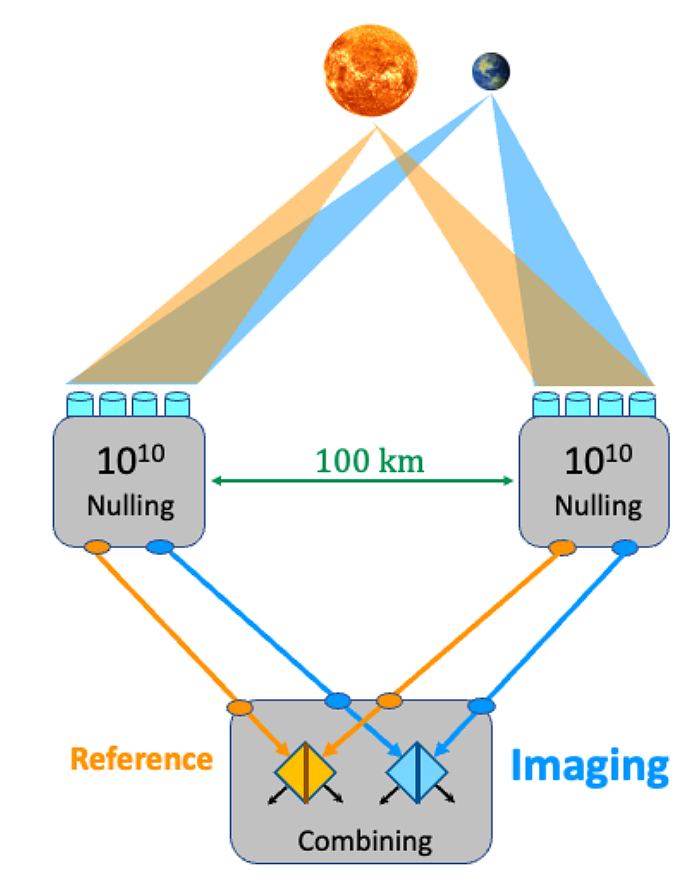 Graphic depiction of the Mapping Alien Continents concept.Paul Stankus Paul Stankus
Brookhaven Science Associates
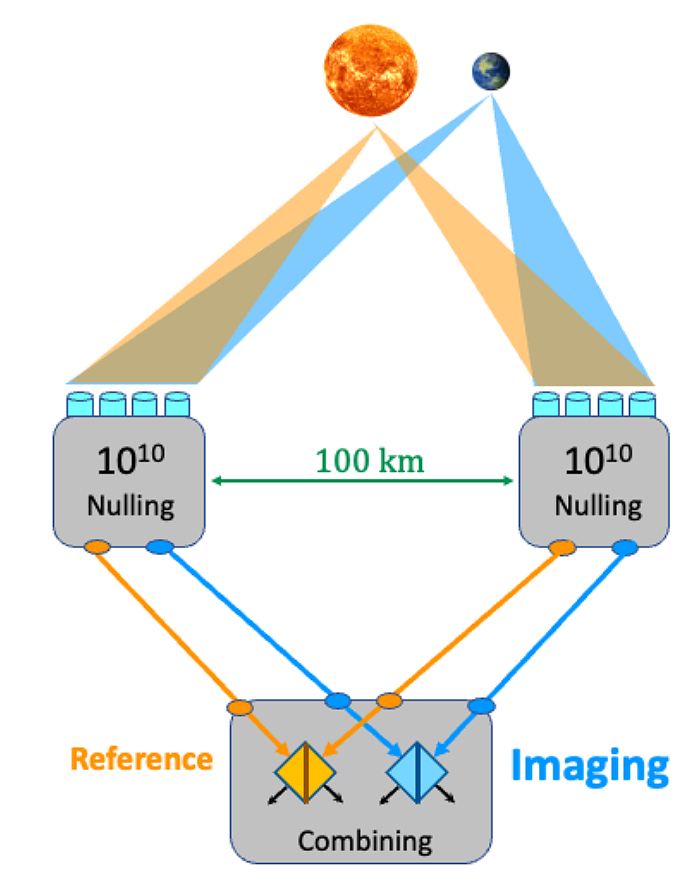
The scientific goal of the proposed work will be reconstructing the image, ie resolving surface features, of an Earth-like exoplanet around a nearby star as seen in visible light. The innovation is in two stages. First, the design of a new kind of nulling interferometer — “dynamic hierarchical nulling” — combining inputs from multiple apertures and capable of separating star light from planet light with contrast of 10^10 or better in the visible. Second, combine the output beams from two such nullers on spacecraft stationed ~100km apart to achieve the required angular resolution using Michelson interferometric imaging; note that the hierarchical nuller preserves the star’s light in a separate beam which can then be used as in interference phase reference. The capability to survey the features of Earth-like exoplanets is perfectly aligned with NASA priorities and sure to excite public interest.
Facebook logo @NASATechnology @NASA_Technology
Keep Exploring Discover More NIAC Topics Space Technology Mission Directorate
 NASA Innovative Advanced Concepts