
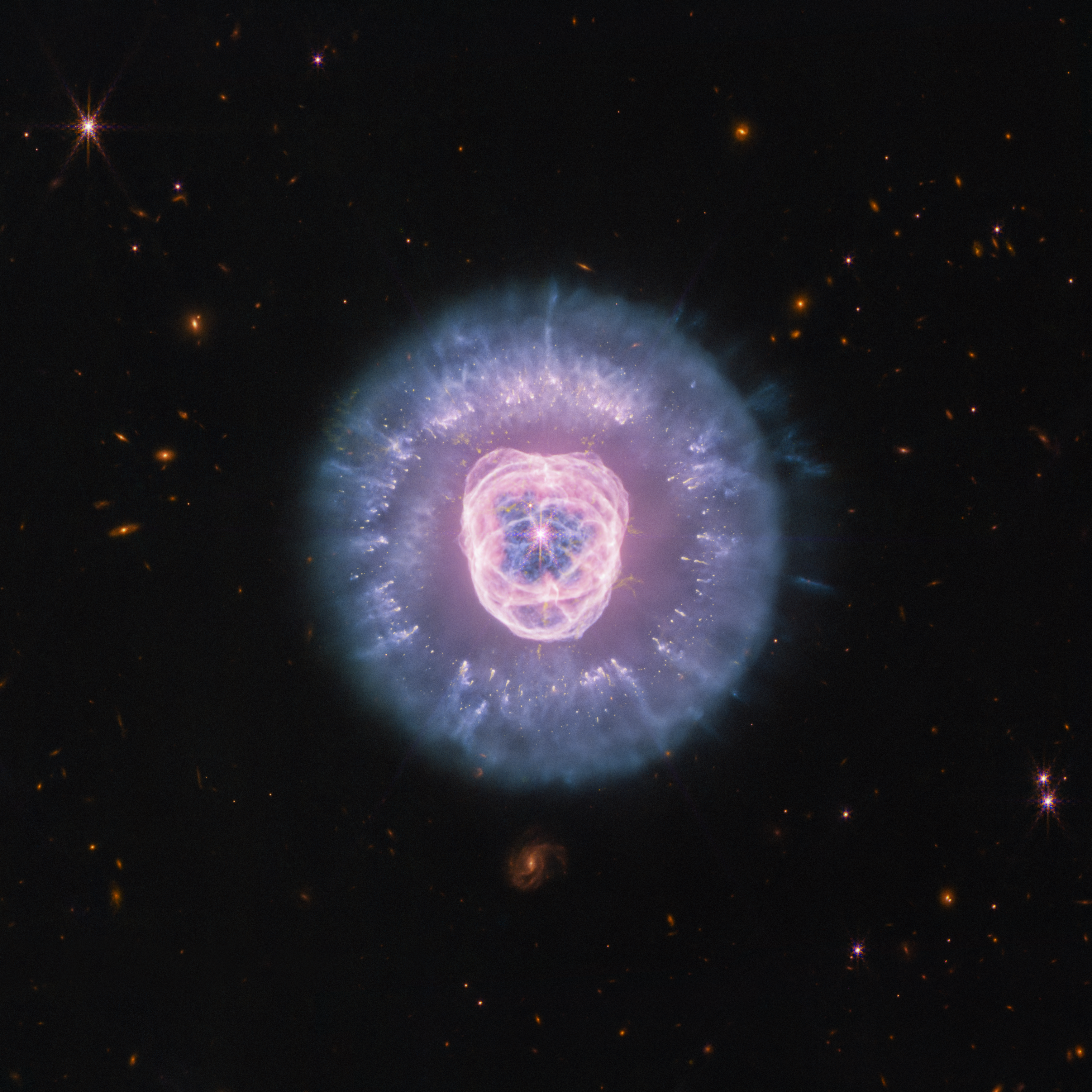
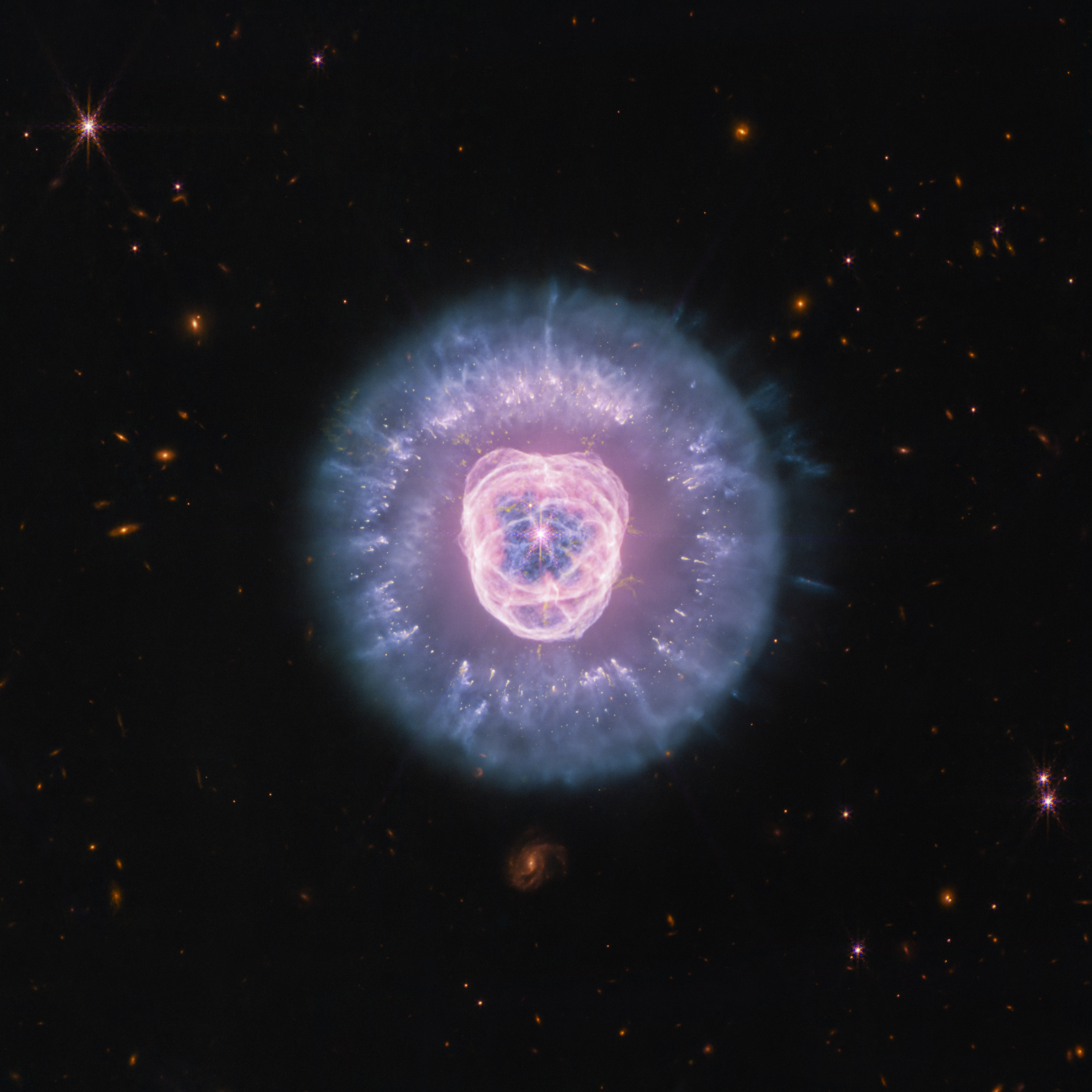
 NASA’s James Webb Space Telescope imaged the planetary nebula NGC 2392, the Lion Nebula, using the observatory’s NIRCam and MIRI instruments. The central star’s remains are responsible for the nebula’s structure, including a lion face-shaped bubble of ionized gas and dust “mane.”Image: NASA, ESA, CSA, STScI; Image Processing: Alyssa Pagan (STScI) Observing across the starry “plains” of space, NASA’s James Webb Space Telescope has taken new images of NGC 2392, nicknamed the Lion Nebula. The nebula’s “mane” is clear and detailed in this image released on Aug. 10, 2026, due to Webb’s high-resolution imaging.
See more images of the Lion Nebula from Webb.
Image: NASA, ESA, CSA, STScI; Image Processing: Alyssa Pagan (STScI)