Explore Hubble Hubble Home Overview About Hubble The History of Hubble Hubble Timeline Why Have a Telescope in Space? Hubble by the Numbers At the Museum FAQs Impact & Benefits Hubble’s Impact & Benefits Science Impacts Cultural Impact Technology Benefits Impact on Human Spaceflight Astro Community Impacts Science Hubble Science Science Themes Science Highlights Science Behind Discoveries Hubble’s Partners in Science Universe Uncovered AI and Hubble Science Explore the Night Sky Observatory Hubble Observatory Hubble Design Mission Operations Missions to Hubble Hubble vs Webb Team Hubble Team Career Aspirations Hubble Astronauts Multimedia Images Videos Sonifications Podcasts e-Books Online Activities 3D Hubble Models Lithographs Fact Sheets Posters Hubble on the NASA App Glossary News Hubble News Social Media Media Resources More 35th Anniversary Online Activities 2 min read
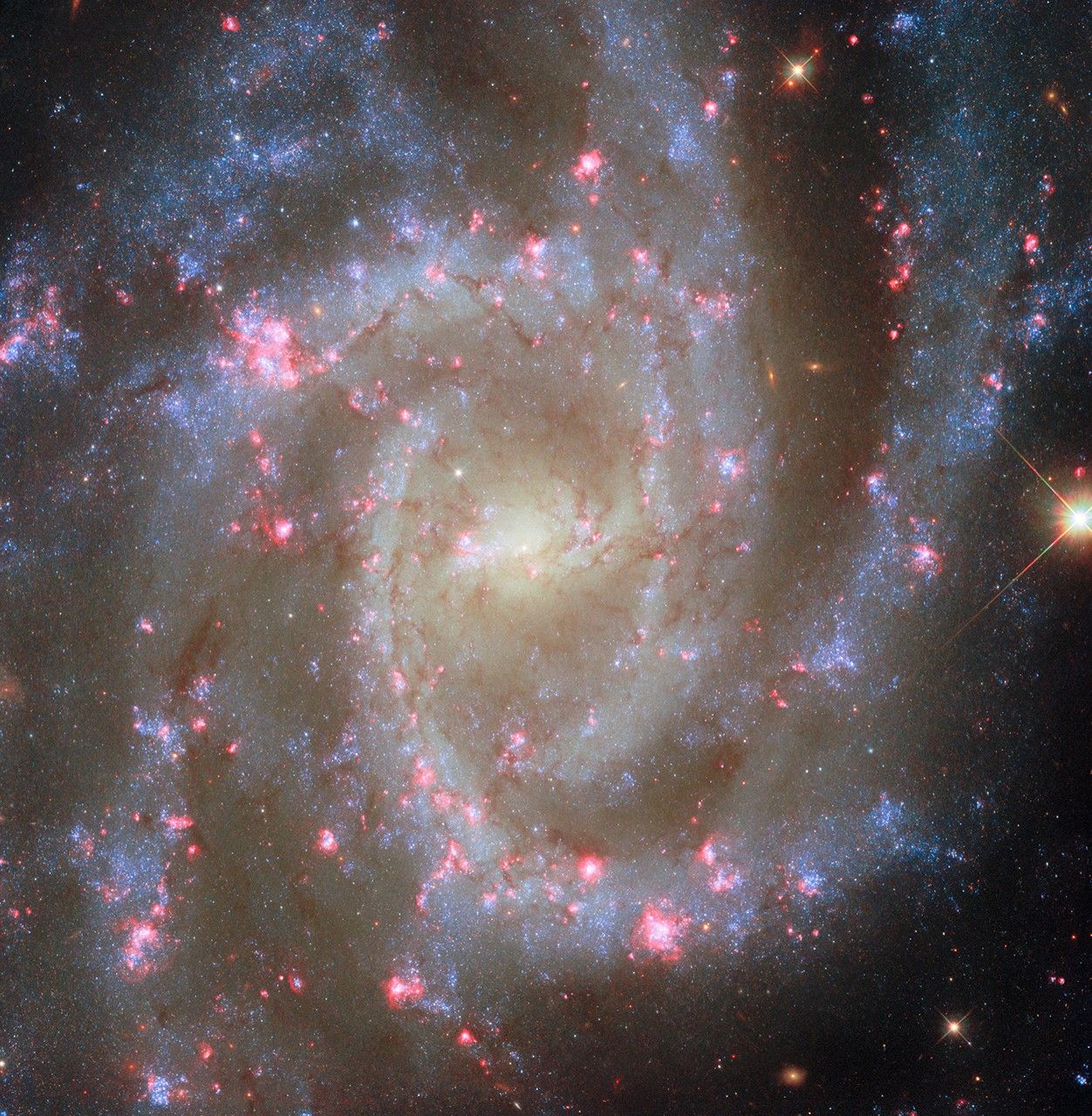
Hubble Observes Noteworthy Nearby Spiral Galaxy 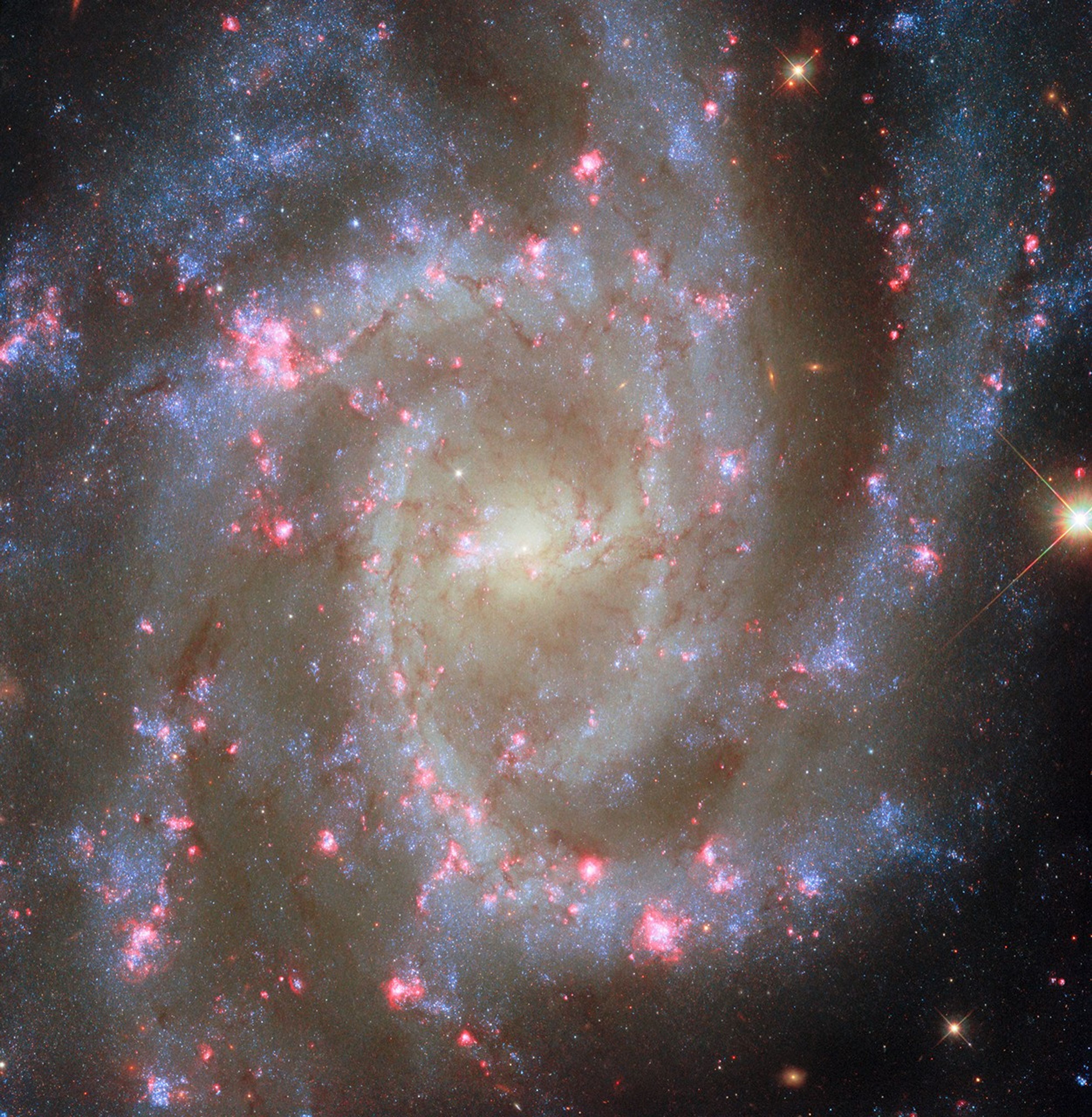 This NASA/ESA Hubble Space Telescope image features the nearby spiral galaxy NGC 2835. ESA/Hubble & NASA, R. Chandar, J. Lee and the PHANGS-HST team This NASA/ESA Hubble Space Telescope image offers a new view of the nearby spiral galaxy NGC 2835, which lies 35 million light-years away in the constellation Hydra (the Water Snake). The galaxy’s spiral arms are dotted with young blue stars sweeping around an oval-shaped center where older stars reside.
This image differs from previously released images from Hubble and the NASA/ESA/CSA James Webb Space Telescope because it incorporates new data from Hubble that captures a specific wavelength of red light called H-alpha. The regions that are bright in H-alpha emission are visible along NGC 2835’s spiral arms, where dozens of bright pink nebulae appear like flowers in bloom. Astronomers are interested in H-alpha light because it signals the presence of several different types of nebulae that arise during different stages of a star’s life. Newborn, massive stars create nebulae called H II regions that are particularly brilliant sources of H-alpha light, while dying stars can leave behind supernova remnants or planetary nebulae that can also be identified by their H-alpha emission.
By using Hubble’s sensitive instruments to survey 19 nearby galaxies, researchers aim to identify more than 50,000 nebulae. These observations will help to explain how stars affect their birth neighborhoods through intense starlight and winds.
Text Credit: ESA/Hubble
Facebook logo @NASAHubble @NASAHubble Instagram logo @NASAHubble
Details Last Updated Aug 21, 2025 Editor Andrea Gianopoulos Location NASA Goddard Space Flight Center Related Terms Astrophysics Astrophysics Division Galaxies Goddard Space Flight Center Hubble Space Telescope Spiral Galaxies The Universe
Keep Exploring Discover More Topics From Hubble Hubble Space Telescope
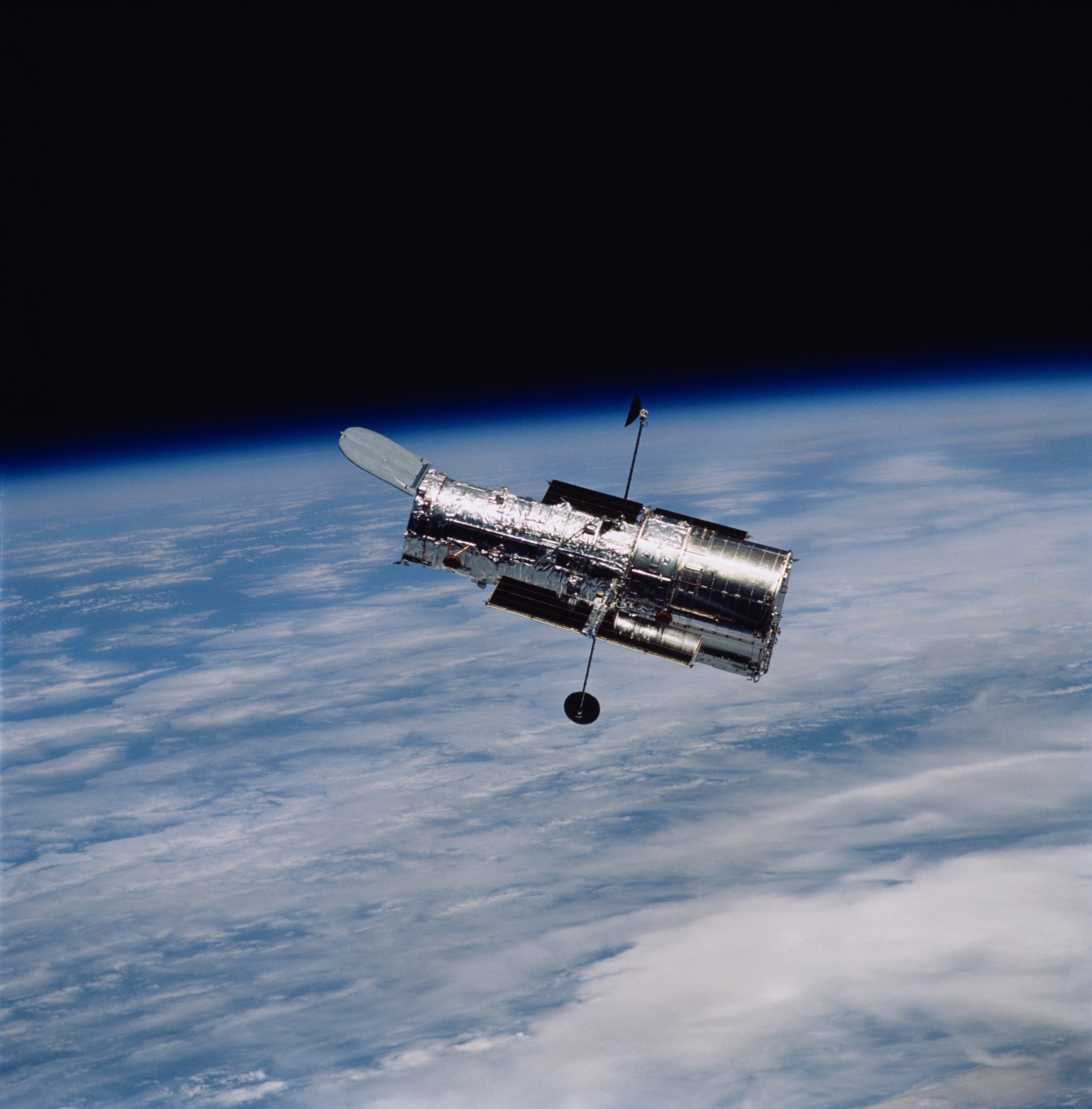
Since its 1990 launch, the Hubble Space Telescope has changed our fundamental understanding of the universe.