Explore Hubble Hubble Home Overview About Hubble The History of Hubble Hubble Timeline Why Have a Telescope in Space? Hubble by the Numbers At the Museum FAQs Impact & Benefits Hubble’s Impact & Benefits Science Impacts Cultural Impact Technology Benefits Impact on Human Spaceflight Astro Community Impacts Science Hubble Science Science Themes Science Highlights Science Behind Discoveries Hubble’s Partners in Science Universe Uncovered Hubble and Artificial Intelligence Explore the Night Sky Observatory Hubble Observatory Hubble Design Mission Operations Missions to Hubble Hubble vs Webb Team Hubble Team Career Aspirations Hubble Astronauts Multimedia Images Videos Sonifications Podcasts e-Books Online Activities 3D Hubble Models Lithographs Fact Sheets Posters Hubble on the NASA App Glossary News Hubble News Social Media Media Resources More 35th Anniversary Online Activities 2 min read
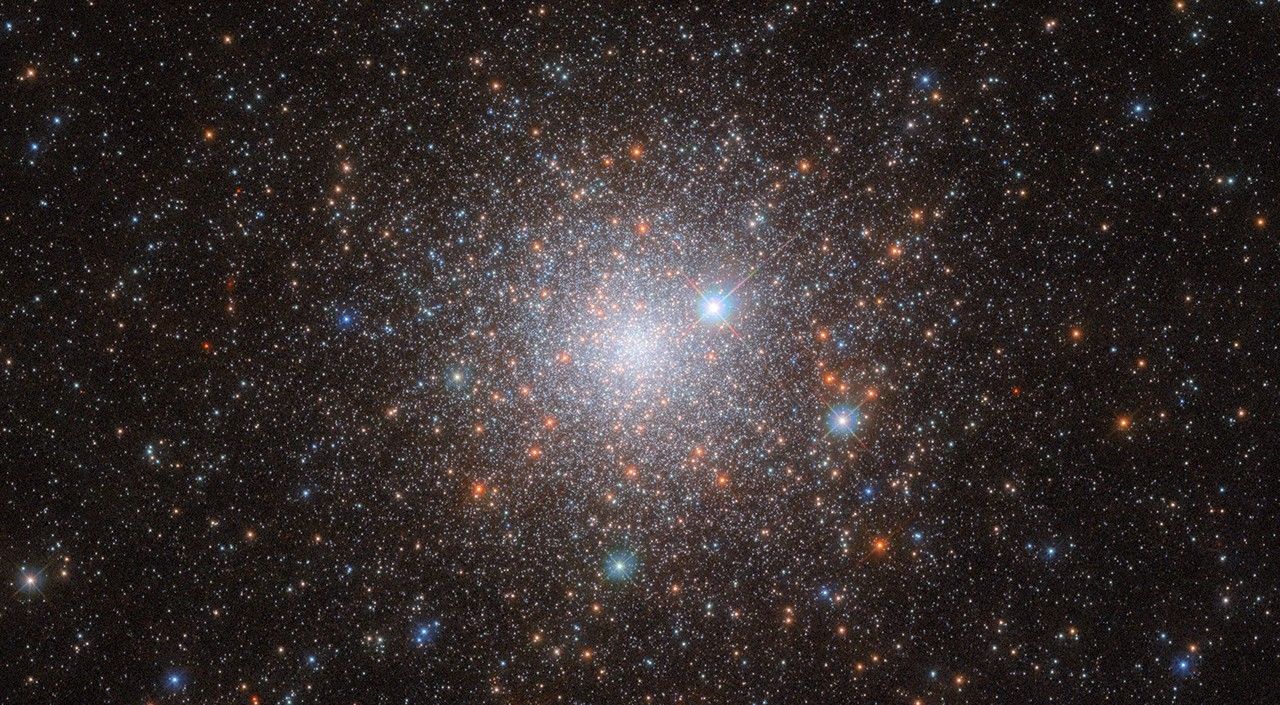
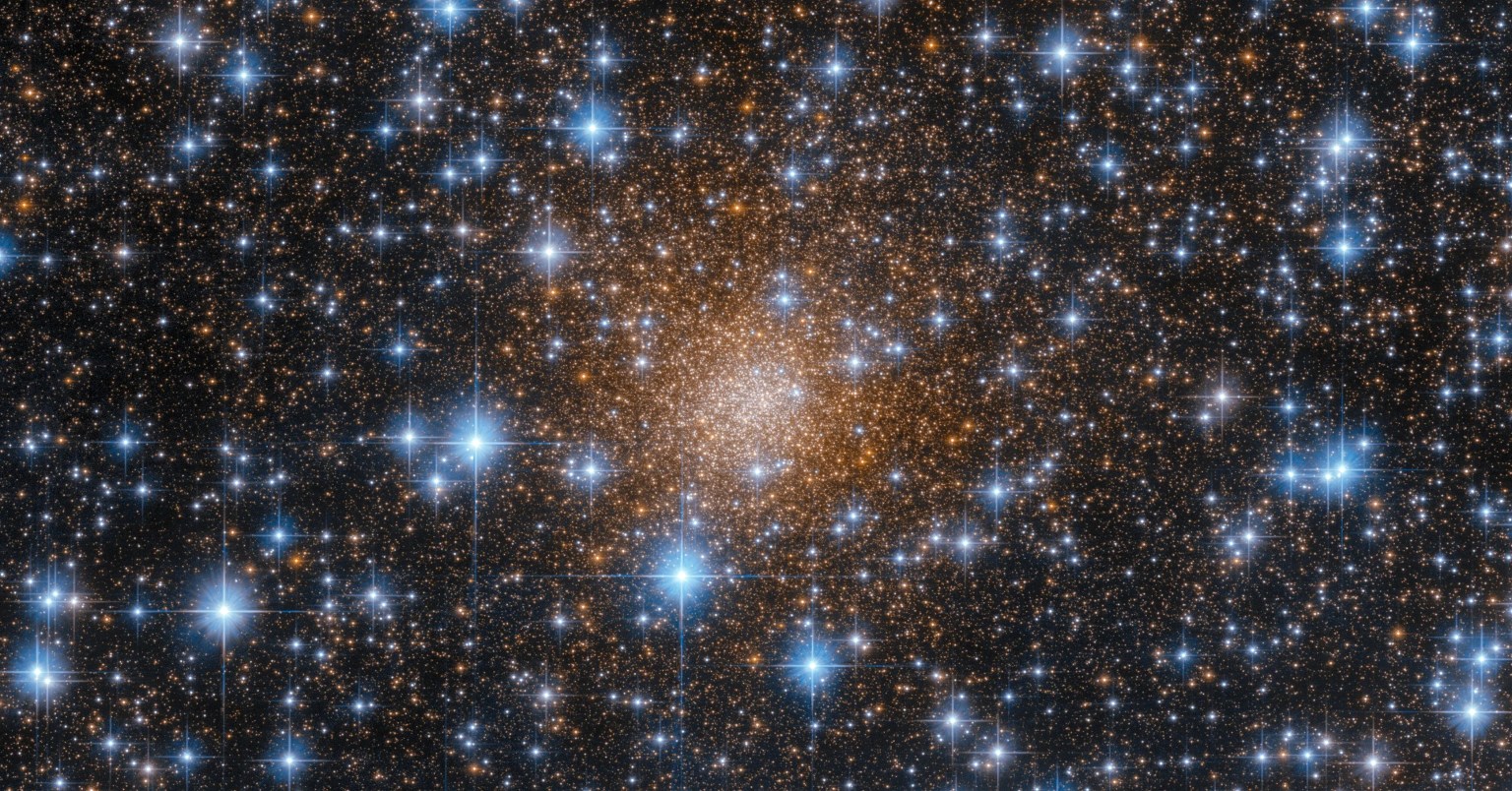
Hubble Digs Up Galactic Time Capsule 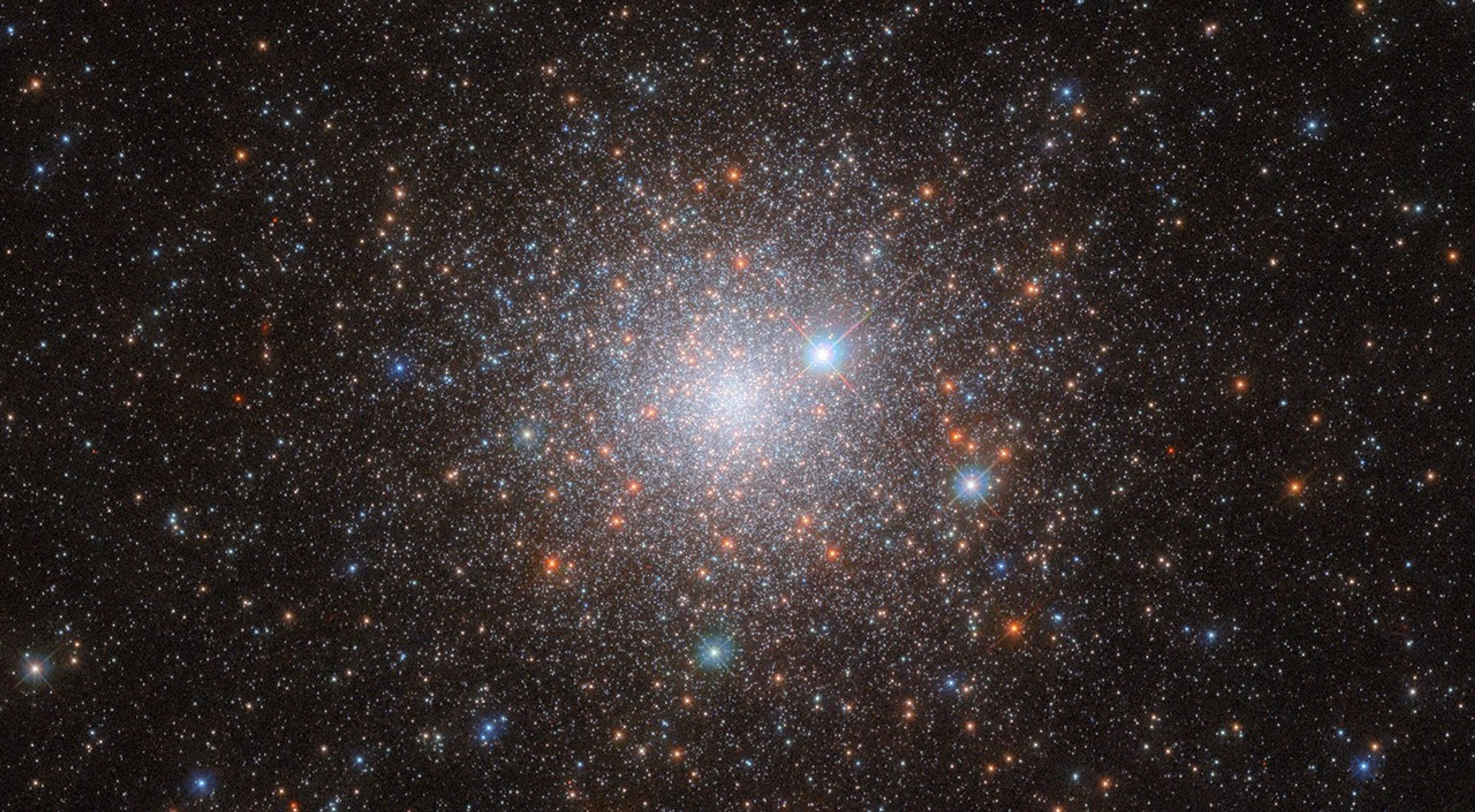 This NASA/ESA Hubble Space Telescope image features the globular cluster NGC 1786. ESA/Hubble & NASA, M. Monelli; Acknowledgment: M. H. Özsaraç This NASA/ESA Hubble Space Telescope image features the field of stars that is NGC 1786. This globular cluster is located in the Large Magellanic Cloud (LMC), a small satellite galaxy of the Milky Way Galaxy that is approximately 160,000 light-years away from Earth. NGC 1786 itself is in the constellation Dorado. It was discovered in the year 1835 by Sir John Herschel.
The data for this image comes from an observing program that compares old globular clusters in nearby dwarf galaxies — the LMC, the Small Magellanic Cloud, and the Fornax dwarf spheroidal galaxy — to globular clusters in the Milky Way galaxy. Our galaxy contains over 150 of these old, spherical collections of tightly-bound stars, which astronomers have studied in depth — especially with Hubble images like this one, which show them in previously unattainable detail. Being very stable and long-lived, globular clusters act as galactic time capsules, preserving stars from the earliest stages of a galaxy’s formation.
Astronomers once thought that stars in a globular cluster all formed together at about the same time, but the study of old globular clusters in our galaxy uncovered multiple populations of stars with different ages. To use globular clusters as historical markers, we must understand how they form and where these stars of varying ages come from. This observing program examined old globular clusters like NGC 1786 in these external galaxies to see if they, too, contain multiple populations of stars. This research can tell us more about how the LMC originally formed, but also the Milky Way Galaxy, too.
Text Credit: ESA/Hubble
Facebook logo @NASAHubble @NASAHubble Instagram logo @NASAHubble Media Contact:
Claire Andreoli (claire.andreoli@nasa.gov)
NASA’s Goddard Space Flight Center, Greenbelt, MD
Details Last Updated Jul 17, 2025 Editor Andrea Gianopoulos Location NASA Goddard Space Flight Center Related Terms Astrophysics Astrophysics Division Globular Clusters Goddard Space Flight Center Hubble Space Telescope Star Clusters Stars The Universe
Keep Exploring Discover More Topics From Hubble Hubble Space Telescope
Since its 1990 launch, the Hubble Space Telescope has changed our fundamental understanding of the universe.
Science Behind the Discoveries