Explore Hubble Hubble Home Overview About Hubble The History of Hubble Hubble Timeline Why Have a Telescope in Space? Hubble by the Numbers At the Museum FAQs Impact & Benefits Hubble’s Impact & Benefits Science Impacts Cultural Impact Technology Benefits Impact on Human Spaceflight Astro Community Impacts Science Hubble Science Science Themes Science Highlights Science Behind Discoveries Hubble’s Partners in Science Universe Uncovered AI and Hubble Science Explore the Night Sky Observatory Hubble Observatory Hubble Design Mission Operations Missions to Hubble Hubble vs Webb Team Hubble Team Career Aspirations Hubble Astronauts Multimedia Images Videos Sonifications Podcasts e-Books Online Activities 3D Hubble Models Lithographs Fact Sheets Posters Hubble on the NASA App Glossary News Hubble News Social Media Media Resources More 35th Anniversary Online Activities 2 min read
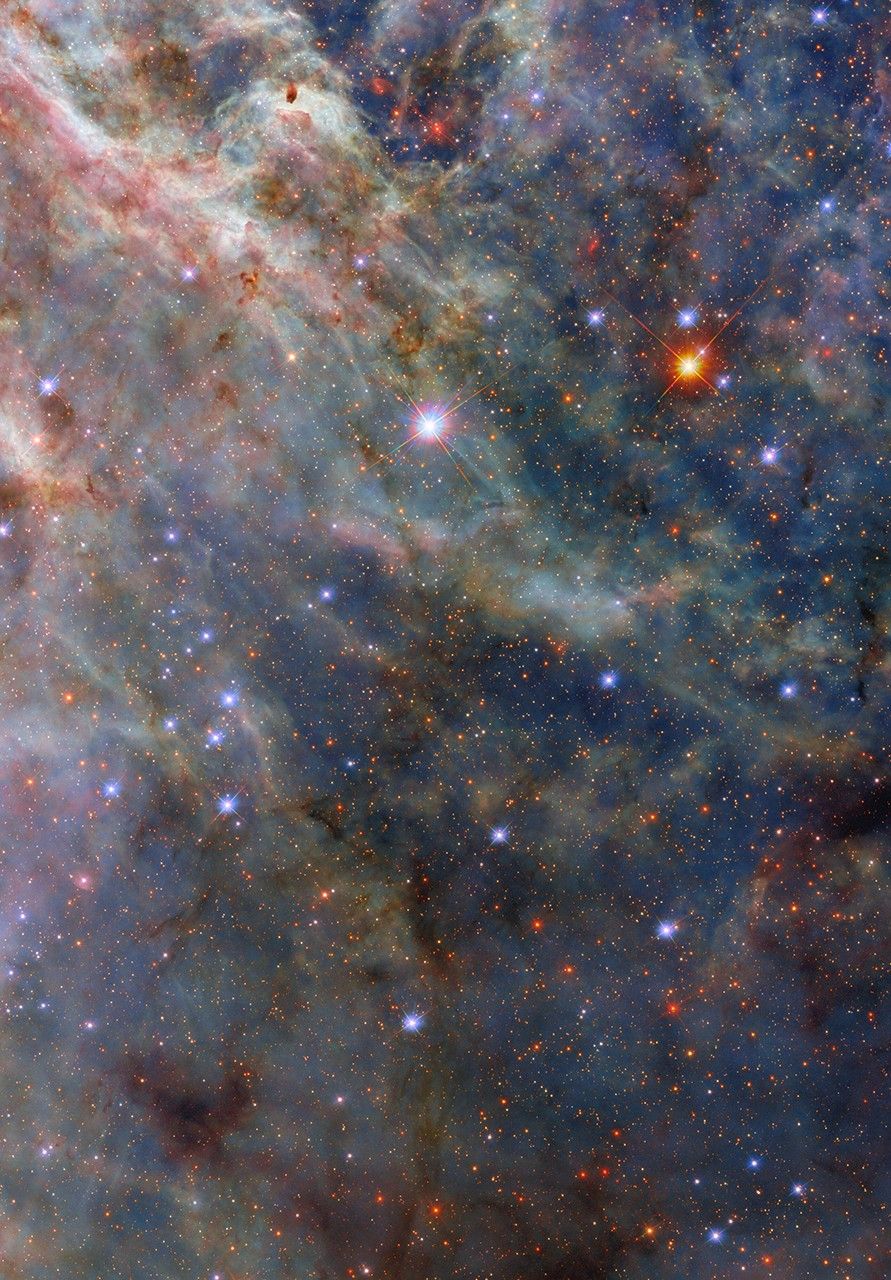
Hubble Captures a Tarantula 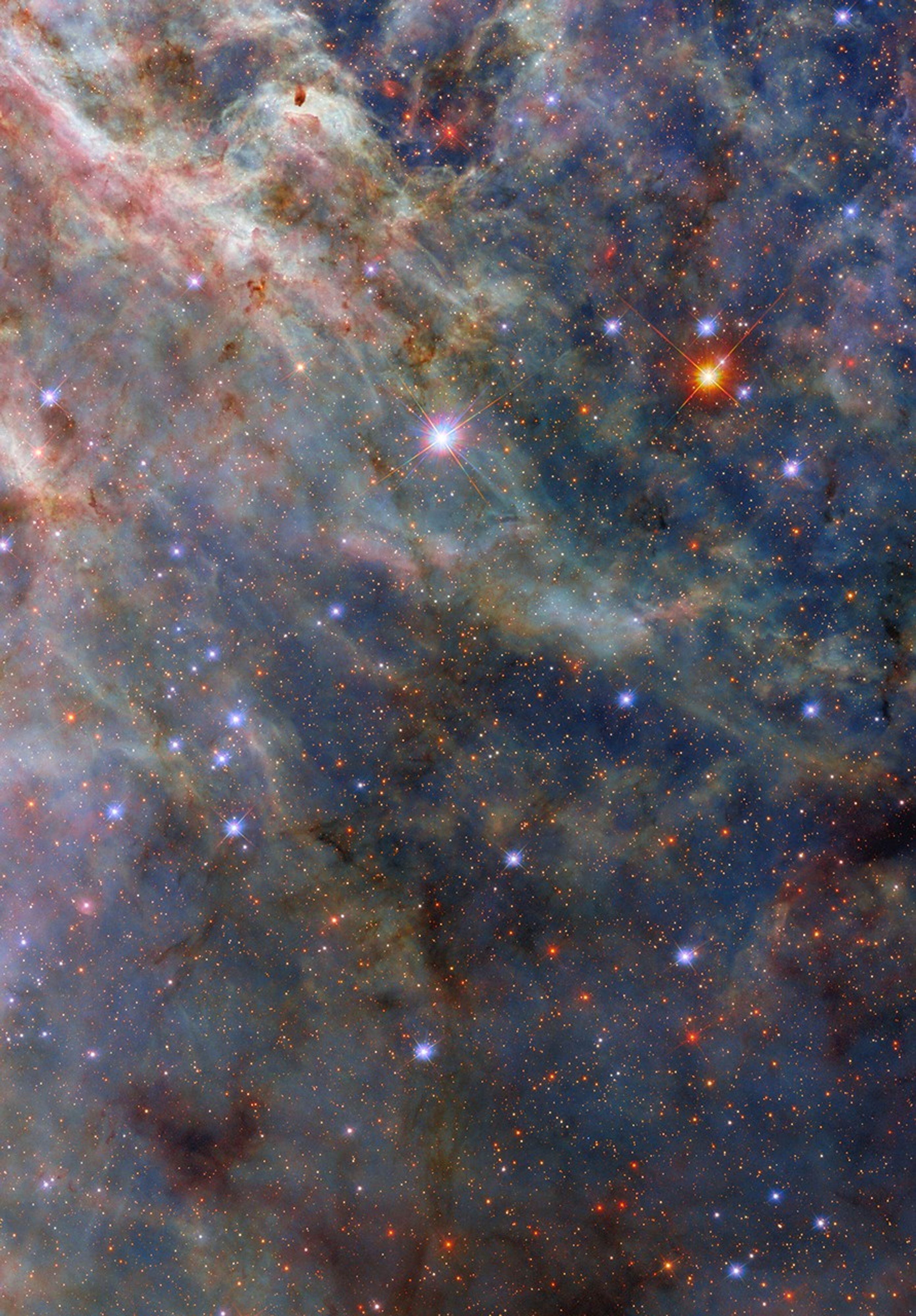 This NASA/ESA Hubble Space Telescope image shows a portion of the Tarantula Nebula. ESA/Hubble & NASA, C. Murray This NASA/ESA Hubble Space Telescope image captures incredible details in the dusty clouds of a star-forming factory called the Tarantula Nebula. Most of the nebulae Hubble images are in our galaxy, but this nebula is in the Large Magellanic Cloud, a dwarf galaxy located about 160,000 light-years away in the constellations Dorado and Mensa.
The Large Magellanic Cloud is the largest of the dozens of small satellite galaxies that orbit the Milky Way. The Tarantula Nebula is the largest and brightest star-forming region, not just in the Large Magellanic Cloud, but in the entire group of nearby galaxies to which the Milky Way belongs.
The Tarantula Nebula is home to the most massive stars known, some roughly 200 times as massive as our Sun. This image is very close to a rare type of star called a Wolf–Rayet star. Wolf–Rayet stars are massive stars that have lost their outer shell of hydrogen and are extremely hot and luminous, powering dense and furious stellar winds.
This nebula is a frequent target for Hubble, whose multiwavelength capabilities are critical for capturing sculptural details in the nebula’s dusty clouds. The data used to create this image come from an observing program called Scylla, named for a multi-headed sea monster from Greek mythology. The Scylla program was designed to complement another Hubble observing program called ULLYSES (Ultraviolet Legacy Library of Young Stars as Essential Standards). ULLYSES targets massive young stars in the Small and Large Magellanic Clouds, while Scylla investigates the structures of gas and dust that surround these stars.
Explore More:
Hubble’s Image Shows Turbulent Star-making Region
30 Doradus: A Massive Star-Forming Region
Large Magellanic Cloud’s Star-Forming Region, 30 Doradus
Explore the Night Sky: Caldwell 103/Tarantula Nebula
Multiple Generations of Stars in the Tarantula Nebula
Facebook logo @NASAHubble @NASAHubble Instagram logo @NASAHubble Media Contact:
Claire Andreoli (claire.andreoli@nasa.gov)
NASA’s Goddard Space Flight Center, Greenbelt, MD
Details Last Updated Aug 07, 2025 Editor Andrea Gianopoulos Location NASA Goddard Space Flight Center Related Terms Astrophysics Astrophysics Division Emission Nebulae Goddard Space Flight Center Hubble Space Telescope Nebulae Star-forming Nebulae The Universe
Keep Exploring Discover More Topics From Hubble Hubble Space Telescope
Since its 1990 launch, the Hubble Space Telescope has changed our fundamental understanding of the universe.
Seeing ultraviolet, visible, and near-infrared light helps Hubble uncover the mysteries of star formation.
When stars die, they throw off their outer layers, creating the clouds that birth new stars.
These ethereal veils of gas and dust tell the story of star birth and death.