
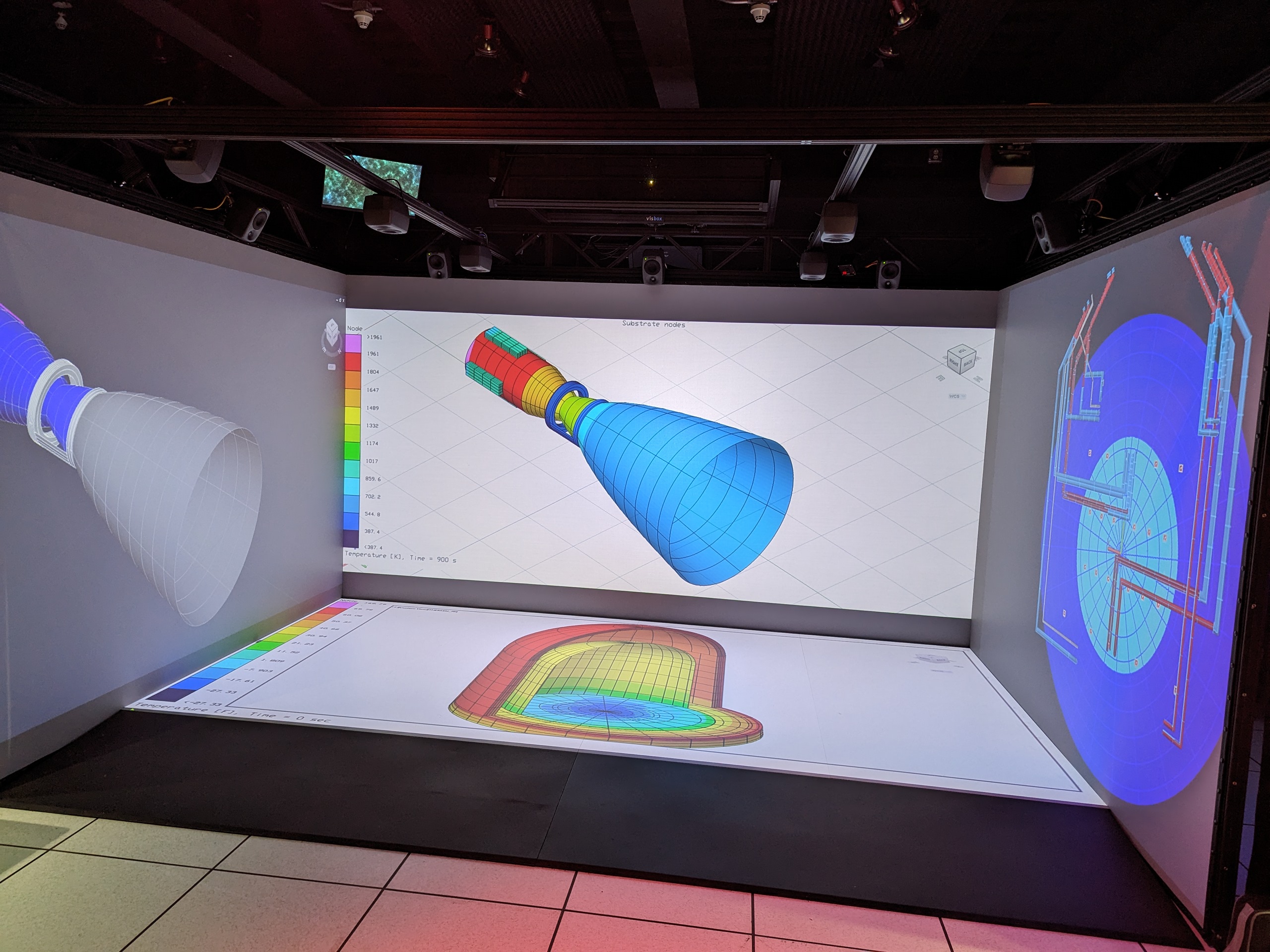
4 Min Read GRUVE Lab 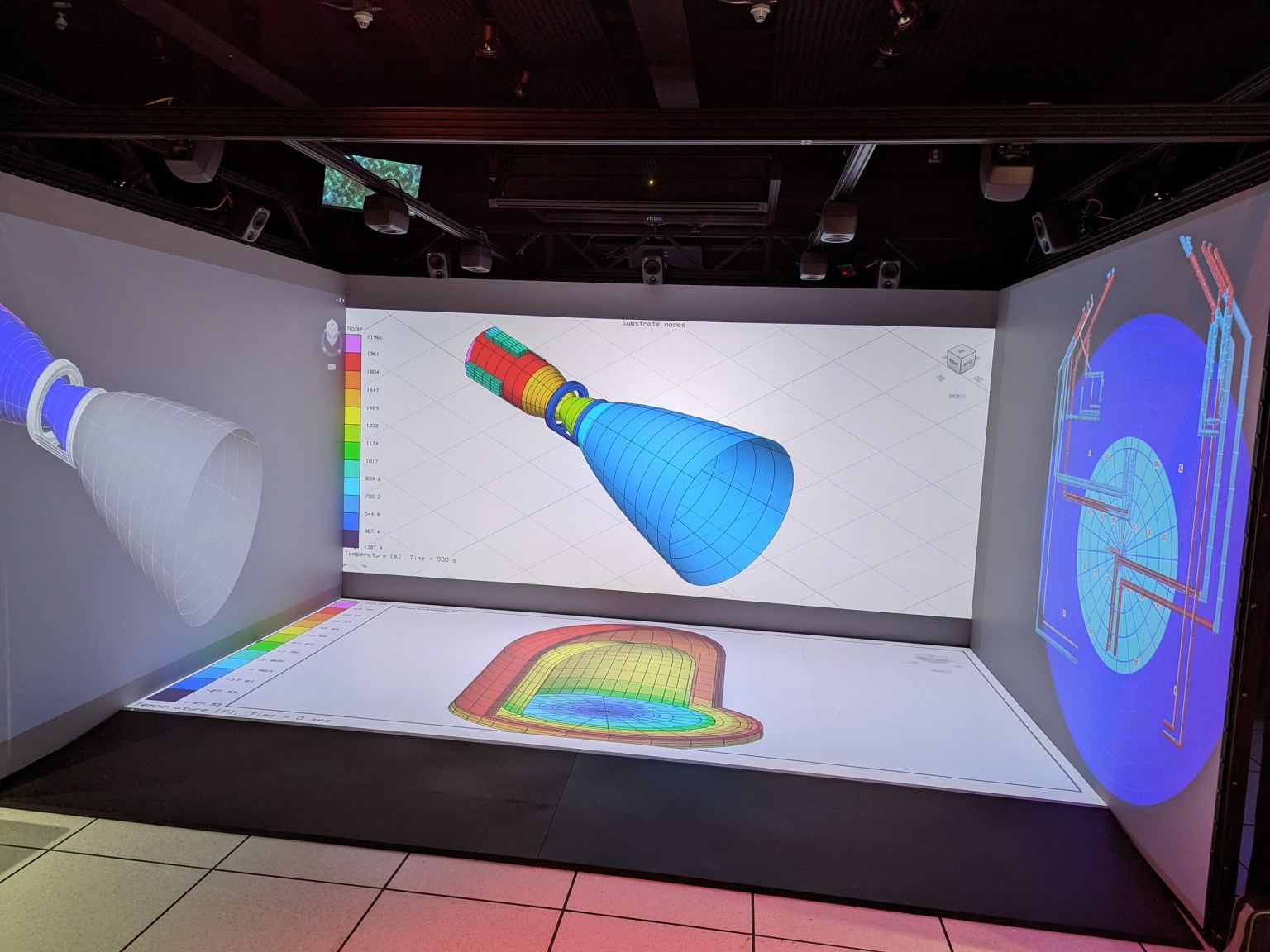 The CAVE in the GRUVE Lab is capable of running highly immersive VR experiences through powerful projectors, mirrors, an infrared motion tracking system, and active-shutter glasses. Credits: NASA About The GRUVE (Glenn Reconfigurable User-Interface and Virtual Reality Exploration) Lab is located within the GVIS Lab. It is home to the CAVE, which is predominantly used for mission scenarios and to tour virtual environments of NASA facilities.
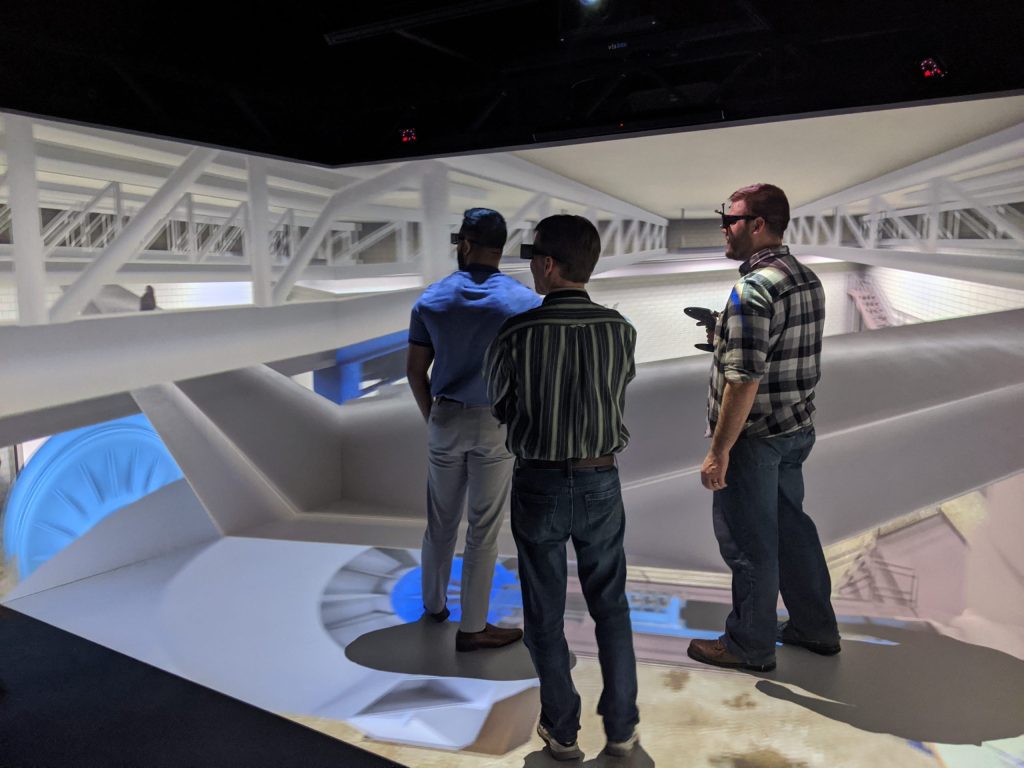 GRUVE Lab VisualizationUsers virtually explore a facility at NASA’s Glenn Research Center in Cleveland.NASA
 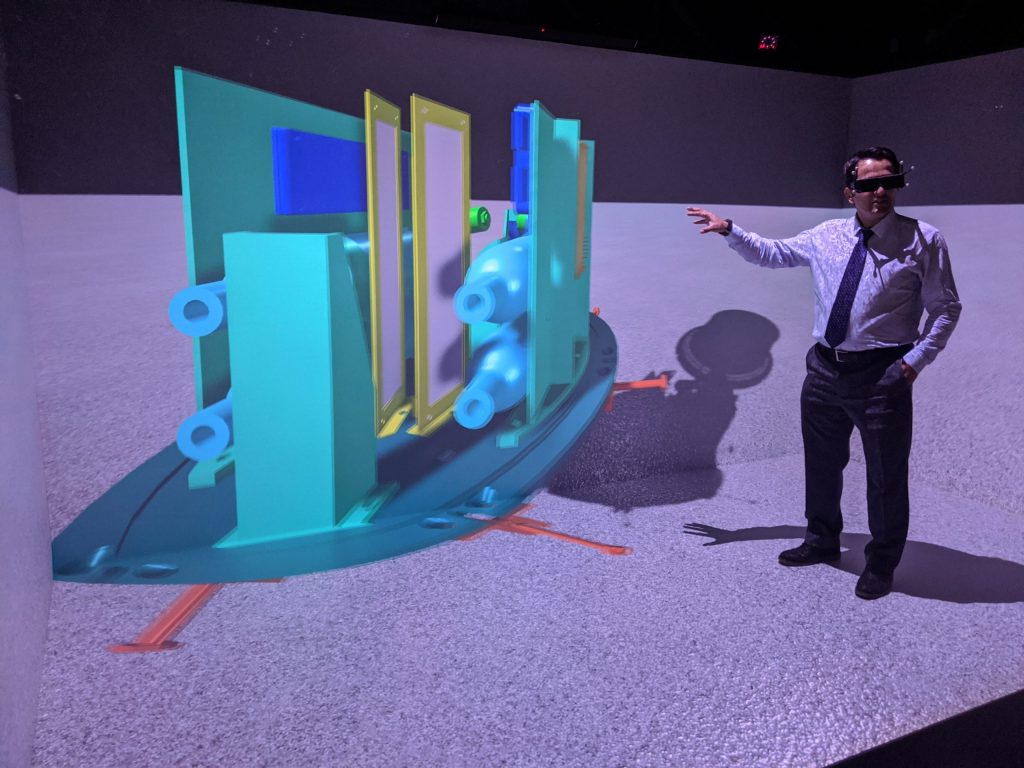 GRUVE Lab DemonstrationA user analyzes a visualization of a prototype structure.NASA
 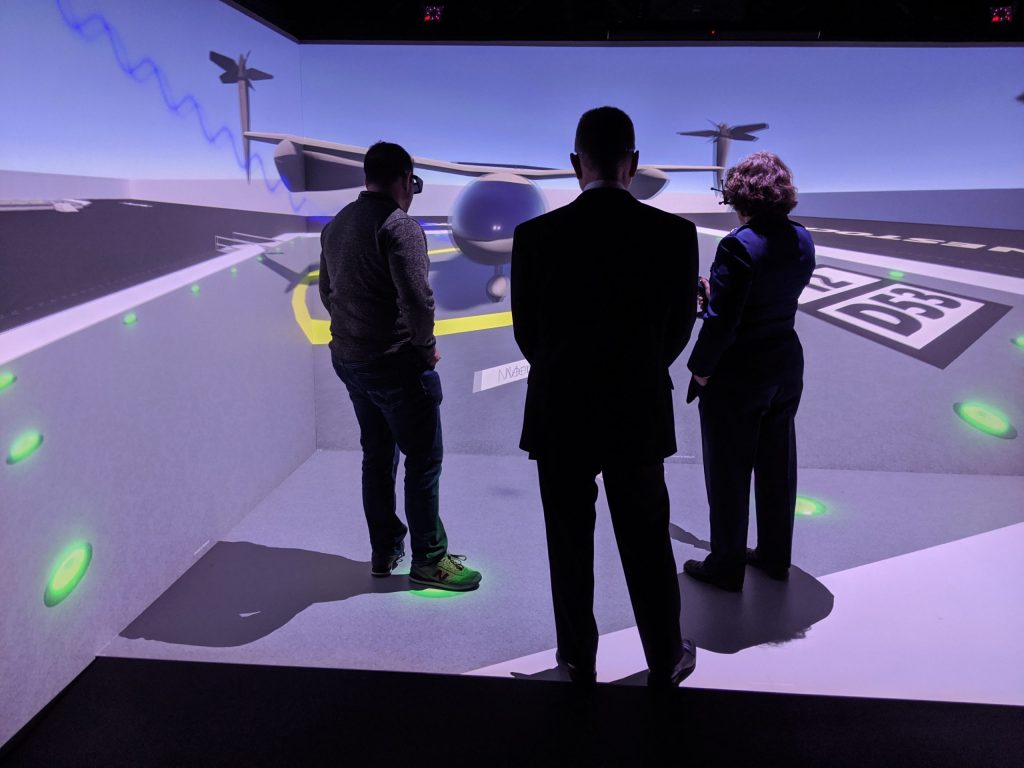 GRUVE Lab VisualizationA user analyzes a visualization of a prototype structure that will be used for a fire experiment on the Moon.NASA
  GRUVE Lab VisualizationA Graphics and Visualization Lab (GVIS) intern in the Cave Automatic Virtual Environment (CAVE).NASA
  GRUVE Lab TourA user takes a virtual tour of a facility at NASA’s Glenn Research Center in Cleveland.NASA How GRUVE Works GRUVE allows multiple people to view a visualization in 3D together. These visualizations include 3D models of NASA facilities and intricate images created from collected data.
Powerful projectors and mirrors, in combination with an infrared motion tracking system and active-shutter glasses, allow viewers to view 3D models and data in perfect perspective. 3D models effectively pop off the screen and remain proportional no matter where the user with the pair of tracking glasses moves in the environment.
The CAVE can be driven by either a Windows or Linux computer system, enabling the team to use the best environment for a given problem and software tool.
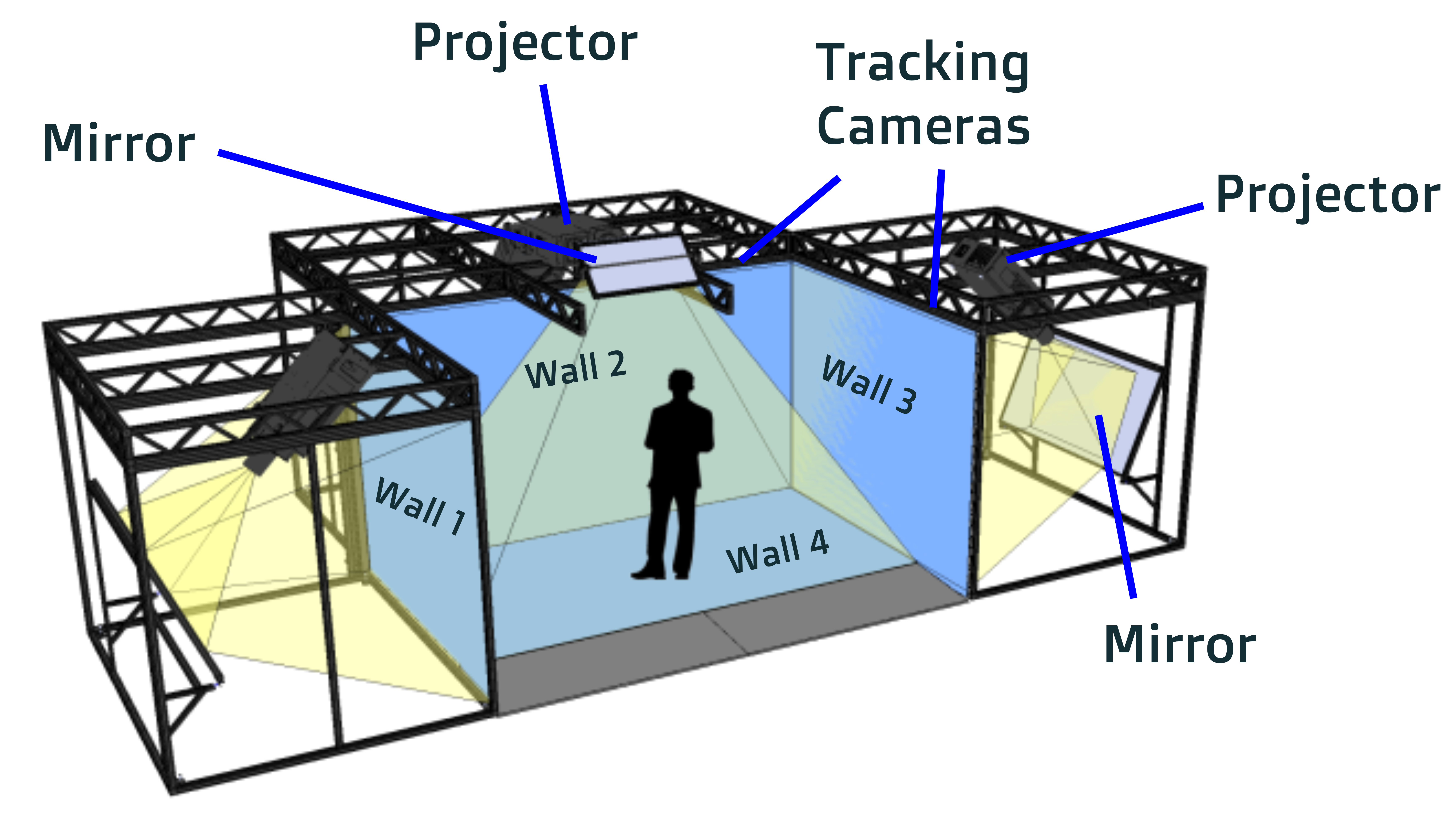 The CAVE setup immerses the user in 3D visualizations through walls on all sides, projectors from above, tracking cameras, and mirrors hidden behind the facade.Visbox, Inc. Benefits of GRUVE The CAVE’s technology provides a unique advantage for researchers, scientists, engineers, and others. Seeing and analyzing forces and data that would otherwise not be viewable to the human eye allows the observer to understand their subject matter in more detail.
Benefits of GRUVE to research include:
Providing an immersive environment: with large screens to fill peripheral vision and stereoscopic projection for a real sense of three-dimensional space, more parts of the brain are engaged, and the user is better able to understand problems and solve them faster More effective collaboration: the ability to see each other in the virtual reality environment makes GRUVE better for collaboration than traditional VR technology Seeing complex data and flows in 3D: this makes it easier for both experts and non-experts to understand the data Providing greater resolution and larger display size: this allows details to be displayed without losing their context Delivering faster and more accurate manipulation and viewing of models, including CAD data, with fewer errors: this results in a faster time to market and less re-work All members of NASA Glenn may use GRUVE for their projects.
Applications of Immersive 3D Environments Fluid dynamics analysis (CFD) Point cloud data, e.g., LiDAR Virtual design reviews Virtual manufacturing testing Computer Aided Design (CAD) 3D imaging data Training and education Virtual procedures Biomedical research Molecular dynamics Virtual building walkthroughs Showroom “theater” Education and outreach Building Information Management (BIM) Big data and data mining Cybersecurity data analysis Safety systems analysis Microfocus CT scan data Electron microscopy 3D photos and videos Data Types Supported Point cloud data Volume data Computational fluid dynamics (CFD) Computer Aided Design (CAD) Molecular dynamics GRUVE Hardware Linux CAVE node Windows 10 CAVE node CAVE wall Stereo glasses Audio system Tracking system Wand Software Available in the GRUVE Lab The Windows node attached to the GRUVE Lab runs middleware software, which enables Unity-developed applications to run in the CAVE. This greatly expands the number of VR applications that can be run. Vrui VR Toolkit-based applications such as LiDAR viewer and 3D visualizer VMD – Visual Molecular Dynamics ParaView COVISE– Collaborative Visualization and Simulation Environment Other Visualization Devices The GVIS Lab maintains a large collection of computing, visualization, and user interaction devices including:
Virtual reality display devices Head-mounted displays Room-scale CAVE Augmented reality head-mounted displays 3D displays Psuedo-3D displays Pepper’s Ghost display Persistence of Vision (POV) LED display Light field technology- based displays Projection devices for projected AR Natural user interface devices Hand gesture recognition devices Motion capture devices Cameras for mixed reality Computing hardware High-end laptops High-end desktops High-end tablets and smartphones Cameras Stereo 3D camera 180/360 camera Flight simulators 3D printers All these devices are available for employees to try and test for possible application to their work.
 A Graphics and Visualization Lab (GVIS) intern in the Cave Automatic Virtual Environment (CAVE).NASA Contact Us Need to reach us? You can send an email directly to the GVIS Team (GRC-DL-GVIS@mail.nasa.gov) or to the team leader, Herb Schilling (hschilling@nasa.gov).
 5 min read NASA Advances Pressure Sensitive Paint Research Capability Article 3 weeks ago
  1 min read Gateway Space Station in 3D Article 11 months ago
  5 min read Augmented Reality Speeds Spacecraft Construction at NASA Goddard Article 1 year ago
 Keep Exploring Discover More Topics From NASA Want to Go on a Simulated Mission to the Moon?

 Glenn University Student Design Challenges
 NASA at Home: Virtual Tours and Apps