
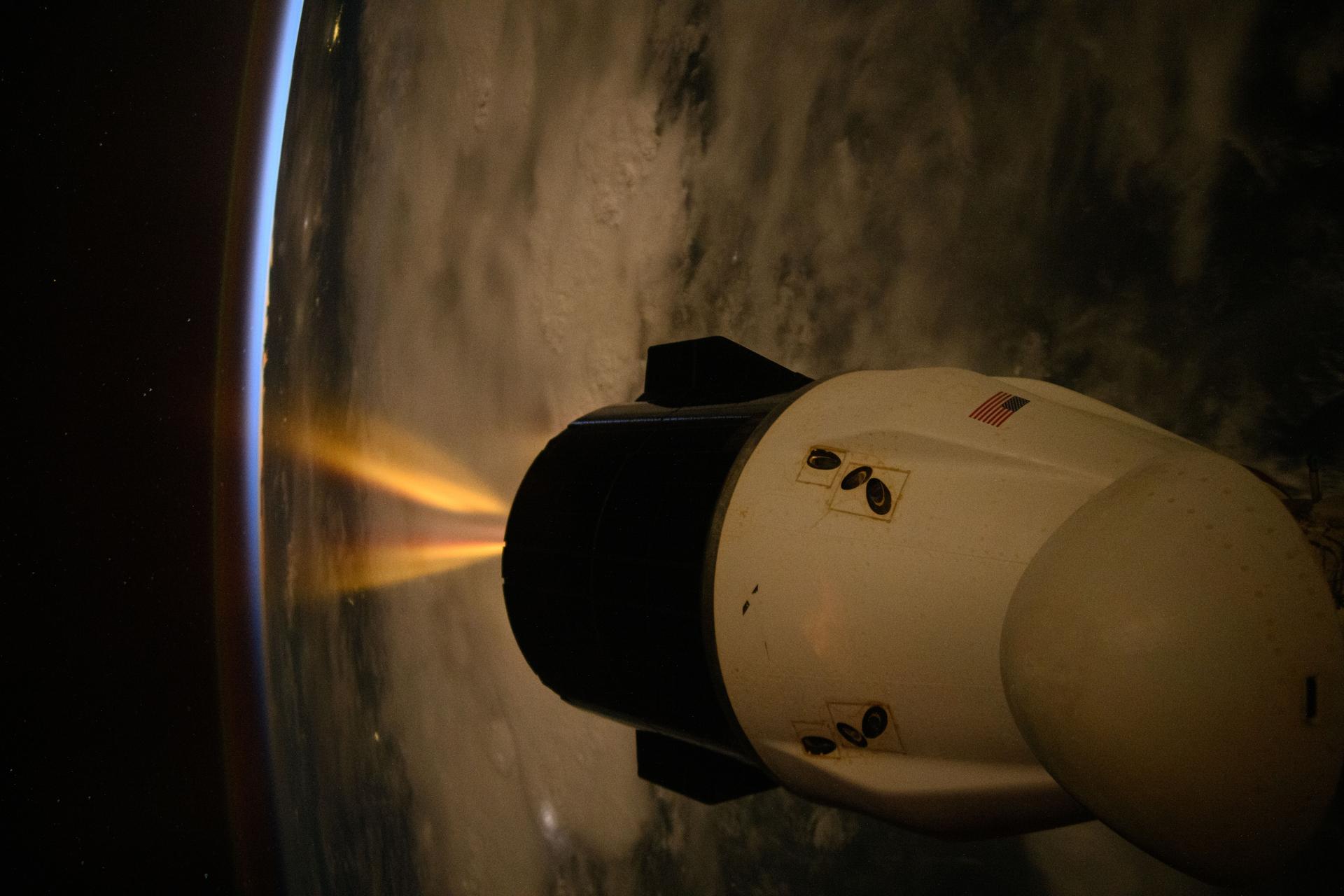
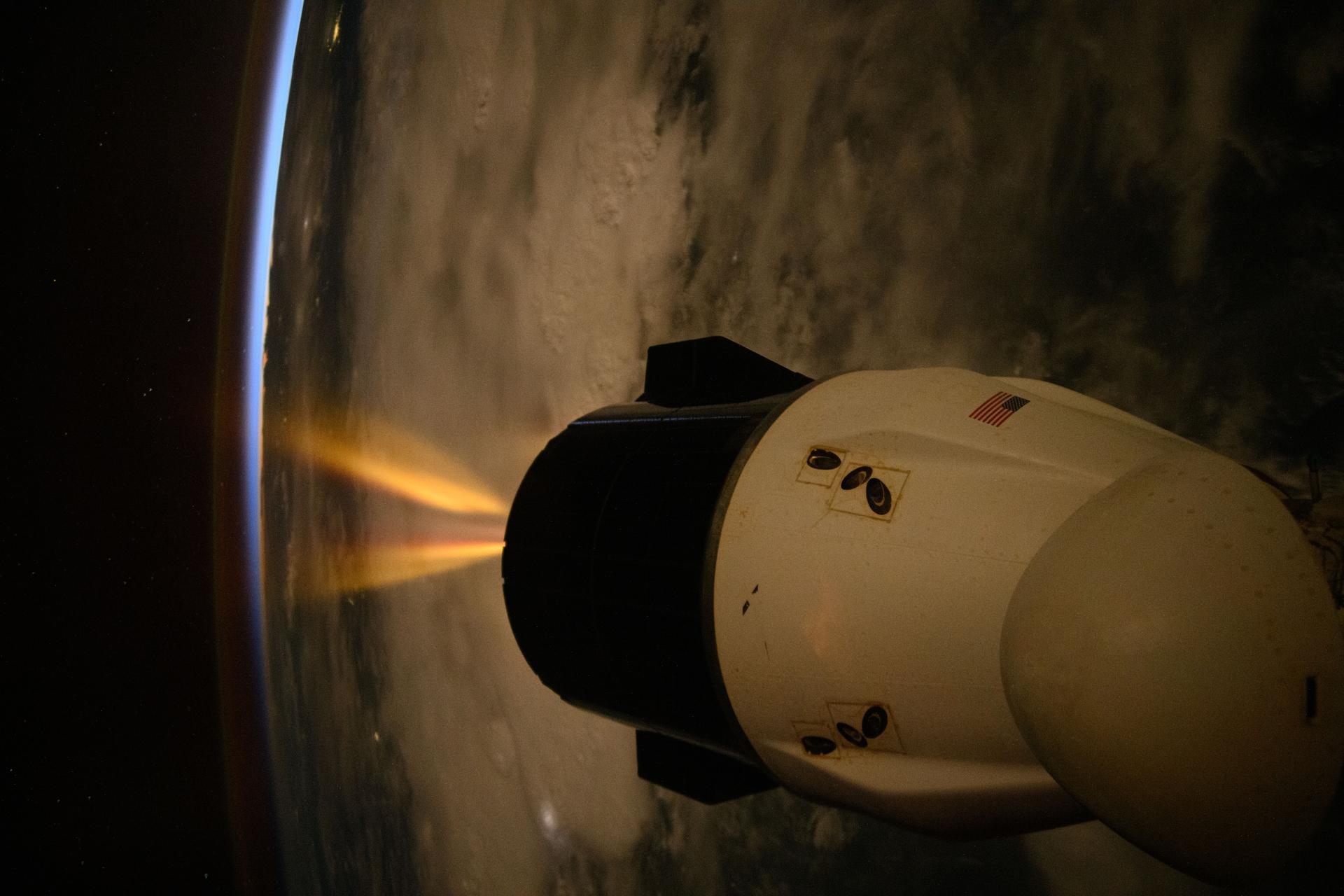
The Expedition 74 crew kicked off the week with SpaceX Dragon spacecraft preparations and science hardware maintenance ensuring research continues providing pristine results aboard the International Space Station. The orbital trio is gearing up for a pair of missions targeted to arrive and depart the station this month while keeping up ongoing microgravity science impossible to achieve in Earth’s gravity environment and benefitting humans on and off the Earth.
The next mission to the orbital outpost, NASA’s SpaceX Crew-12, is targeted to launch from Cape Canaveral, Florida, no earlier than Feb. 11. Two NASA astronauts, commander Jessica Meir and pilot Jack Hathaway, will ride a SpaceX Dragon alongside mission specialists Sophie Adenot of ESA (European Space Agency) and Andrey Fedyaev of Roscosmos. After docking to the Harmony module’s space-facing port, they will join Expedition 74 and begin a nine-month space research mission.
Expedition 74 Flight Engineer Chris Williams studied the monitoring tools and techniques he will use when Crew-12 aboard Dragon begins its approach and rendezvous maneuvers toward Harmony. Williams reviewed the variety of computers that control the station’s orientation and the procedures he will use during Dragon’s approach to Harmony.
Later in his shift, Williams focused on cargo operations packing some of the completed experiments and associated research samples, as well as used hardware and trash, inside the SpaceX Dragon cargo spacecraft for retrieval and analysis on the ground. Dragon delivered a host of science experiments, crew supplies, and more on August 25, 2025.
In between the Dragon operations, Williams serviced advanced science gear supporting different research operations aboard the orbiting lab. He first replaced power, control, and stowage components inside the TangoLab facility that supports numerous investigations including virulent bacteria research and early cancer detection. Next, he swapped a hard drive inside the Advanced Space Experiment Processor-4 that houses and processes research samples for an array of microbiology and physics studies and can be operated on Dragon and Cygnus cargo spacecraft, as well as the space station.
Roscosmos Flight Engineer Sergei Mikaev began his shift pedaling on an exercise cycle while attached to electrodes and a blood pressure cuff. Station Commander Sergey Kud-Sverchkov of Roscosmos assisted Mikaev during the fitness evaluation that monitors how a crew member’s heart activity and blood pressure are affected by living in weightlessness. Afterward, Mikaev packed obsolete hardware and trash for disposal inside the Progress 92 cargo craft then cleaned the ventilation system inside the Zvezda service module.
Kud-Sverchkov also set up the Plasma Kristall-4 physics study and switched from neon to argon gas inside the Columbus laboratory module. The experiment explores complex plasmas to advance spacecraft designs, better understand planetary formation, and improve fundamental physics research. The two-time space station resident later conducted a photographic inspection of windows inside Zvezda for analysis.
Learn more about station activities by following the space station blog, @space_station on X, as well as the ISS Facebook and ISS Instagram accounts.
Get the latest from NASA delivered every week. Subscribe here.