Curiosity NavigationCuriosity HomeMission OverviewWhere is Curiosity?Mission UpdatesScienceOverviewInstrumentsHighlightsExploration GoalsNews and FeaturesMultimediaCuriosity Raw ImagesImagesVideosAudioMosaicsMore ResourcesMars MissionsMars Sample ReturnMars Perseverance RoverMars Curiosity RoverMAVENMars Reconnaissance OrbiterMars OdysseyMore Mars MissionsMars Home 3 min read
Curiosity Blog, Sols 4609–4610: Recharged and Ready To Roll Onwards 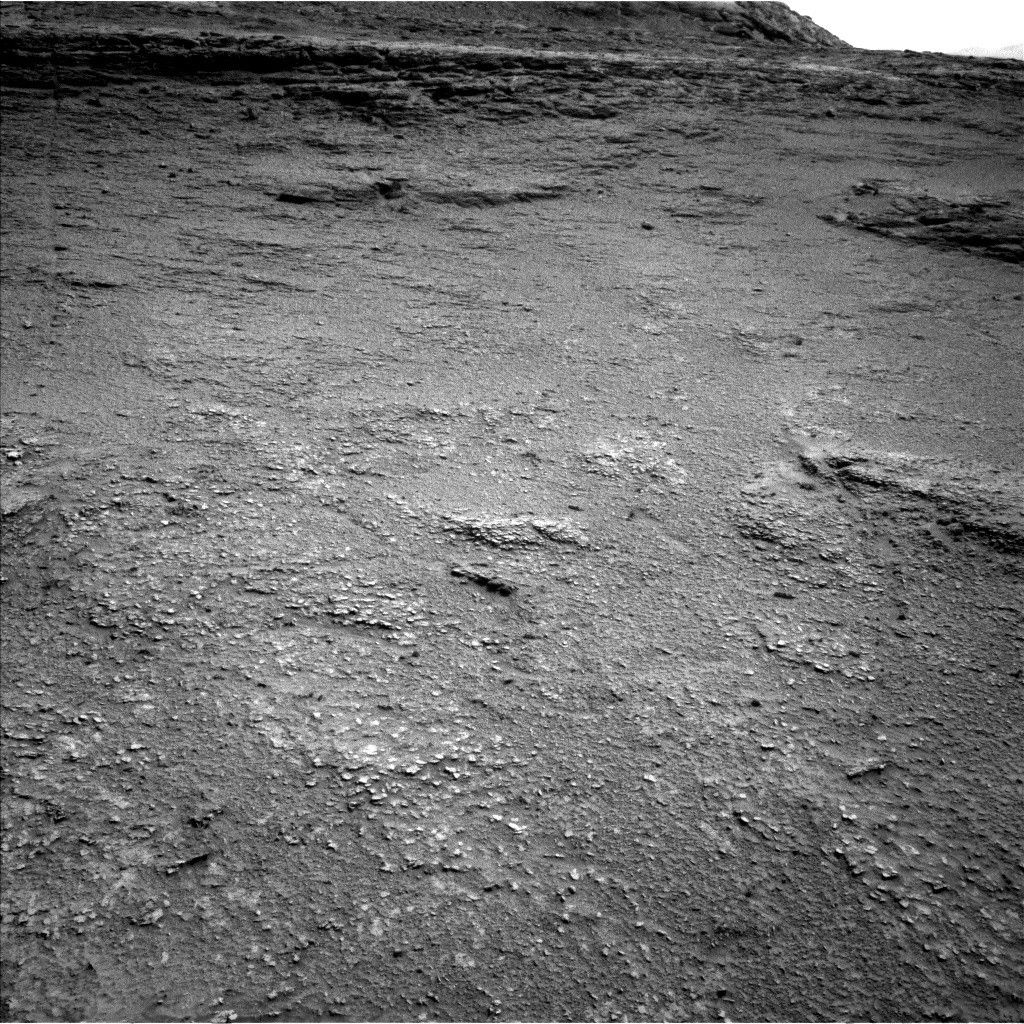 NASA’s Mars rover Curiosity acquired this image showing the boxwork hollow where it is investigating, and the boxwork ridge on the far side of the hollow, using its Left Navigation Camera. Curiosity captured the image on July 20, 2025 — Sol 4605, or Martian day 4,605 of the Mars Science Laboratory mission — at 18:51:55 UTC.NASA/JPL-Caltech Written by Catherine O’Connell-Cooper, Planetary Geologist at University of New Brunswick
Earth planning date: Wednesday, July 23, 2025
For today’s planning, we were in the same workspace as the Monday plan — on purpose! We don’t often have a plan without a drive but in order to allow the battery to recover from some power-hungry SAM atmospheric measurements over the weekend and on Monday, we needed to stay put and skip our usual drive. As a result, we gained a bonus planning cycle at this interesting workspace.
We are in one of the “hollows” between the resistant ridges of the “boxwork” terrain, as you can see in the image for this blog. This made for a quieter Operations day for me as the APXS planner. As Deborah noted in Monday’s blog, we have already gotten three APXS and MAHLI measurements in this workspace, so we didn’t acquire more in this plan.
This morning, we focused on documenting some small light-toned, rounded, white pebbles in the workspace (you can see them in the accompanying Navcam image), which look very different from the underlying bedrock. We used our one ChemCam LIBS analysis for the plan on “Yana Qaqa.” Mastcam will image this pebble, another at “Ojos del Salado,” and a really cool-looking target with a dendritic-looking texture at “Punta de Lobos.”
Further afield, Mastcam will image the adjacent boxwork ridge and hollow in our drive direction, and a series of troughs with raised edges to the right of our current workspace. ChemCam will image a long-distance RMI mosaic of “Cueva de los Vencejos y Murciélagos,” which was imaged by Mastcam on Monday, and also acquire some further images of the “Mishe Mokwa” hill.
We had a bumper couple of sols of atmospheric measurements over the weekend and Monday. Now we revert back to our more normal environmental and atmospheric monitoring. These do not get as much attention sometimes as the amazing images we take of the fascinating rocks we see, but have been taking place consistently and continuously since Curiosity’s landing almost 13 years ago now. This plan includes a series of Navcam movies (suprahorizon, dust devil) and a line-of-sight observation of dust, standard REMS and DAN observations, and two Mastcam tau measurements, looking at dust in the atmosphere.
Our 24-meter drive (almost 79 feet) will take us out of this hollow and back up on top of a ridge. From here, we hope to be able to spy the best driving path through the boxwork. The ridges are up to 5 meters in diameter (about 16 feet), so we are cautiously hopeful that we can just trundle along one of the ridges as we investigate this fascinating terrain.
For more Curiosity blog posts, visit MSL Mission Updates Learn more about Curiosity’s science instruments
 2 min read Feeling the Heat: Perseverance Looks for Evidence of Contact Metamorphism Article 6 days ago
  3 min read Curiosity Blog, Sols 4607-4608: Deep Dip Article 6 days ago
  3 min read Curiosity Blog, Sols 4604-4606: Taking a Deep Breath of Martian Air Article 6 days ago
 Keep Exploring Discover More Topics From NASA Mars Mars is the fourth planet from the Sun, and the seventh largest. It’s the only planet we know of inhabited…