
Bioengineering cartilage tissues and manufacturing advanced materials kicked off the week aboard the International Space Station. The Expedition 74 crew members also ramped up preparations for a spacewalk and conducted vision tests on Monday.
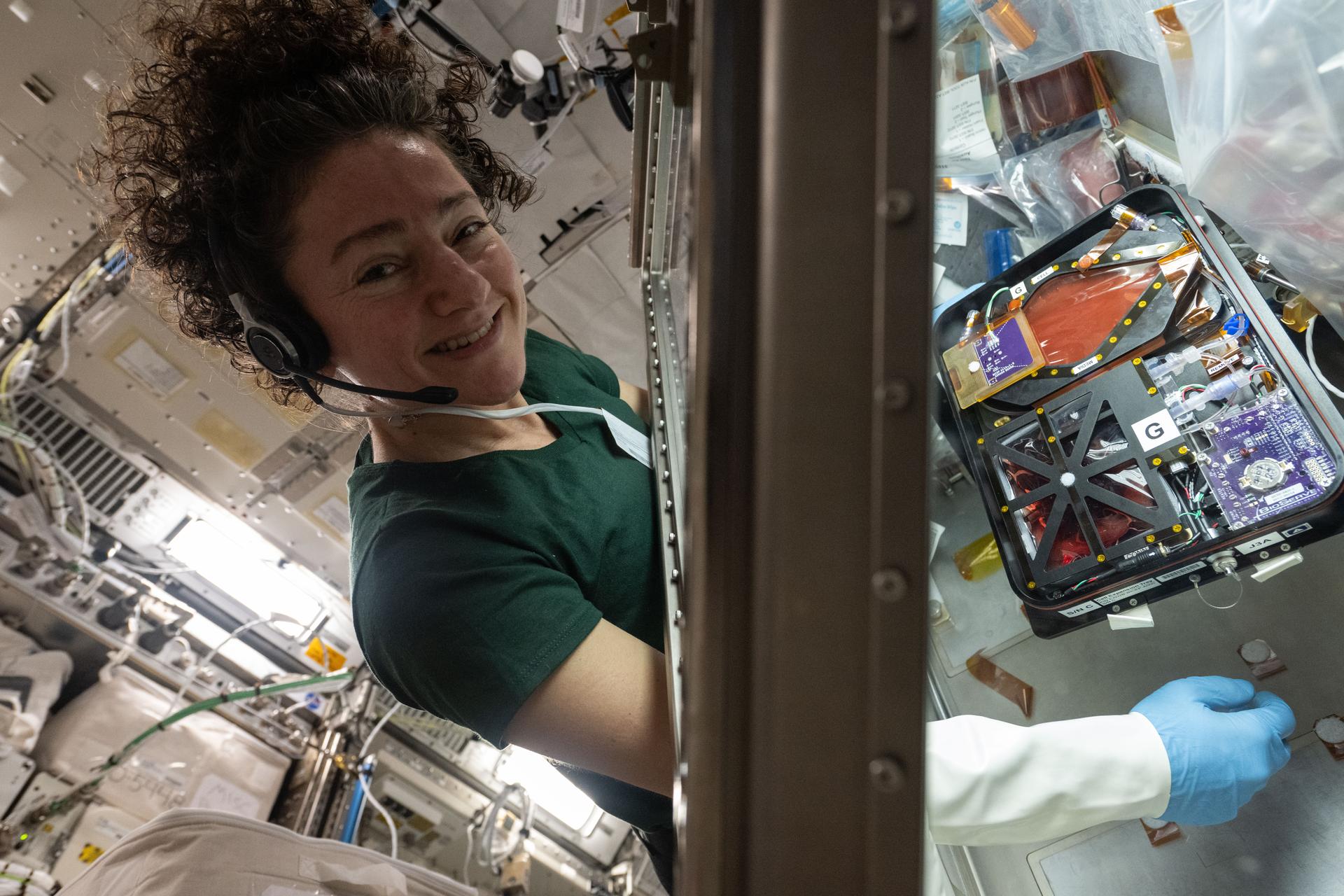
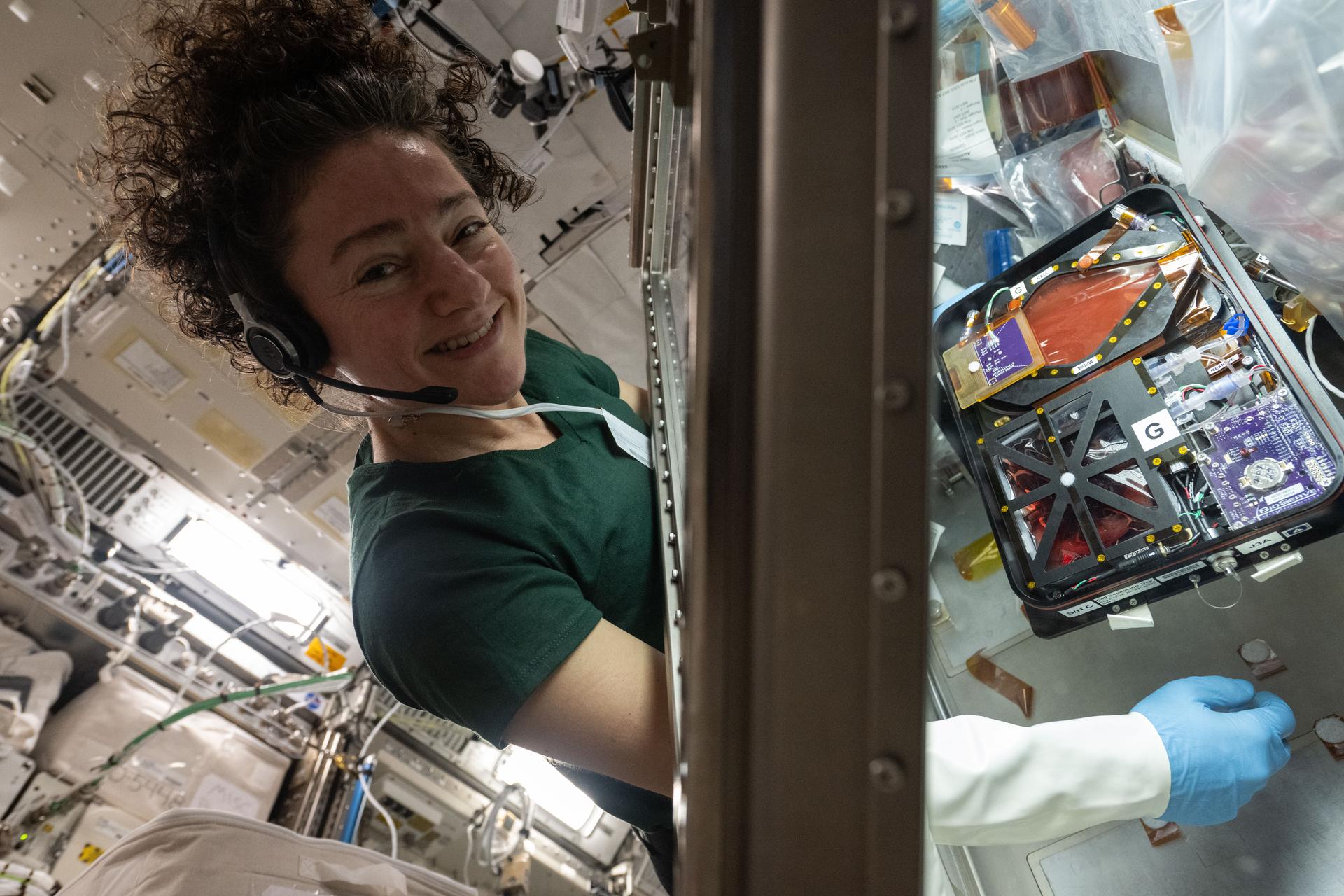
NASA flight engineer Jessica Meir split her day working on a pair of investigations — one focused on biotechnology and the other on space‑based manufacturing. She began her shift inside the Kibo laboratory module’s Life Science Glovebox, nourishing living cartilage cells. Scientists are studying how these cells grow larger in weightlessness, research that could guide new treatments for arthritis or sports injuries. Later, in the Harmony module, she photographed colloidal crystals — microscopic particles floating in liquid — to capture how they naturally arrange themselves into orderly 3D structures in microgravity. The results could help the design and development of next‑generation materials and technologies for both Earth and space industries.
In between the space science work, Meir joined NASA flight engineer Chris Williams and reviewed plans for a spacewalk to repair a wrist joint on the Canadarm2 robotic arm scheduled for June 30. The duo examined spacewalking tools and spacesuits, studied emergency procedures, and more in the Quest airlock. Williams then configured Quest and staged a spacesuit inside the airlock for the upcoming spacewalk.
NASA flight engineer Jack Hathaway worked on spacesuit maintenance inside Quest, filling water tanks and cleaning a water-cooling system that keeps the suit’s temperature stable during a spacewalk. Flight engineer Sophie Adenot of ESA (European Space Agency) briefly inspected another spacesuit preparing it for a fit check then readied two cameras and their thermal shields for spacewalk photography duties. NASA will soon announce the two spacewalking astronauts and provide a live televised briefing with more details this week.
Vision tests were on the schedule on Monday as Williams took turns with cosmonauts Sergey Kud-Sverchkov and Sergei Mikaev reading characters off a standard eye chart inside the Destiny laboratory module. Kud-Sverchkov, the station’s commander, then photographed and inspected docking components on the Rassvet and Poisk modules. Mikaev partnered with flight engineer Andrey Fedyaev, both Roscosmos flight engineers, for more testing of artificial intelligence tools to boost crew efficiency and communications in space.
Learn more about station activities by following the space station blog, @space_stationon X, as well as the ISS Facebook and ISS Instagram accounts.
Get the latest from NASA delivered every week. Subscribe here.