
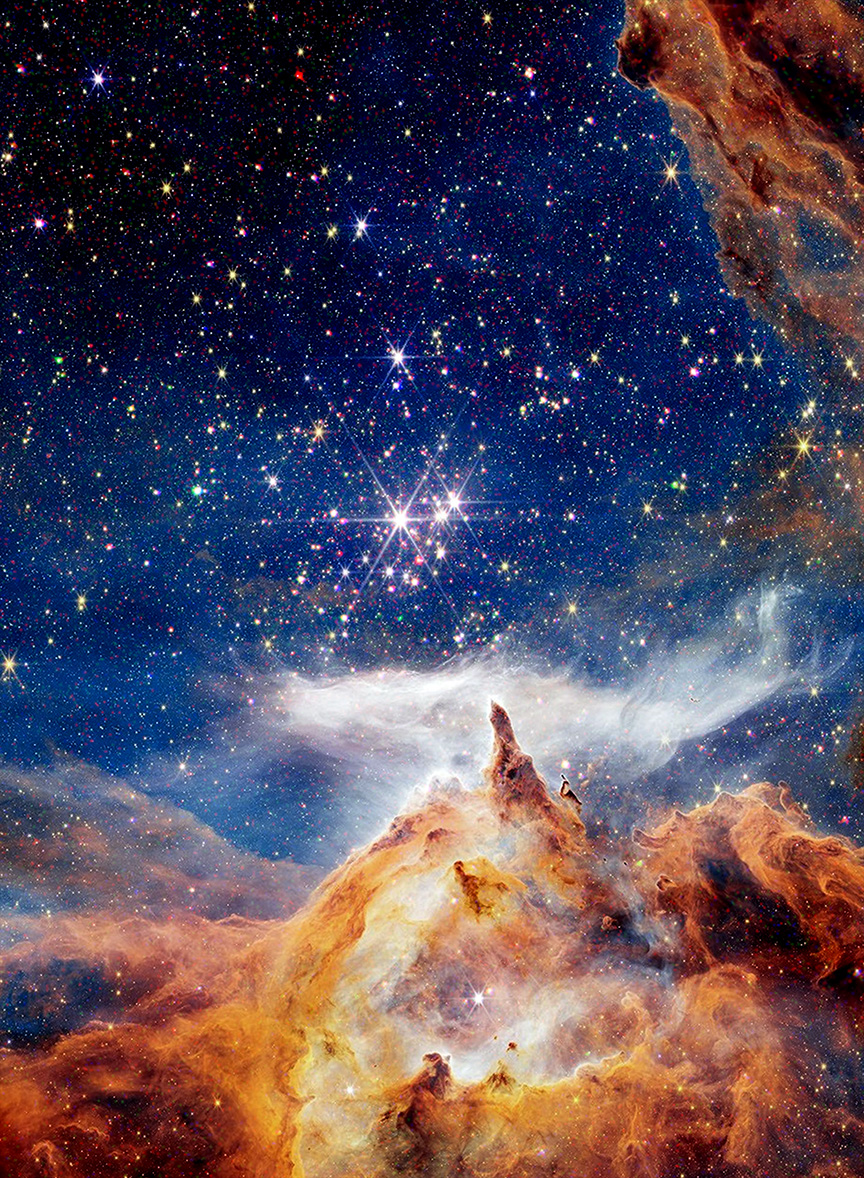
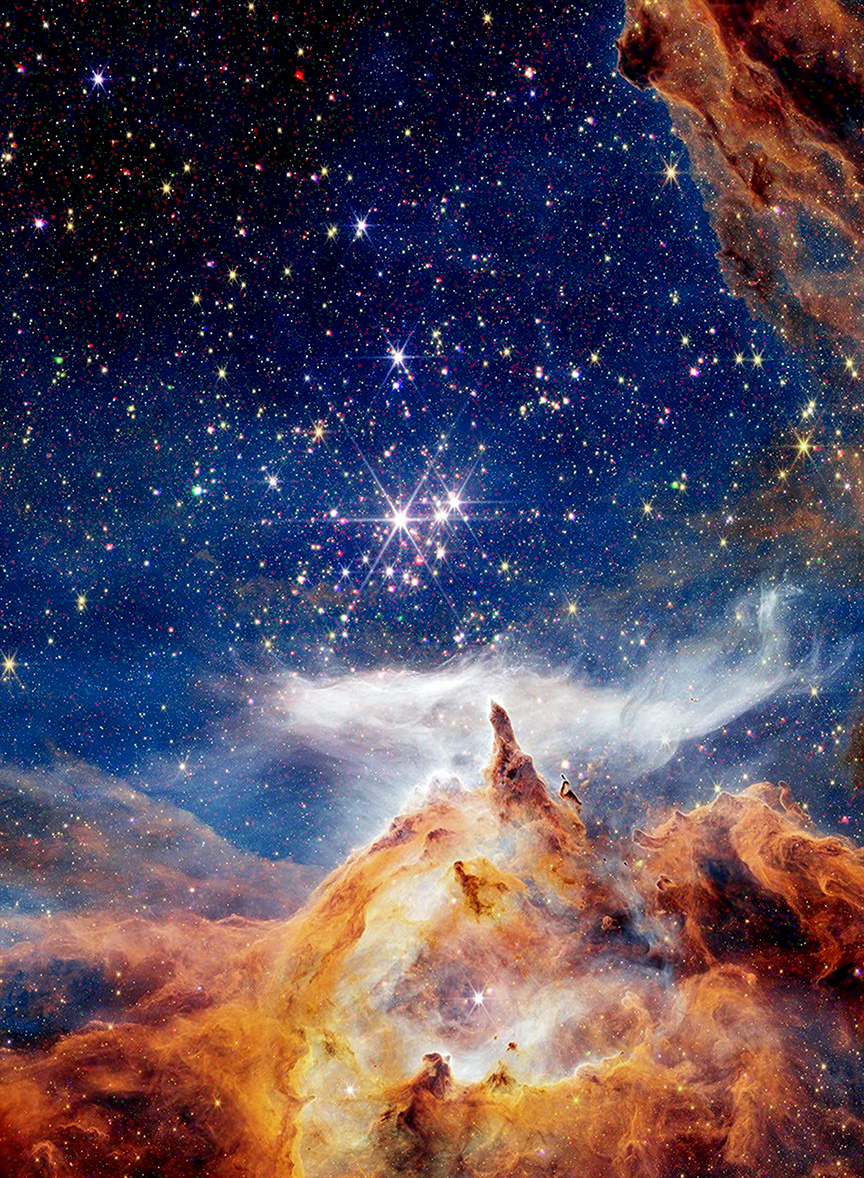
 This stellar landscape is reminiscent of a winter vista in a view from NASA’s James Webb Space Telescope (red, green, and blue). Chandra data (red, green and blue) punctuate the scene with bursts of colored lights representing high-energy activity from the active stars.Credit: X-ray: NASA/CXC/Penn State/G. Garmire; Infrared: NASA, ESA, CSA, and STScI; Image Processing: NASA/CXC/SAO/L. Frattare and NSA/ESA/CSA/STScI/A. Pagan Data from Chandra adds red, green, and blue twinkling lights in this Dec. 22, 2025, image of Pismis 24 from NASA’s James Webb Space Telescope. Pismis 24 is a young cluster of stars in the core of the nearby Lobster Nebula, approximately 5,500 light-years from Earth in the constellation Scorpius. Home to a vibrant stellar nursery and one of the closest sites of massive star birth, Pismis 24 provides rare insight into large and massive stars. This region is one of the best places to explore the properties of hot young stars and how they evolve.
Image credit: Credit: X-ray: NASA/CXC/Penn State/G. Garmire; Infrared: NASA, ESA, CSA, and STScI; Image Processing: NASA/CXC/SAO/L. Frattare and NSA/ESA/CSA/STScI/A. Pagan