
A packed schedule filled with numerous science objectives and critical lab maintenance tasks greeted the Expedition 74 crew aboard the International Space Station on Thursday. Meanwhile, the orbital residents await the next U.S. cargo mission.
A wide array of research is always ongoing aboard the orbital lab as NASA and its international partners use the unique microgravity environment to gain results unobtainable on Earth. Insights reveal new phenomena that inform scientists and engineers of ways to advance human health and innovate Earth and space industries.
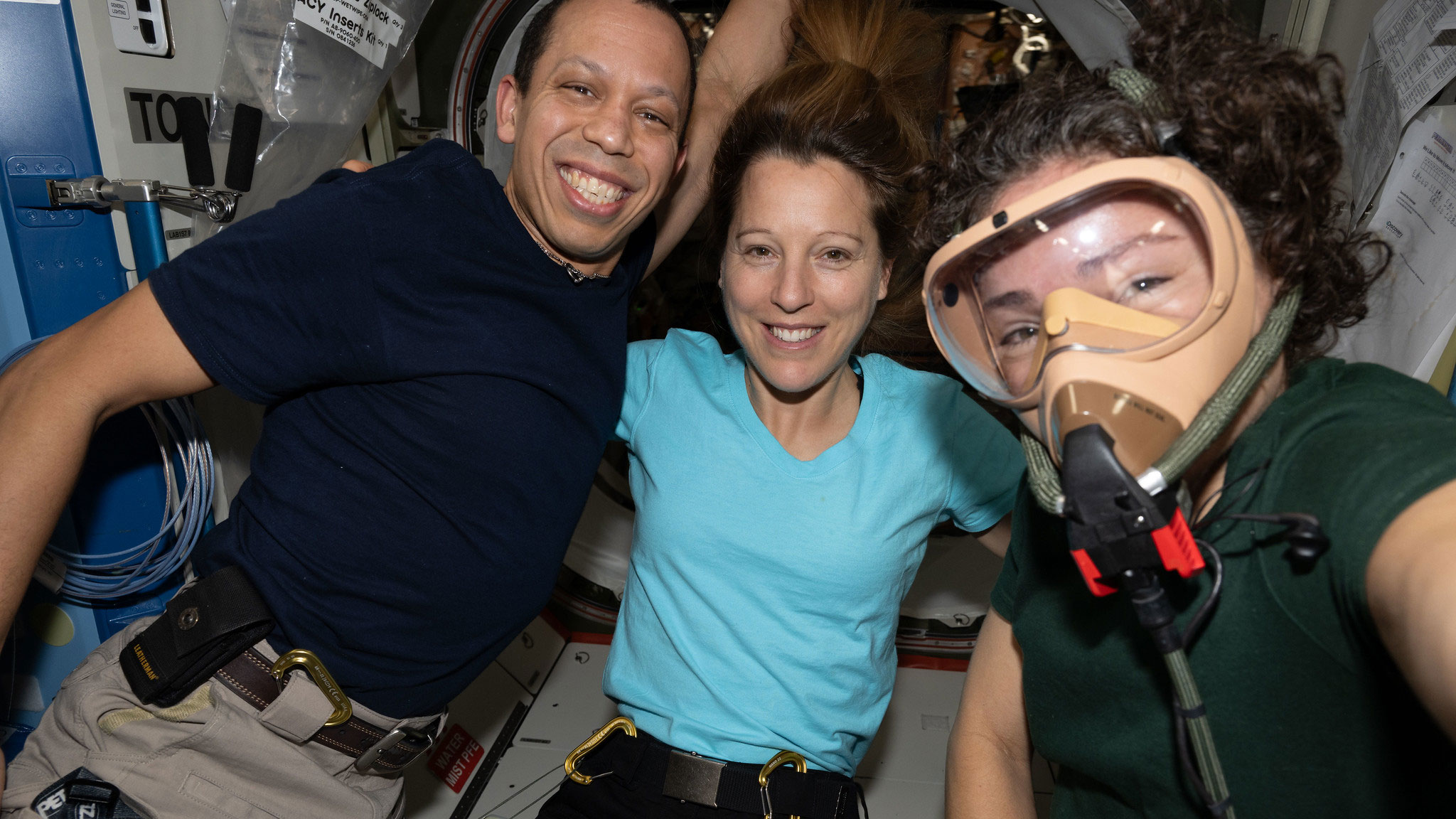
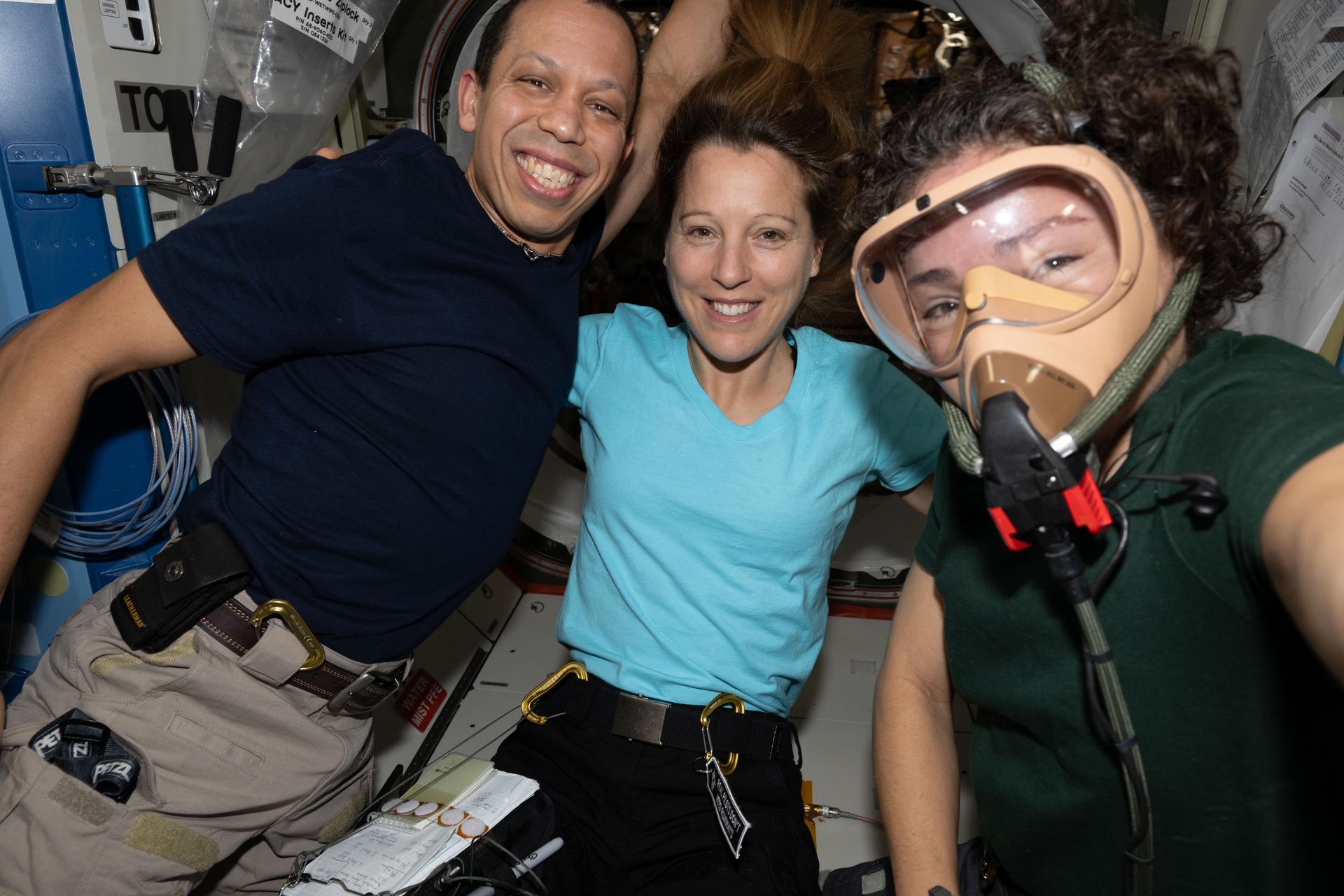
Over 25 years of medical knowledge gained from crews living on the space station has shown that living and working in weightless in the confines of a spacecraft impacts stress and immunity levels. A new investigation sponsored by ESA (European Space Agency) is exploring mindfulness and meditation techniques to manage stress and improve sleep quality during a long-term spaceflight. NASA flight engineer Jessica Meir documented her sleep patterns then collected and stowed her saliva samples for the RelaxPro study. Scientists will analyze the saliva samples to measure how microgravity affects an astronaut’s stress hormones and immune markers.
NASA flight engineer Chris Williams spent most of his day on standard housekeeping and maintenance duties. Williams first stowed spacesuit helmet components inside the Quest airlock. Next, he entered his nutritional and pharmaceutical intake on the EveryWear health data collection app. Finally, Williams stocked and reorganized food packs inside the Unity module making space for new crew supplies being delivered on the upcoming Cygnus XL mission.
NASA flight engineer Jack Hathaway kicked off his shift reviewing safety procedures when connecting electronics gear inside the orbiting lab. Next, Hathaway inventoried biomedical research hardware in the Columbus and Destiny laboratory modules. At the end of his day, he set up a camera inside the Unity’s Earth-facing port where mission controllers tested its downlink video they will use to monitor the arrival of Cygnus XL.
Mission managers continue targeting no earlier than 7:41 a.m. EDT Saturday, April 11, for the launch of Northrop Grumman’s Cygnus XL cargo spacecraft to resupply the Expedition 74 crew. Watch the agency’s launch and arrival coverage on NASA+, Amazon Prime, and the agency’s YouTube channel. Learn how to watch NASA content through a variety of platforms, including social media.
The small TUSK experimental robotic arm was configured inside the Kibo laboratory module for a technology demonstration by flight engineer Sophie Adenot of ESA (European Space Agency) at the beginning of her shift. TUSK seeks to save crew time and test the robotic arm’s precise, sub-millimeter motion in weightlessness. Adenot wrapped up her shift familiarizing herself with spacewalking hardware then videotaping how to measure the human body’s height, arm length, and leg length as they expand due to the lack of gravity.
The orbital outpost’s three cosmonauts focused on their list of research and lab upkeep throughout the International Space Station’s Roscosmos segment on Thursday. Station commander Sergey Kud-Sverchkov and flight engineer Sergei Mikaev took turns filling out a questionnaire to help researchers understand a crew member’s decision‑making styles, stress responses, interpersonal approaches, and preferred working patterns. The duo then split up conducting life support maintenance and cargo transfers. Flight engineer Andrey Fedyaev spent his shift on European robotic arm maintenance inside the Nauka science module.
Learn more about station activities by following the space station blog, @space_station on X, as well as the ISS Facebook and ISS Instagram accounts.
Get the latest from NASA delivered every week. Subscribe here.