
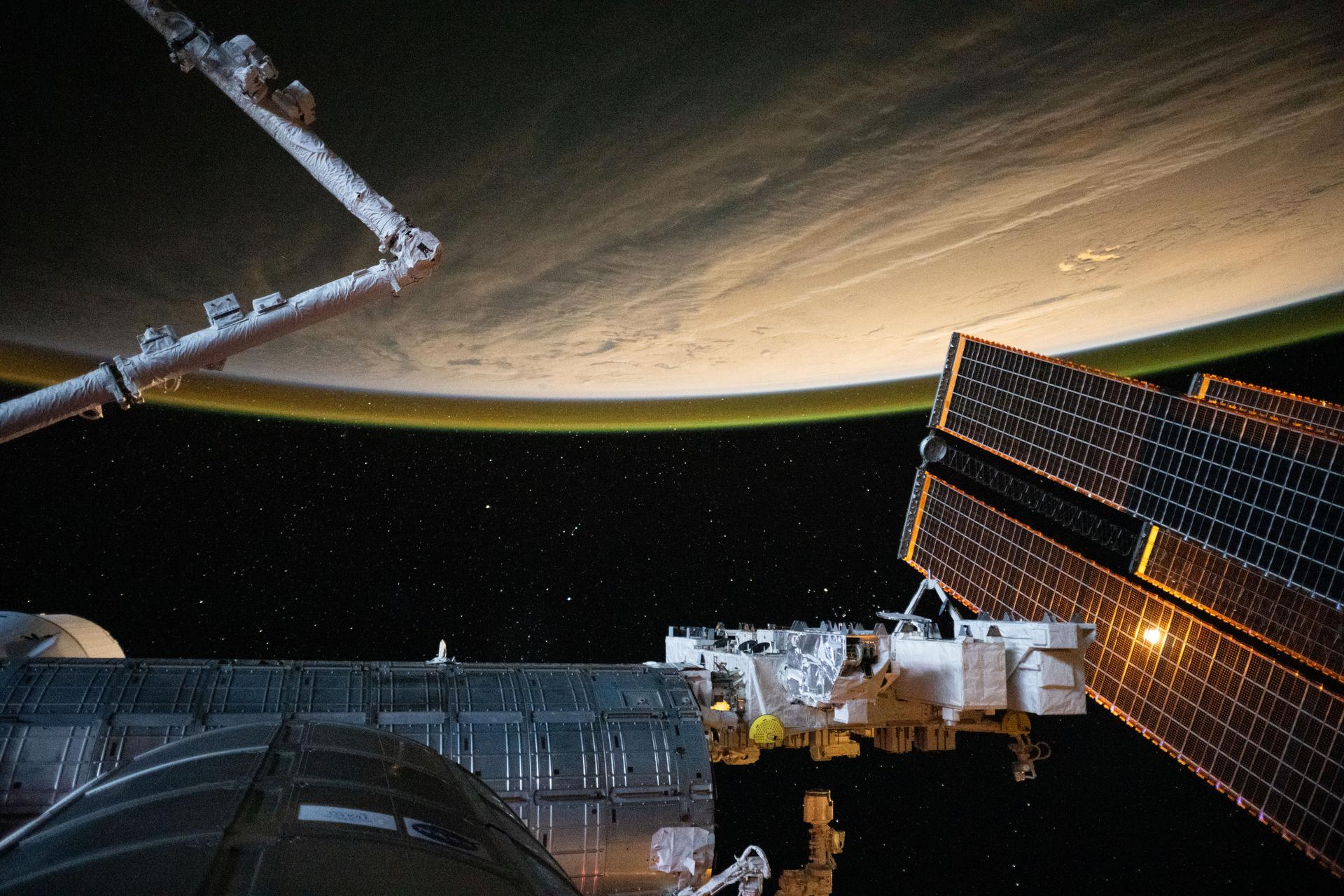
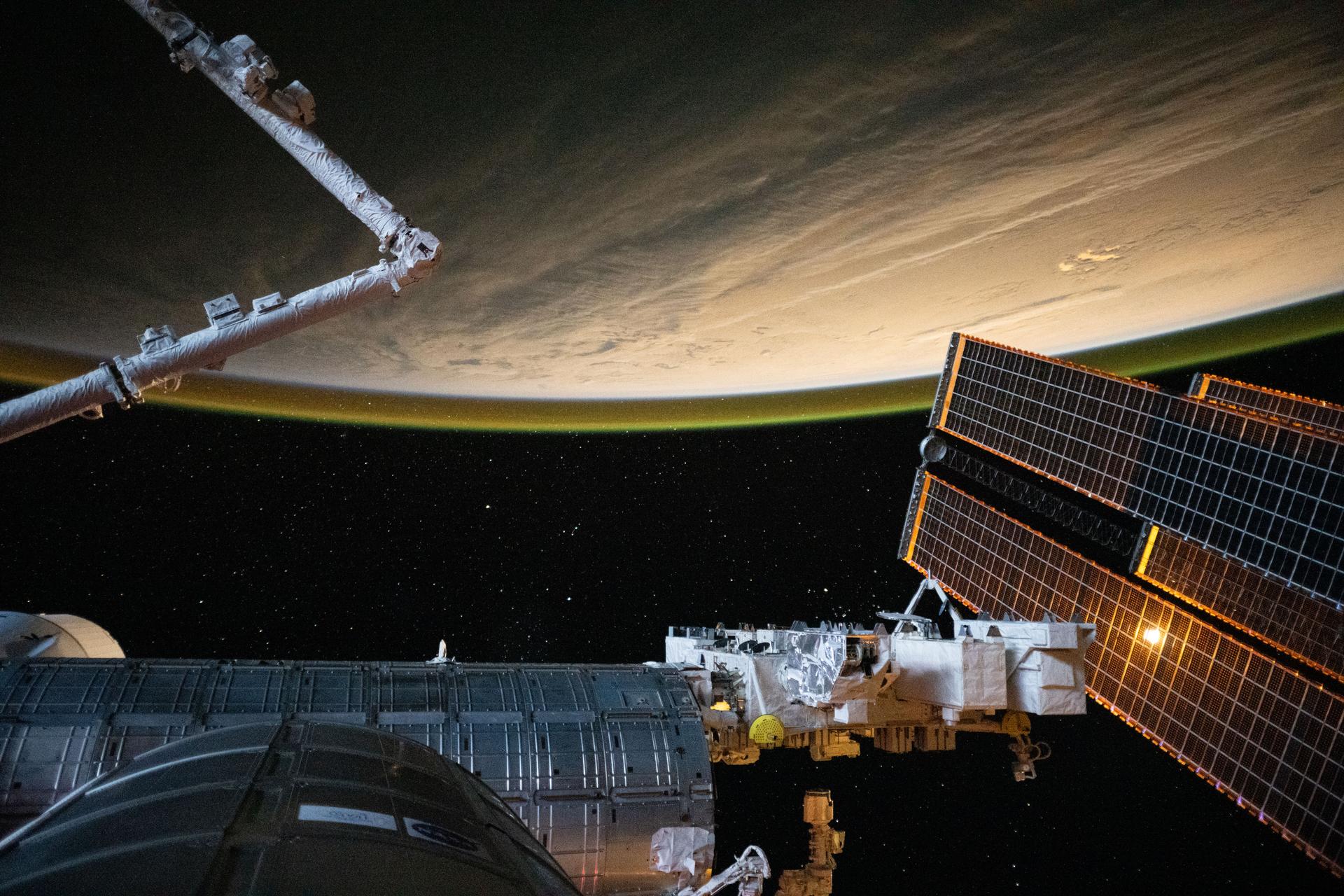
Biomedical research to keep crews healthy and CubeSat deployments for educational research topped the science schedule aboard the International Space Station on Tuesday. The Expedition 74 crew also focused on cargo swaps and life support maintenance throughout the day.
NASA Flight Engineer Chris Williams processed his body samples during the first half of his shift for the long-running CIPHER astronaut health study. He collected then stowed his urine samples inside a science freezer for preservation and later analysis. The human research investigation looks at a broad range of physiological and psychological parameters before, during, and after a spaceflight to understand how the human body adapts to weightlessness. Doctors will use the insights to keep crews healthy as they travel farther away from Earth.
Williams also pointed a camera out a window on the cupola as a set of CubeSats were deployed outside the Kibo laboratory module by a small satellite orbital deployer into Earth orbit. Students from Mexico, Italy, Thailand, Malaysia, and Japan designed the shoe-boxed satellites for a series of Earth observations and technology demonstrations.
Williams also logged onto a station computer and studied procedures to monitor the approach and rendezvous of the SpaceX Crew-12 mission aboard a Dragon spacecraft targeted to launch no earlier than Feb. 11 from Cape Canaveral in Florida. The first-time space flyer then continued packing completed science experiments and station hardware for return to Earth inside a Dragon spacecraft docked to the Harmony module’s forward port.
Flight Engineer Sergei Mikaev started his shift in the Nauka science module replacing battery controllers to maintain safe operations of the Roscosmos segment’s electrical power system. After lunchtime, Mikaev inspected and cleaned a pair of laptop computers before removing hardware and crew supplies from the Progress 92 cargo craft and stowing them inside the orbital outpost.
Station Commander Sergey Kud-Sverchkov spent his shift primarily on lab maintenance in the station’s Roscosmos’ modules. He first verified the location and configuration of a variety tool kits then inventoried and photographed the tools for analysis on the ground. Afterward, Kud-Sverchkov cleaned and inspected station smoked detectors and their components verifying they were in functional condition.
Learn more about station activities by following the space station blog, @space_station on X, as well as the ISS Facebook and ISS Instagram accounts.
Get the latest from NASA delivered every week. Subscribe here.