
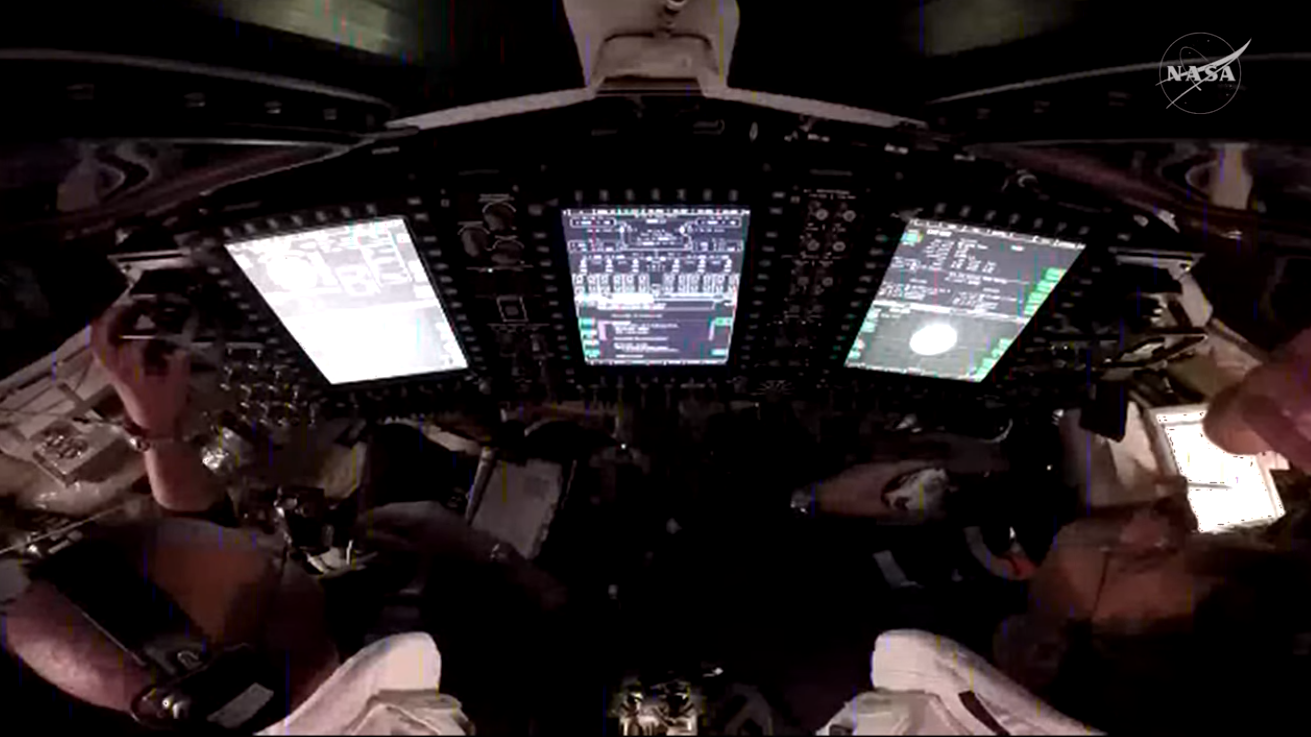
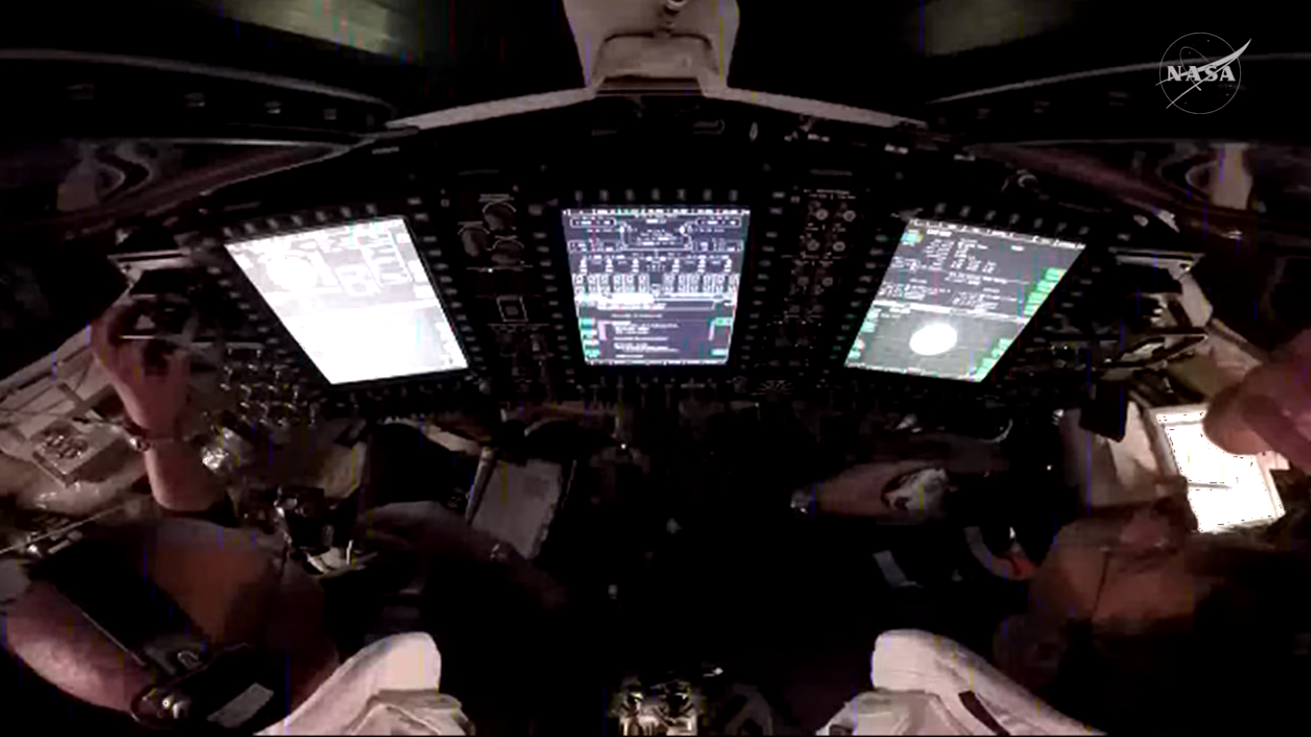
A view over the shoulders of NASA astronauts Victor Glover (left) and Reid Wiseman (right), pilot and commander, respectively, inside the Orion spacecraft as they participate in a proximity operations demonstration. This demonstration tests the spacecraft’s ability to manually maneuver relative to another spacecraft, the interim cryogenic propulsion stage, after separation, using its onboard navigation sensors and reaction control thrusters.
NASA

The Artemis II crew, working closely with mission control in Houston, were able to restore the Orion spacecraft’s toilet to normal operations following the proximity operations demonstration.

Ahead of the apogee raise burn on April 1, the Artemis II crew reported a blinking fault light and mission control teams successfully assessed the data and worked with the crew to troubleshoot and resolve the issue.

The crew now will take a four-hour nap and be awakened at 7 a.m. EDT on Thursday, April 2, to prepare for the perigee raise burn. This burn will lift the lowest point of Orion’s orbit around Earth. Together with the apogee raise burn completed earlier, these burns shape the spacecraft’s initial orbit and prepare it for later translunar operations. The crew members then will resume their sleep period around 9:40 a.m.

Artemis II Flight Update: Crew and Ground Teams Successfully Troubleshoot Orion’s Toilet