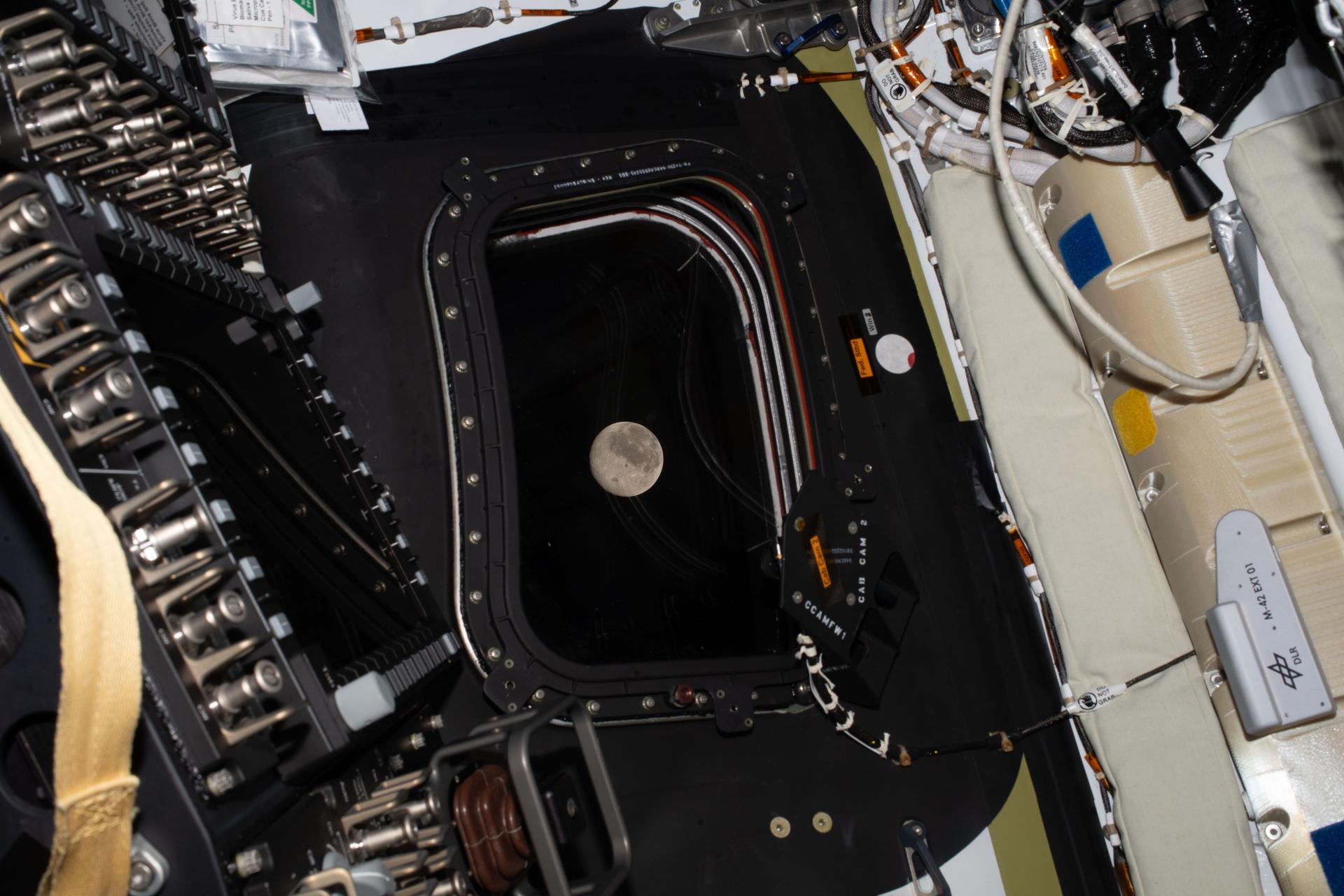
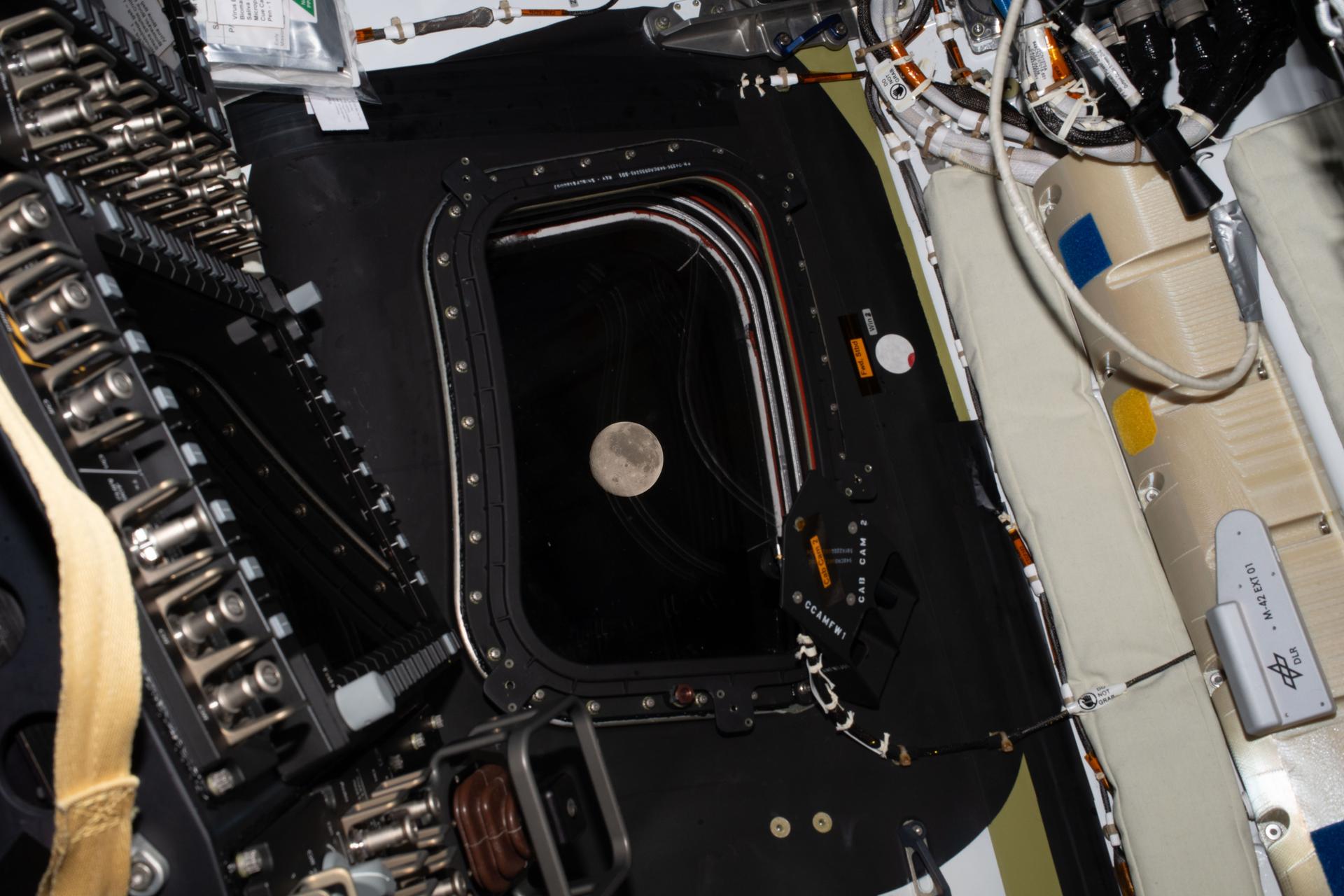
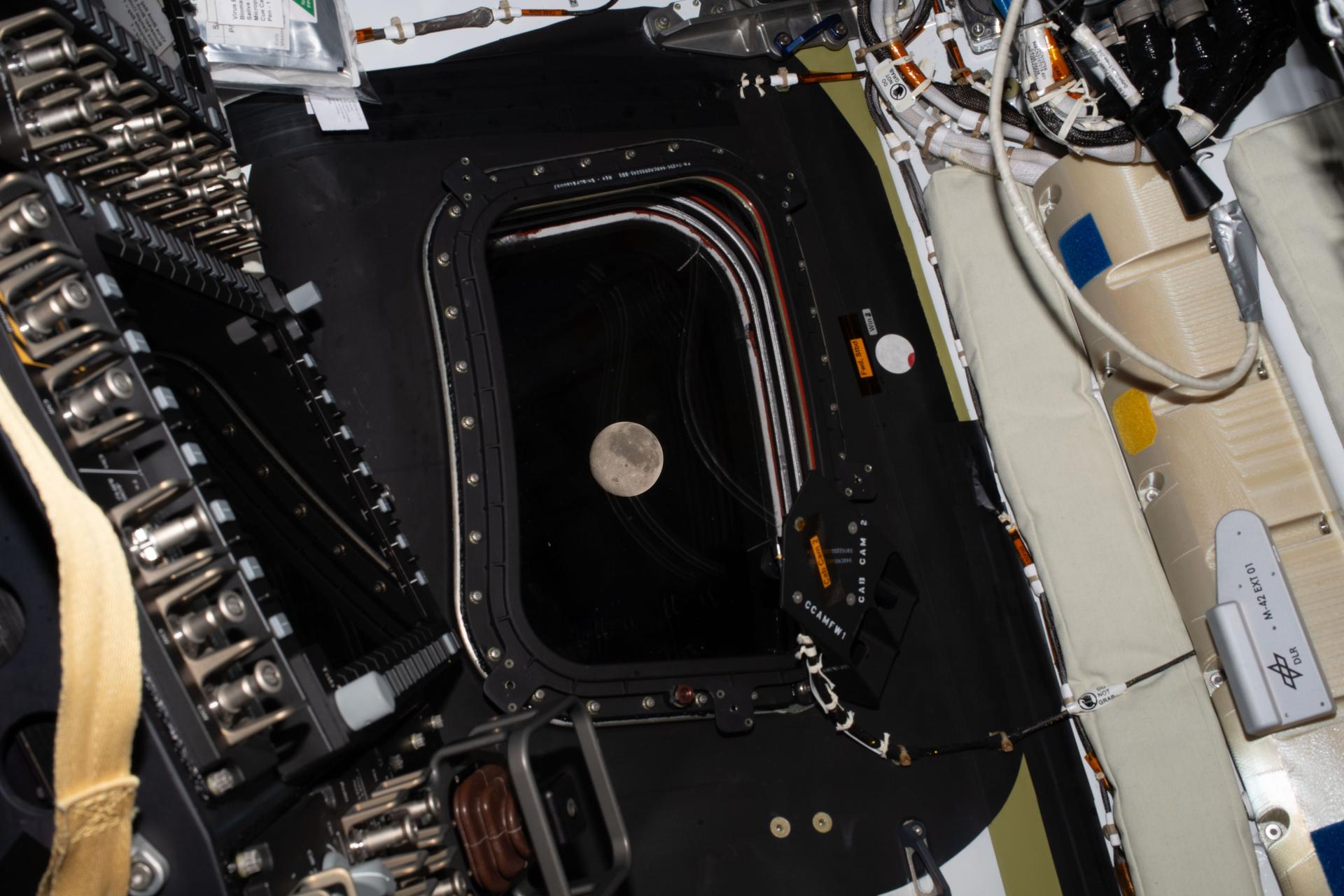
The Artemis II crew is awake and beginning preparations for today’s lunar flyby — a first for humans since Apollo 17 in 1972.
The sounds of “Good Morning,” by Mandisa and TobyMac played as NASA astronauts Reid Wiseman, Victor Glover, and Christina Koch, along with CSA (Canadian Space Agency) astronaut Jeremy Hansen, woke up just 18,830 miles from the Moon. The crew also received a special message that Apollo 8 and Apollo 13 astronaut Jim Lovell recorded for the mission before his passing in 2025.
“Hello, Artemis II! This is Apollo astronaut Jim Lovell. Welcome to my old neighborhood! When Frank Borman, Bill Anders, and I orbited the Moon on Apollo 8, we got humanity’s first up-close look at the Moon and got a view of the home planet that inspired and united people around the world. I’m proud to pass that torch on to you — as you swing around the Moon and lay the groundwork for missions to Mars … for the benefit of all. It’s a historic day, and I know how busy you’ll be. But don’t forget to enjoy the view. So, Reid, Victor, Christina, and Jeremy, and all the great teams supporting you – good luck and Godspeed from all of us here on the good Earth.”

Jim Lovell
Gemini VII, Gemini XII, Apollo 8, and Apollo 13 Astronaut
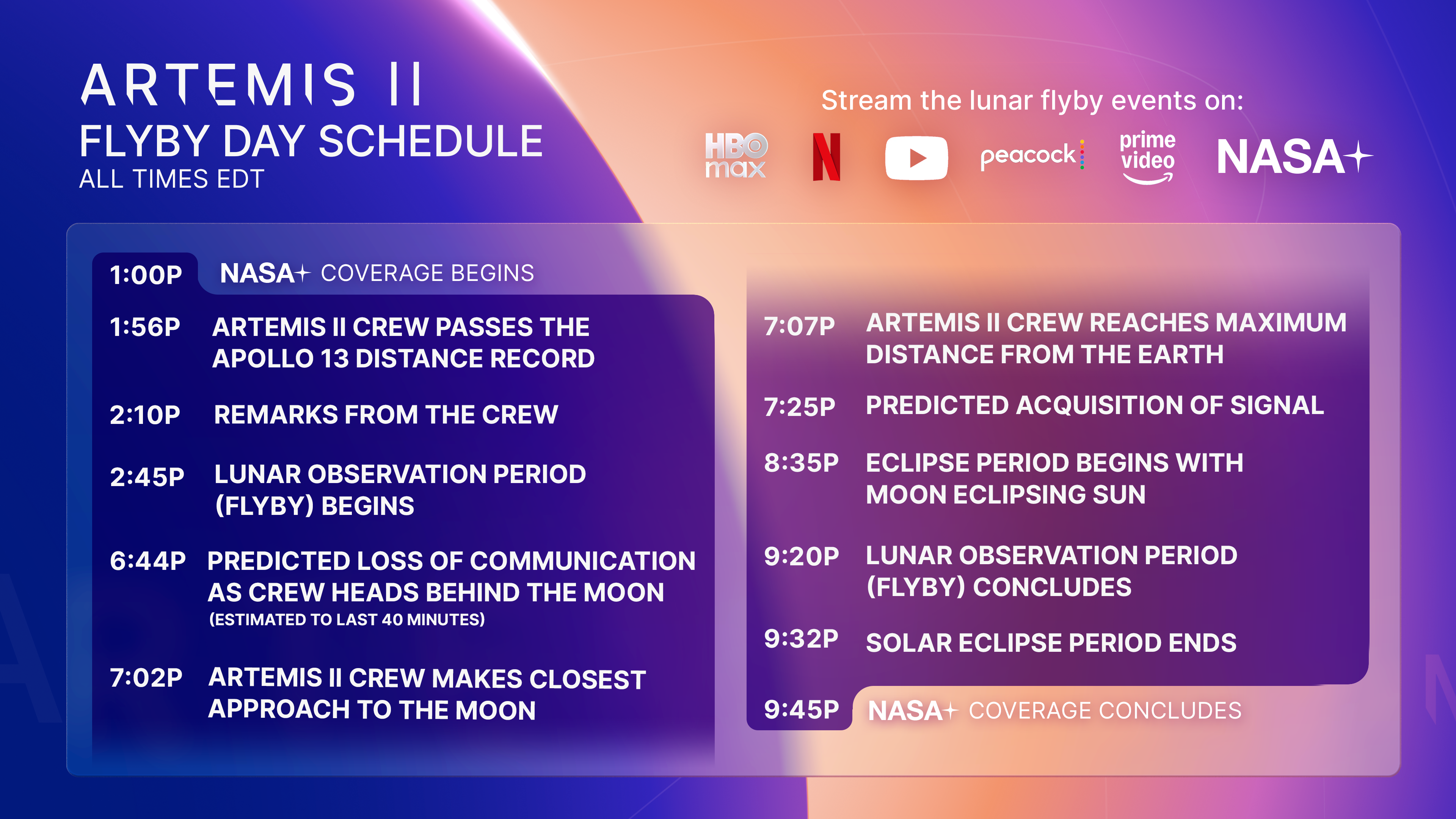
At approximately 1:56 p.m. EDT, the spacecraft will break the record for the farthest distance from Earth traveled by any human, surpassing the mark set by Apollo 13 in April 1970, during its emergency return to Earth. The spacecraft will reach its maximum distance at 7:07 p.m., a total of 252,760 miles from Earth; Apollo 13 reached 248,655 miles from Earth.
The lunar observation is scheduled to begin at about 2:45 p.m. EDT. The roughly seven-hour flyby covers the period when their Orion spacecraft will be close enough to the Moon for the crew to make detailed observations of geologic features on the lunar surface.
Watch live coverage of the Artemis II lunar flyby on NASA+, Amazon Prime, Apple TV, Hulu, Netflix, HBO Max, and Roku starting at 1 p.m., alongside the agency’s 24/7 coverage on its YouTube channel. Learn how to stream NASA content through a variety of online platforms, including social media.
Coverage will include live views of the Moon from cameras mounted on Orion’s solar arrays. Image and view quality may vary throughout the lunar observation period due to distance from Earth, system limitations, and bandwidth across NASA’s communications network.
When Orion passes behind the Moon, starting at approximately 6:44 p.m., the mission will enter a planned communications blackout lasting about 40 minutes. During this period, the Moon blocks the radio signals needed for the Deep Space Network to maintain contact with the spacecraft. Shortly after loss of signal, Orion is expected to make its closest approach at about 7:02 p.m., when it will be just 4,070 miles above the surface.
Toward the end of their observation, starting at 8:35 p.m., the crew will witness a solar eclipse from space as Orion, the Moon, and the Sun align. The astronauts will see the Sun disappear behind the Moon for nearly an hour. During this period, they will view a mostly darkened Moon and will use the opportunity to analyze the solar corona — the Sun’s outermost atmosphere — as it appears around the edge of the Moon.
Key moments for the lunar flyby include this following. All times are Eastern and may be adjusted based on real-time operations:
Monday, April 6
- 1:30 p.m.: The science officer in the Mission Control Center at NASA’s Johnson Space Center in Houston will brief the crew on their science goals for the upcoming flyby.
- 1:56 p.m.: The Artemis II crew is expected to surpass the record previously set by the Apollo 13 crew in 1970 for the farthest humans have ever traveled from Earth.
- 2:45 p.m.: Lunar observations begin.
- 6:44 p.m.: Mission control expects to temporarily lose communication with the crew as the Orion spacecraft passes behind the Moon.
- 6:45 p.m.: During “Earthset,” Earth will glide behind the Moon from Orion’s perspective.
- 7:02 p.m.: Orion reaches its closest approach to the Moon at 4,070 miles above the surface.
- 7:07 p.m.: Crew reach their maximum distance from Earth during the mission (252,706 miles).
- 7:25 p.m.: “Earthrise” marks Earth coming back into view on the opposite edge of the Moon.
- 7:25 p.m.: Mission control will re-acquire communication with the astronauts.
- 8:35-9:32 p.m.: During a solar eclipse, the Sun will pass behind the Moon from the crew’s perspective.
- 9:20 p.m.: Lunar observations conclude.
Tuesday, April 7
- 1:25 p.m.: Orion exits the lunar sphere of influence at 41,072 miles from the Moon.
View the latest imagery from the Artemis II mission on our Artemis II Multimedia Resource Page. Please follow @NASAArtemis on X, Facebook, and Instagram for real-time updates. Live coverage of the mission is available on NASA’s YouTube channel.