
Robotics and artificial intelligence were back on the research schedule Wednesday for the Expedition 74 crew to inspire college students and explore boosting crew efficiency. Earth observations and life support maintenance also rounded out the day for the orbital residents aboard the International Space Station.
Several teams of college students from the Asia-Pacific region competed to see whose code could best command the Astrobee robotic free-flyers during a “treasure” hunt aboard the Kibo laboratory module. The challenge was to maneuver the Astrobee and properly identify and locate hidden items throughout the Kibo lab. NASA Flight Engineer Chris Williams monitored the Kibo robotics challenge ensuring the toaster-sized, cube-shaped robots were correctly configured and operated safely. The ultimate objective of the robotics challenge is to inspire students to study science, technology, engineering, and math subjects.
Station Commander Sergey Kud-Sverchkov of Roscosmos worked in the Zvezda service module and studied using artificial intelligence to boost crew efficiency aboard the orbital outpost. He tested AI-assisted tools to convert speech-to-text and improve data handling and communications between the crew and ground controllers. Researchers seek to use the new technology to speed up and increase the accuracy of crew documentation benefitting operations aboard spacecraft.
The commander also checked out a variety of cameras throughout the station’s Roscosmos segment and synchronized them to Greenwich Mean Time, or GMT, to accurately timestamp imagery. Kud-Sverchkov then moved on and serviced plumbing and ventilation systems in the Nauka and Zarya modules.
Roscosmos Flight Engineer Sergei Mikaev pointed a camera out a station window and programmed it to automatically photograph landmarks across eastern Europe at the beginning of his shift. Afterward, Mikaev uninstalled the Earth observation equipment and downloaded the imagery data for analysis on the ground. During the second half of his shift, he checked out computer software supporting physics research hardware then answered a questionnaire to help researchers improve communications between international crews and mission controllers from around the world.
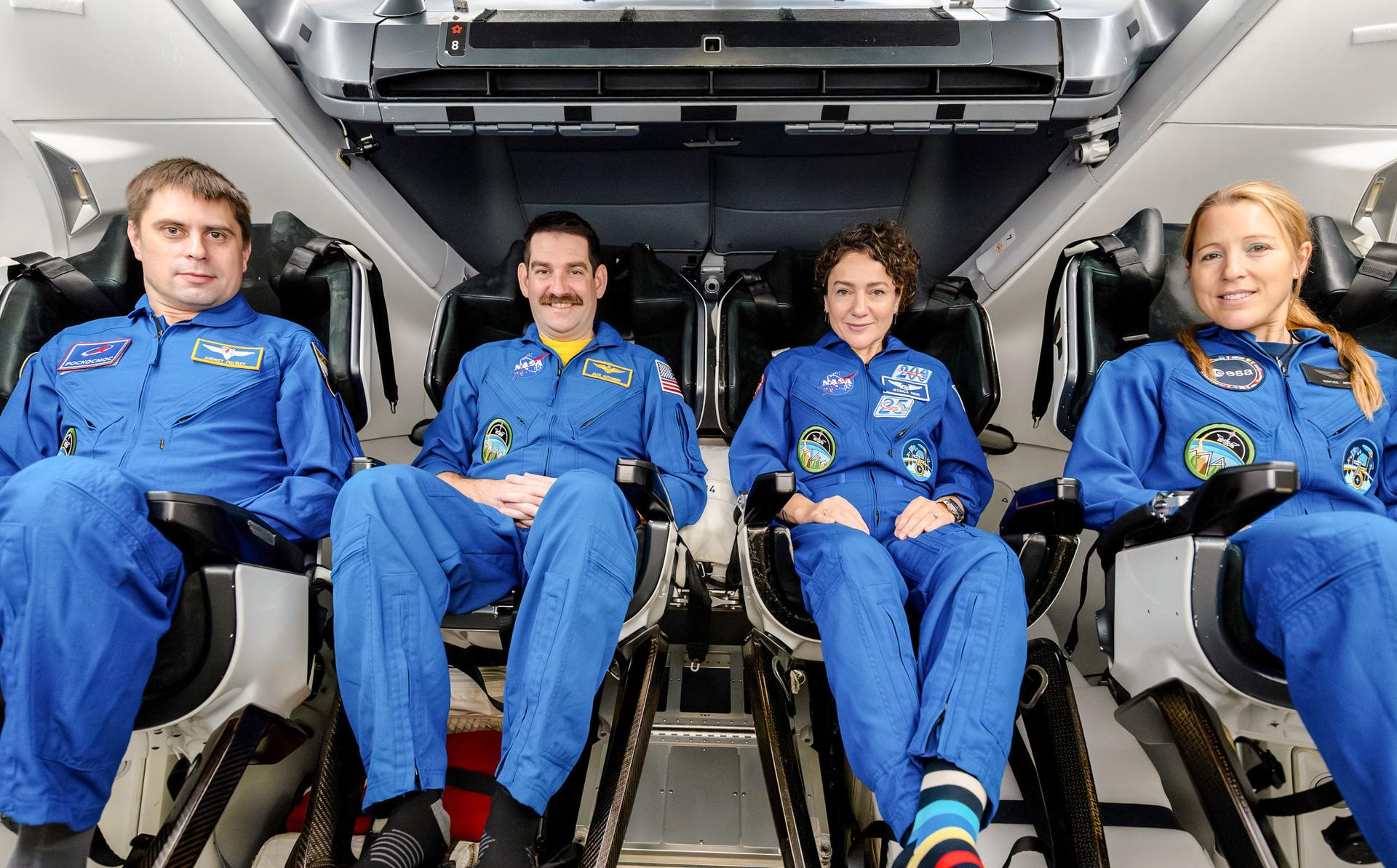
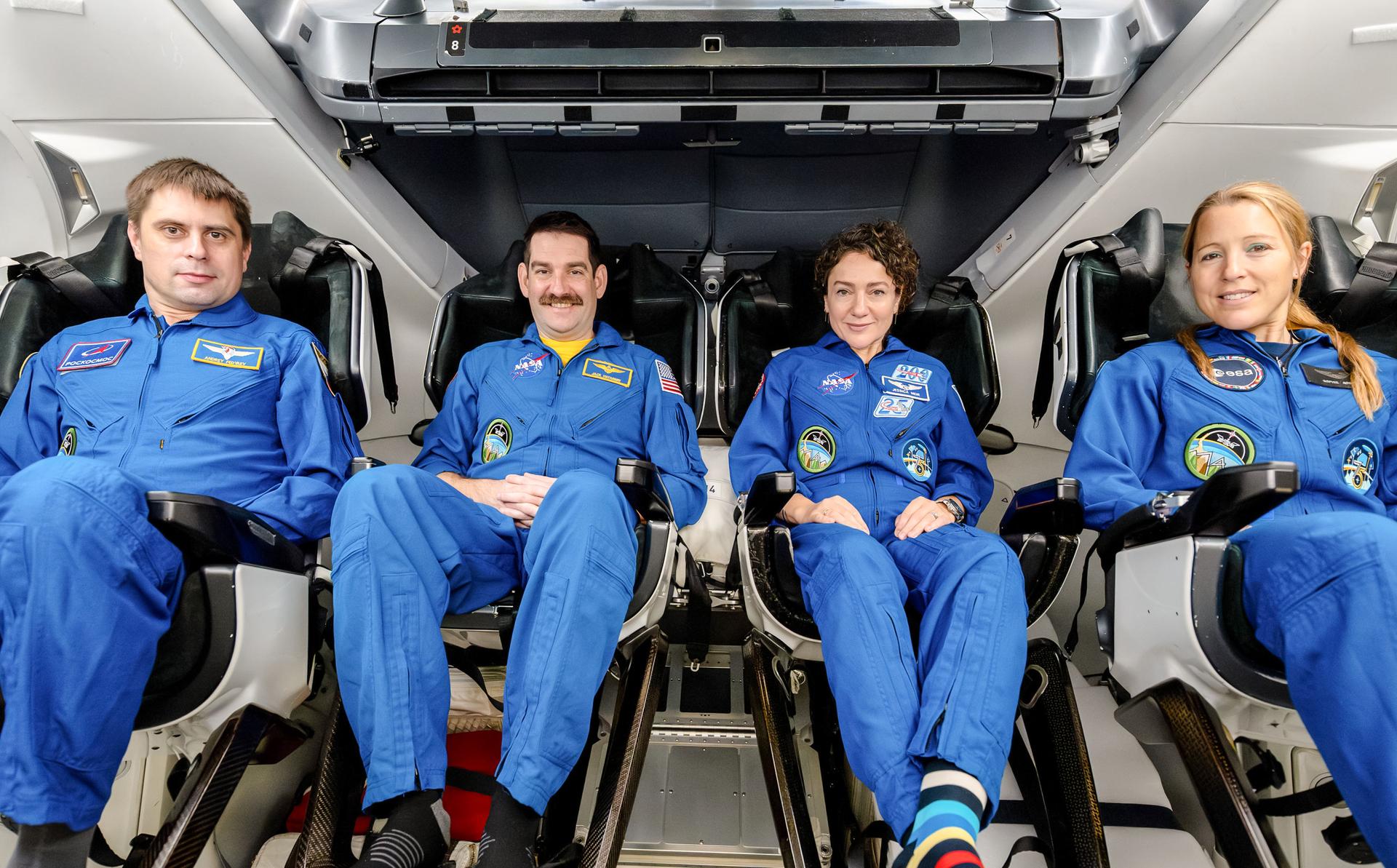
The earliest opportunity for NASA’s SpaceX Crew-12 launch to the space station is 6 a.m. EST, Feb. 11, from pad 40 at Cape Canaveral Space Force Station in Florida. Next opportunities are 5:38 a.m. Feb. 12 & 5:15 a.m. Feb. 13. NASA continues working toward potential launch windows for two important crewed missions this February: Artemis II and Crew-12. We will make any decisions on the best launch opportunity for each mission closer to flight.
Learn more about station activities by following the space station blog, @space_station on X, as well as the ISS Facebook and ISS Instagram accounts.
Get the latest from NASA delivered every week. Subscribe here.