
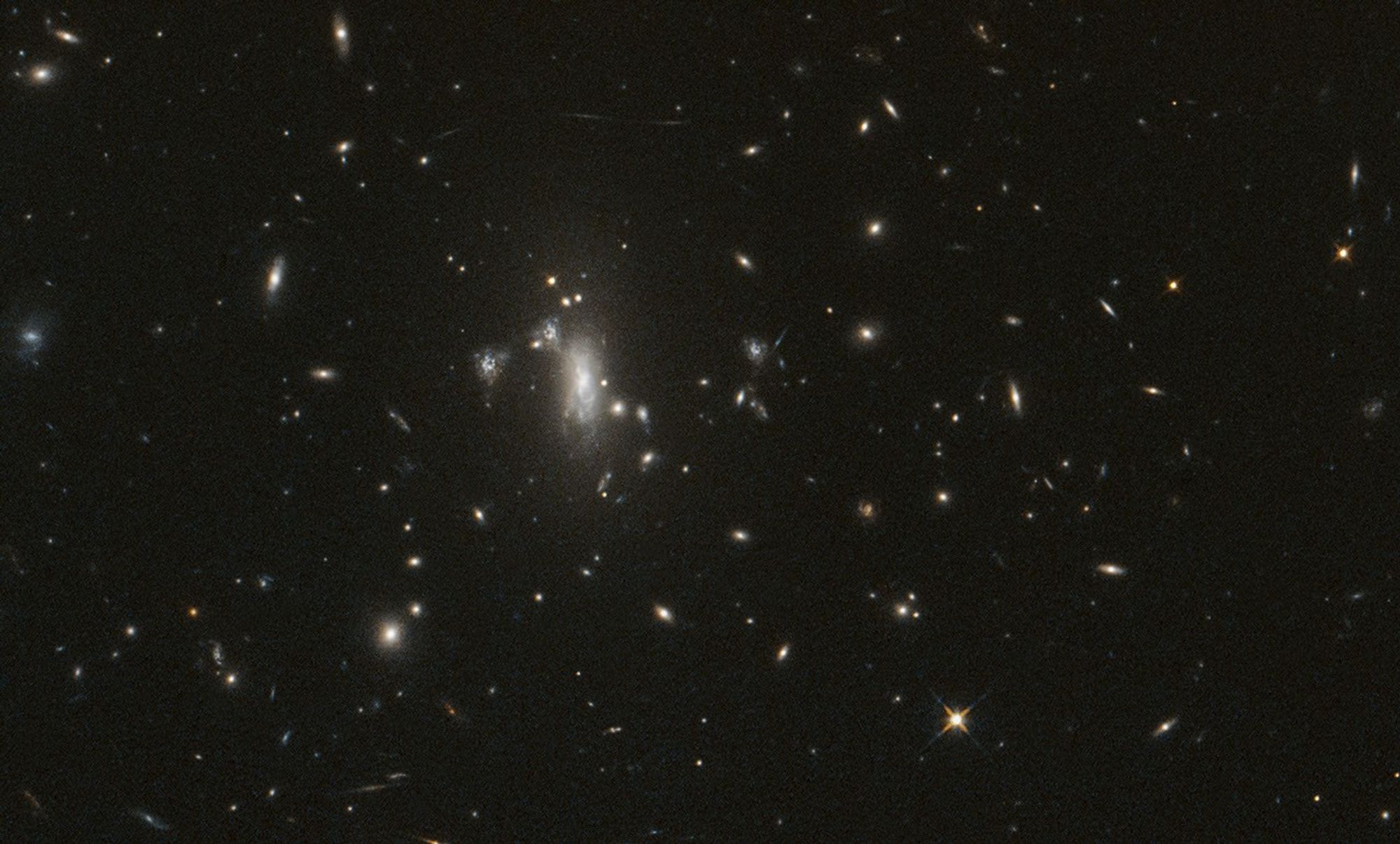
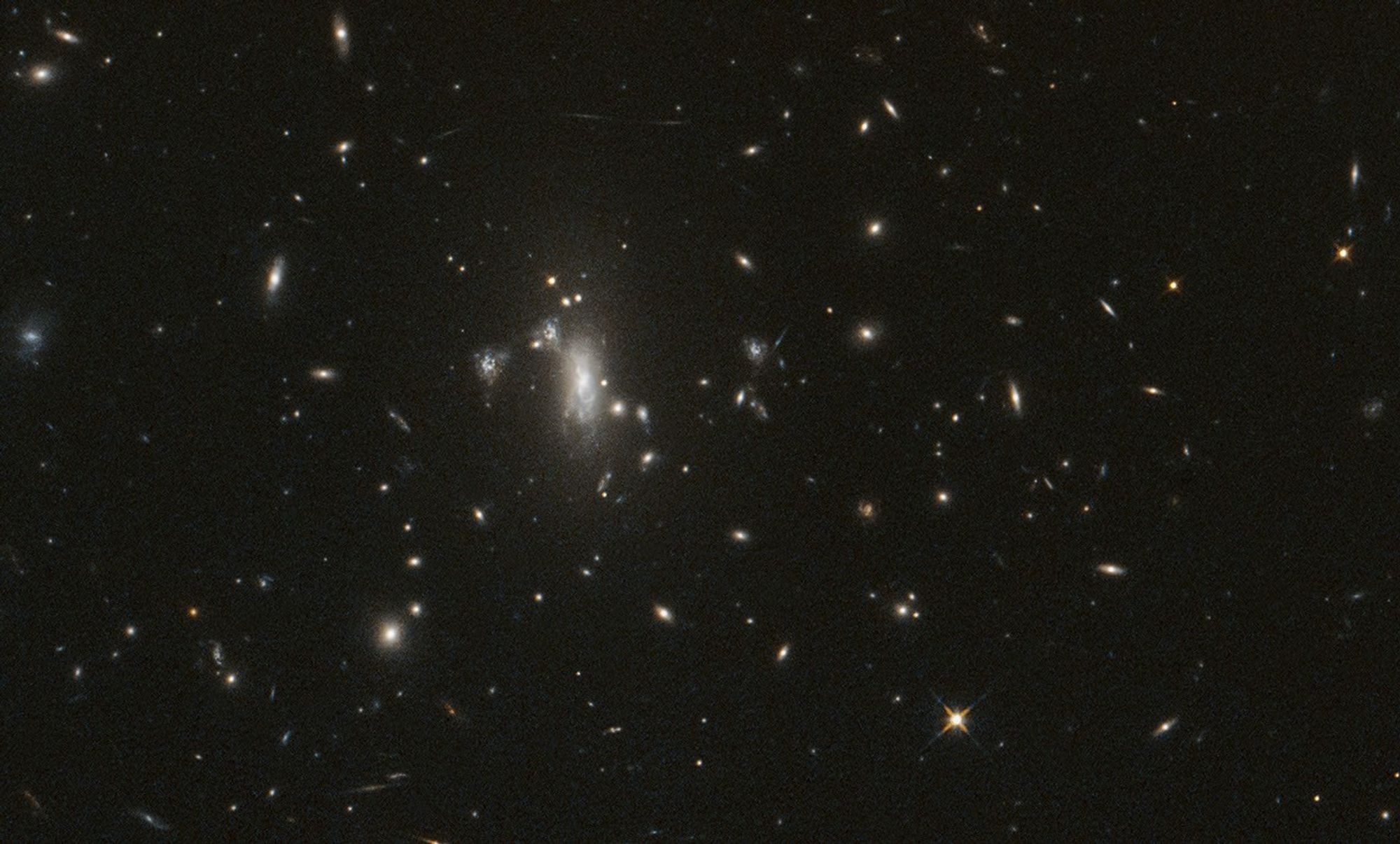
 An image from NASA’s Hubble Space Telescope of galaxy cluster MACS J0417 is part of repeated observations to monitor for the reappearance of supernova Athena, which can help astronomers measure the expansion rate of the universe.NASA, ESA, STScI, M. Pascale (UCLA); Image Processing: J. DePasquale (STScI) NASA’s Hubble Space Telescope captured this image of massive galaxy cluster MACS J0417 (left of center) on Sept. 19, 2026. This galaxy cluster acts as a gravitational lens, bending and magnifying light from objects far behind it. Supernova Athena, discovered by NASA’s James Webb Space Telescope in 2025, is predicted to reappear between now and early March 2027. Measuring the timing of Athena’s reappearances can help researchers map the mass of MACS J0417, which acts as a magnifying, foreground lens for distant objects, and refine our understanding of the expansion rate of the universe.
Hubble also completed its 200,000th orbit around Earth on Sept. 19, marking another new milestone for an observatory that continues to transform our understanding of the universe.
Read more about Hubble and this recent milestone.
Image credit: NASA, ESA, STScI, M. Pascale (UCLA); Image Processing: J. DePasquale (STScI)