Explore Hubble Hubble Home Overview About Hubble The History of Hubble Hubble Timeline Why Have a Telescope in Space? Hubble by the Numbers At the Museum FAQs Impact & Benefits Hubble’s Impact & Benefits Science Impacts Cultural Impact Technology Benefits Impact on Human Spaceflight Astro Community Impacts Science Hubble Science Science Themes Science Highlights Science Behind Discoveries Universe Uncovered Hubble’s Partners in Science Hubble & Citizen Science AI & Hubble Science Explore the Night Sky Observatory Hubble Observatory Hubble Design Mission Operations Science Operations Astronaut Missions to Hubble Hubble vs Webb Team Hubble Team Career Aspirations Hubble Astronauts Multimedia Images Videos Online Activities e-Books Sonifications Podcasts 3D Hubble Models Lithographs Fact Sheets Posters Hubble on the NASA App Glossary News Hubble News Social Media Media Resources 35th Anniversary More Online Activities 3 min read
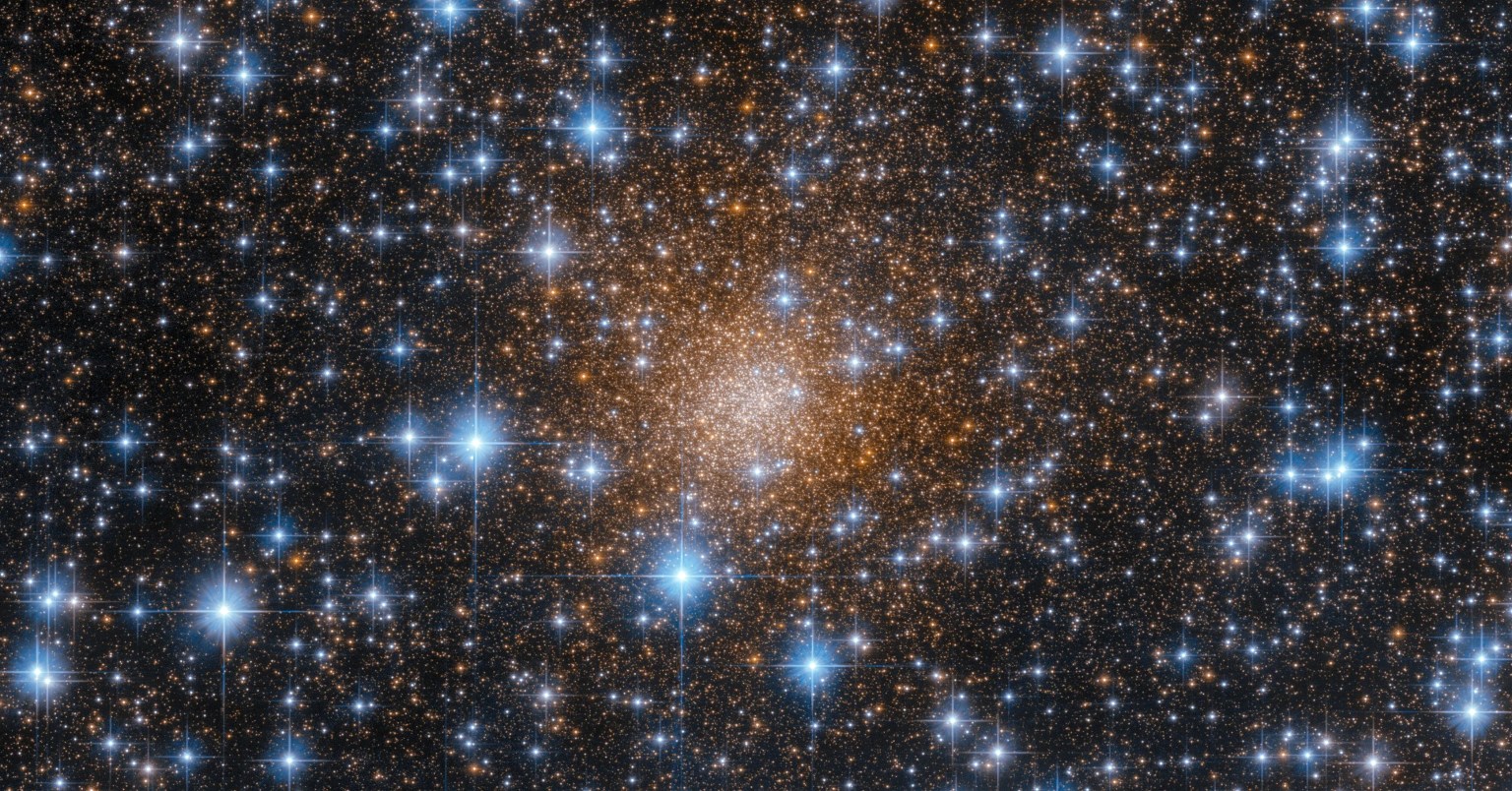
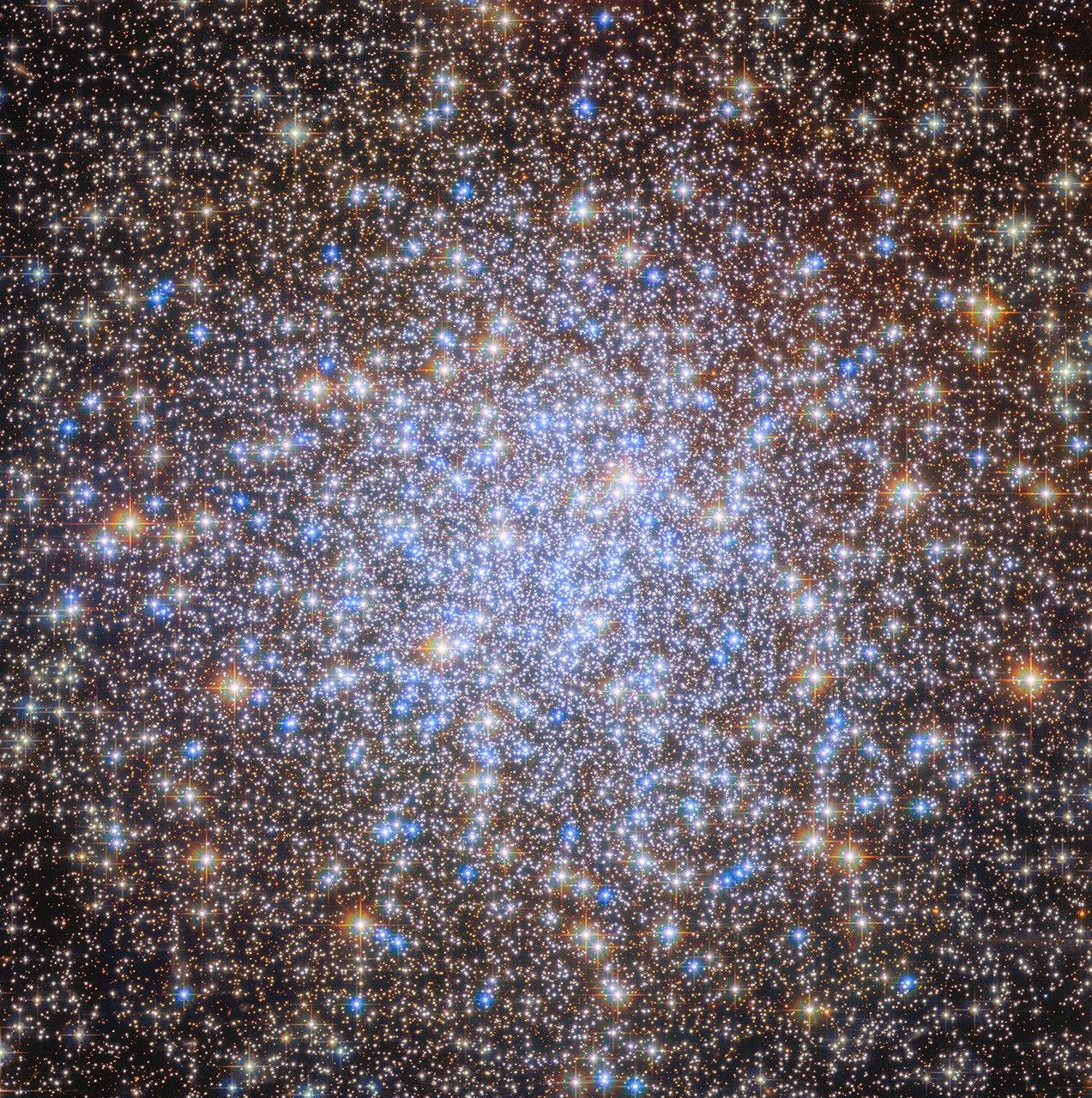
Hubble Spies Starry Chandelier 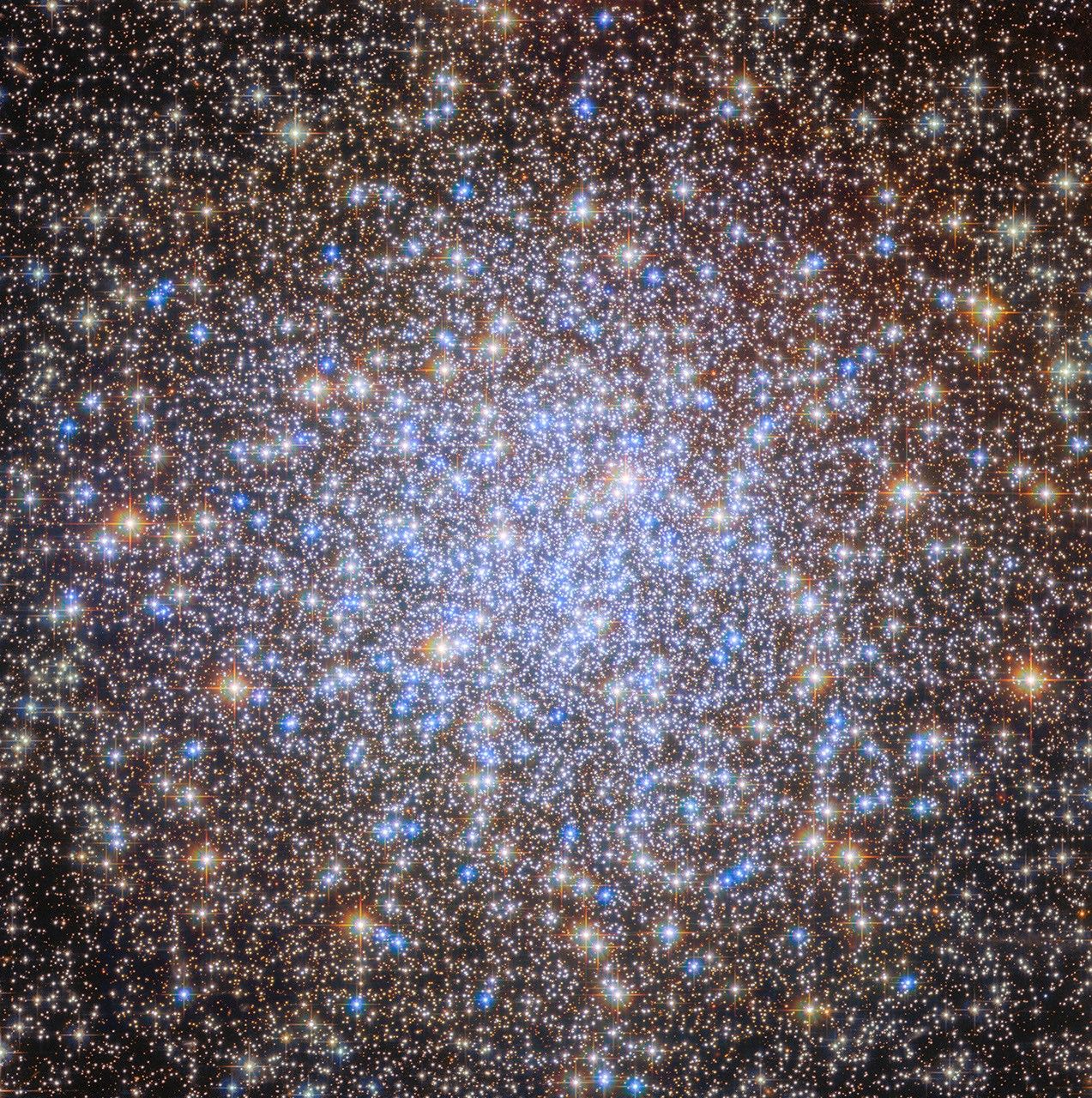 This NASA/ESA Hubble Space Telescope image features the globular cluster NGC 6723, sometimes called the Chandelier Cluster. ESA/Hubble & NASA, A. Sarajedini, G. Piotto The subject of today’s NASA/ESA Hubble Space Telescope image is an ancient inhabitant of our galaxy. This sparkling scene features a globular cluster: a collection of tens of thousands to millions of stars, all tightly bound together under the influence of gravity. There are more than 150 globular clusters in our galaxy, though there may be others still undiscovered, hidden from view by dust or densely packed fields of stars.
This globular cluster, NGC 6723, sometimes called the Chandelier Cluster, is much like its namesake because it sparkles with countless lights. However, each ‘lightbulb’ in this chandelier is an individual star 27,000 light-years away in the constellation Sagittarius (the Archer).
Globular clusters like NGC 6723 contain some of the oldest stars in our galaxy. These clusters have ages that often exceed 10 billion years old, and some are nearly as old as the universe itself. Astronomers think globular clusters are some of the first structures that formed in our galaxy, coalescing potentially billions of years before the thin disk of stars in which our Sun orbits. The details of how globular clusters formed, however, are not yet certain.
Astronomers initially thought that all stars in a globular cluster formed at the same time in a single flourish of star formation. This would mean that all stars in a globular cluster would be the same age and made of the same mixture of chemical elements. Now, thanks to observations from telescopes like Hubble, researchers know that these seemingly simple stellar populations have more complex histories than originally thought.
Hubble first observed NGC 6723 as part of an ambitious survey dedicated to demystifying the properties of globular clusters in our Milky Way galaxy. In this observing program (#10775, PI: Sarajedini), researchers used Hubble to study 65 globular clusters in our galaxy in visible and near-infrared light. That data allowed researchers to study everything from the ages of globular clusters to the process through which massive stars sink to the center of a star cluster and lower-mass stars drift toward the cluster outskirts. This survey has been immensely scientifically valuable, and these observations have inspired several hundred published research papers.
In a later observing program (#13297, PI: Piotto), researchers set their sights again on many of these same clusters, including NGC 6723. This time, they used Hubble’s unique sensitivity to ultraviolet light to detect the subtle variations in chemical composition between the stars of globular clusters and determine the age spread among the clusters’ stars. For NGC 6723, researchers found evidence of two closely-spaced periods of star formation, the second occurring within 634 million years of the first. (‘Closely-spaced’ is relative; 634 million years is a blink of an eye for a star cluster that is more than 10 billion years old!)
Thanks to these findings, astronomers are on the path to understanding how and when globular clusters formed — and Hubble observations of celestial chandeliers like NGC 6723 are lighting the way.
Text Credit: ESA/Hubble
Facebook logo @NASAHubble @NASAHubble Instagram logo @NASAHubble Media Contact:
Claire Andreoli
NASA’s Goddard Space Flight Center, Greenbelt, MD
claire.andreoli@nasa.gov
Details Last Updated Jun 26, 2026 Editor Andrea Gianopoulos Location NASA Goddard Space Flight Center Related Terms Hubble Space Telescope Astrophysics Astrophysics Division Globular Clusters Goddard Space Flight Center Star Clusters Stars The Universe
Keep Exploring Discover More Topics From Hubble Hubble Space Telescope
Since its 1990 launch, the Hubble Space Telescope has changed our fundamental understanding of the universe.