Skywatching Skywatching Home What’s Up Meteor Showers Eclipses Daily Moon Guide More Tips & Guides Skywatching FAQ Night Sky Network Venus and Jupiter meet after sunset, the Moon passes in front of Venus, summer begins, and deep-sky treasures rise into view.
Skywatching Highlights June 9: Venus and Jupiter conjunction June 11–15: Mercury joins Venus and Jupiter after sunset June 17: Moon passes in front of Venus & close Moon and Venus pairing June 21: June solstice & start of astronomical summer June: Summer Triangle and deep-sky observing targets rise into view Transcript Planets gather after sunset, the Moon passes in front of Venus, summer officially begins and deep sky treasures rise into view. That’s What’s Up for June.
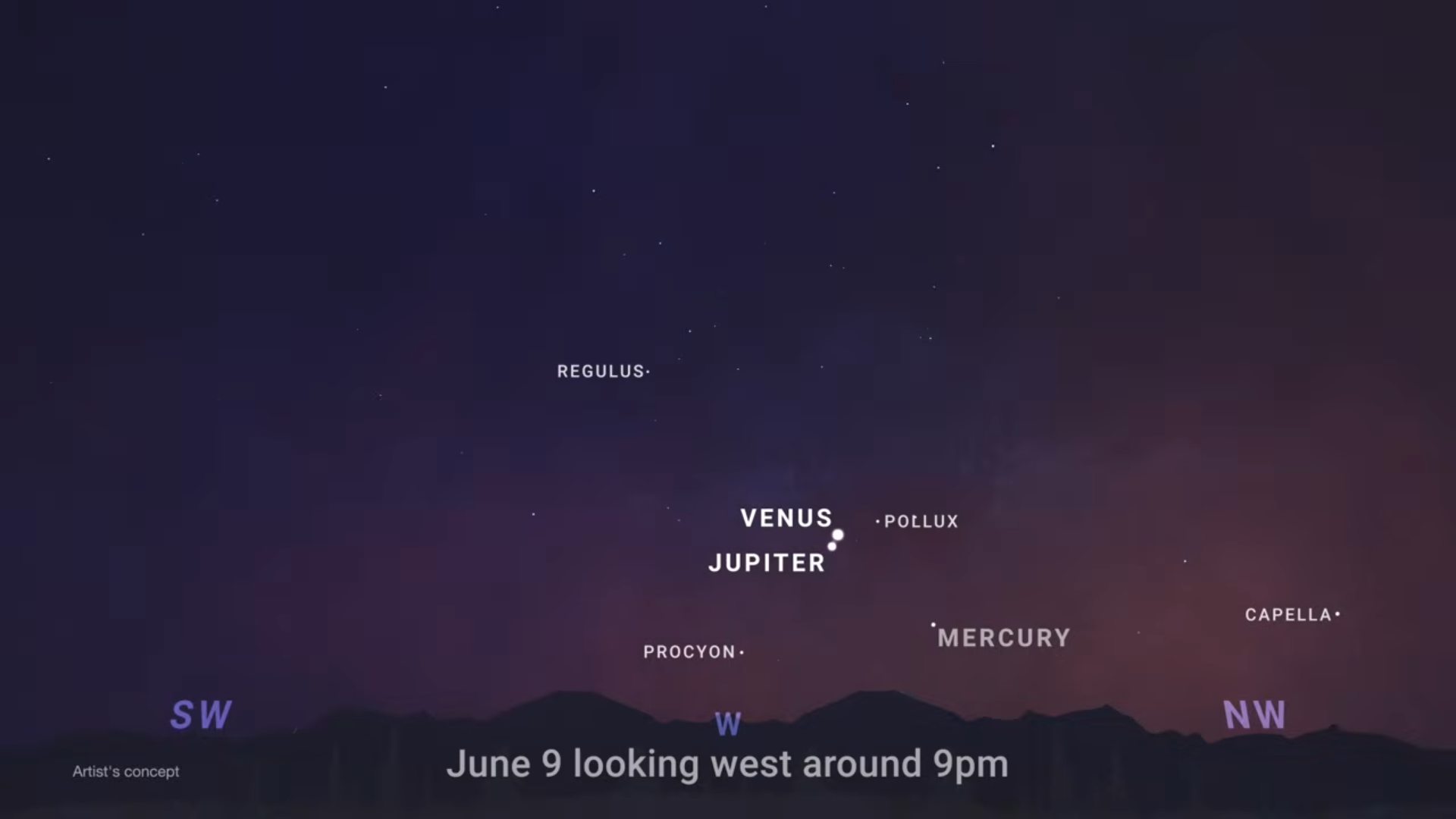
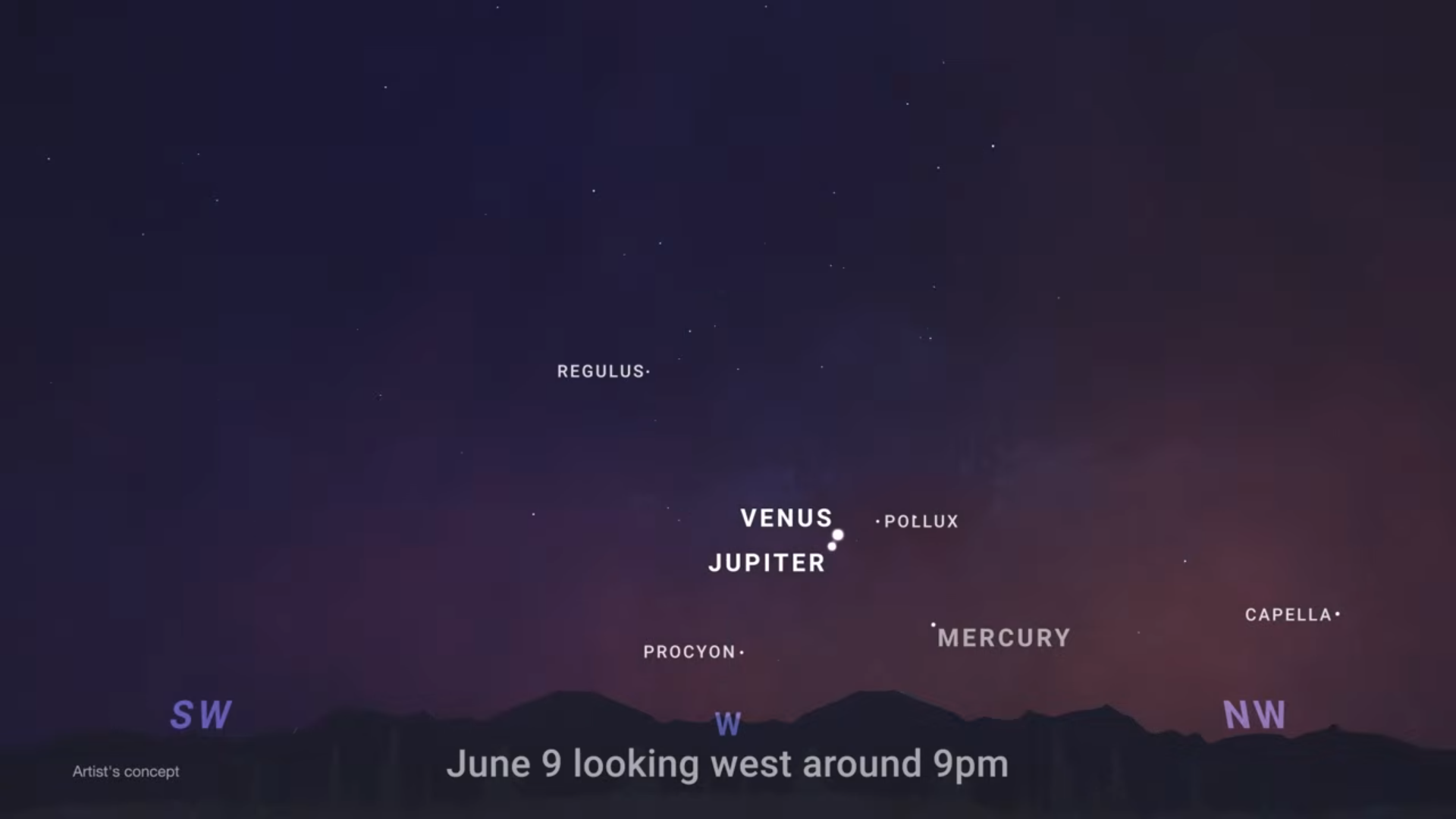
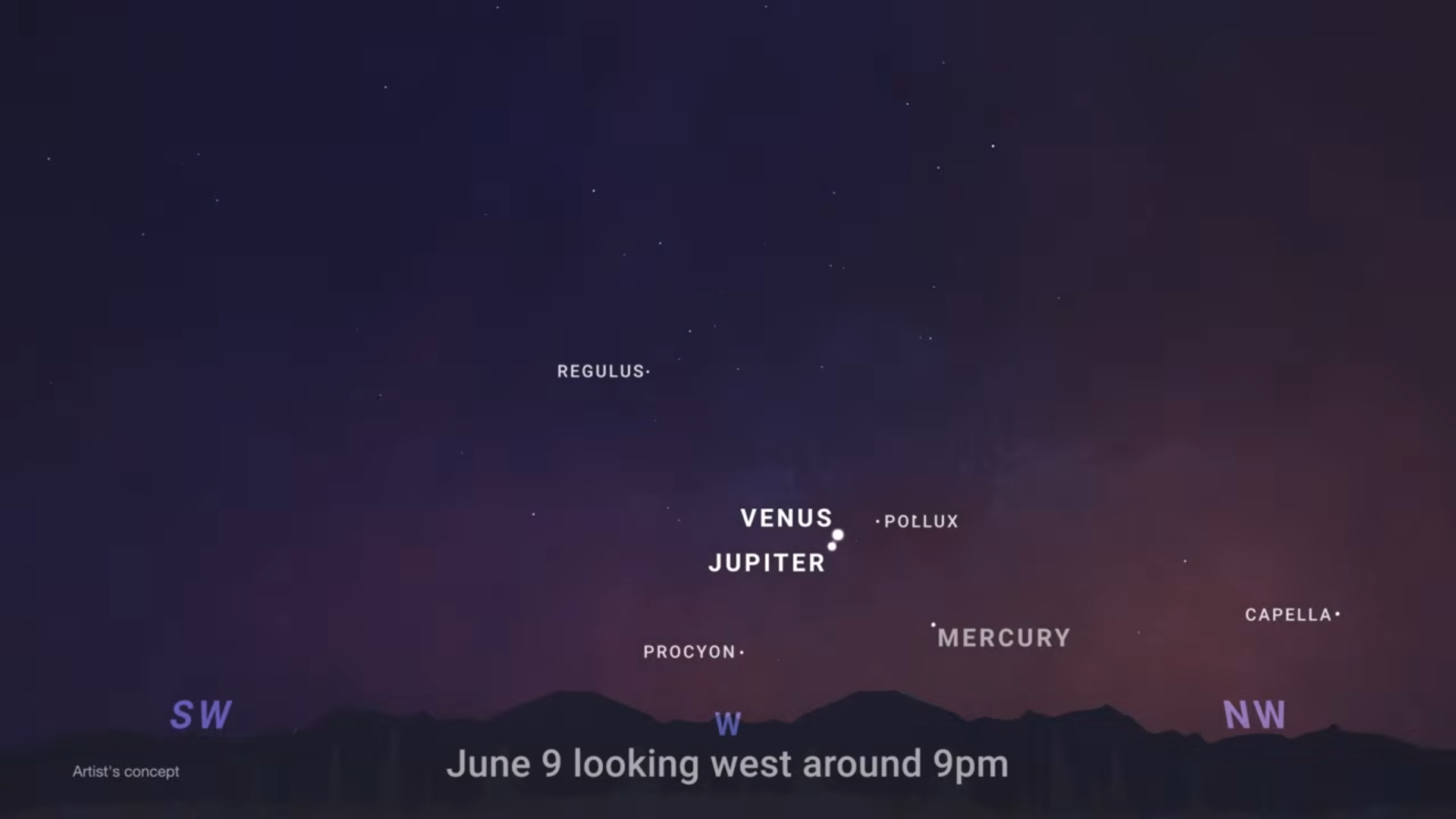
Early this month, look west shortly after sunset to see Venus and Jupiter. They are two of the brightest planets in our sky and around June 9th, they’ll appear close together after sunset. This is called a planetary conjunction—when two planets appear near each other from our point of view on Earth, even though they’re still millions of miles apart in space.
 NASA/JPL-Caltech From June 11th through June 15th, Mercury joins the scene, creating a mini parade of planets low in the western sky. This happens because the planets orbit the sun along nearly the same path in our sky, called the ecliptic. So from our point of view on Earth, they sometimes appear to gather in the same part of the sky.
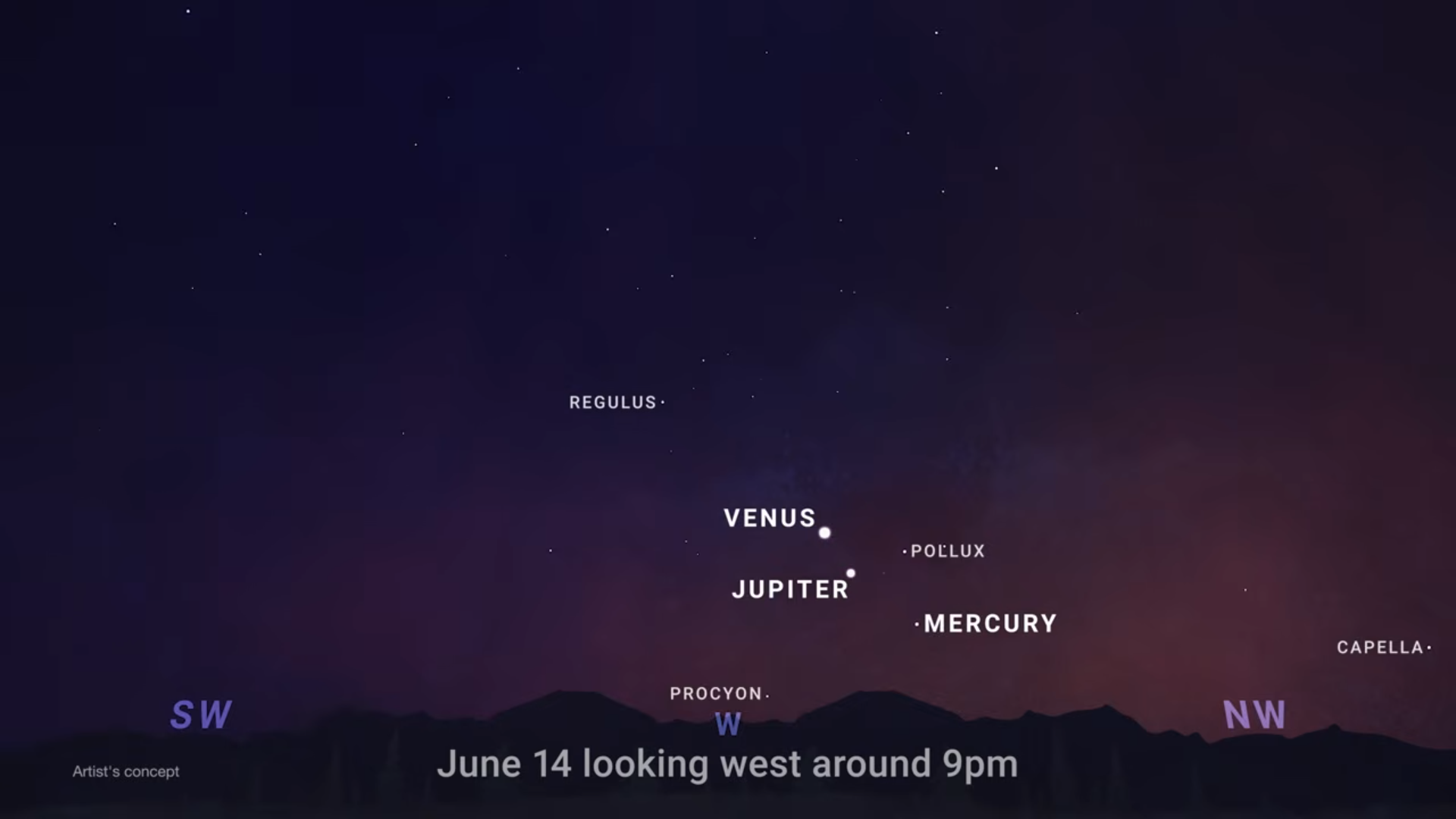 NASA/JPL-Caltech Venus will be the brightest and easiest to spot with Jupiter nearby. Mercury will sit lower toward the horizon, so you will need a clear view to the west to catch it in the glow of twilight.
On June 17th, from some locations the Moon will pass in front of Venus. This is called a lunar occultation. For viewers in the right viewing path, Venus will look like it disappears behind the Moon, then reappears later. The event will be visible from parts of the United States, Canada, Brazil and Venezuela. Outside of the exact viewing path, many skywatchers may still see a close pairing of the Moon and Venus, but this comes with an important safety note. For many viewers this will happen during the daytime.
If you’re trying to observe the occultation, do not point binoculars, a telescope, or a camera near the sun unless you’re using proper solar safety equipment. Looking at or near the sun through optics can cause serious eye injury.
June also brings the summer solstice. In the Northern Hemisphere, the June solstice marks the start of the astronomical summer. In Pacific time, it happens on Sunday, June 21st at 1:24 a.m.
Around the solstice, the Northern Hemisphere gets its longest days and shortest nights of the year.
But here’s a fun fact, the longest day does not usually line up exactly with the earliest sunrise or latest sunset. For example, in Los Angeles, the earliest sunrise comes before the solstice, while the latest sunset comes after it.
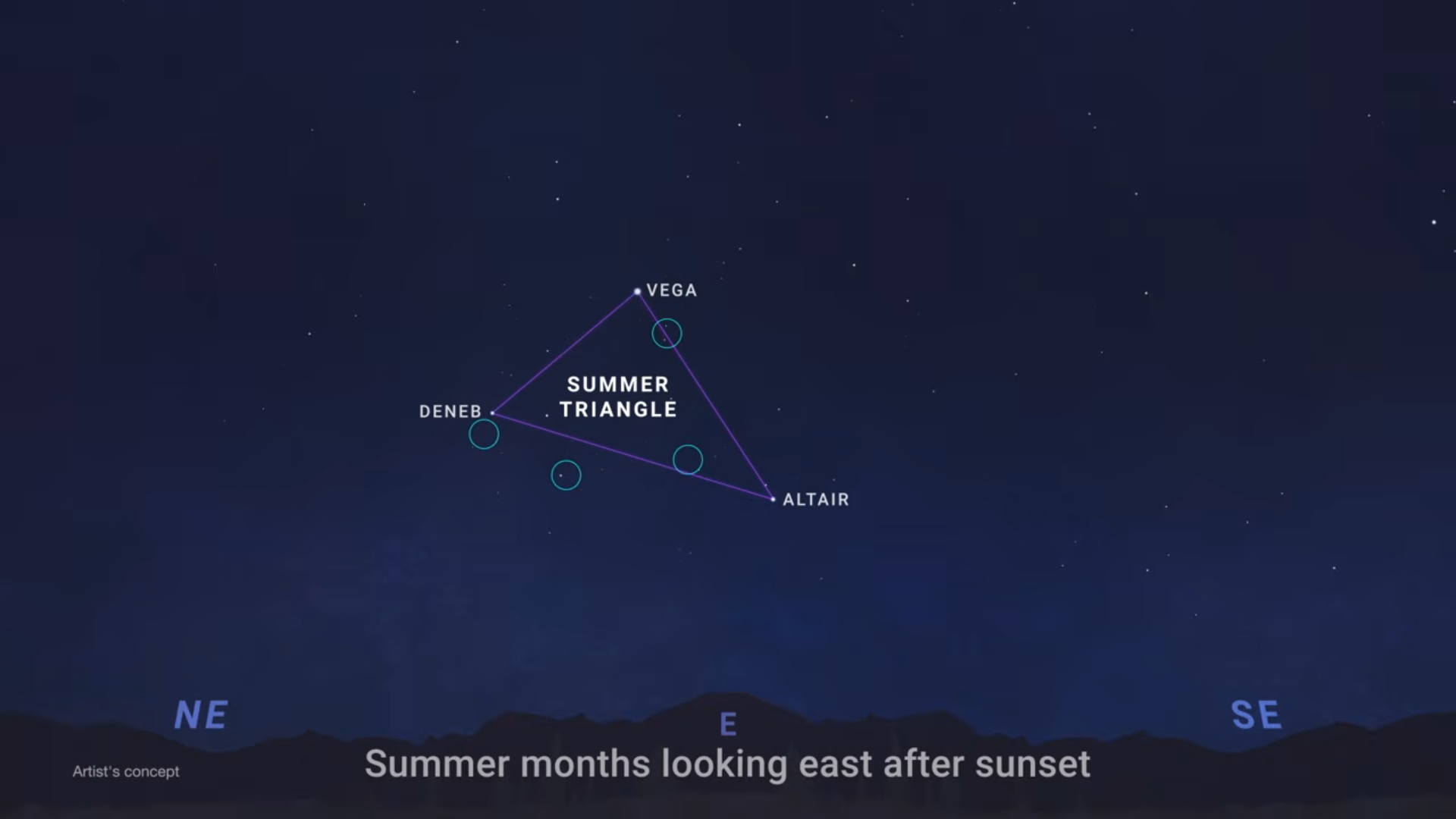
And once the sky gets dark, summer brings some favorite targets for telescope users and astrophotographers. First, look for the Summer Triangle, formed by the bright stars Vega, Altair, and Deneb. Inside and around this region are deep sky objects like the Dumbbell Nebula, the Ring Nebula, the North America Nebula, and the Veil Nebula. The Dumbbell Nebula, also known as Messier 27, was the first planetary nebula ever discovered.
These objects are not bright like planets, but with telescopes or long exposure photography, they reveal glowing gas, dying stars, and stellar nurseries in our galaxy.
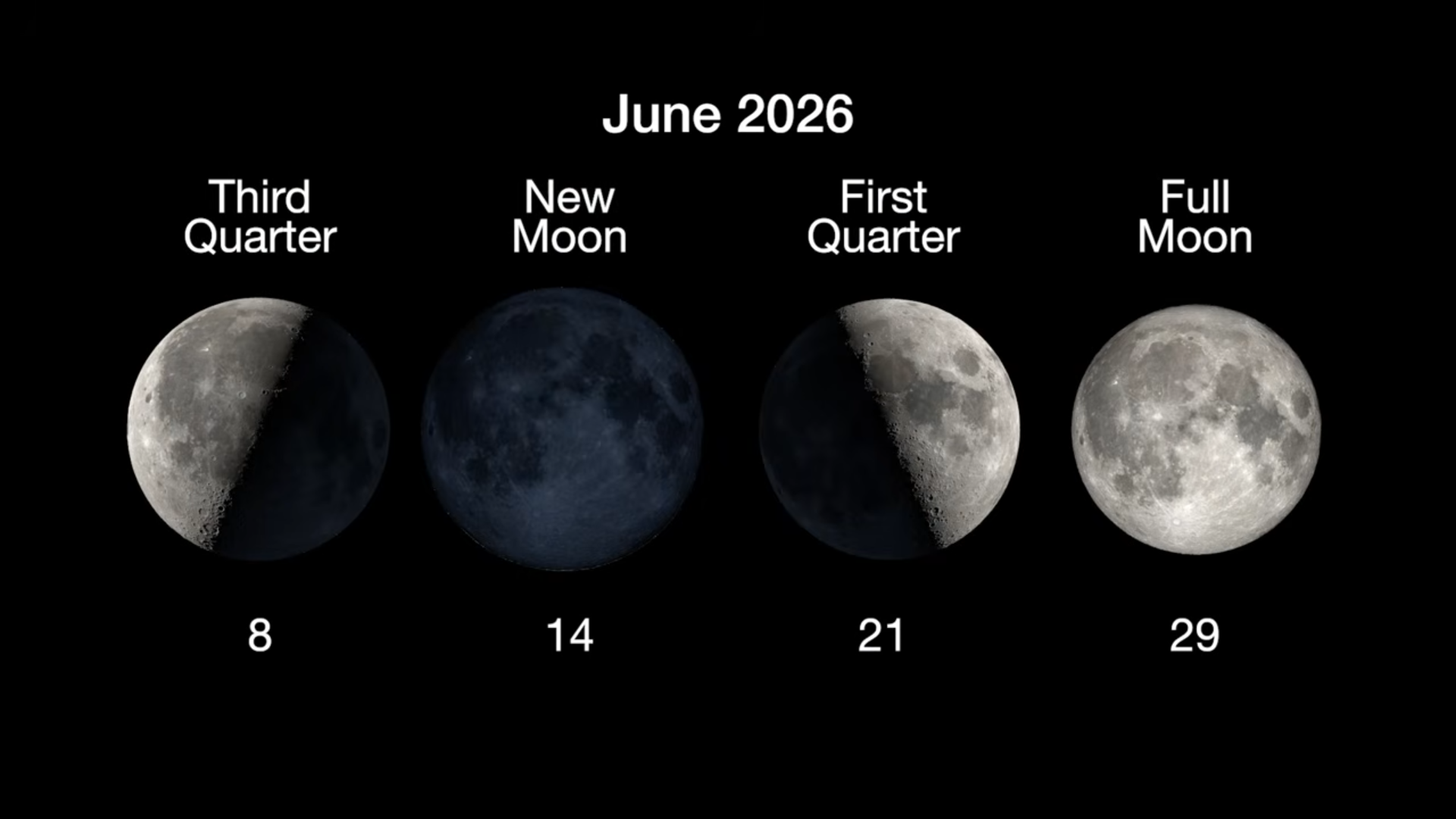
 NASA/JPL-Caltech Here are the phases of the Moon for June. You can stay up to date on all of NASA’s missions exploring the solar system and beyond at science.nasa.gov. I’m Raquel Villanueva from NASA’s Jet Propulsion Laboratory, and that’s What’s Up this month.
 NASA/JPL-Caltech Keep Exploring Discover More Topics From NASA What’s Up