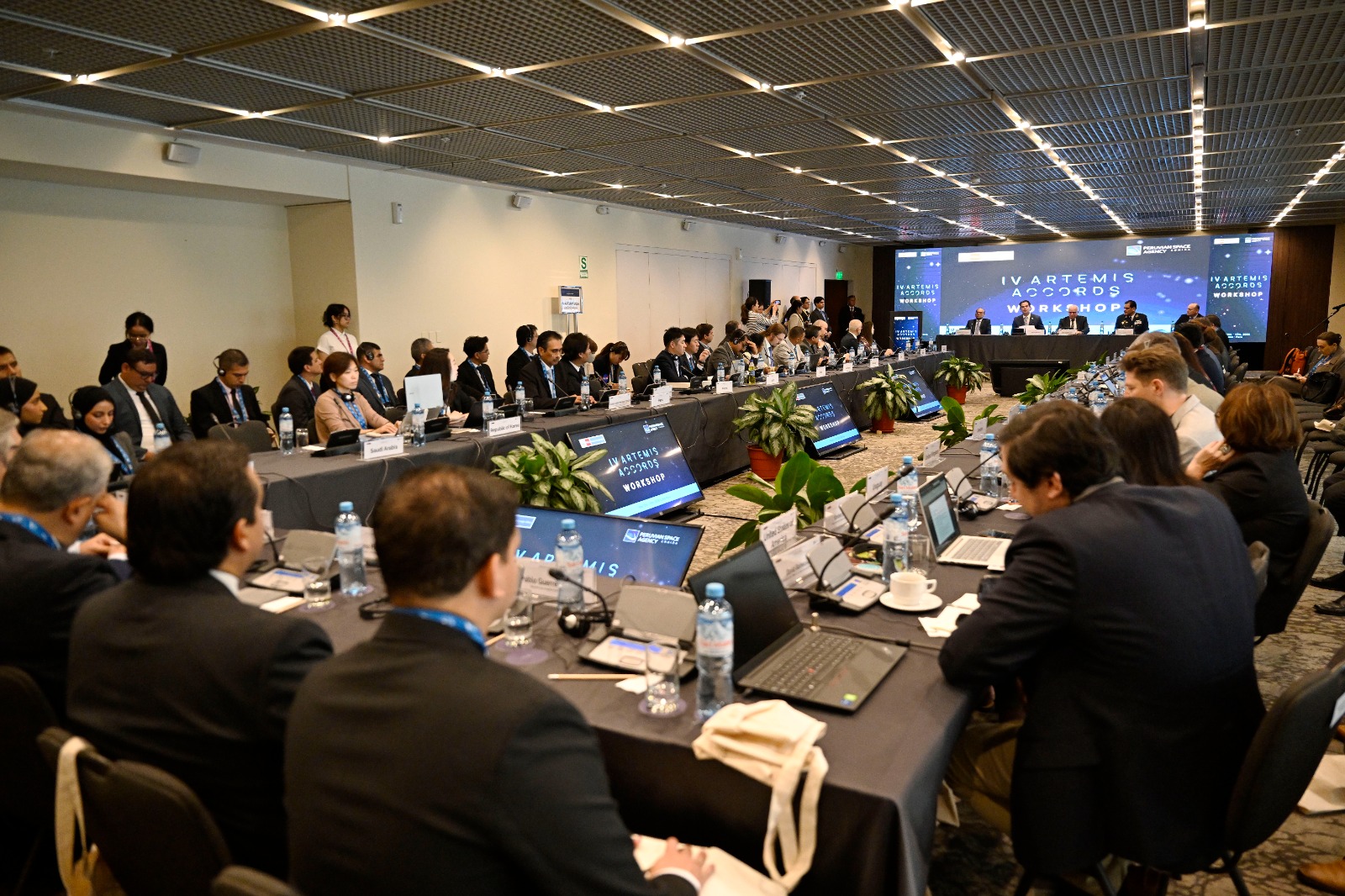
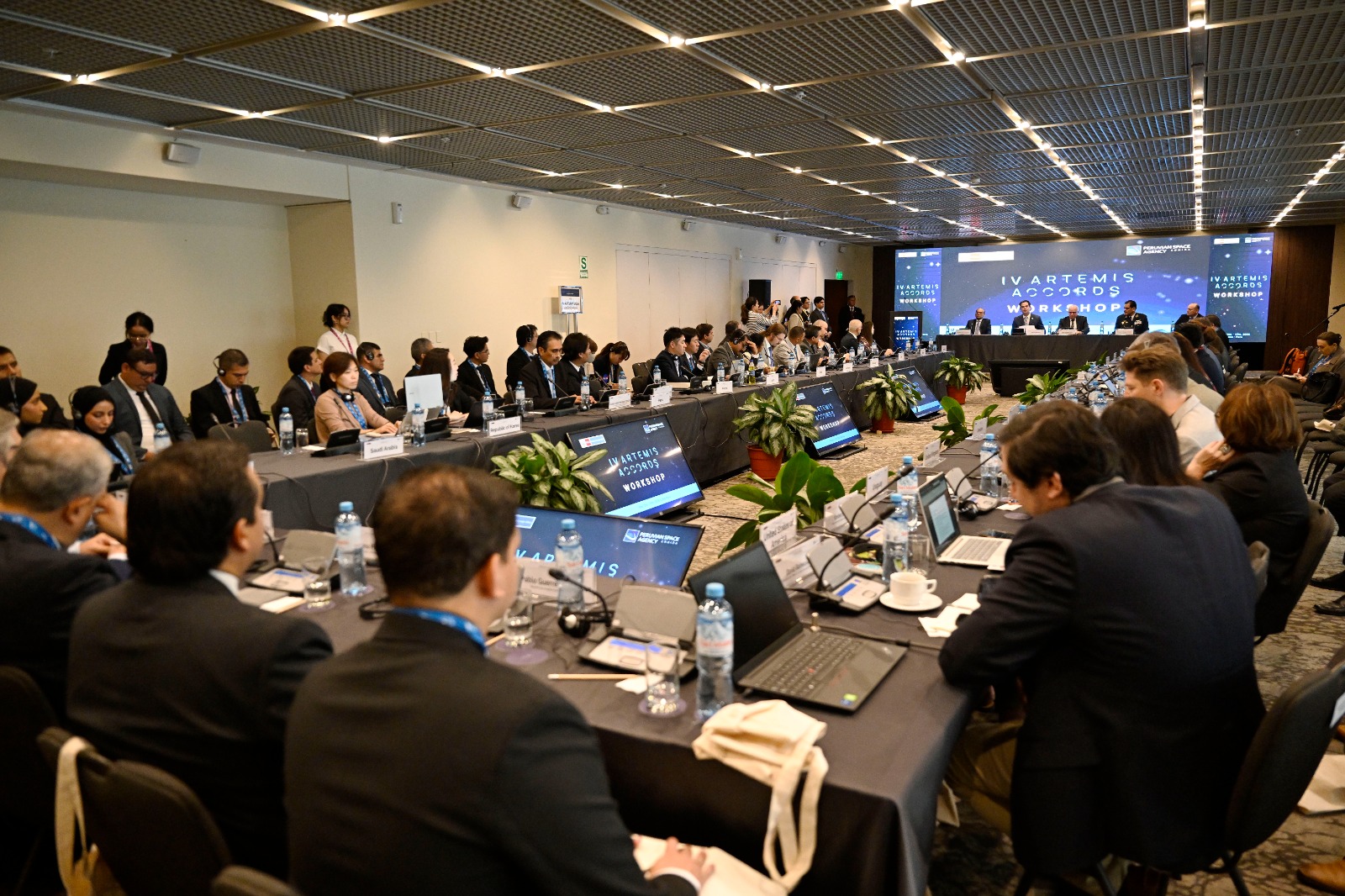
The United States participated in an Artemis Accords workshop in Lima, Peru, last week, following a new wave of nations committing to safe and responsible exploration of the Moon, Mars, and beyond.
Leading up to the event, six countries, including Latvia, Jordan, Morocco, Malta, Ireland, and Paraguay, joined the growing coalition of Artemis Accords signatories during ceremonies held at NASA Headquarters and abroad. This brings the total number of Artemis Accords signatories to 67 like-minded nations.
“This gathering showcases the remarkable global momentum behind the Artemis Accords and our Artemis program,” said NASA Administrator Jared Isaacman. “The Artemis Accords were created in President Trump’s first term and, as we execute his National Space Policy, we are putting these principles into practice. By aligning our capabilities, acting with urgency, and moving forward as partners, these signatory countries will help shape the future, not from the sidelines, but as essential contributors to humanity’s first permanent outpost on the Moon. Each and every Artemis Accords signatory has the opportunity to play a meaningful role with NASA as we work together to build a sustained human presence on the surface of the Moon.”
On May 13-14, representatives from NASA and the U.S. Department of State joined dozens of counterparts from 30 countries, including several of the newest signatories, for technical discussions and a tabletop exercise focused on operating in complex lunar environments.
Peru hosted the fourth annual workshop, marking the first time the gathering has taken place in South America.
“One of our objectives in hosting this edition of the workshops in our country was to increase regional participation,” said Maj. Gen. Roberto Melgar Sheen, director of Peruvian Space Agency (CONIDA). “I am pleased to say that we have achieved this: All South American signatory countries are taking part in this event, with 90% participating in person and 10% virtually.”
The Artemis Accords community reviewed planned lunar landing and orbiting missions from all the signatories in attendance. With more than a dozen lunar landing missions expected over the next 18 months, last week’s discussions and tabletop exercises focused on non-interference, interoperability, release of scientific data, orbital debris and mitigation. These conversations included a presentation on NASA’s exploration plan, which accelerates the agency’s missions to the Moon. Artemis Accords signatories now have expanded opportunities to support NASA’s Moon Base and deepen their participation in the broader Artemis program, following the agency’s Ignition event on March 24.
“Peru joined the Artemis Accords in 2024, aiming to participate in a cutting-edge dialogue mechanism that addresses global trends in space exploration. We aspire to forge cooperative ties with the signatories of the Artemis Accords that contribute to the scientific and aerospace development of our country,” said Peru’s Vice Minister of Foreign Affairs Ambassador Felix Denegri about the workshop.
During the first Trump Administration, the United States, led by NASA and the U.S. State Department, joined with seven other founding nations in 2020 to establish the Artemis Accords in response to the growing interest in lunar activities by both governments and private companies. Today, countries representing every region of the world have committed to responsible principles for exploration.
Signing the Artemis Accords means a commitment to the peaceful and transparent exploration of space; rendering aid to those in need; enabling access to scientific data; ensuring activities do not interfere with those of others; and preserving historically significant sites and artifacts by developing best practices.
More countries are expected to sign the Artemis Accords in the months and years ahead, as NASA continues its work to establish a safe, peaceful, and prosperous future in space.
For more information about the Artemis Accords, visit:
https://www.nasa.gov/artemis-accords
-end-
Camille Gallo / Elizabeth Shaw
Headquarters, Washington
202-358-1600
camille.m.gallo@nasa.gov / elizabeth.a.shaw@nasa.gov