Curiosity Navigation Curiosity Home Mission Overview Where is Curiosity? Mission Updates Science Overview Instruments Highlights Exploration Goals News and Features Multimedia Curiosity Raw Images Images Videos Audio Mosaics More Resources Mars Missions Mars Sample Return Mars Perseverance Rover Mars Curiosity Rover MAVEN Mars Reconnaissance Orbiter Mars Odyssey More Mars Missions Mars Home 3 min read
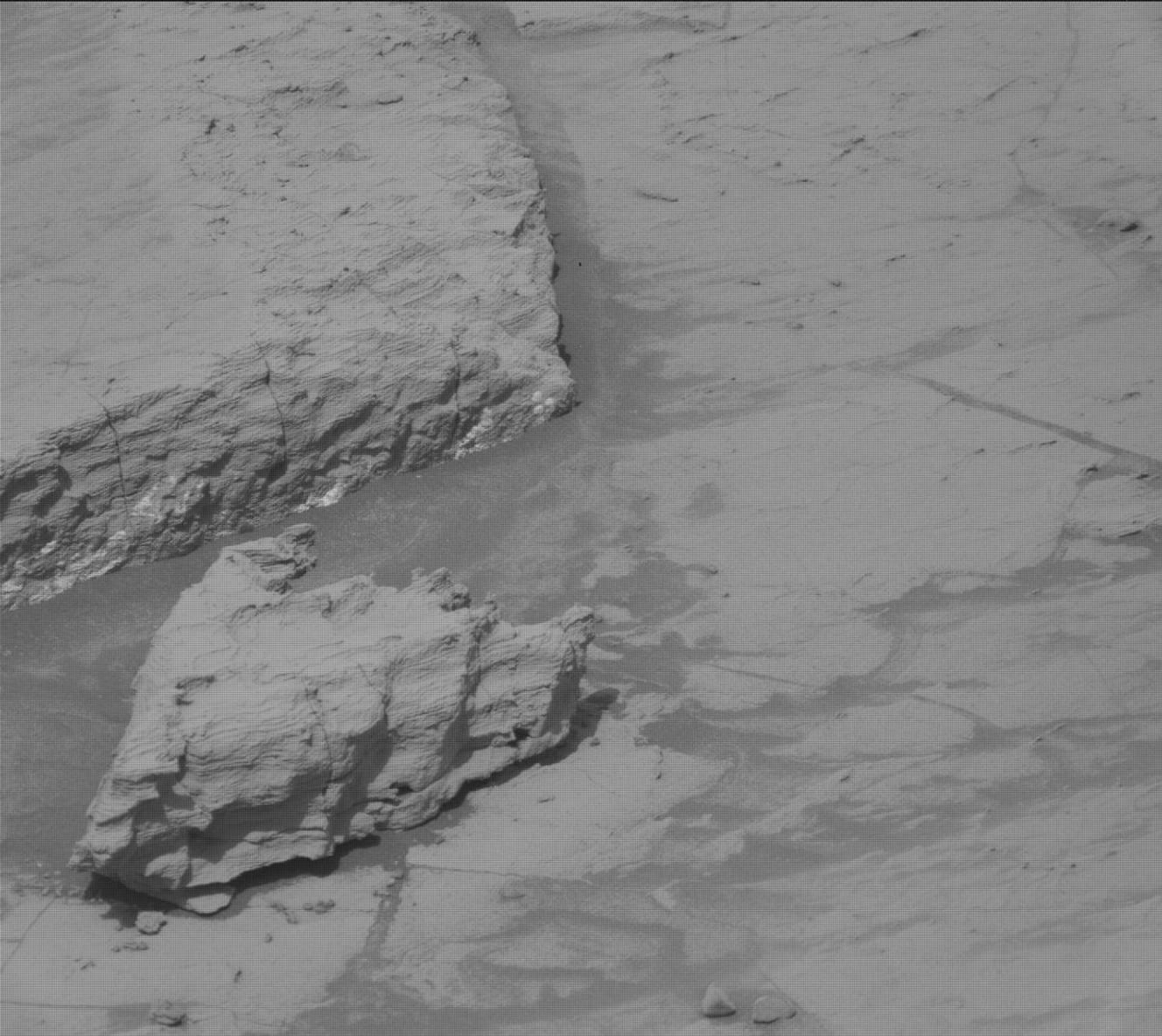
Curiosity Blog, Sols 4845-4851: Bye-Bye Boxwork, Bye-Bye 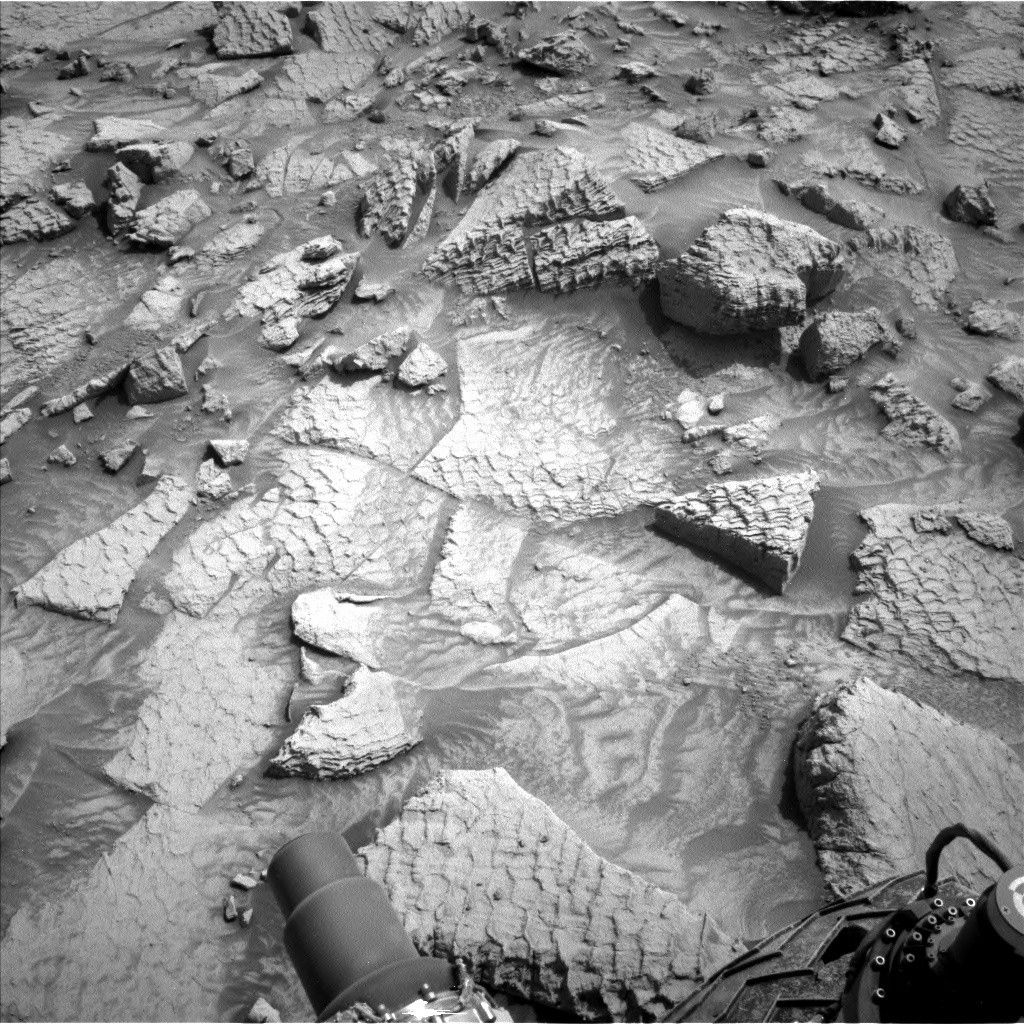 NASA’s Mars rover Curiosity acquired this image, showing the polygonal sulfate unit currently being investigated by the rover after leaving the boxwork terrain. Curiosity captured the image using its Left Navigation Camera on March 27, 2026 — Sol 4848, or Martian day 4,848 of the Mars Science Laboratory mission — at 10:43:16 UTC. NASA/JPL-Caltech Written by Lucy Thompson, APXS Strategic Planner and Planetary Geologist at the University of New Brunswick, Canada
Earth planning date: Friday, March 27, 2026
Last weekend’s drive took us just over the southernmost contact of the boxwork terrain with the surrounding layered sulfate unit. This was our third time crossing this contact, providing an excellent opportunity to look for any changes across it. We have acquired multiple observations (chemistry and imaging for textures) of the boxwork-bearing bedrock close to the contact. We are also interested in determining whether the layered sulfate unit to the south of the boxwork terrain has the same depositional setting as that encountered to the north. Is the composition the same as the typical layered sulfate unit we encountered prior to the boxwork, or could there be a change associated with a different depositional environment, source sediment, or potential alteration along the contact with the boxwork?
Unfortunately, although the weekend drive was successful, Curiosity was not on stable enough ground coming into planning Monday to brush the dusty bedrock, although we were able to get MAHLI imaging of a block within the workspace. The rover engineers repositioned the rover so that we could safely unstow the arm, brush, image with MAHLI, and analyze with APXS the layered sulfate unit bedrock just across the contact (“Santa Rosa”) in Wednesday’s plan. We also looked at a concentration of granules with APXS and MAHLI (“Piedra Colgada”). They appear to be a collection of fine nodules that eroded from the bedrock, thereby allowing us to obtain chemical and textural data on these nodules.
The drive planned on Wednesday took us another 50 meters (about 164 feet) away from the boxwork, to a stunning sulfate unit workspace. The bedrock contained abundant resistant ridges forming a polygonal pattern. We wanted to compare these current exposures with polygonal textures observed previously, for example, within the boxwork, the sulfate unit before the boxwork, and the clay-sulfate transition. We are brushing two spots on the bedrock in front of us (“Ocharaza” and “Nevado Tres Cruces”) and analyzing them both with APXS and MAHLI for chemistry and texture.
Across the three plans, Mastcam imaging was acquired of the boxwork terrain behind, the sulfate unit ahead, and the rocks immediately in front of us. In particular, this weekend’s plan was jam-packed full of mosaics to capture the amazing polygonal textures surrounding the rover. The planned 30-meter drive (about 98 feet) should keep us in this same terrain.
The environmental group has also been busy planning multiple observations to monitor atmospheric opacity, optical depth and aerosol scattering properties, clouds, wind direction, and potential dust-devil activity. Navcam and Mastcam are utilized to make these observations. As usual, our plans this week included the standard DAN, REMS and RAD activities.
Want to read more posts from the Curiosity team?
Visit Mission Updates
Want to learn more about Curiosity’s science instruments?
Visit the Science Instruments page
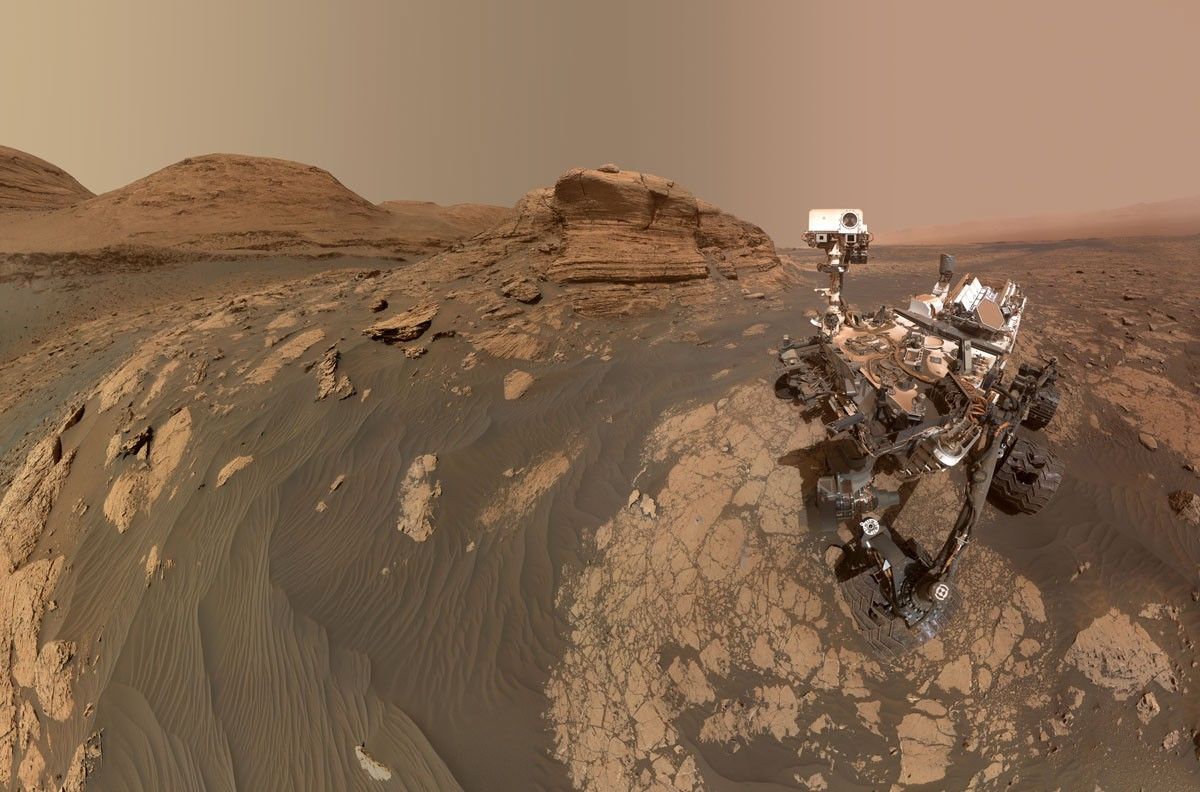
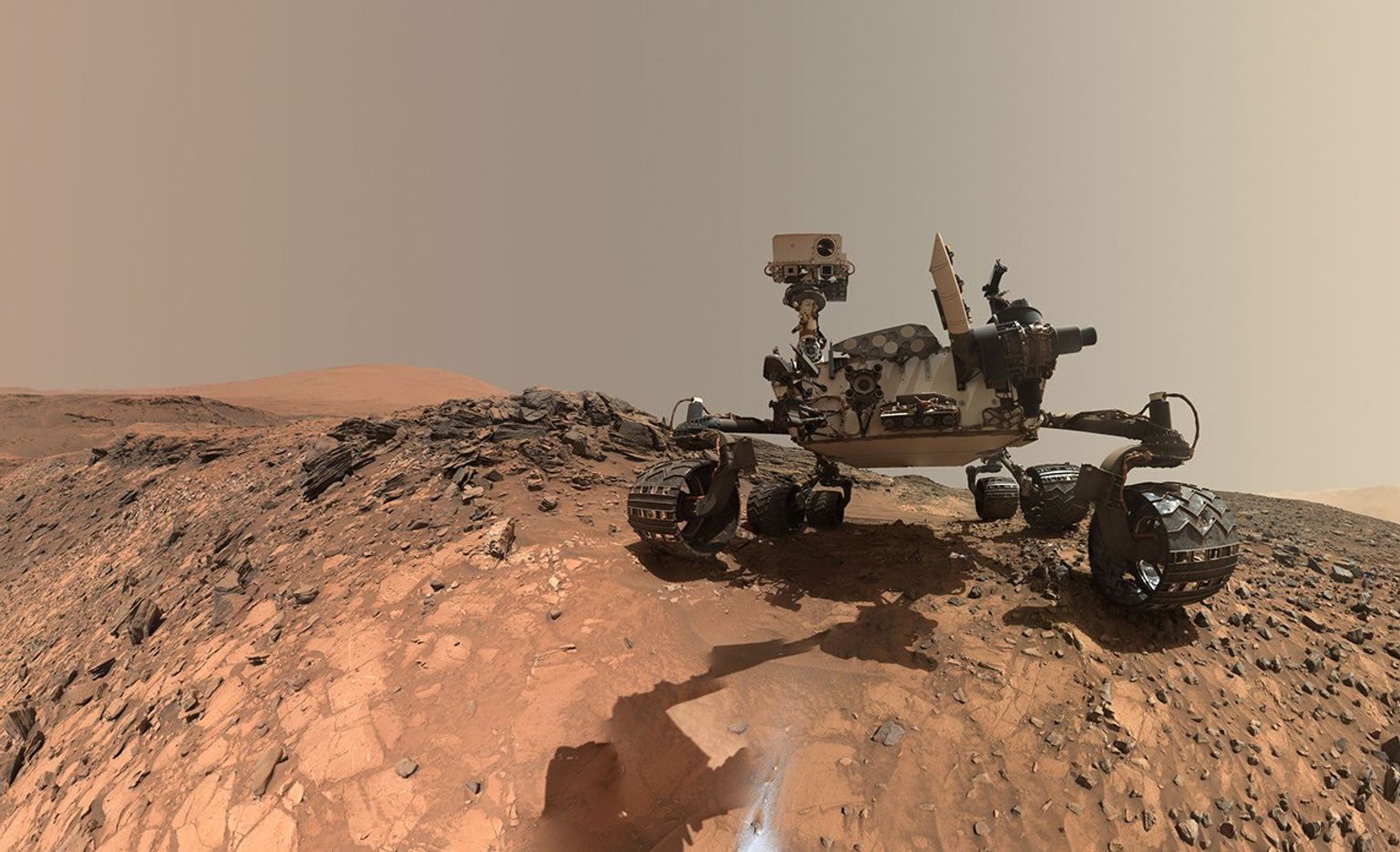
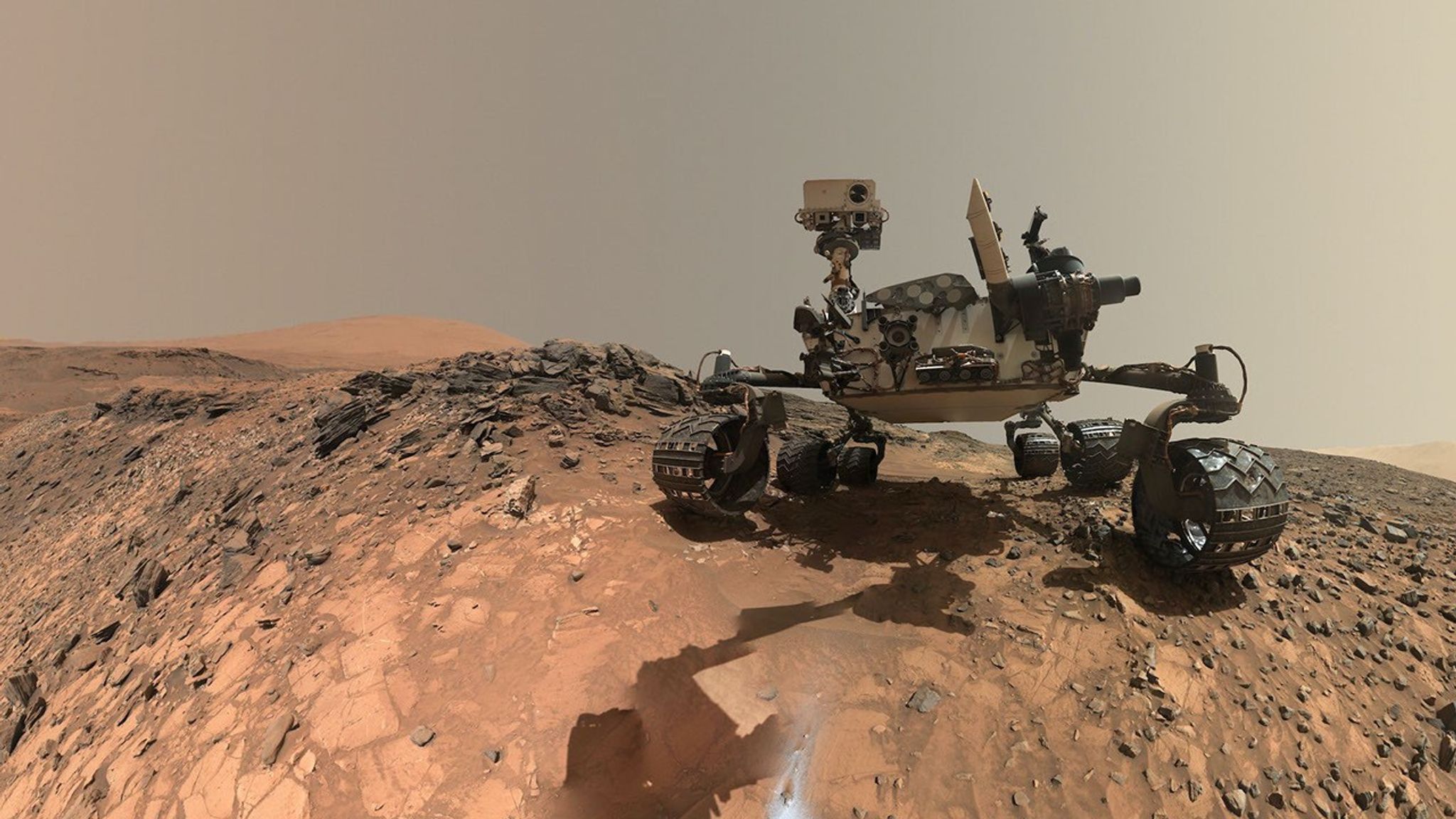 NASA’s Curiosity rover at the base of Mount Sharp NASA/JPL-Caltech/MSSS
Details Last Updated Apr 13, 2026 Related Terms Blogs
 4 min read Curiosity Blog, Sols 4852–4858: When Data Take Their Time…
Article
36 seconds ago
 4 min read Curiosity Blog, Sols 4838-4844: Wrapping Up the Boxwork Terrain
Article
3 weeks ago
 3 min read Curiosity Blog, Sols 4832–4837: Driving the (Contact) Line!
Article
4 weeks ago
Keep Exploring Discover More Topics From NASA Mars
Mars is the fourth planet from the Sun, and the seventh largest. It’s the only planet we know of inhabited…
Explore this collection of Mars images, videos, resources, PDFs, and toolkits. Discover valuable content designed to inform, educate, and inspire,…
Each robotic explorer sent to the Red Planet has its own unique capabilities driven by science. Many attributes of a…
Mars Exploration: Science Goals
The key to understanding the past, present or future potential for life on Mars can be found in NASA’s four…