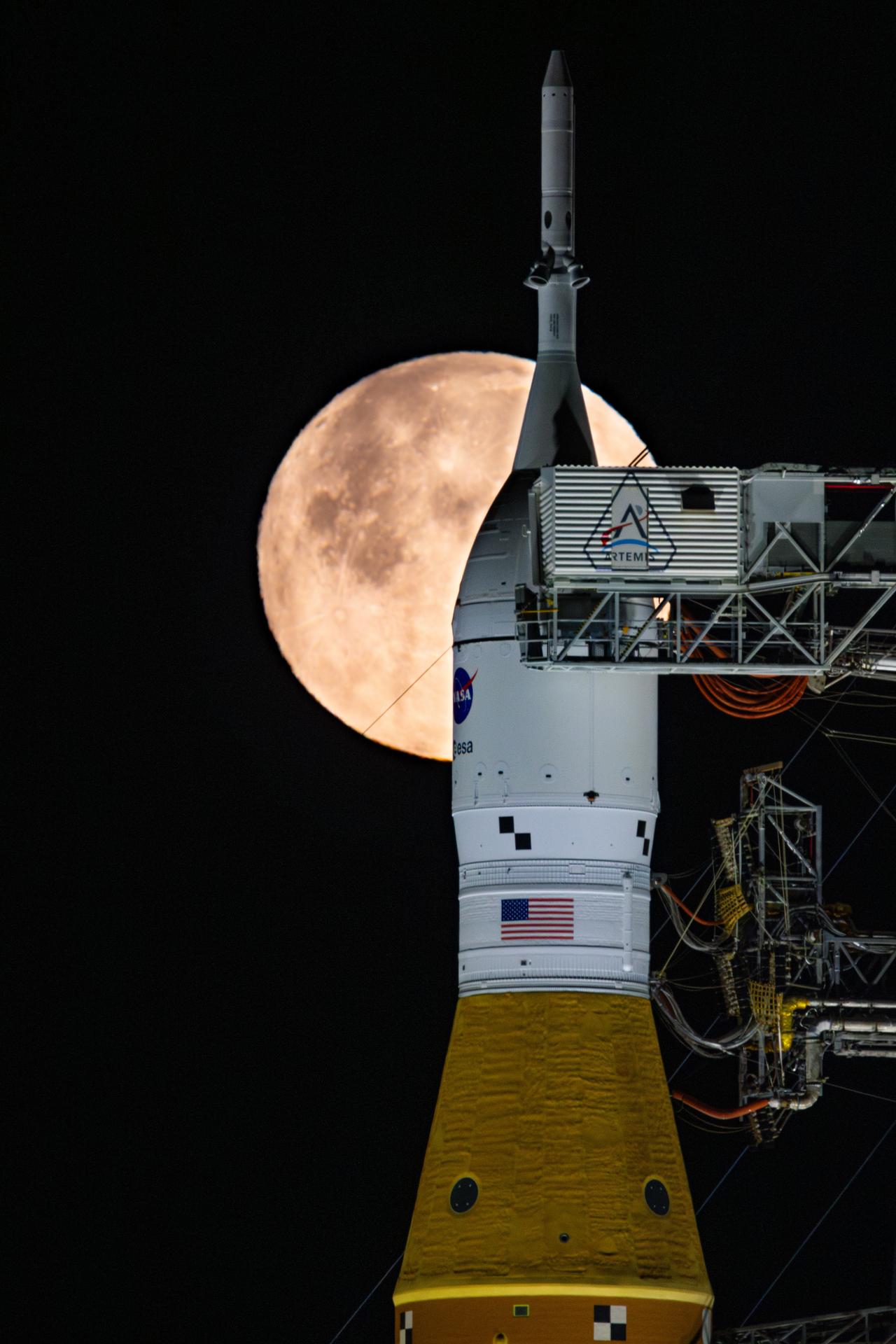
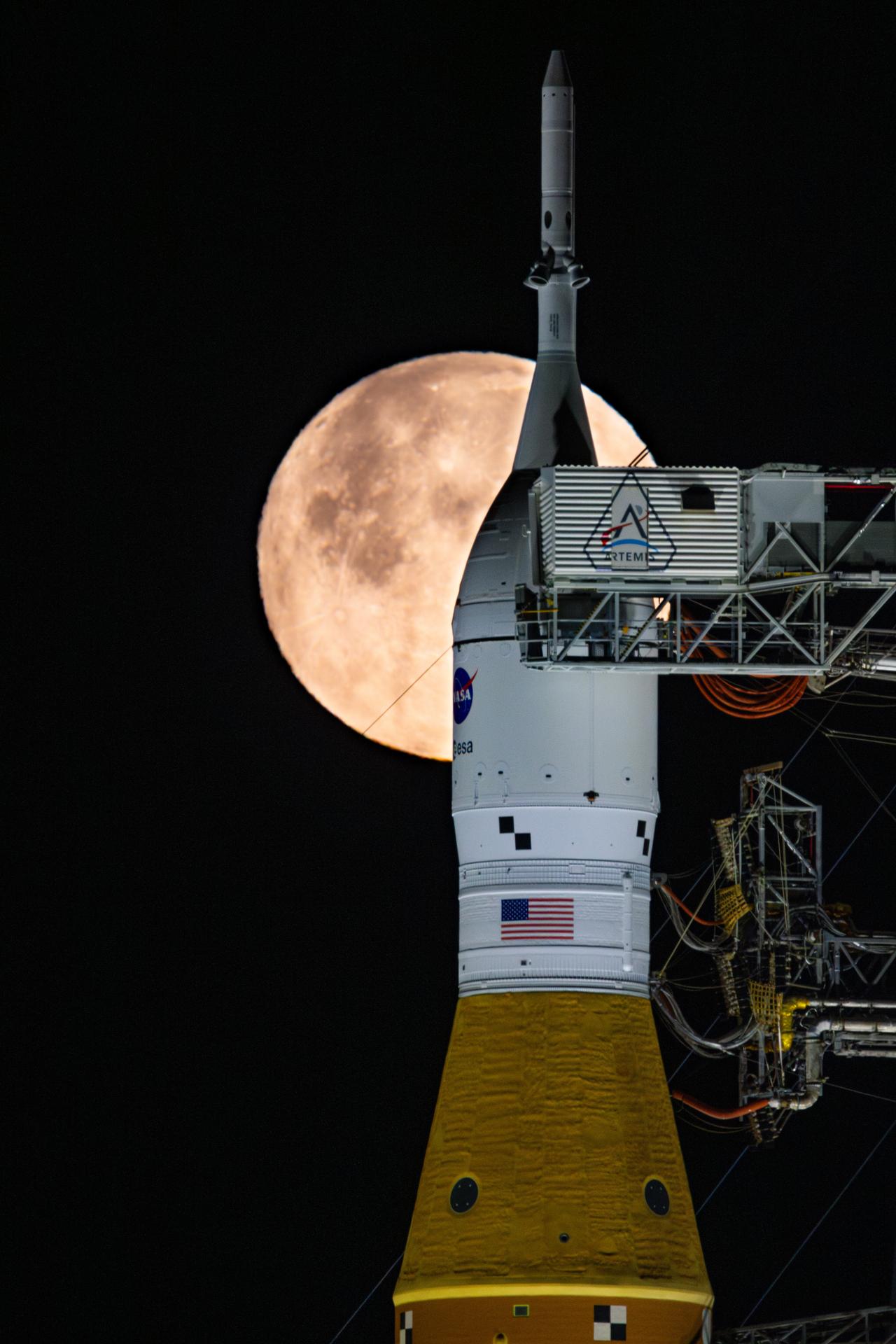
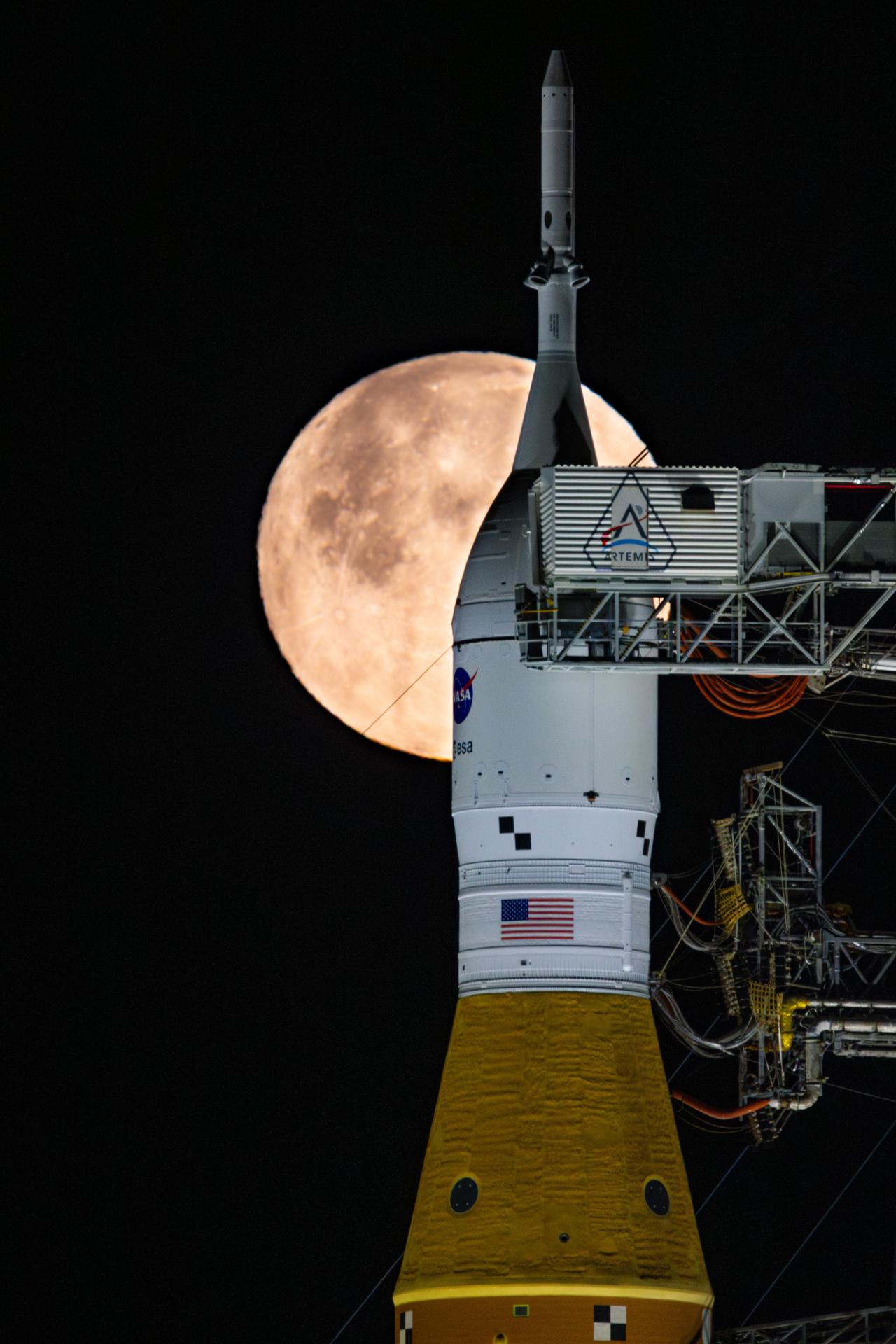
NASA concluded a wet dress rehearsal for the agency’s Artemis II test flight early Tuesday morning, successfully loading cryogenic propellant into the SLS (Space Launch System) tanks, sending a team out to the launch pad to closeout Orion, and safely draining the rocket. The wet dress rehearsal was a prelaunch test to fuel the rocket, designed to identify any issues and resolve them before attempting a launch.
Engineers pushed through several challenges during the two-day test and met many of the planned objectives. To allow teams to review data and conduct a second wet dress rehearsal, NASA now will target March as the earliest possible launch opportunity for the flight test.
Moving off a February launch window also means the Artemis II astronauts will be released from quarantine, which they entered in Houston on Jan. 21. As a result, they will not travel to NASA’s Kennedy Space Center in Florida Tuesday as tentatively planned. Crew will enter quarantine again about two weeks out from the next targeted launch opportunity.
NASA began the approximately 49-hour countdown at 8:13 p.m. EST on Jan. 31. Leading up to, and throughout tanking operations on Feb. 2, engineers monitored how cold weather at Kennedy impacted systems and put procedures in place to keep hardware safe. Cold temperatures caused a late start to tanking operations, as it took time to bring some interfaces to acceptable temperatures before propellant loading operations began.
During tanking, engineers spent several hours troubleshooting a liquid hydrogen leak in an interface used to route the cryogenic propellant into the rocket’s core stage, putting them behind in the countdown. Attempts to resolve the issue involved stopping the flow of liquid hydrogen into the core stage, allowing the interface to warm up for the seals to reseat, and adjusting the flow of the propellant.
Teams successfully filled all tanks in both the core stage and interim cryogenic propulsion stage before a team of five was sent to the launch pad to finish Orion closeout operations. Engineers conducted a first run at terminal countdown operations during the test, counting down to approximately 5 minutes left in the countdown, before the ground launch sequencer automatically stopped the countdown due to a spike in the liquid hydrogen leak rate.
In addition to the liquid hydrogen leak, a valve associated with Orion crew module hatch pressurization, which recently was replaced, required retorquing, and closeout operations took longer than planned. Cold weather that affected several cameras and other equipment didn’t impede wet dress rehearsal activities, but would have required additional attention on launch day. Finally, engineers have been troubleshooting dropouts of audio communication channels across ground teams in the past few weeks leading up to the test. Several dropouts reoccurred during the wet dress rehearsal.
The team carried out updated procedures to purge the Orion service module’s cavities with breathing air during closeout crew operations rather than gaseous nitrogen to ensure the team assisting the crew into their seats and closing Orion’s hatches can safely operate in the White Room.
With March as the potential launch window, teams will fully review data from the test, mitigate each issue, and return to testing ahead of setting an official target launch date.
Crew safety will remain the highest priority, ensuring NASA astronauts Reid Wiseman, Victor Glover, and Christina Koch, and CSA (Canadian Space Agency) astronaut Jeremy Hansen, return home at the end of their mission.
In addition to a statement from NASA Administrator Jared Isaacman released Tuesday, agency leaders will discuss initial results from the wet dress rehearsal during a news conference at 1 p.m. on Tuesday. Previously, NASA was targeting the news conference to begin at 12 p.m. The agency will stream the news conference live on its YouTube channel.