Explore Hubble Hubble Home Overview About Hubble The History of Hubble Hubble Timeline Why Have a Telescope in Space? Hubble by the Numbers At the Museum FAQs Impact & Benefits Hubble’s Impact & Benefits Science Impacts Cultural Impact Technology Benefits Impact on Human Spaceflight Astro Community Impacts Science Hubble Science Science Themes Science Highlights Science Behind Discoveries Universe Uncovered Hubble’s Partners in Science Hubble & Citizen Science AI & Hubble Science Explore the Night Sky Observatory Hubble Observatory Hubble Design Mission Operations Science Operations Astronaut Missions to Hubble Hubble vs Webb Team Hubble Team Career Aspirations Hubble Astronauts Multimedia Images Videos Online Activities e-Books Sonifications Podcasts 3D Hubble Models Lithographs Fact Sheets Posters Hubble on the NASA App Glossary News Hubble News Social Media Media Resources More 35th Anniversary Online Activities 3 Min Read Hubble Sees Galaxy with Dark Rings in New Light 
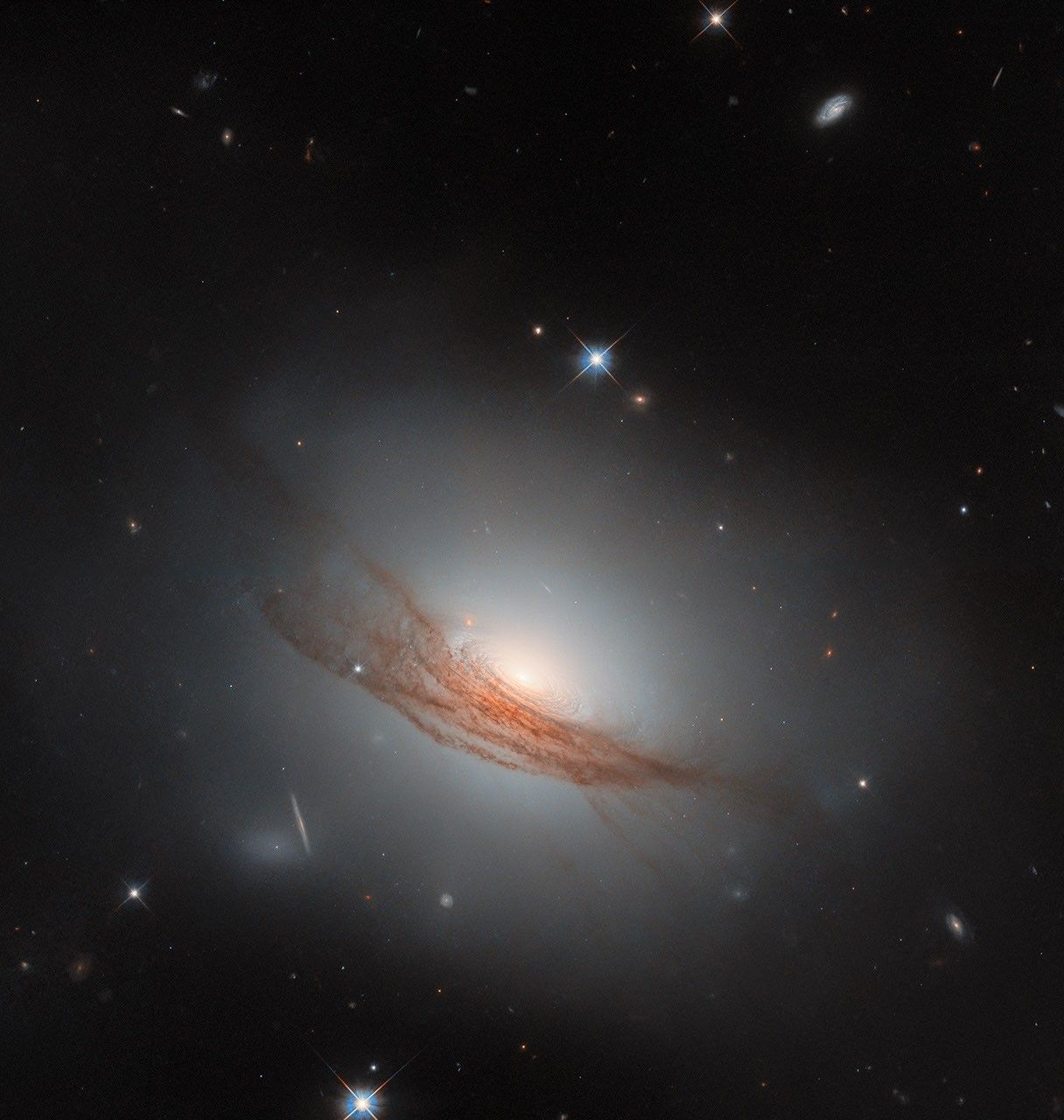
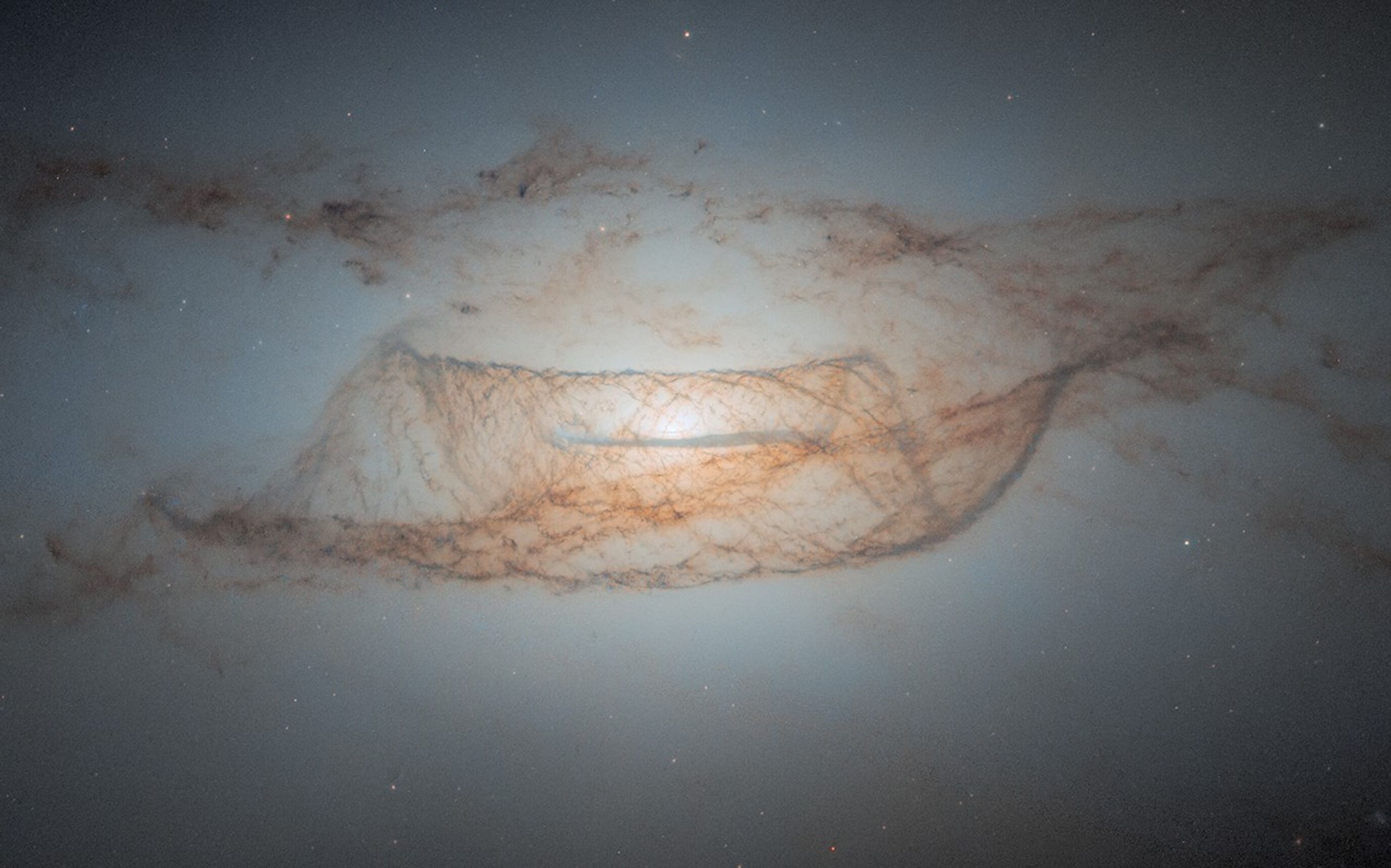
ESA/Hubble & NASA, R. J. Foley (UC Santa Cruz), Dark Energy Survey / DOE / FNAL / DECam / CTIO / NOIRLab / NSF / AURA; Acknowledgment: Mehmet Yüksek This NASA/ESA Hubble Space Telescope image features an uncommon galaxy with a striking appearance. NGC 7722 is a lenticular galaxy located about 187 million light-years away in the constellation Pegasus.
A lenticular, meaning “lens-shaped,” galaxy is a type whose classification sits between more familiar spiral galaxies and elliptical galaxies. It is also less common than spirals and ellipticals — partly because these galaxies have a somewhat ambiguous appearance, making it hard to determine if it is a spiral, an elliptical, or something in between. Many of the known lenticular galaxies sport features of both spiral and elliptical. In this case, NGC 7722 lacks the defined arms of a spiral galaxy, while it has an extended, glowing halo and a bright bulge in its center like an elliptical galaxy. Unlike elliptical galaxies, it has a visible disk — concentric rings swirl around its bright nucleus. Its most prominent feature, however, is undoubtedly the long lanes of dark red dust coiling around the outer disk and halo.
While it doesn’t host as many new, young stars as a spiral galaxy, there’s still activity in NGC 7722: in 2020 it was host to the explosion of a star that astronomers detected from Earth. SN 2020SSF was a Type Ia supernova, an event that occurs when a white dwarf star in a binary system siphons enough mass away from its companion star that it grows unstable and explodes. These explosions output a remarkably consistent level of light: by measuring how bright they appear from Earth and comparing that to how bright they intrinsically are, astronomers can tell how far away they must be. Type Ia supernovae are one of the best ways to measure distances to galaxies, so understanding exactly how they work is of great importance for astronomy.
Taken with Hubble’s Wide Field Camera 3, this Hubble image was obtained as part of an observing program (#16691, PI: R. J. Foley) that followed up on recent supernovae. SN 2020SSF, is not visible in this image. Researchers purposefully observed NGC 7722 two years after the supernova faded to witness the supernova’s aftereffects and examine its surroundings, which can only be accomplished once the intense light of the explosion is gone. With Hubble’s clear vision, astronomers can search for radioactive material created by the supernova, catalog its neighbors to help determine the original star’s age, and look for the companion star it left behind — all from almost 200 million light-years away.
Text Credit: European Space Agency (ESA)
Download a high-resolution version of this image (30MB tiff)
Facebook logo @NASAHubble @NASAHubble Instagram logo @NASAHubble Media Contact:
Claire Andreoli
NASA’s Goddard Space Flight Center, Greenbelt, MD
claire.andreoli@nasa.gov
Explore More 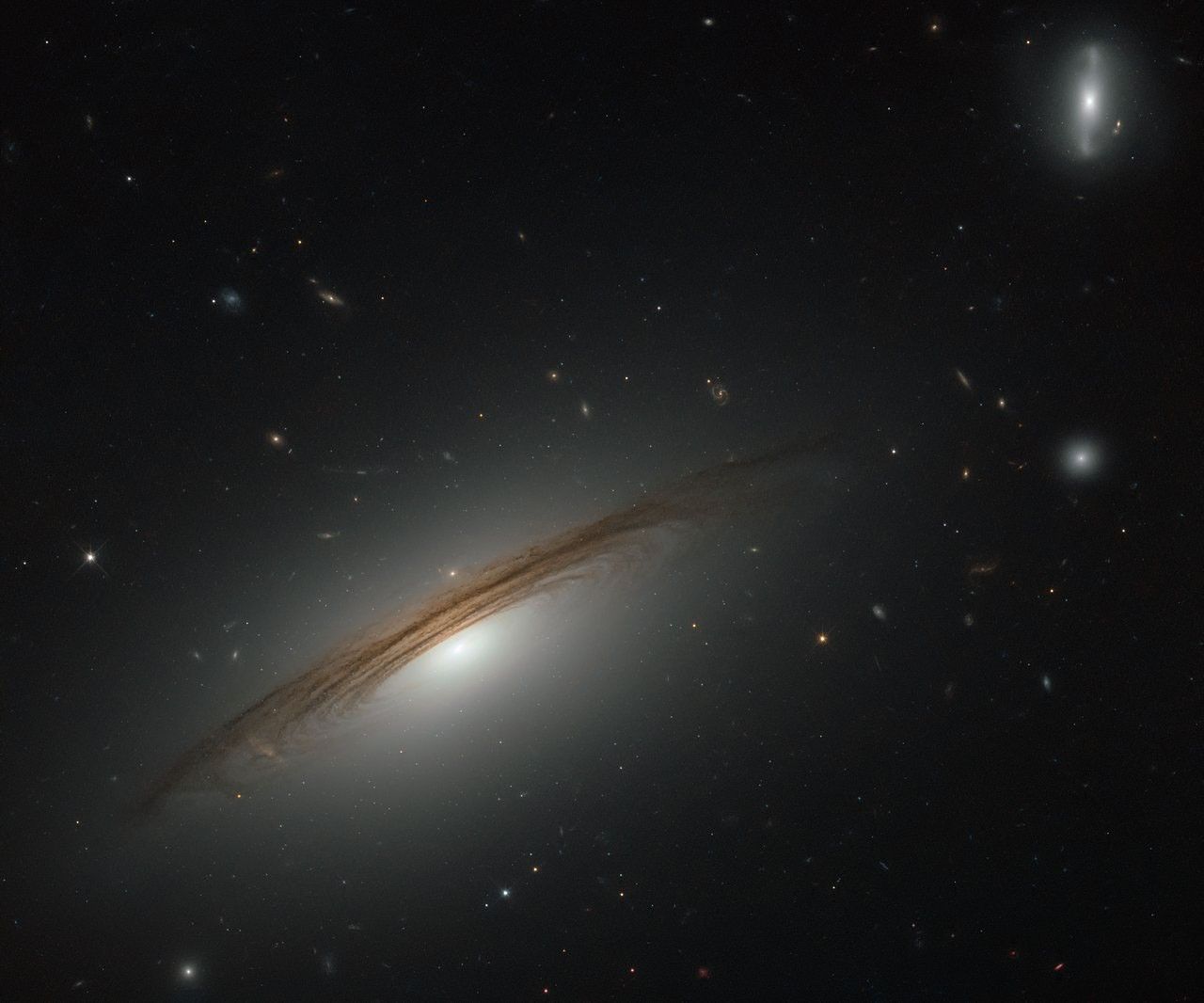 Hubble Showcases a Remarkable Galactic Hybrid This remarkable galaxy, called UGC 12591, sits somewhere between a lenticular and a spiral.
 Hubble Views Cosmic Dust Lanes This Hubble image features a nearly edge-on view of the lenticular galaxy NGC 4753.
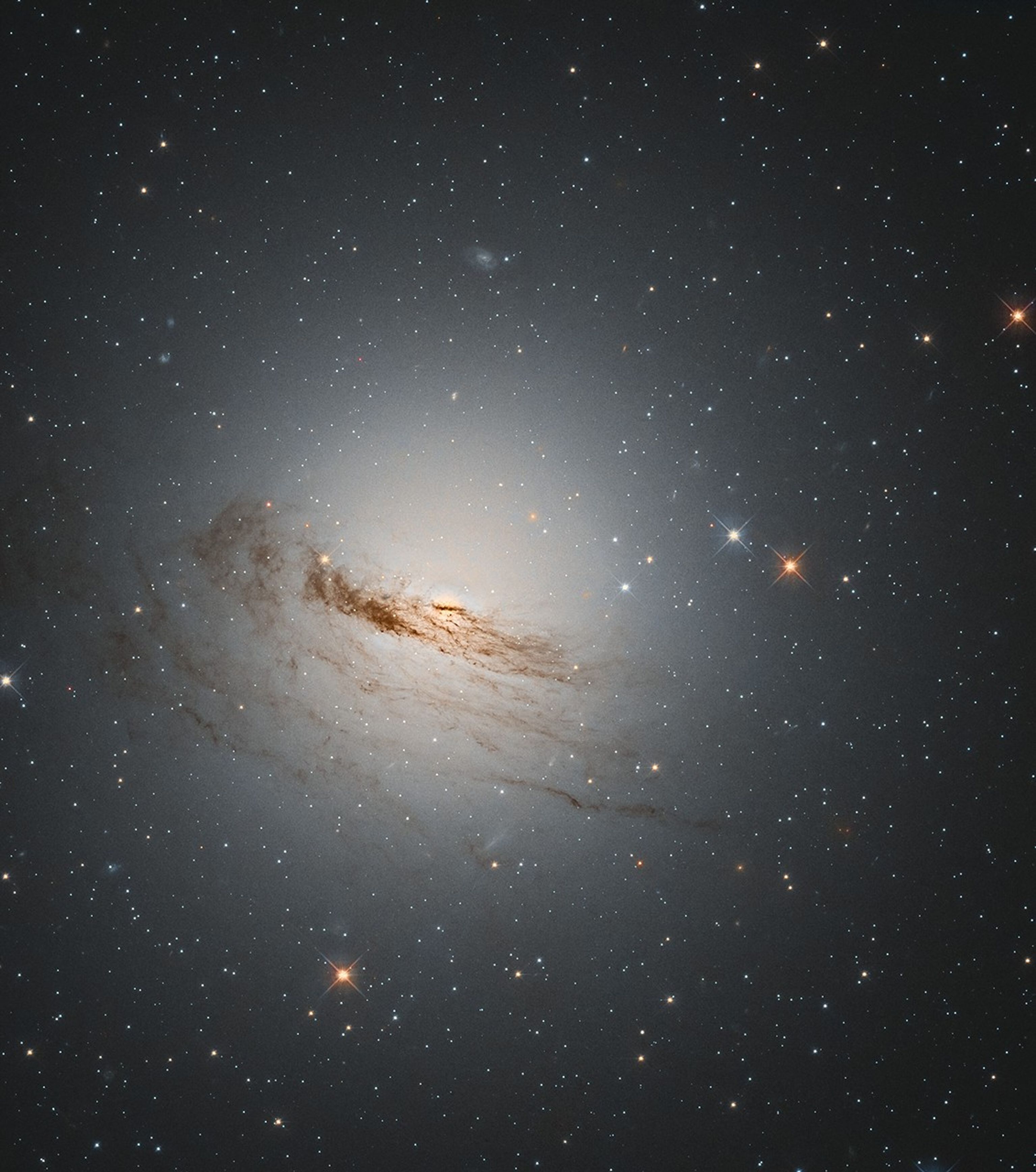 Hubble Views a Galaxy with Faint Threads This unusual lenticular galaxy has lost almost all the gas and dust from its signature spiral arms.
Galaxies are the visible foundation of the universe; each one a collection of stars, planets, gas, dust, and dark matter held together by gravity. Hubble’s observations give us insight into how galaxies form, grow, and evolve through time.
NASA’s Goddard Space Flight Center; Lead Producer: Miranda Chabot; Lead Writer: Andrea Gianopoulos
Details Last Updated Jan 30, 2026 Editor Andrea Gianopoulos Location NASA Goddard Space Flight Center Related Terms Hubble Space Telescope Astrophysics Astrophysics Division Galaxies Goddard Space Flight Center Lenticular Galaxies The Universe
Keep Exploring Discover More Topics From Hubble Hubble Space Telescope
Since its 1990 launch, the Hubble Space Telescope has changed our fundamental understanding of the universe.


What Did Hubble See on Your Birthday?