
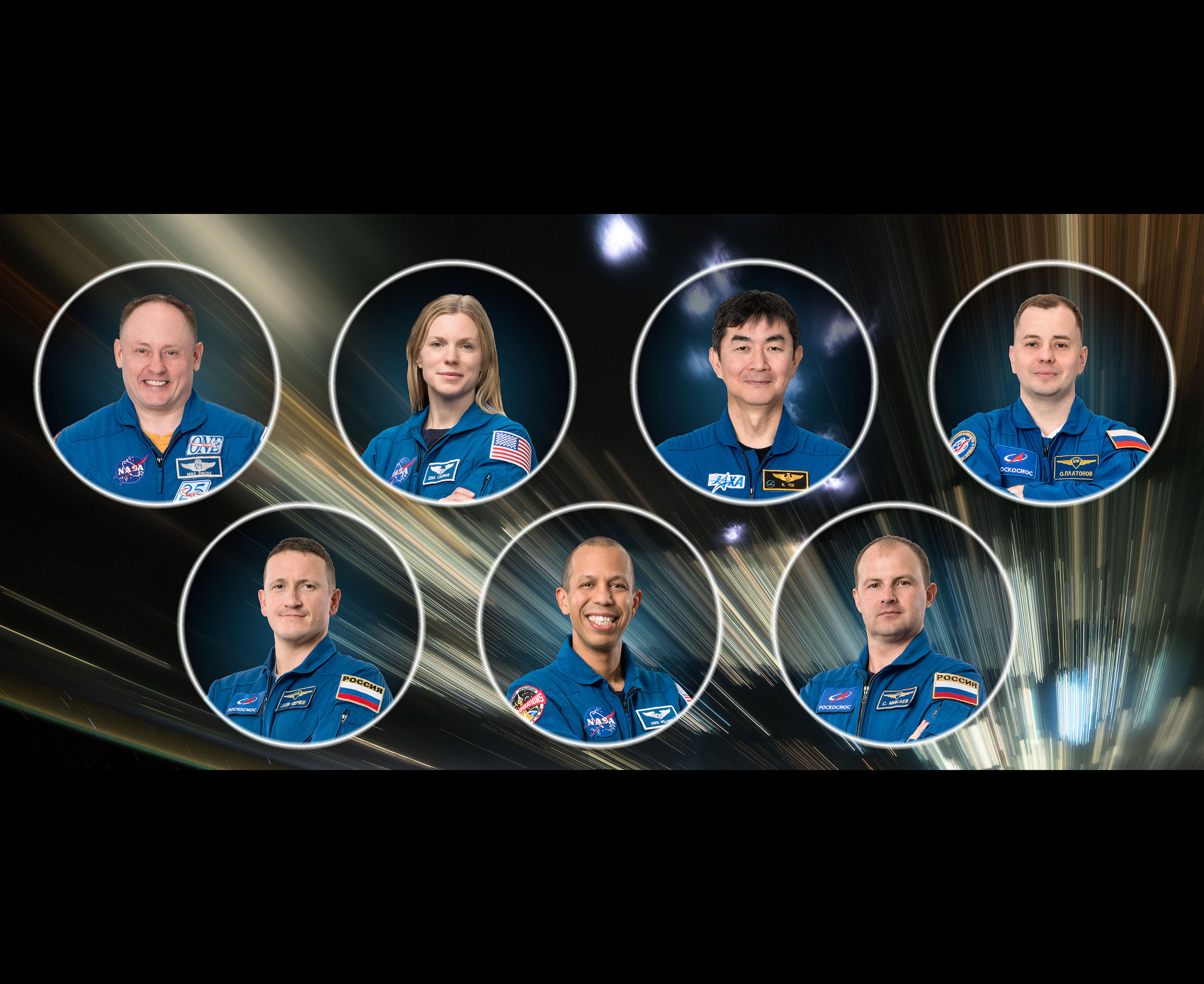

Stem cells, materials research, and a technology demo topped the research schedule for the Expedition 74 crew on Thursday. The seven International Space Station residents also worked on a host of lab maintenance including Japanese cargo operations and preparations for upcoming rack transfers.
NASA Flight Engineer Zena Cardman kicked off her day inside the Destiny laboratory module peering at stem cells through a microscope for the StemCellEx-IP1 investigation. She was helping investigators demonstrate the successful production of stem cells in space that are superior to those manufactured on Earth. Results may also advance regenerative medicine for damaged organs and tissues. Later she swapped a gas analyzer, that scans the station’s atmosphere for nitrogen, carbon dioxide, and more, inside the Tranquility module.
JAXA (Japan Aerospace Exploration Agency) Flight Engineer Kimiya Yui began his shift installing a materials exposure experiment inside the Kibo laboratory module’s airlock. The research hardware will be placed in the vacuum of space exposing a variety of materials to space radiation, extreme temperature changes, and more to benefit a range of Earth and space industries. Yui then installed an experimental carbon dioxide removal device in Kibo and wrapped it with soundproof insulation to reduce noise during its operation. The advanced hardware is being studied to inform advanced life support systems for Artemis lunar spacecraft.
NASA Flight Engineer Chris Williams, with a little bit of assistance from Cardman and Yui, spent most of his shift loading cargo inside JAXA’s HTV-X1 that is due to leave the station’s Earth-facing port on the Harmony module in late January. He also had time set aside to replace an air filter, turn on a fluorescent microscope, and swap out hardware on a portable computer tablet.
Station Commander Mike Fincke of NASA spent his shift deconfiguring and removing hardware from a science rack that will soon be transferred inside the HTV-X1. Shortly after waking up, Fincke took a test for an experiment documenting how crews sleep while living off the Earth and without the normal day-night cycle, also called circadian rhythm. Afterward, he performed a leak check on a recycle tank inside Tranquility.
Roscosmos cosmonaut Oleg Platonov started his shift measuring his mass attaching himself to a device that applies a known force with the resulting force providing an output using a form of Newton’s Second Law of Motion. Platonov then worked throughout the day on life support maintenance, inspecting cables, and uninstalling hardware that provides functionality to the European robotic arm.
Cosmonauts Sergey Kud-Sverchkov and Sergei Mikaev, who have been aboard the station since Nov. 27 with Williams, worked throughout the day on a variety of life support maintenance tasks. At the end of his shift, Kud-Sverchkov later installed Earth observation hardware programmed to automatically landmarks on the ground during the crew’s sleep shift. Mikaev wiped down surfaces inside the Roscosmos modules to prevent microbial growth.
Learn more about station activities by following the space station blog, @space_station on X, as well as the ISS Facebook and ISS Instagram accounts.
Get the latest from NASA delivered every week. Subscribe here.