Explore Hubble Hubble Home Overview About Hubble The History of Hubble Hubble Timeline Why Have a Telescope in Space? Hubble by the Numbers At the Museum FAQs Impact & Benefits Hubble’s Impact & Benefits Science Impacts Cultural Impact Technology Benefits Impact on Human Spaceflight Astro Community Impacts Science Hubble Science Science Themes Science Highlights Science Behind Discoveries Hubble’s Partners in Science Universe Uncovered Hubble and Artificial Intelligence Explore the Night Sky Observatory Hubble Observatory Hubble Design Mission Operations Missions to Hubble Hubble vs Webb Team Hubble Team Career Aspirations Hubble Astronauts Multimedia Images Videos Sonifications Podcasts e-Books Online Activities 3D Hubble Models Lithographs Fact Sheets Posters Hubble on the NASA App Glossary News Hubble News Social Media Media Resources More 35th Anniversary Online Activities 2 min read
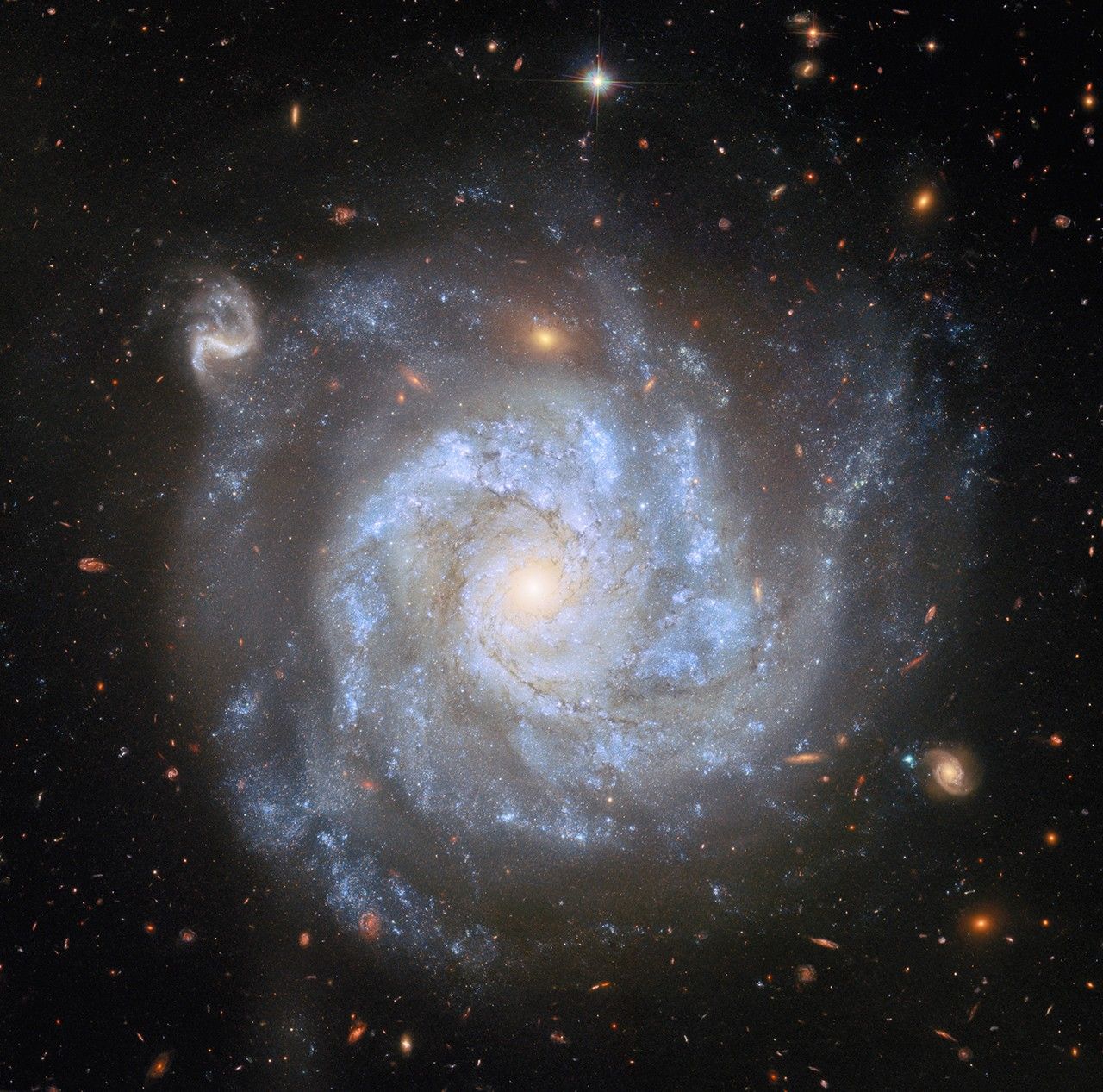
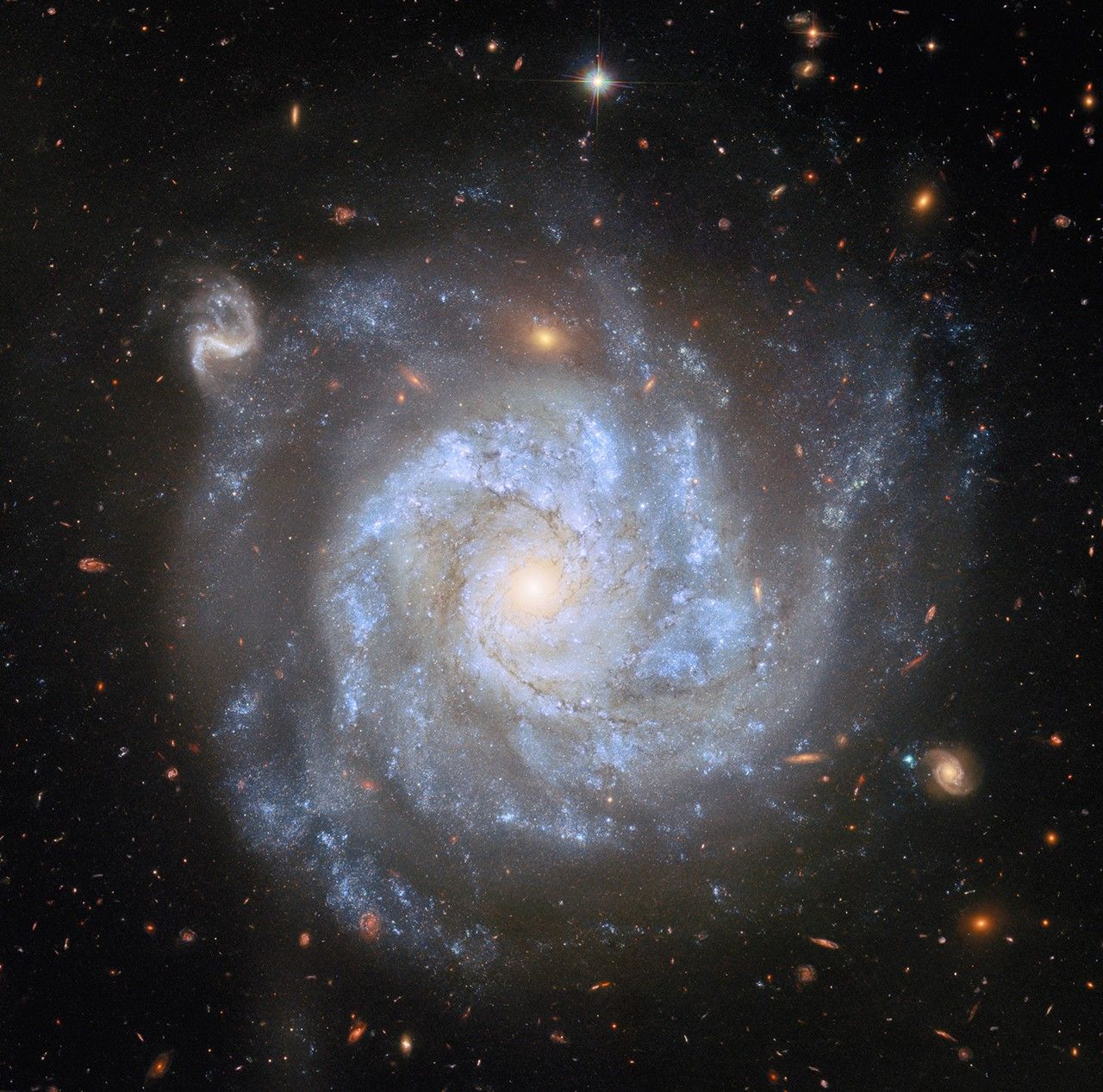
Hubble Surveys Supernova-Rich Spiral 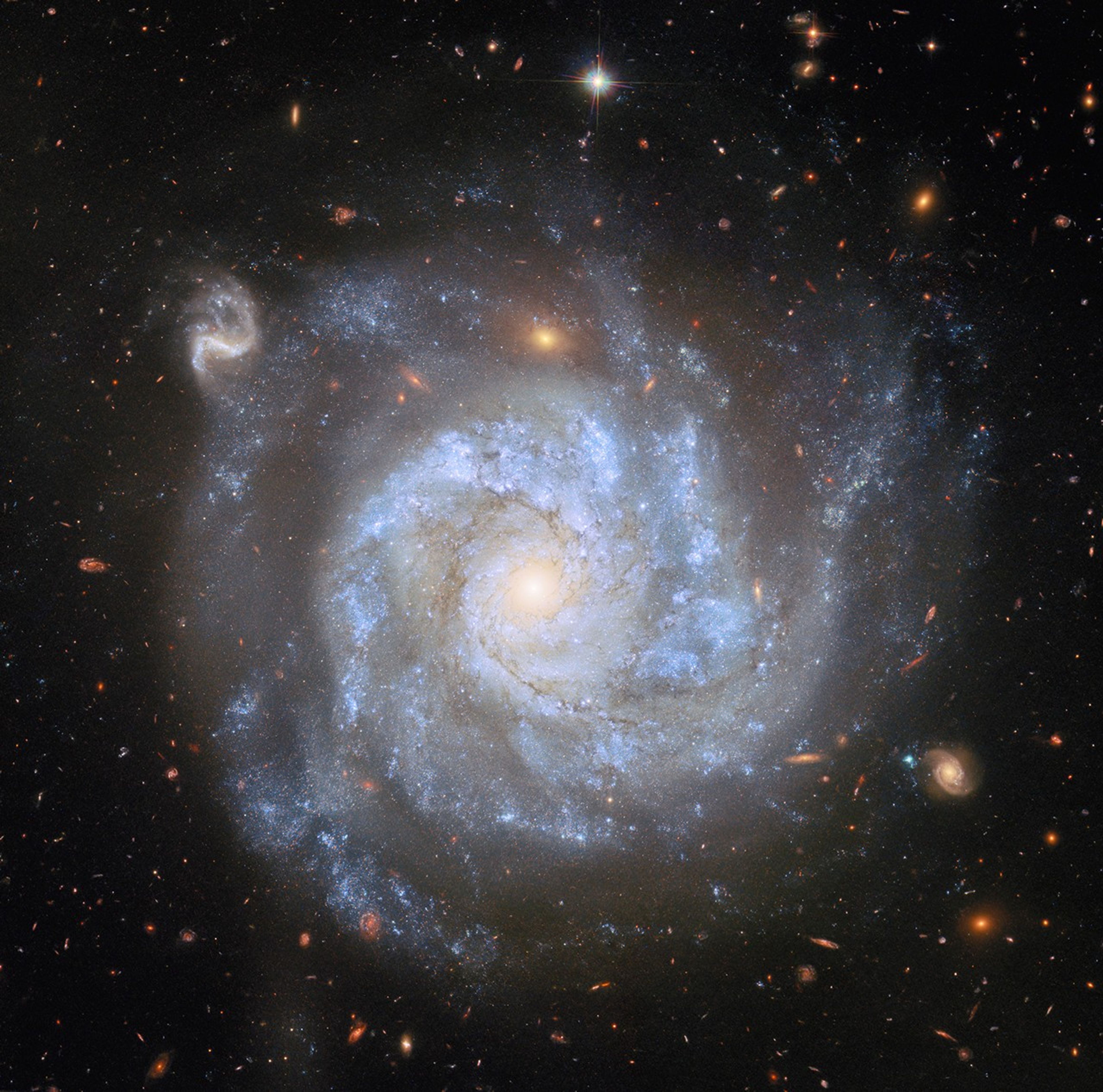 This NASA/ESA Hubble Space Telescope image features the face-on spiral galaxy NGC 1309. ESA/Hubble & NASA, L. Galbany, S. Jha, K. Noll, A. Riess Rich with detail, the spiral galaxy NGC 1309 shines in this NASA/ESA Hubble Space Telescope image. NGC 1309 is about 100 million light-years away in the constellation Eridanus.
This stunning Hubble image encompasses NGC 1309’s bluish stars, dark brown gas clouds, and pearly-white core, as well as hundreds of distant background galaxies. Nearly every smudge, streak, and blob of light in this image is an individual galaxy, some shining through less dense regions of NGC 1309 itself. The only exception to this extragalactic ensemble is a star near the top of the frame identified by its diffraction spikes. The star is positively neighborly at just a few thousand light-years away in the Milky Way galaxy.
Hubble turned its attention toward NGC 1309 several times; previous Hubble images of this galaxy were released in 2006 and 2014. Much of NGC 1309’s scientific interest derives from two supernovae, SN 2002fk in 2002 and SN 2012Z in 2012. SN 2002fk was a perfect example of a Type Ia supernova, which happens when the stripped-down core of a dead star (a white dwarf) explodes.
SN 2012Z, on the other hand, was a bit of a renegade. It was classified as a Type Iax supernova: while its spectrum resembled that of a Type Ia supernova, the explosion wasn’t as bright as expected. Hubble observations showed that in this case, the supernova did not destroy the white dwarf completely, leaving behind a ‘zombie star’ that shone even brighter than it did before the explosion. Hubble observations of NGC 1309 taken across several years also made this the first time astronomers spotted a star system that later produced an unusual supernova explosion of a white dwarf.
Text Credit: ESA/Hubble
Facebook logo @NASAHubble @NASAHubble Instagram logo @NASAHubble Media Contact:
Claire Andreoli (claire.andreoli@nasa.gov)
NASA’s Goddard Space Flight Center, Greenbelt, MD
Details Last Updated Jul 31, 2025 Editor Andrea Gianopoulos Location NASA Goddard Space Flight Center Related Terms Astrophysics Astrophysics Division Galaxies Goddard Space Flight Center Hubble Space Telescope Spiral Galaxies The Universe
Keep Exploring Discover More Topics From Hubble Hubble Space Telescope
Since its 1990 launch, the Hubble Space Telescope has changed our fundamental understanding of the universe.
Tracing the Growth of Galaxies