
2 min read
Preparations for Next Moonwalk Simulations Underway (and Underwater) NASA/Lori Losey
The best way to solve a mystery is by gathering evidence and building a case. That’s exactly what NASA researchers are doing with a series of research flights aimed at advancing a sensor for supersonic parachutes. The clues they find could help make these parachutes more reliable and safer for delivering scientific instruments and payloads to Mars.
These investigative research flights are led by the EPIC (Enhancing Parachutes by Instrumenting the Canopy) team at NASA’s Armstrong Fight Research Center in Edwards, California. During a June flight test, a quadrotor aircraft, or drone, air-launched a capsule that deployed a parachute equipped with a sensor. The flexible, strain-measuring sensor attached to the parachute did not interfere with the canopy material, just as the EPIC team had predicted. The sensors also provided data, a bonus for planning upcoming tests.
“Reviewing the research flights will help inform our next steps,” said Matt Kearns, project manager for EPIC at NASA Armstrong. “We are speaking with potential partners to come up with a framework to obtain the data that they are interested in pursuing. Our team members are developing methods for temperature testing the flexible sensors, data analysis, and looking into instrumentation for future tests.”
The flight tests were a first step toward filling gaps in computer models to improve supersonic parachutes. This work could also open the door to future partnerships, including with the aerospace and auto racing industries.
NASA’s Space Technology Mission Directorate (STMD) funds the EPIC work through its Entry Systems Modeling project at NASA’s Ames Research Center in California’s Silicon Valley. The capsule and parachute system were developed by NASA’s Langley Research Center in Hampton, Virginia. NASA Armstrong interns worked with Langley to build and integrate a similar system for testing at NASA Armstrong. An earlier phase of the work focused on finding commercially available flexible strain sensors and developing a bonding method as part of an STMD Early Career Initiative project.
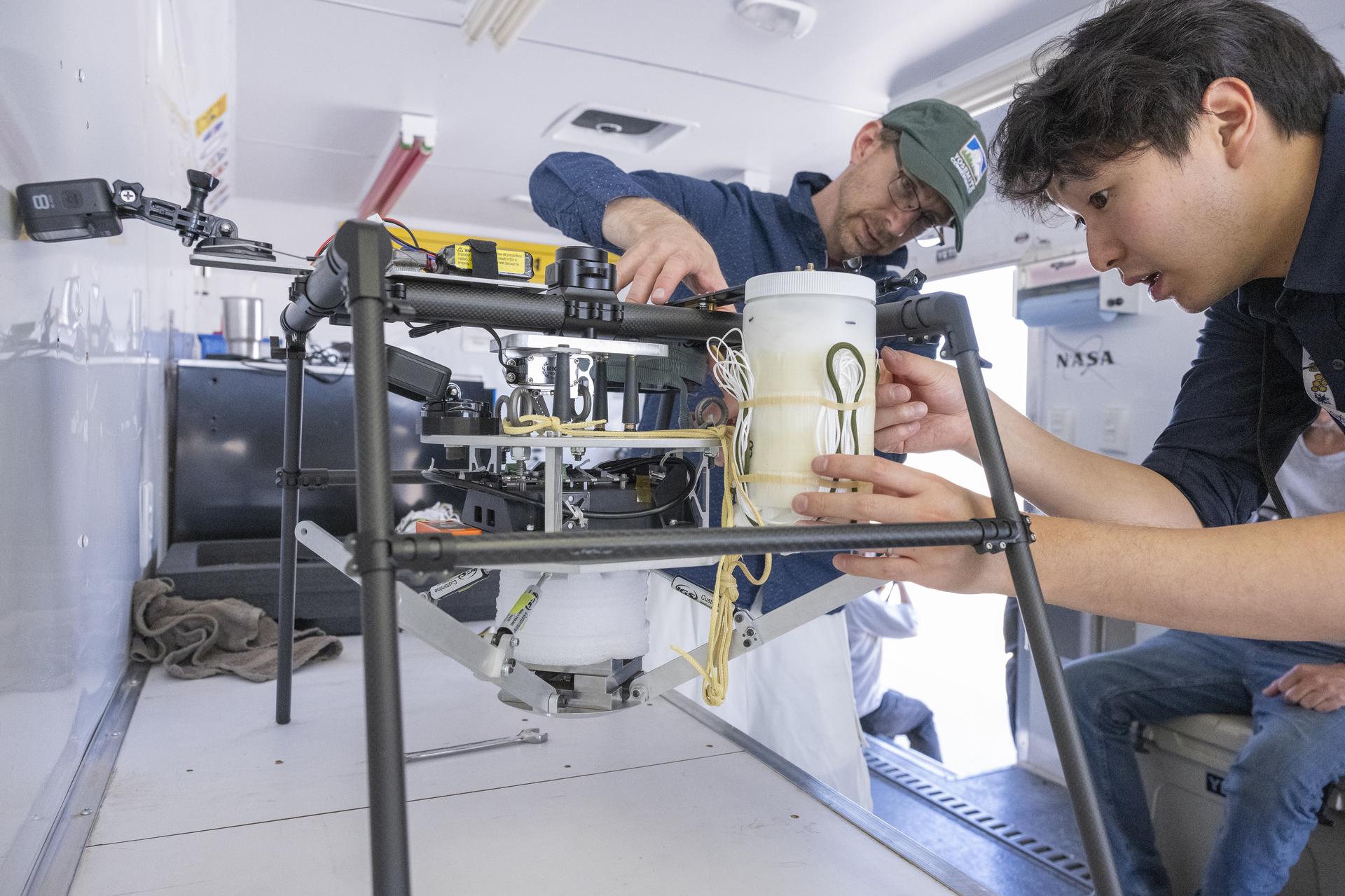 NASA researchers Paul Bean, center, and Mark Hagiwara, right, attach the capsule with parachute system to the Enhancing Parachutes by Instrumenting the Canopy test experiment on June 4, 2025, at NASA’s Armstong Flight Research Center in Edwards, California. NASA researchers are developing technology to make supersonic parachutes safer and more reliable for delivering science instruments and payloads to Mars.NASA/Christopher LC Clark
 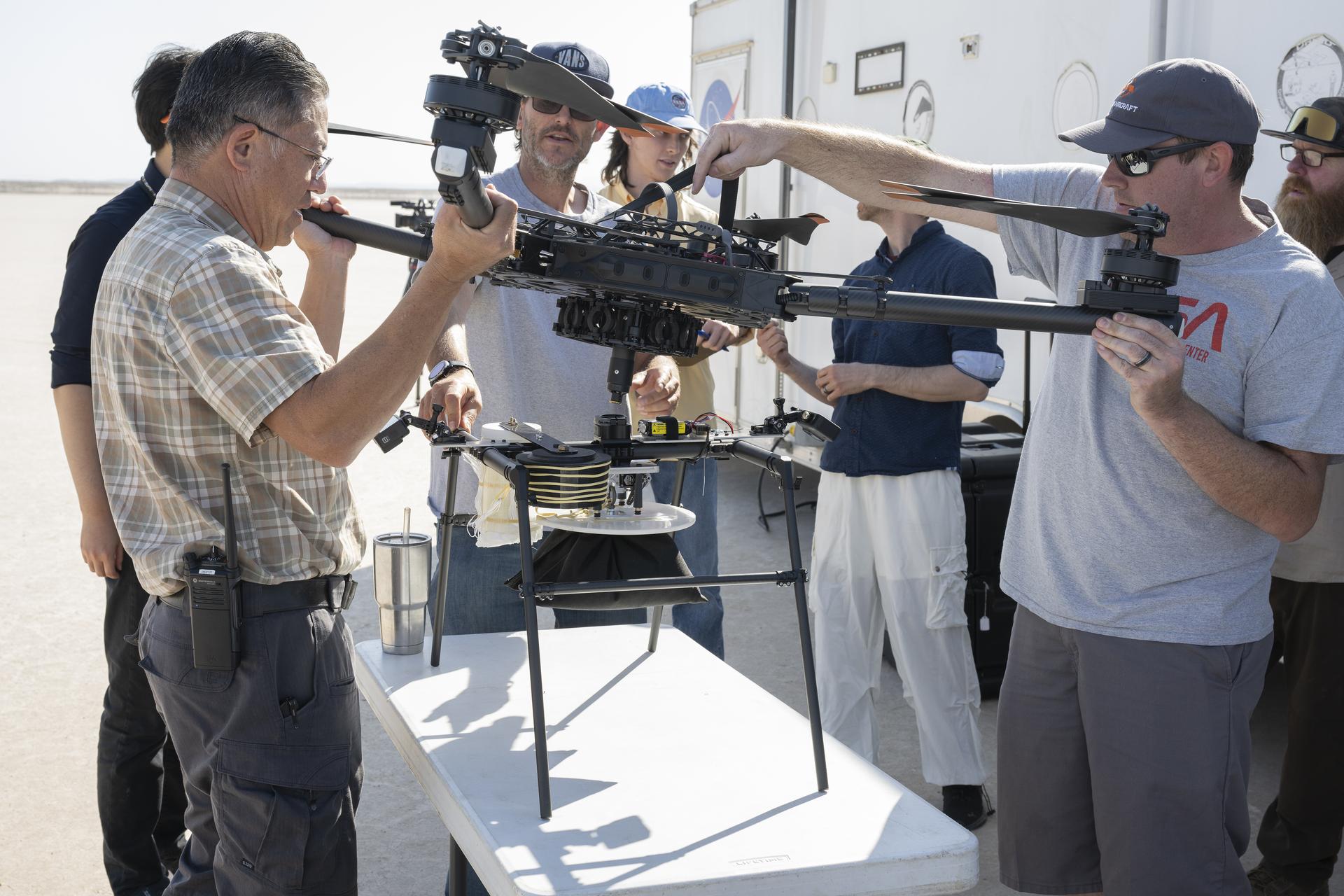 Derek Abramson, left, and Justin Link, right, attach an Alta X drone to the Enhancing Parachutes by Instrumenting the Canopy test experiment on June 4, 2025, at NASA’s Armstong Flight Research Center in Edwards, California. Abramson is NASA chief engineer at the center’s Dale Reed Subscale Flight Research Laboratory, where Link also works as a pilot for small uncrewed aircraft systems. NASA researchers are developing technology to make supersonic parachutes safer and more reliable for delivering science instruments and payloads to Mars.NASA/Christopher LC Clark
 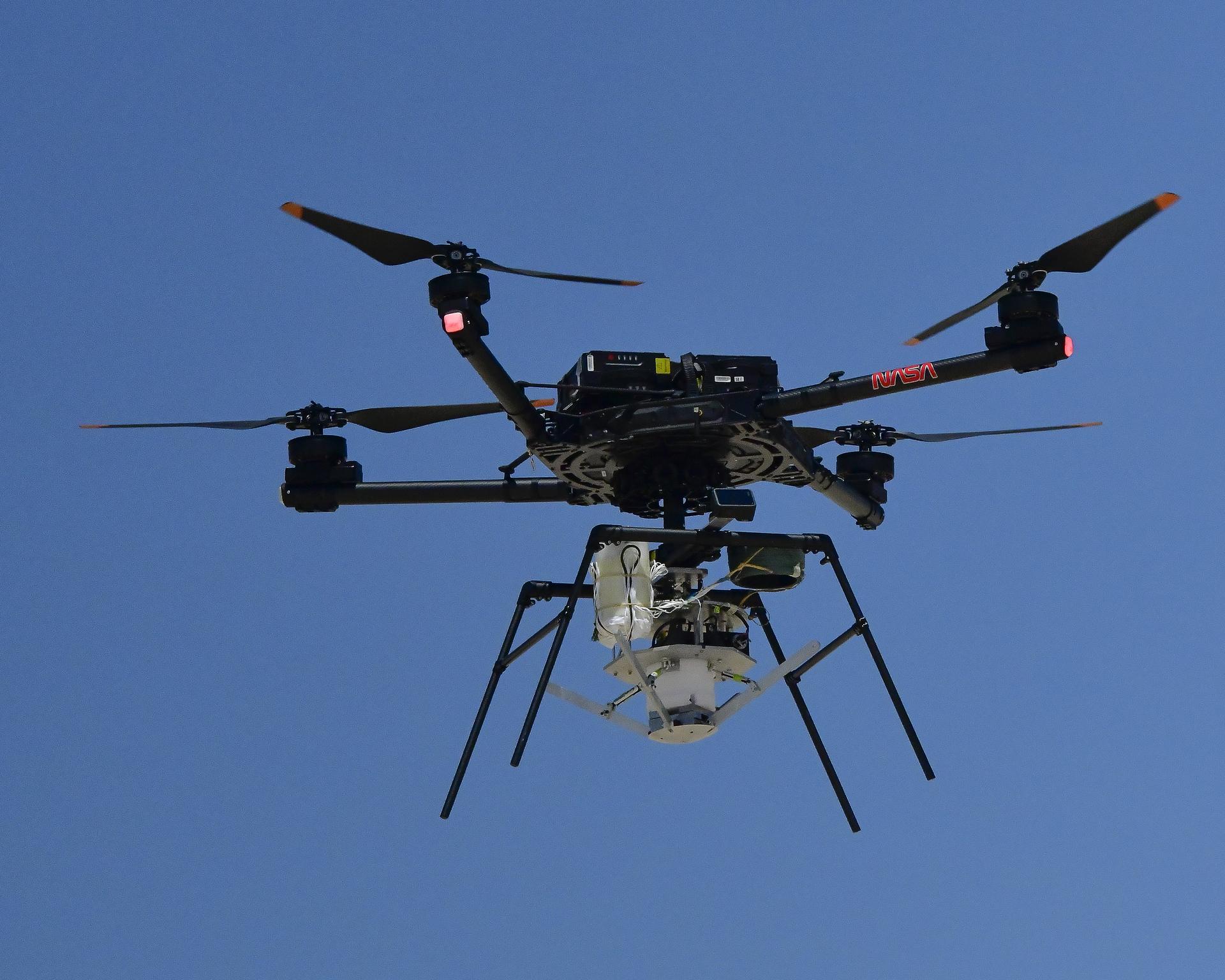 An Alta X drone is positioned at altitude for an air launch of the Enhancing Parachutes by Instrumenting the Canopy test experiment on June 4, 2025, at NASA’s Armstong Flight Research Center in Edwards, California. NASA researchers are developing technology to make supersonic parachutes safer and more reliable for delivering science instruments and payloads to Mars.NASA/Christopher LC Clark
 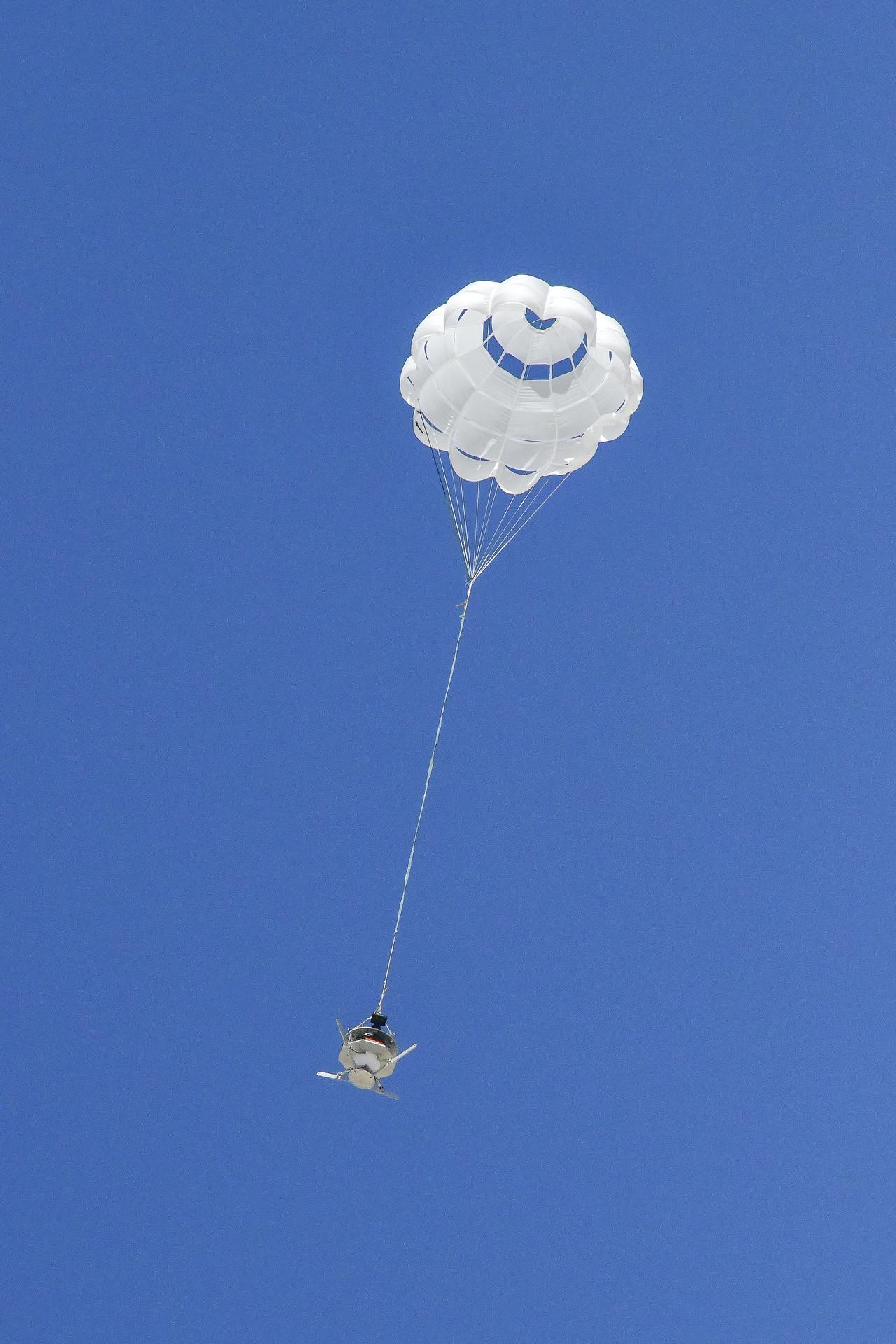 The parachute of the Enhancing Parachutes by Instrumenting the Canopy test experiment deploys following an air launch from an Alta X drone on June 4, 2025, at NASA’s Armstong Flight Research Center in Edwards, California. NASA researchers are developing technology to make supersonic parachutes safer and more reliable for delivering science instruments and payloads to Mars.NASA/Christopher LC Clark
 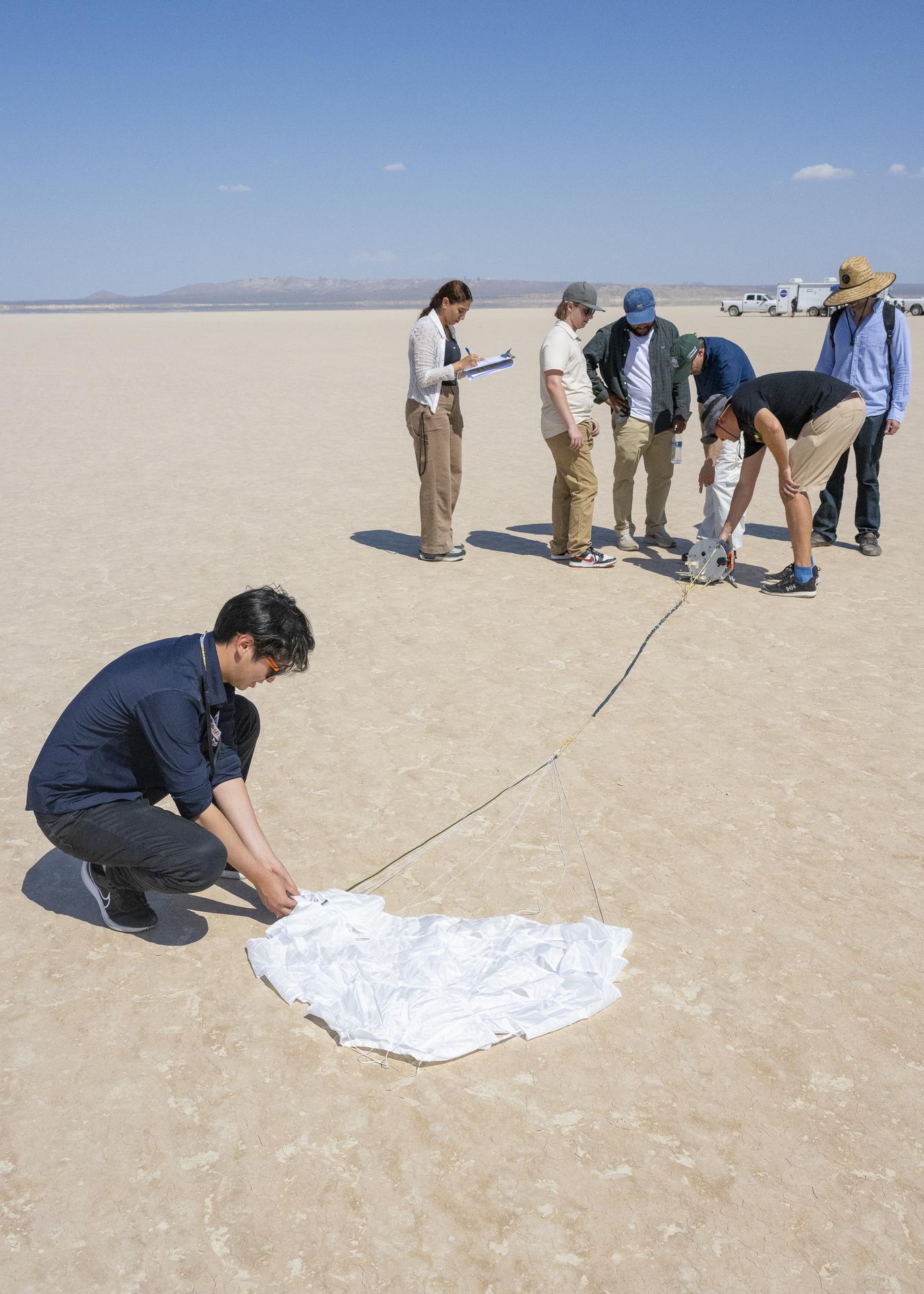 The Enhancing Parachutes by Instrumenting the Canopy project team examines a capsule and parachute following an air launch from an Alta X drone on June 4, 2025, at NASA’s Armstong Flight Research Center in Edwards, California. NASA researchers are developing technology to make supersonic parachutes safer and more reliable for delivering science instruments and payloads to Mars.NASA/Christopher LC Clark
 3 min read NASA Drop Test Supports Safer Air Taxi Design and Certification Article 2 days ago
  3 min read NASA Rehearses How to Measure X-59’s Noise Levels Article 5 days ago
  4 min read NASA Scientist Finds Predicted Companion Star to Betelgeuse Article 7 days ago
 Keep Exploring Discover More Topics From NASA Armstrong Flight Research Center